Department of Molecular Medicine, Keimyung University School of Medicine, Daegu 42601, Republic of Korea.
Department of Bioinformatics, Psomagen Inc., Rockville, MD 20850, USA.
Int J Oncol. 2023 Aug;63(2). doi: 10.3892/ijo.2023.5541. Epub 2023 Jun 30.
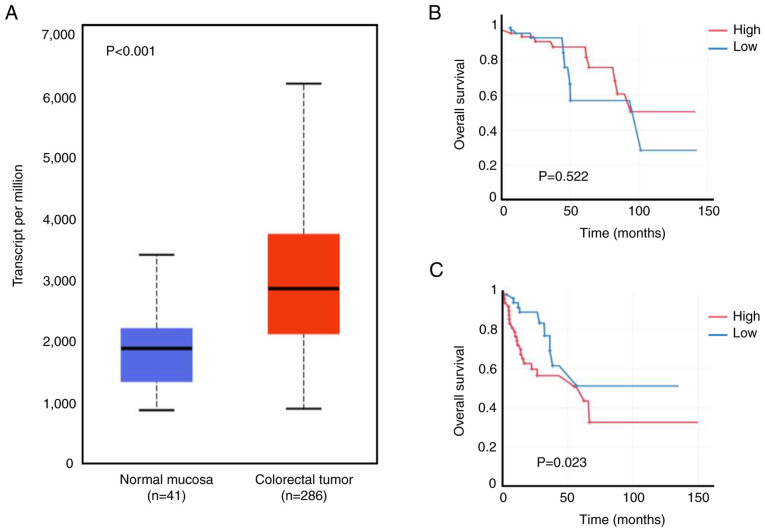
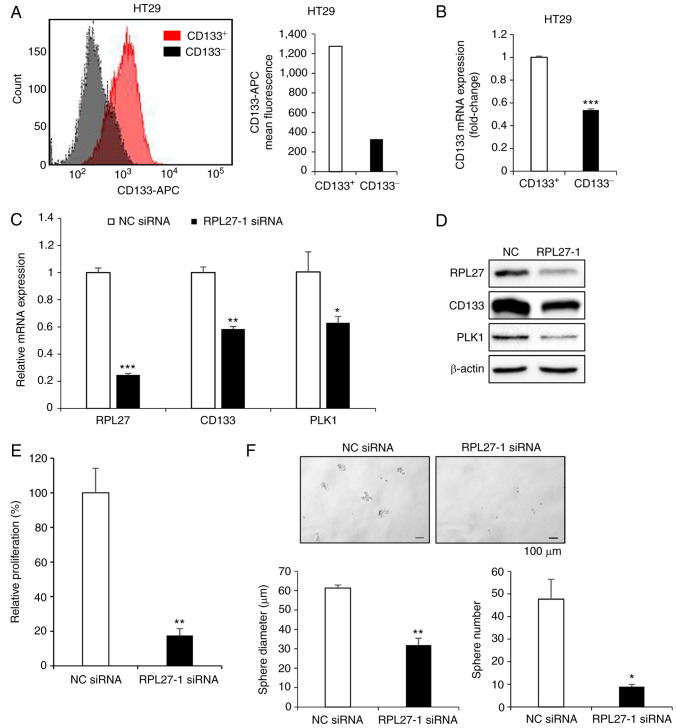
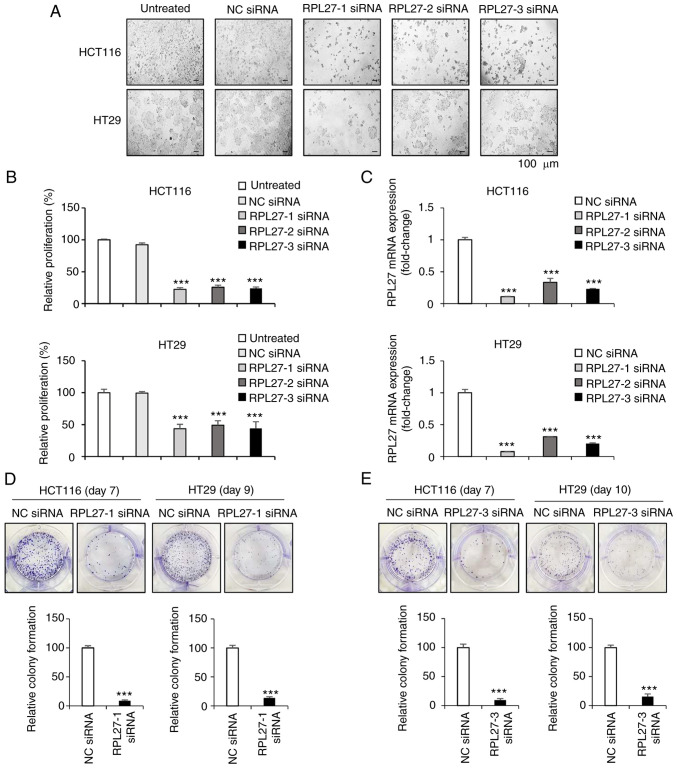
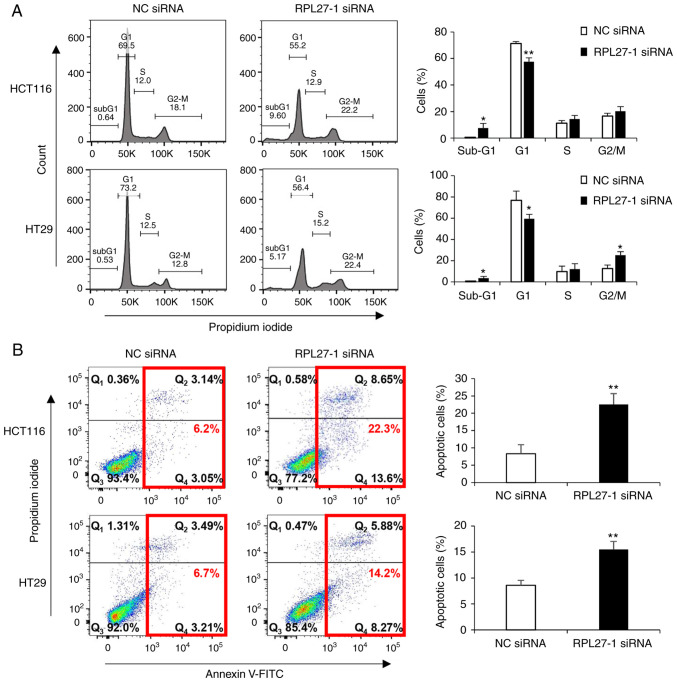
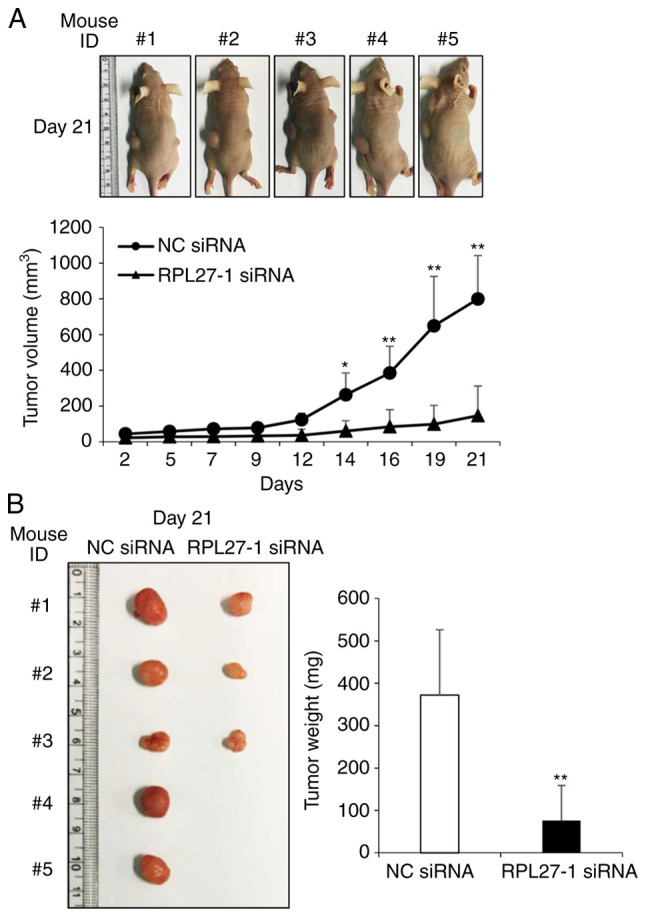
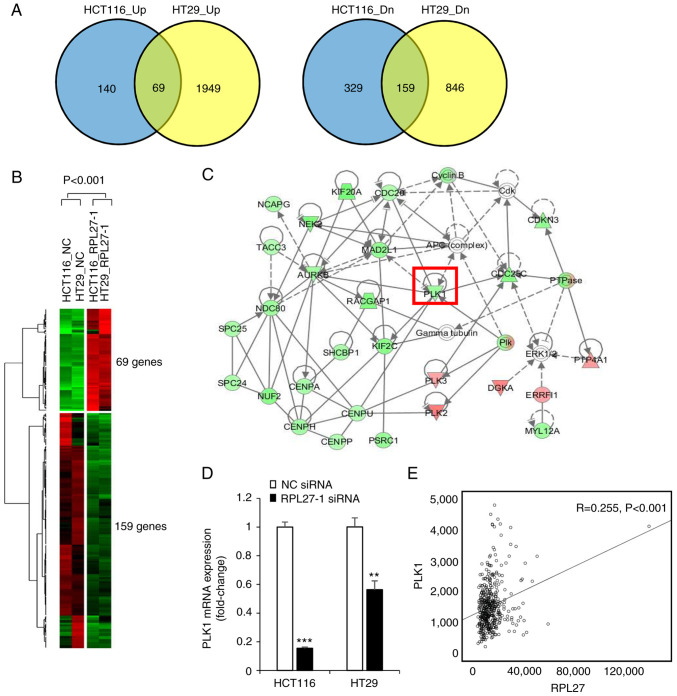
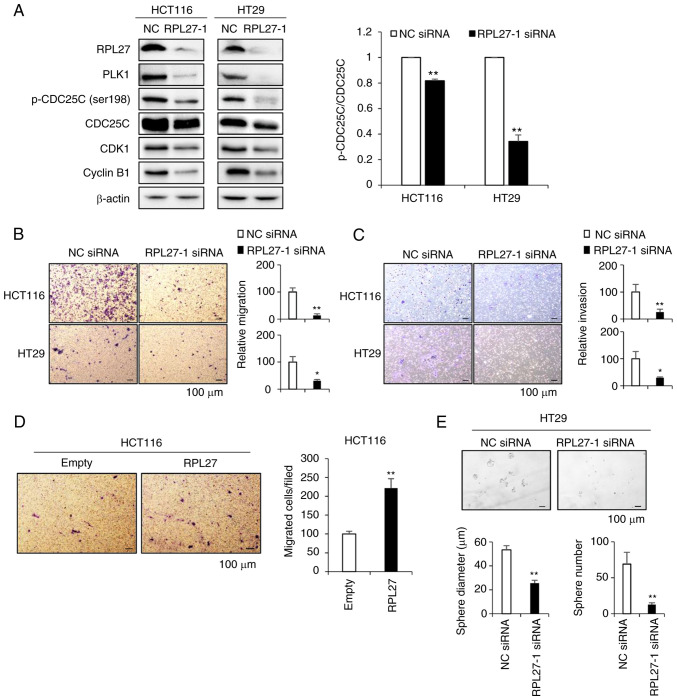
Although expression of ribosomal protein L27 (RPL27) is upregulated in clinical colorectal cancer (CRC) tissue, to the best of our knowledge, the oncogenic role of RPL27 has not yet been defined. The present study aimed to investigate whether targeting RPL27 could alter CRC progression and determine whether RPL27 gains an extra‑ribosomal function during CRC development. Human CRC cell lines HCT116 and HT29 were transfected with RPL27‑specific small interfering RNA and proliferation was assessed and using proliferation assays, fluorescence‑activated cell sorting (FACS) and a xenograft mouse model. Furthermore, RNA sequencing, bioinformatic analysis and western blotting were conducted to explore the underlying mechanisms responsible for RPL27 silencing‑induced CRC phenotypical changes. Inhibiting RPL27 expression suppressed CRC cell proliferation and cell cycle progression and induced apoptotic cell death. Targeting RPL27 significantly inhibited growth of human CRC xenografts in nude mice. Notably, polo‑like kinase 1 (PLK1), which serves an important role in mitotic cell cycle progression and stemness, was downregulated in both HCT116 and HT29 cells following RPL27 silencing. RPL27 silencing reduced the levels of PLK1 protein and G2/M‑associated regulators such as phosphorylated cell division cycle 25C, CDK1 and cyclin B1. Silencing of RPL27 reduced the migration and invasion abilities and sphere‑forming capacity of the parental CRC cell population. In terms of phenotypical changes in cancer stem cells (CSCs), RPL27 silencing suppressed the sphere‑forming capacity of the isolated CD133 CSC population, which was accompanied by decreased CD133 and PLK1 levels. Taken together, these findings indicated that RPL27 contributed to the promotion of CRC proliferation and stemness via PLK1 signaling and RPL27 may be a useful target in a next‑generation therapeutic strategy for both primary CRC treatment and metastasis prevention.
尽管核糖体蛋白 L27(RPL27)在临床结直肠癌(CRC)组织中的表达上调,但就我们所知,RPL27 的致癌作用尚未确定。本研究旨在探讨靶向 RPL27 是否可以改变 CRC 的进展,并确定 RPL27 在 CRC 发展过程中是否获得额外的核糖体功能。用人 CRC 细胞系 HCT116 和 HT29 转染 RPL27 特异性小干扰 RNA,通过增殖试验、荧光激活细胞分选(FACS)和异种移植小鼠模型评估增殖。此外,进行 RNA 测序、生物信息学分析和 Western blot 分析,以探讨负责 RPL27 沉默诱导 CRC 表型变化的潜在机制。抑制 RPL27 表达可抑制 CRC 细胞增殖和细胞周期进程,并诱导细胞凋亡。靶向 RPL27 可显著抑制裸鼠人 CRC 异种移植物的生长。值得注意的是,在 HCT116 和 HT29 细胞中,RPL27 沉默后,对有丝分裂细胞周期进展和干性起重要作用的 Polo 样激酶 1(PLK1)下调。RPL27 沉默降低了 PLK1 蛋白和 G2/M 相关调节剂(如磷酸化细胞分裂周期 25C、CDK1 和细胞周期蛋白 B1)的水平。RPL27 沉默降低了亲本 CRC 细胞群体的迁移和侵袭能力以及球体形成能力。就癌症干细胞(CSC)的表型变化而言,RPL27 沉默抑制了分离的 CD133 CSC 群体的球体形成能力,同时 CD133 和 PLK1 水平降低。总之,这些发现表明,RPL27 通过 PLK1 信号促进 CRC 的增殖和干性,并且 RPL27 可能是原发性 CRC 治疗和转移预防的下一代治疗策略中的一个有用靶标。