Li Ruidong, Wang Yaxin, Ma Zhijun, Ma Muyuan, Wang Di, Xie Gengchen, Yin Yuping, Zhang Peng, Tao Kaixiong
Department of General Surgery, Union Hospital, Tongji Medical College, Huazhong University of Science and Technology, No. 1277, Jiefang Ave, Wuhan 430022, China.
Department of Anesthesiology and Critical Care, Union Hospital, Tongji Medical College, Huazhong University of Science and Technology, No. 1277, Jiefang Ave, Wuhan 430022, China.
Mediators Inflamm. 2016;2016:3798465. doi: 10.1155/2016/3798465. Epub 2016 Nov 30.
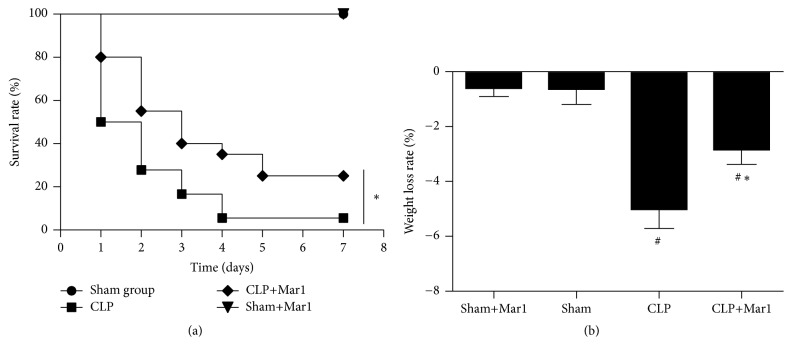
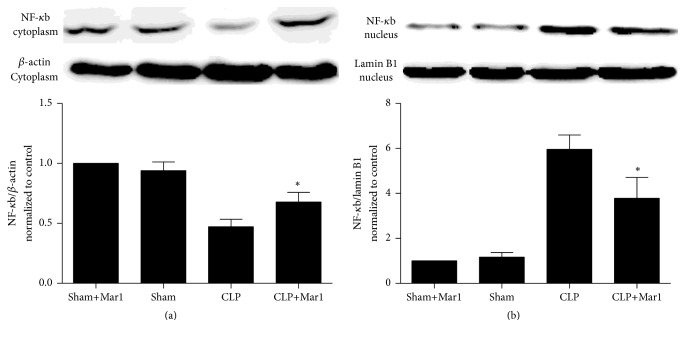
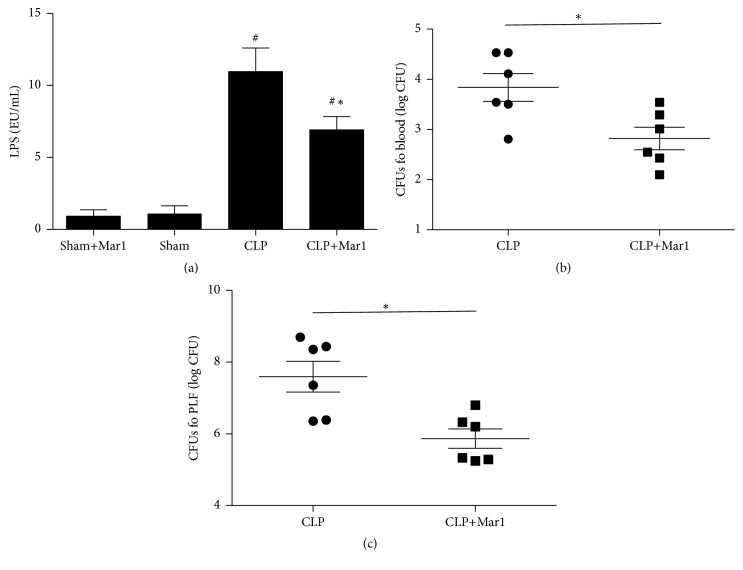
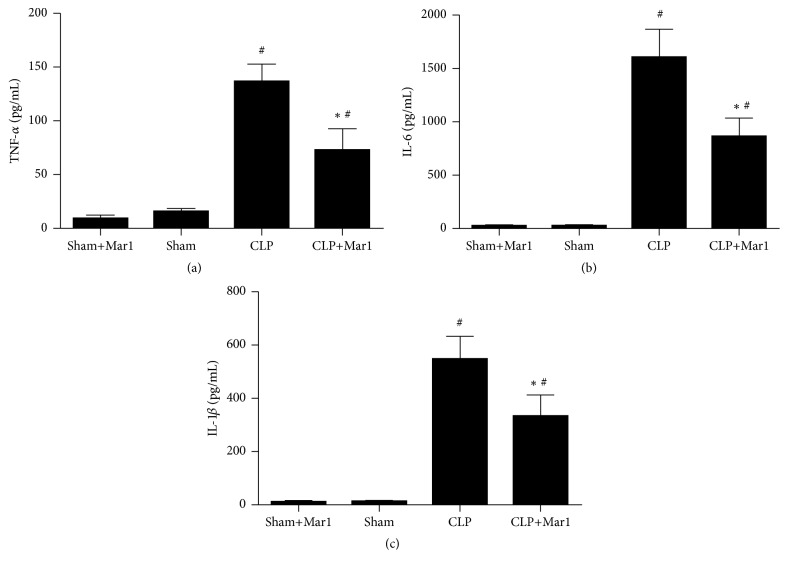
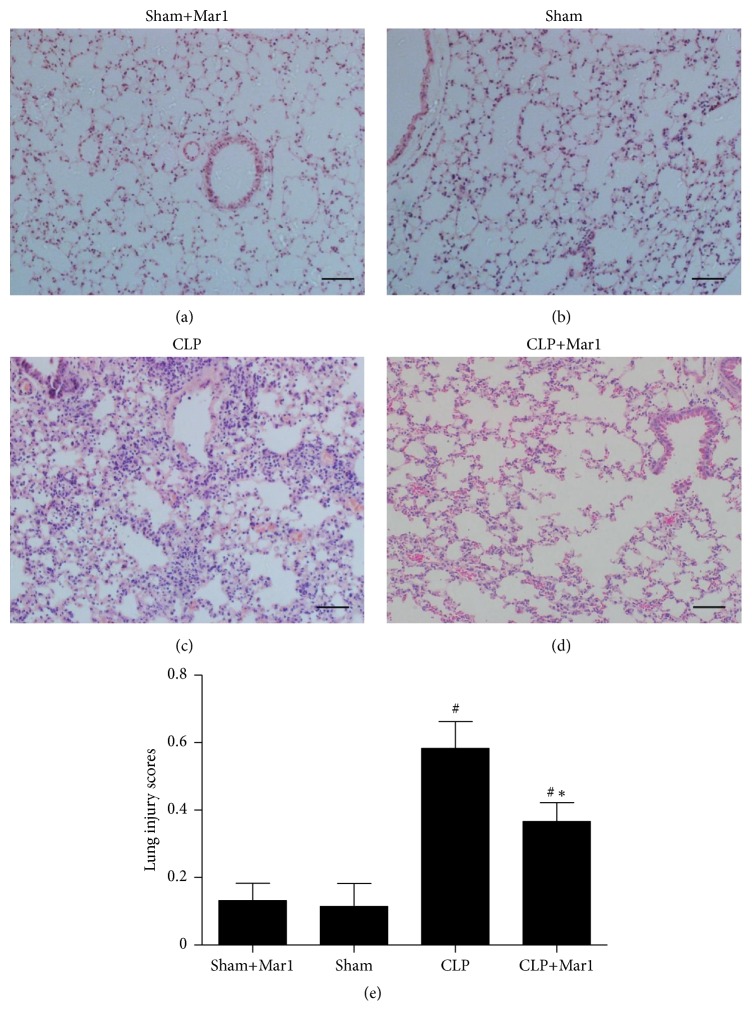
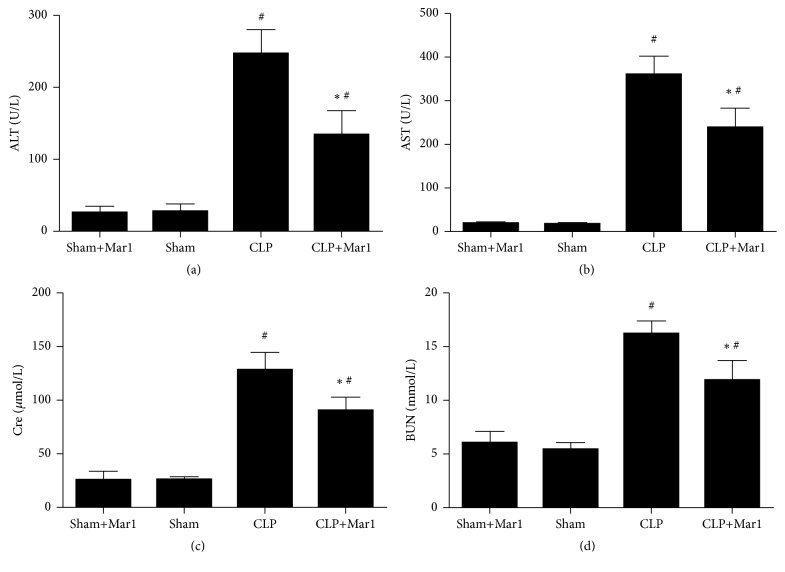
Sepsis, frequently caused by infection of bacteria, is considered as an uncontrollable systematic inflammation response syndrome (SIRS). Maresin 1 (Mar1) is a new proresolving mediator with potent anti-inflammatory effect in several animal models. However, its effect in sepsis is still not investigated. To address this question, we developed sepsis model in BALB/c mice by cecal ligation and puncture (CLP) with or without Mar1 treatment. Our data showed that Mar1 markedly improved survival rate and decreased the levels of proinflammatory cytokines in CLP mice such as interleukin-6 (IL-6), tumor necrosis factor- (TNF-), and interleukin-1 (IL-1). Furthermore, Mar1 reduced serum level of lipopolysaccharide (LPS) and enhanced the bacteria clearance in mice sepsis model. Moreover, Mar1 attenuated lung injury and decreased level of alanine transaminase (ALT), aspartate transaminase (AST), creatinine (Cre), and blood urea nitrogen (BUN) in serum in mice after CLP surgery. Treatment with Mar1 inhibited activation of nuclear factor kappa B (NF-b) pathway. In conclusion, Mar1 exhibited protective effect in sepsis by reducing LPS, bacteria burden in serum, inhibiting inflammation response, and improving vital organ function. The possible mechanism is partly involved in inhibition of NF-b activation.
脓毒症通常由细菌感染引起,被认为是一种无法控制的全身性炎症反应综合征(SIRS)。maresin 1(Mar1)是一种新的促消退介质,在多种动物模型中具有强大的抗炎作用。然而,其在脓毒症中的作用仍未得到研究。为了解决这个问题,我们通过盲肠结扎和穿刺(CLP)在BALB/c小鼠中建立了脓毒症模型,并对其进行或不进行Mar1治疗。我们的数据表明,Mar1显著提高了CLP小鼠的存活率,并降低了促炎细胞因子的水平,如白细胞介素-6(IL-6)、肿瘤坏死因子-(TNF-)和白细胞介素-1(IL-1)。此外,Mar1降低了小鼠脓毒症模型中血清脂多糖(LPS)的水平,并增强了细菌清除能力。此外,Mar1减轻了肺损伤,并降低了CLP手术后小鼠血清中丙氨酸转氨酶(ALT)、天冬氨酸转氨酶(AST)、肌酐(Cre)和血尿素氮(BUN)的水平。Mar1治疗可抑制核因子κB(NF-κB)途径的激活。总之,Mar1通过降低LPS、血清中的细菌负荷、抑制炎症反应和改善重要器官功能,在脓毒症中发挥了保护作用。其可能的机制部分涉及抑制NF-κB的激活。