Sun ShuJun, Wang JiaMei, Wang JingXu, Wang FuQuan, Yao ShangLong, Xia HaiFa
Department of Anesthesiology, Union Hospital, Tongji Medical College, Huazhong University of Science and Technology, Wuhan, China.
Institute of Anesthesia and Critical Care Medicine, Union Hospital, Tongji Medical College, Huazhong University of Science and Technology, Wuhan, China.
Front Pharmacol. 2019 Nov 7;10:1323. doi: 10.3389/fphar.2019.01323. eCollection 2019.
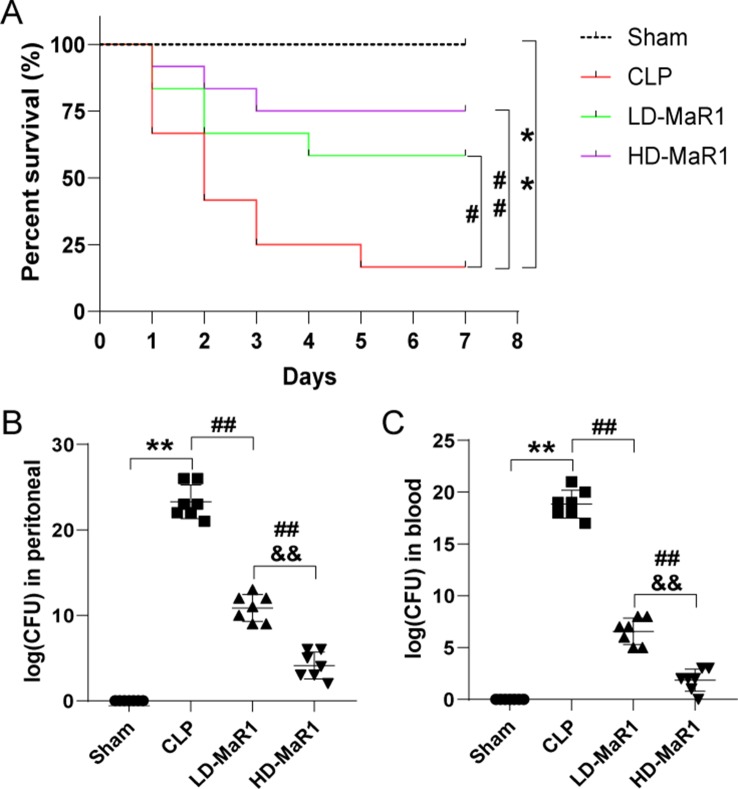
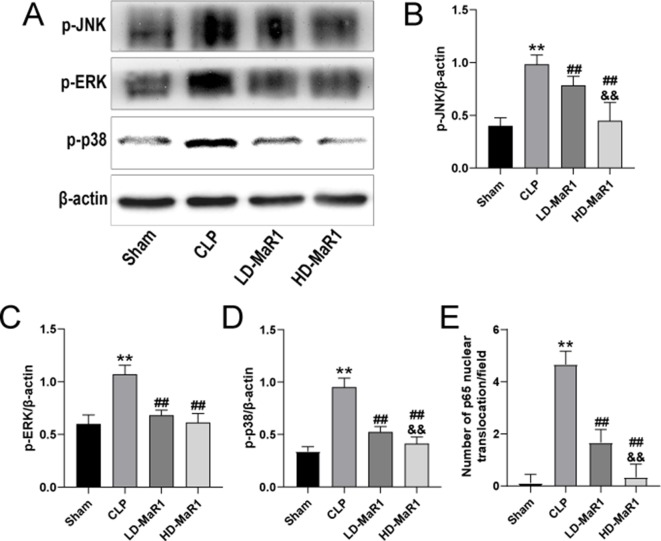
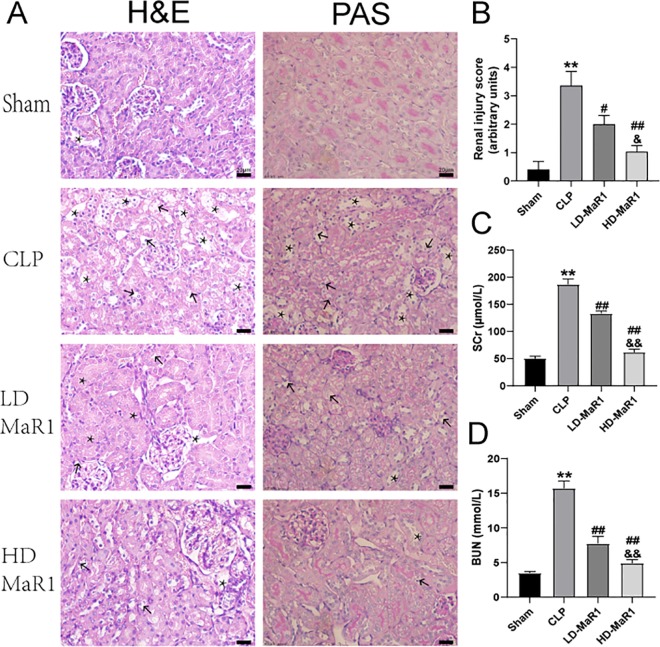
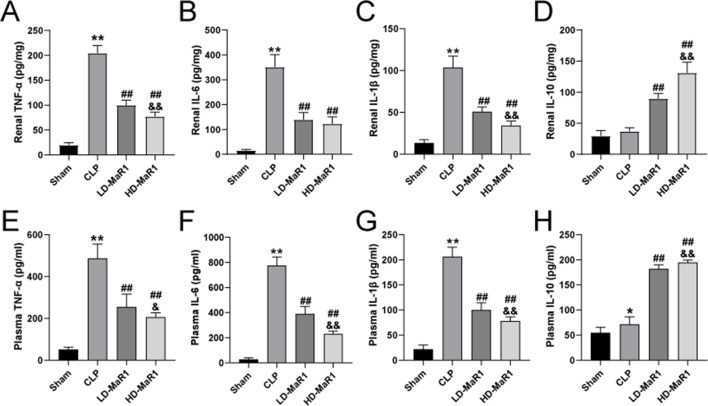
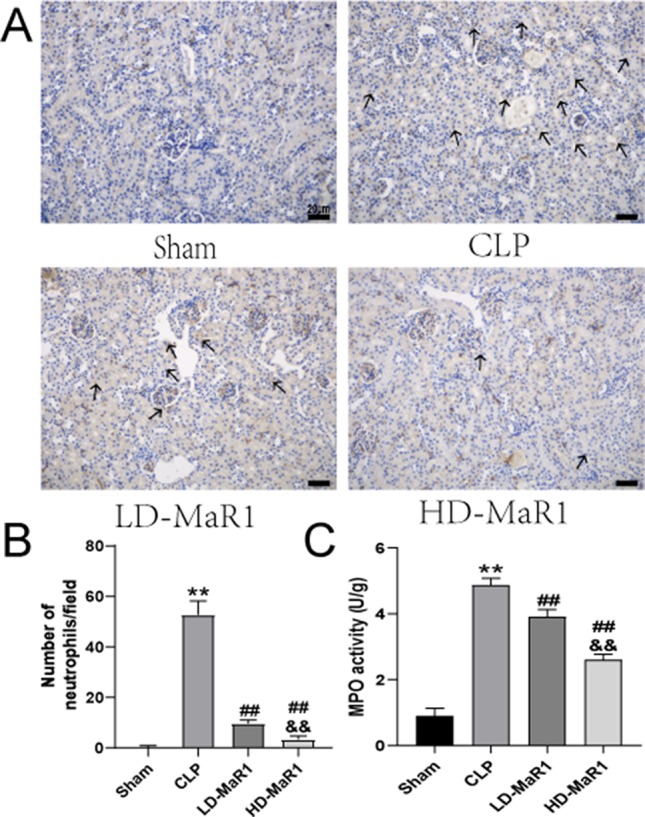
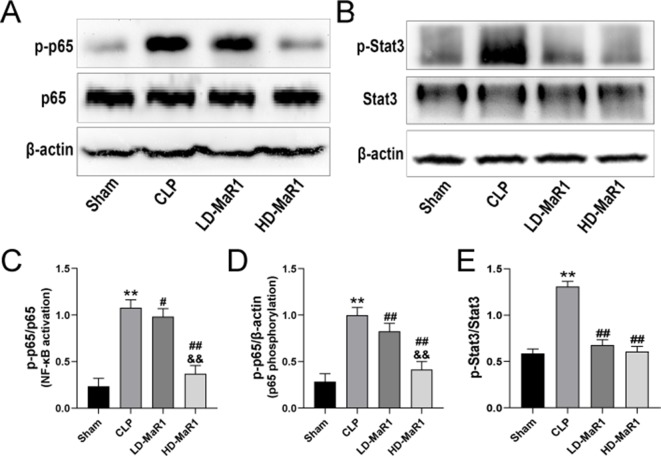
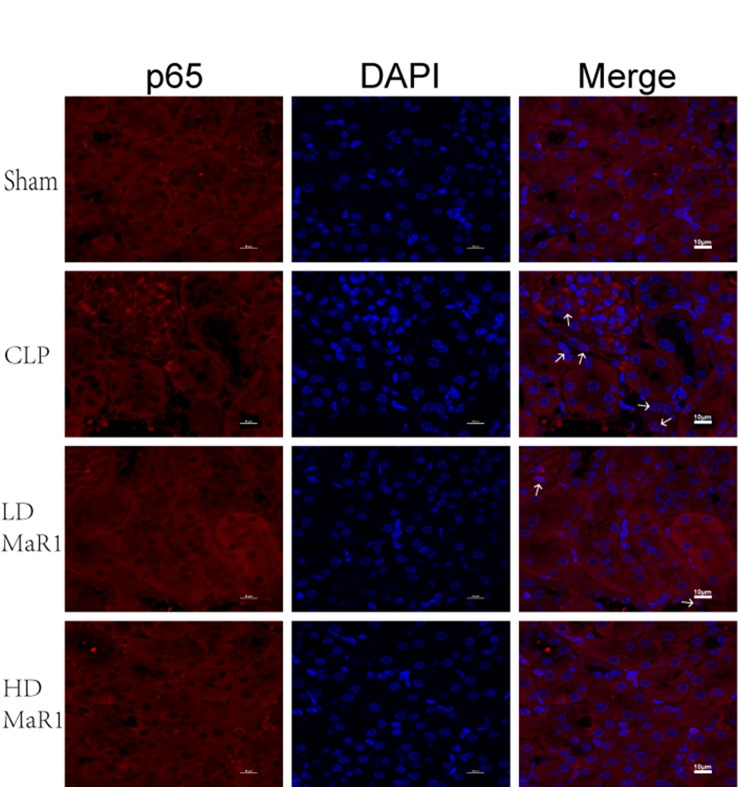
Acute kidney injury (AKI) is one of the most common and serious complications of sepsis in which the inflammatory cascade plays a crucial role. There is now increasing evidence that lipid mediators derived from the omega-3 fatty acid docosahexaenoic acid (DHA) have potent anti-inflammatory effects that promote the timely regression of acute inflammation. In this study, we investigated the protective effects and molecular mechanism of a novel DHA-derived lipid mediator Maresin 1 (MaR1) on AKI in septic mice. The cecal ligation and puncture (CLP) was used to establish a sepsis mice model. As a result, we found that MaR1 significantly increased the 7-day survival rate of septic mice and the anti-inflammatory factor IL-10 while reducing bacterial load and pro-inflammatory cytokines (TNF-α, IL-6, and IL-1β). In addition, MaR1 dose dependently reduced renal injury scores and serum creatinine and urea nitrogen levels in septic mice while inhibiting renal neutrophil infiltration and myeloperoxidase (MPO) activity. In terms of signaling pathway, we found that MaR1 inhibits the expression of phosphorylated p65, Stat3, JNK, ERK, and p38 and significantly reduces nuclear translocation of p65. In conclusion, our results indicate that MaR1 is able to reduce neutrophil infiltration and inhibit nuclear factor-kappa B/signal transducer and activator of transcriptor 3/mitogen-activated protein kinase (NF-κB/STAT3/MAPK) activity and regulate inflammatory cytokine level to inhibit inflammatory response and thereby weaken sepsis-associated AKI in mice.
急性肾损伤(AKI)是脓毒症最常见且最严重的并发症之一,其中炎症级联反应起关键作用。现在越来越多的证据表明,源自ω-3脂肪酸二十二碳六烯酸(DHA)的脂质介质具有强大的抗炎作用,可促进急性炎症的及时消退。在本研究中,我们调查了一种新型的源自DHA的脂质介质玛瑞辛1(MaR1)对脓毒症小鼠急性肾损伤的保护作用及其分子机制。采用盲肠结扎穿刺术(CLP)建立脓毒症小鼠模型。结果发现,MaR1显著提高了脓毒症小鼠的7天生存率以及抗炎因子IL-10的水平,同时降低了细菌载量和促炎细胞因子(TNF-α、IL-6和IL-1β)。此外,MaR1剂量依赖性地降低了脓毒症小鼠的肾损伤评分以及血清肌酐和尿素氮水平,同时抑制了肾中性粒细胞浸润和髓过氧化物酶(MPO)活性。在信号通路方面,我们发现MaR1抑制磷酸化p65、Stat3、JNK、ERK和p38的表达,并显著减少p65的核转位。总之,我们的结果表明,MaR1能够减少中性粒细胞浸润,抑制核因子-κB/信号转导和转录激活因子3/丝裂原活化蛋白激酶(NF-κB/STAT3/MAPK)活性,并调节炎性细胞因子水平以抑制炎症反应,从而减轻小鼠脓毒症相关性急性肾损伤。