School of Life Sciences, Arizona State University, Tempe, AZ, USA.
Department of Neurosciences, University of New Mexico School of Medicine, Albuquerque, NM, USA.
Mol Psychiatry. 2018 Feb;23(2):434-443. doi: 10.1038/mp.2016.238. Epub 2017 Jan 3.
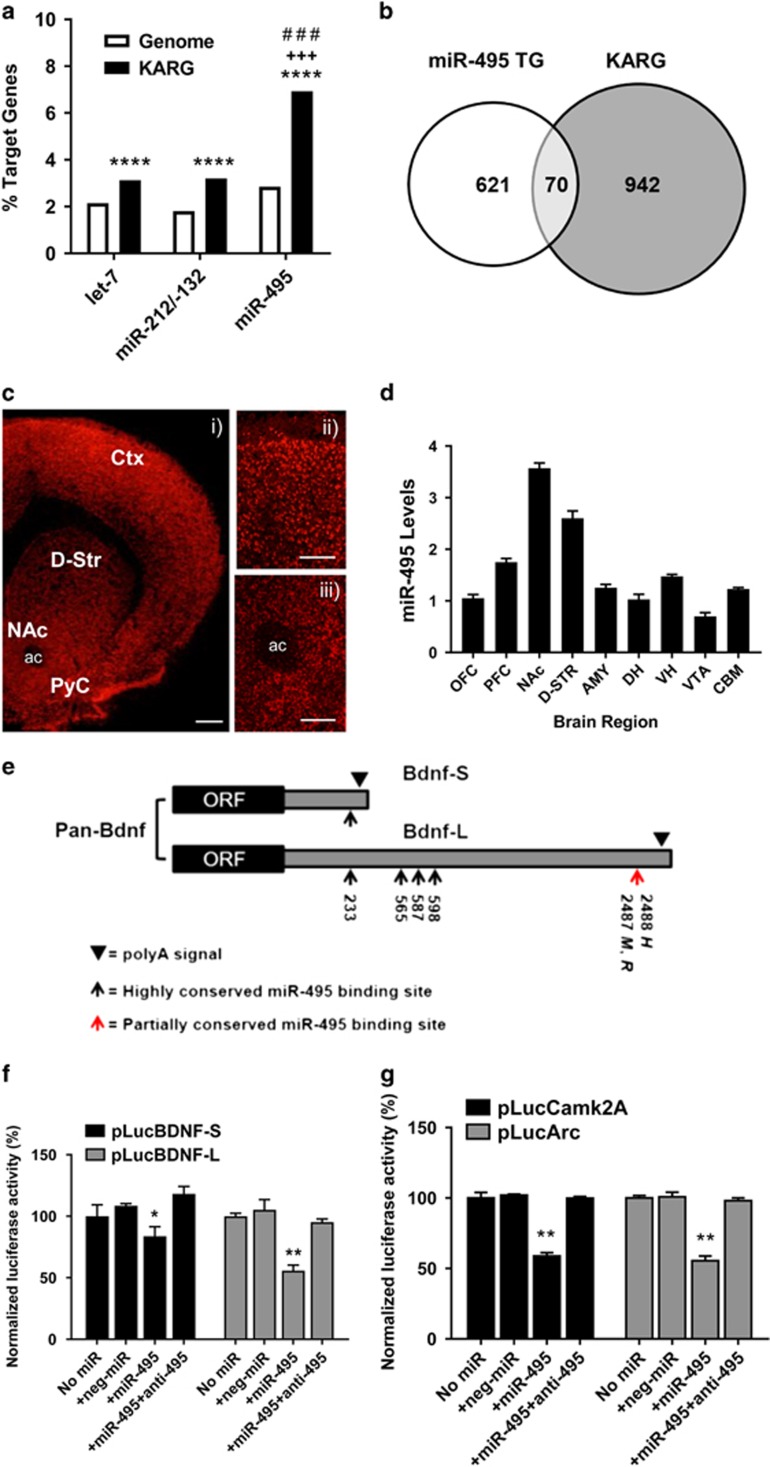
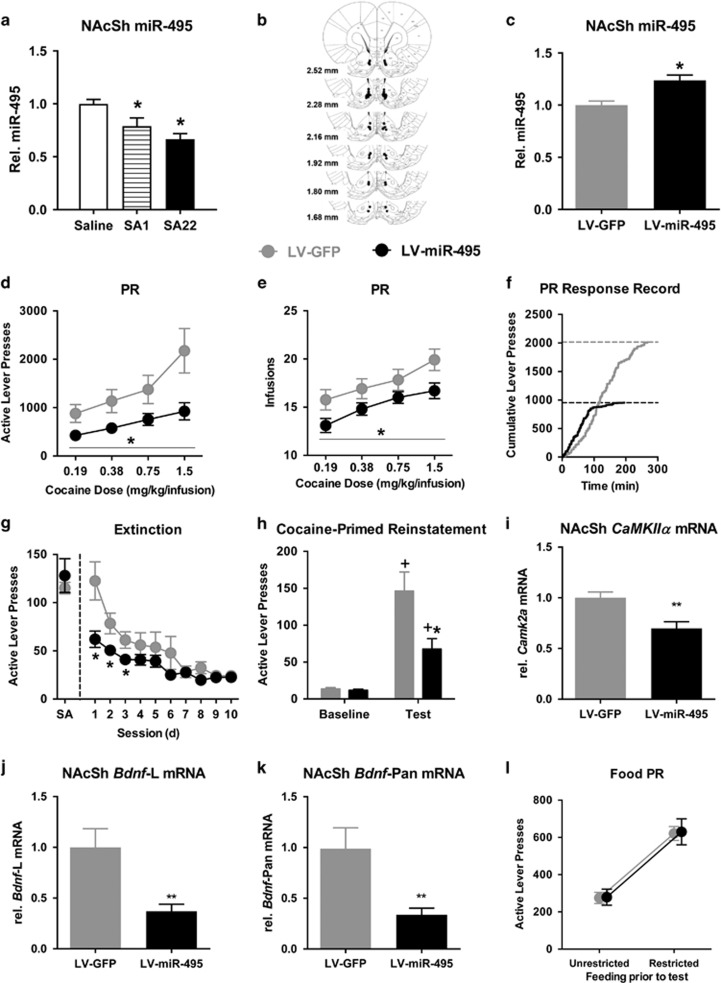
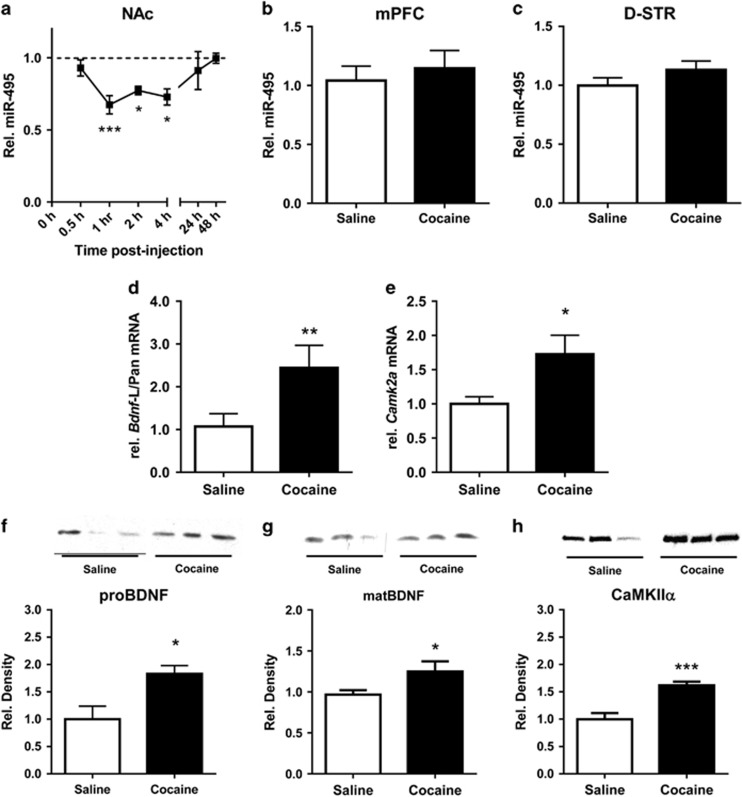
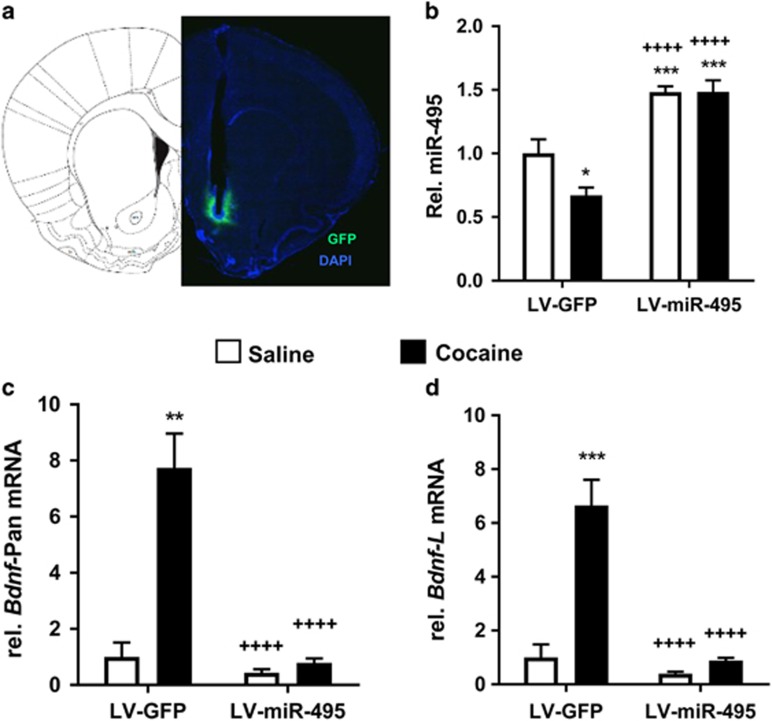
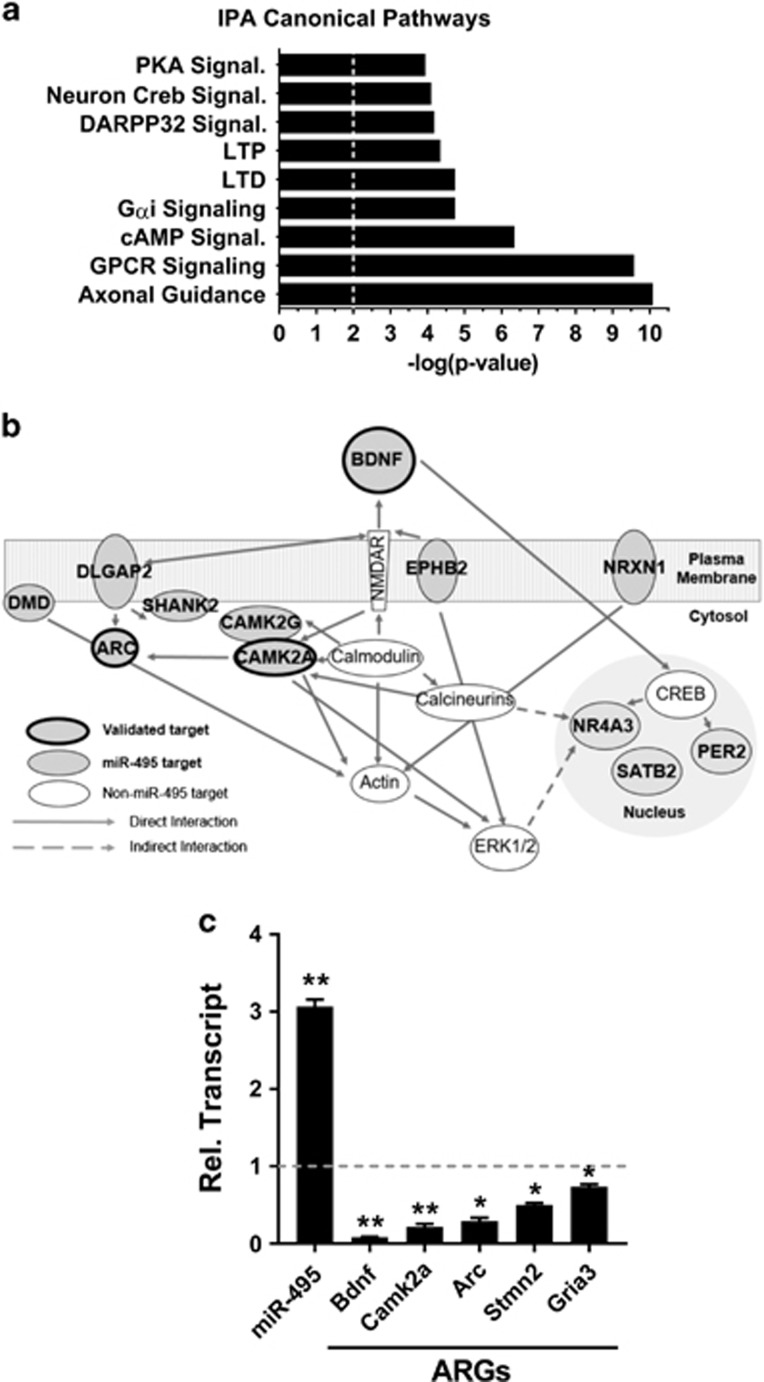
MicroRNAs (miRNAs) are important post-transcriptional regulators of gene expression and are implicated in the etiology of several neuropsychiatric disorders, including substance use disorders (SUDs). Using in silico genome-wide sequence analyses, we identified miR-495 as a miRNA whose predicted targets are significantly enriched in the Knowledgebase for Addiction Related Genes (ARG) database (KARG; http://karg.cbi.pku.edu.cn). This small non-coding RNA is also highly expressed within the nucleus accumbens (NAc), a pivotal brain region underlying reward and motivation. Using luciferase reporter assays, we found that miR-495 directly targeted the 3'UTRs of Bdnf, Camk2a and Arc. Furthermore, we measured miR-495 expression in response to acute cocaine in mice and found that it is downregulated rapidly and selectively in the NAc, along with concomitant increases in ARG expression. Lentiviral-mediated miR-495 overexpression in the NAc shell (NAcsh) not only reversed these cocaine-induced effects but also downregulated multiple ARG mRNAs in specific SUD-related biological pathways, including those that regulate synaptic plasticity. miR-495 expression was also downregulated in the NAcsh of rats following cocaine self-administration. Most importantly, we found that NAcsh miR-495 overexpression suppressed the motivation to self-administer and seek cocaine across progressive ratio, extinction and reinstatement testing, but had no effect on food reinforcement, suggesting that miR-495 selectively affects addiction-related behaviors. Overall, our in silico search for post-transcriptional regulators identified miR-495 as a novel regulator of multiple ARGs that have a role in modulating motivation for cocaine.
微小 RNA(miRNAs)是基因表达的重要转录后调控因子,与包括物质使用障碍(SUD)在内的多种神经精神疾病的病因有关。通过计算机全基因组序列分析,我们发现 miR-495 是一种 miRNA,其预测靶标在成瘾相关基因知识库(KARG;http://karg.cbi.pku.edu.cn)中显著富集。这种小的非编码 RNA 在伏隔核(NAc)中表达水平也很高,NAc 是大脑中与奖励和动机相关的关键区域。通过荧光素酶报告基因检测,我们发现 miR-495 直接靶向 Bdnf、Camk2a 和 Arc 的 3'UTR。此外,我们检测了急性可卡因处理后小鼠 miR-495 的表达情况,发现它在 NAc 中迅速且选择性地下调,同时 ARG 表达增加。在 NAc 壳(NAcsh)中过表达慢病毒介导的 miR-495 不仅逆转了这些可卡因诱导的效应,而且还下调了多个 SUD 相关生物途径中的 ARG mRNA,包括那些调节突触可塑性的途径。可卡因自我给药后,NAcsh 中的 miR-495 表达也下调。最重要的是,我们发现 NAcsh miR-495 过表达抑制了递增比率、消退和复燃测试中对可卡因的自我给药和寻求动机,但对食物强化没有影响,这表明 miR-495 选择性地影响与成瘾相关的行为。总的来说,我们通过计算寻找转录后调控因子,发现 miR-495 是一种新的多种 ARG 调节剂,在调节可卡因的动机方面发挥作用。