
高密度堆积的铝-银纳米螺旋作为超薄完美吸光体。
Densely packed aluminum-silver nanohelices as an ultra-thin perfect light absorber.
机构信息
Department of Electro-Optical Engineering, National Taipei University of Technology, No. 1, Sec. 3, Chung-Hsiao E. Rd. Taipei, (106) Taiwan.
出版信息
Sci Rep. 2017 Jan 3;7:39791. doi: 10.1038/srep39791.
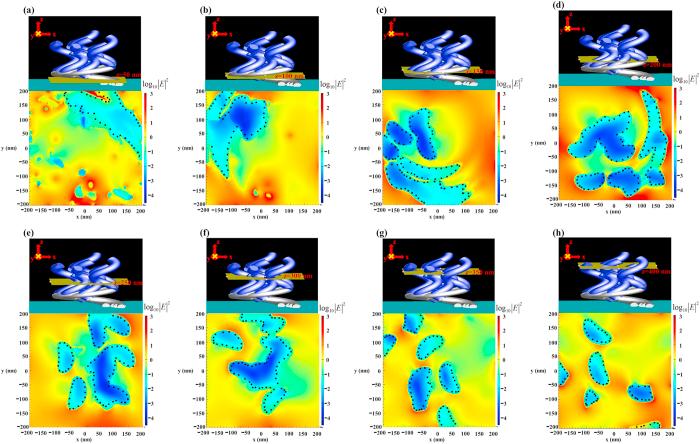
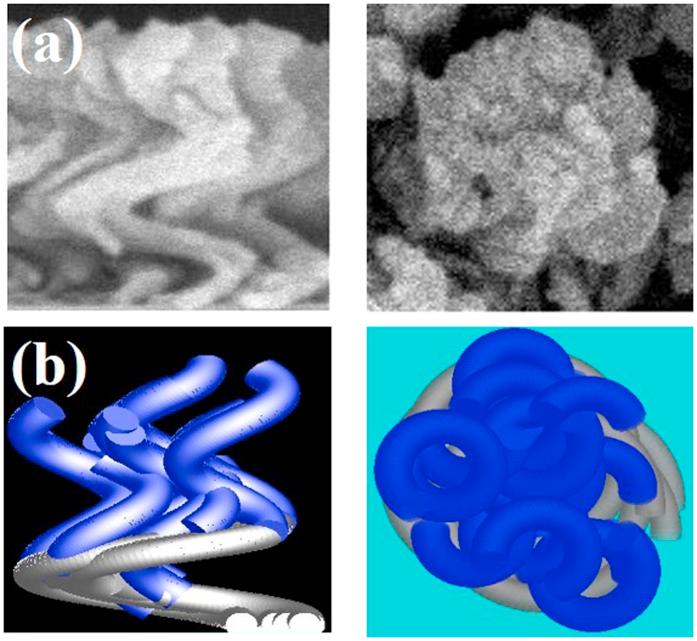
Metals have been formed into nanostructures to absorb light with high efficiency through surface plasmon resonances. An ultra-thin plasmonic structure that exhibits strong absorption over wide ranges of wavelengths and angles of incidence is sought. In this work, a nearly perfect plasmonic nanostructure is fabricated using glancing angle deposition. The difference between the morphologies of obliquely deposited aluminum and silver nanohelices is exploited to form a novel three-dimensional structure, which is an aluminum-silver nanohelix array on a pattern-free substrate. With a thickness of only 470 nm, densely distributed nanohelices support rod-to-rod localized surface plasmons for broadband and polarization-independent light extinction. The extinctance remains high over wavelengths from 400 nm to 2000 nm and angles of incidence from 0° to 70°.
金属已被制成纳米结构,通过表面等离激元共振高效吸收光。人们正在寻求一种超薄的等离子体结构,它能在宽波长范围和大入射角范围内表现出强烈的吸收。在这项工作中,使用掠角沉积制备了几乎完美的等离子体纳米结构。利用斜沉积的铝和银纳米螺旋之间形态的差异,形成了一种新颖的三维结构,即无图案基底上的铝-银纳米螺旋阵列。这种结构的厚度仅为 470nm,密集分布的纳米螺旋支持棒到棒的局域表面等离激元,实现宽带和偏振无关的光消光。在 400nm 到 2000nm 的波长和 0°到 70°的入射角范围内,消光率仍然很高。



 Zotero 插件