Shingyochi Yoshiaki, Kanazawa Shigeyuki, Tajima Satoshi, Tanaka Rica, Mizuno Hiroshi, Tobita Morikuni
Department of Plastic and Reconstructive Surgery, Juntendo University School of Medicine, Hongo, Bunkyo-ku, Tokyo, Japan.
PLoS One. 2017 Jan 3;12(1):e0168937. doi: 10.1371/journal.pone.0168937. eCollection 2017.
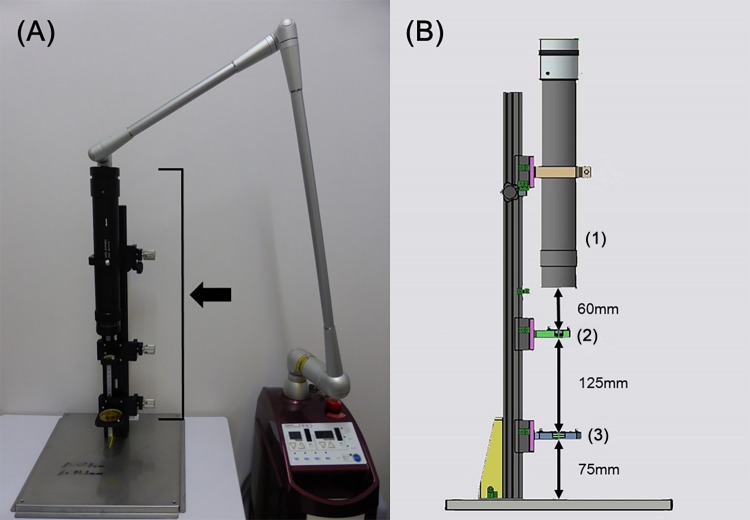
Low-level laser therapy (LLLT) with various types of lasers promotes fibroblast proliferation and migration during the process of wound healing. Although LLLT with a carbon dioxide (CO2) laser was also reported to promote wound healing, the underlying mechanisms at the cellular level have not been previously described. Herein, we investigated the effect of LLLT with a CO2 laser on fibroblast proliferation and migration.
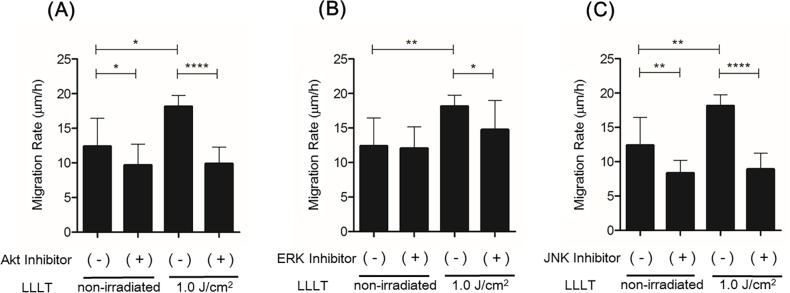
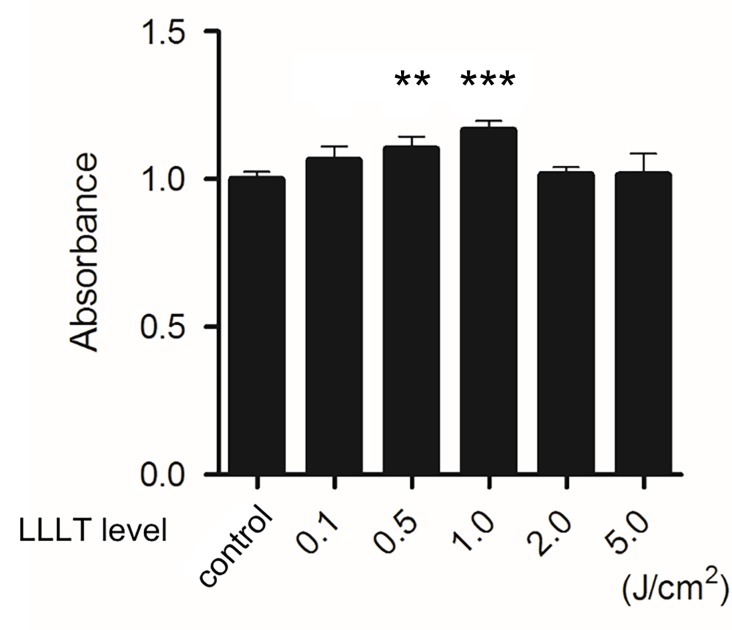
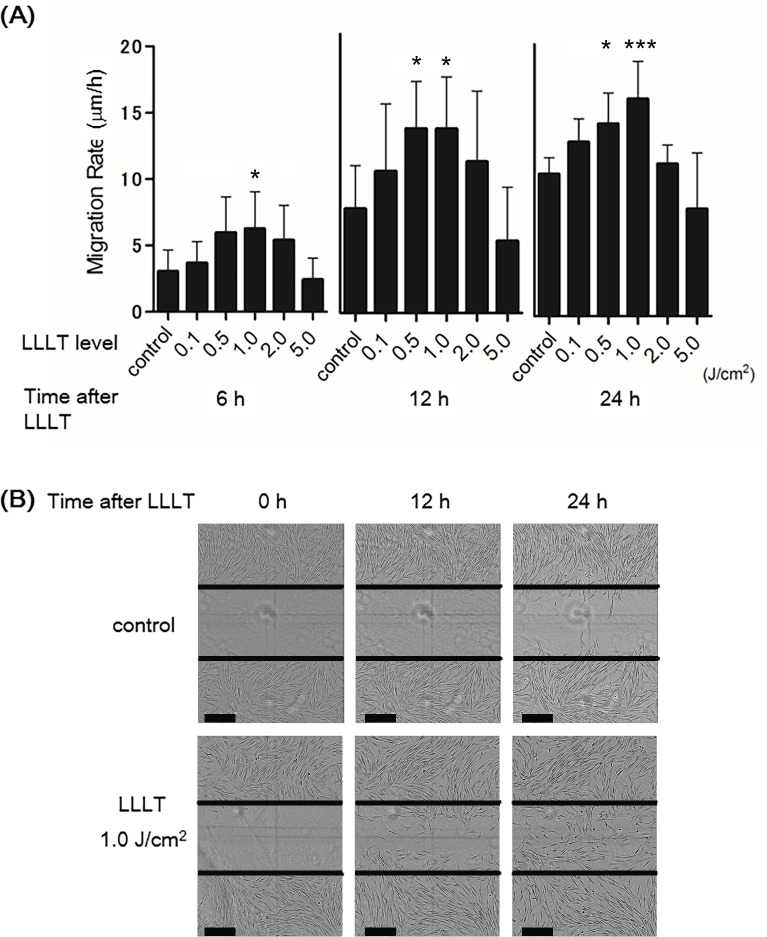
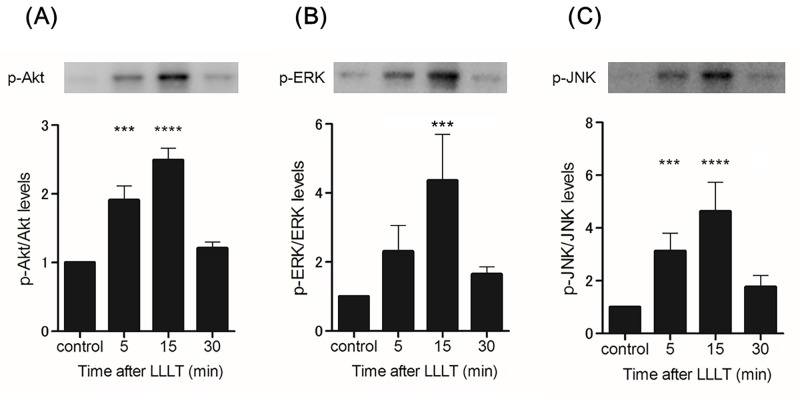
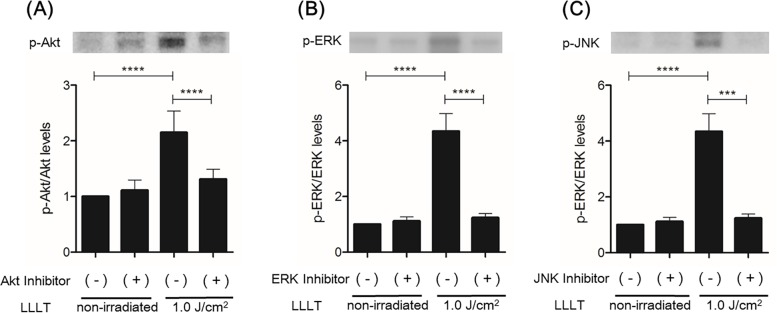
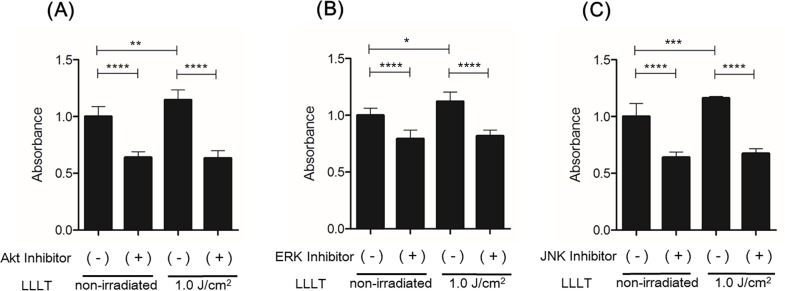
Cultured human dermal fibroblasts were prepared. MTS and cell migration assays were performed with fibroblasts after LLLT with a CO2 laser at various doses (0.1, 0.5, 1.0, 2.0, or 5.0 J/cm2) to observe the effects of LLLT with a CO2 laser on the proliferation and migration of fibroblasts. The non-irradiated group served as the control. Moreover, western blot analysis was performed using fibroblasts after LLLT with a CO2 laser to analyze changes in the activities of Akt, extracellular signal-regulated kinase (ERK), and Jun N-terminal kinase (JNK), which are signaling molecules associated with cell proliferation and migration. Finally, the MTS assay, a cell migration assay, and western blot analysis were performed using fibroblasts treated with inhibitors of Akt, ERK, or JNK before LLLT with a CO2 laser.
In MTS and cell migration assays, fibroblast proliferation and migration were promoted after LLLT with a CO2 laser at 1.0 J/cm2. Western blot analysis revealed that Akt, ERK, and JNK activities were promoted in fibroblasts after LLLT with a CO2 laser at 1.0 J/cm2. Moreover, inhibition of Akt, ERK, or JNK significantly blocked fibroblast proliferation and migration.
These findings suggested that LLLT with a CO2 laser would accelerate wound healing by promoting the proliferation and migration of fibroblasts. Activation of Akt, ERK, and JNK was essential for CO2 laser-induced proliferation and migration of fibroblasts.
使用各种类型激光的低强度激光疗法(LLLT)在伤口愈合过程中可促进成纤维细胞增殖和迁移。尽管也有报道称二氧化碳(CO2)激光的LLLT可促进伤口愈合,但此前尚未描述其在细胞水平的潜在机制。在此,我们研究了CO2激光的LLLT对成纤维细胞增殖和迁移的影响。
制备培养的人真皮成纤维细胞。对成纤维细胞进行不同剂量(0.1、0.5、1.0、2.0或5.0 J/cm2)的CO2激光LLLT后,进行MTS和细胞迁移试验,以观察CO2激光的LLLT对成纤维细胞增殖和迁移的影响。未照射组作为对照。此外,对CO2激光LLLT后的成纤维细胞进行蛋白质免疫印迹分析,以分析与细胞增殖和迁移相关的信号分子Akt、细胞外信号调节激酶(ERK)和Jun氨基末端激酶(JNK)活性的变化。最后,在CO2激光LLLT前,对用Akt、ERK或JNK抑制剂处理的成纤维细胞进行MTS试验、细胞迁移试验和蛋白质免疫印迹分析。
在MTS和细胞迁移试验中,1.0 J/cm2的CO2激光LLLT后成纤维细胞增殖和迁移得到促进。蛋白质免疫印迹分析显示,1.0 J/cm2的CO2激光LLLT后成纤维细胞中Akt、ERK和JNK活性得到促进。此外,抑制Akt、ERK或JNK可显著阻断成纤维细胞增殖和迁移。
这些发现表明,CO2激光的LLLT可通过促进成纤维细胞增殖和迁移来加速伤口愈合。Akt、ERK和JNK的激活对于CO2激光诱导的成纤维细胞增殖和迁移至关重要。