Oliveira Michelli F, Chaillon Antoine, Nakazawa Masato, Vargas Milenka, Letendre Scott L, Strain Matthew C, Ellis Ronald J, Morris Sheldon, Little Susan J, Smith Davey M, Gianella Sara
Department of Medicine, University of California San Diego, La Jolla, California, United States of America.
HIV Neurobehavioral Research Center, San Diego, California, United States of America.
PLoS Pathog. 2017 Jan 3;13(1):e1006112. doi: 10.1371/journal.ppat.1006112. eCollection 2017 Jan.
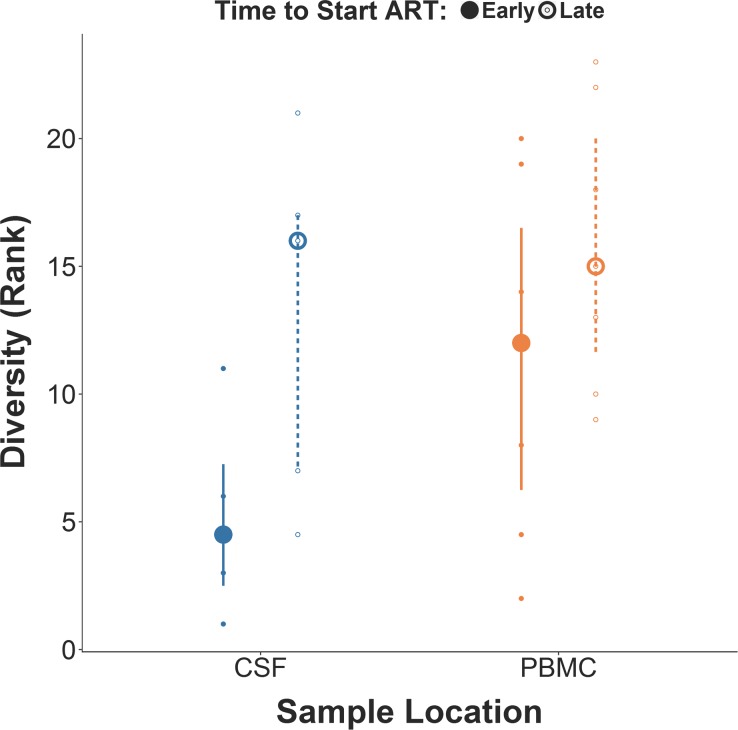
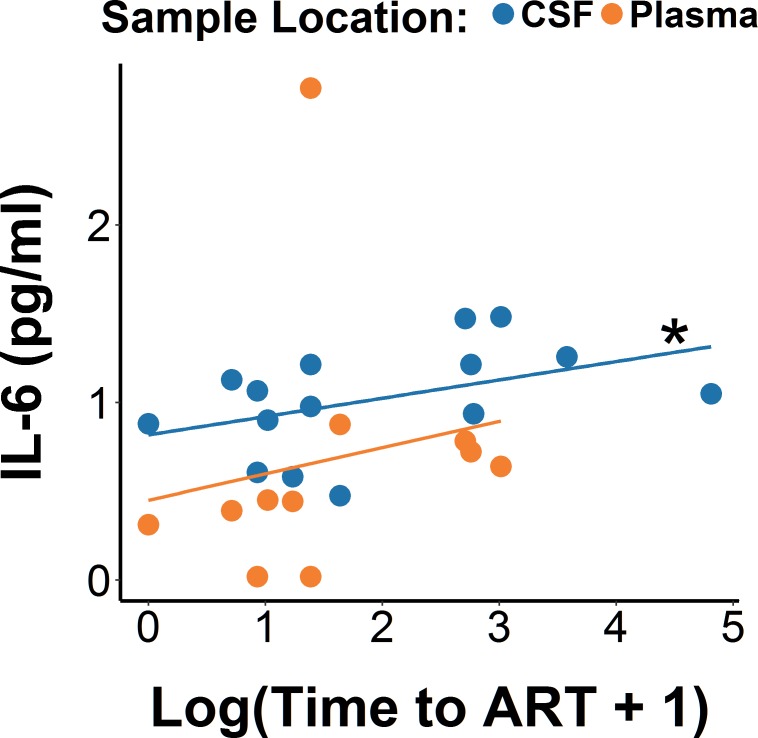
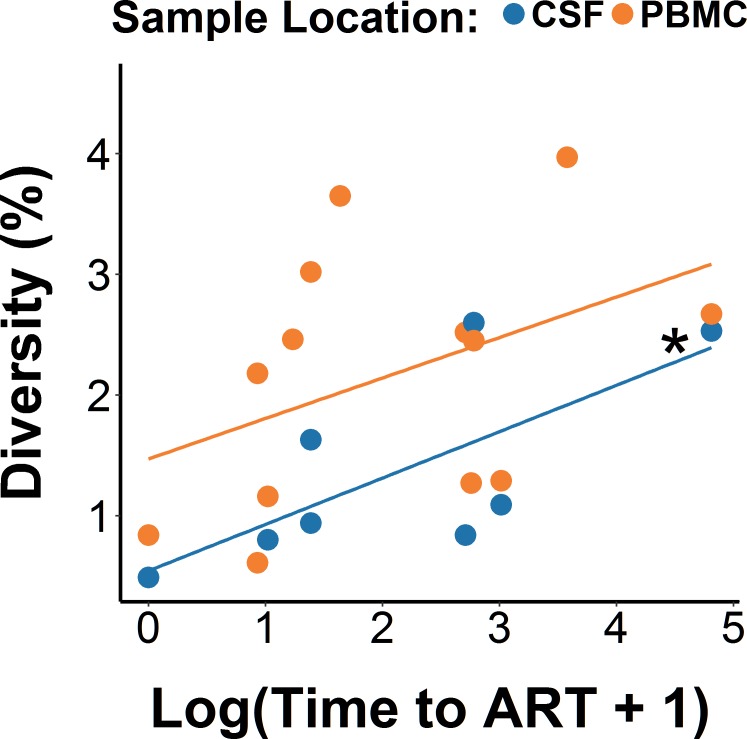
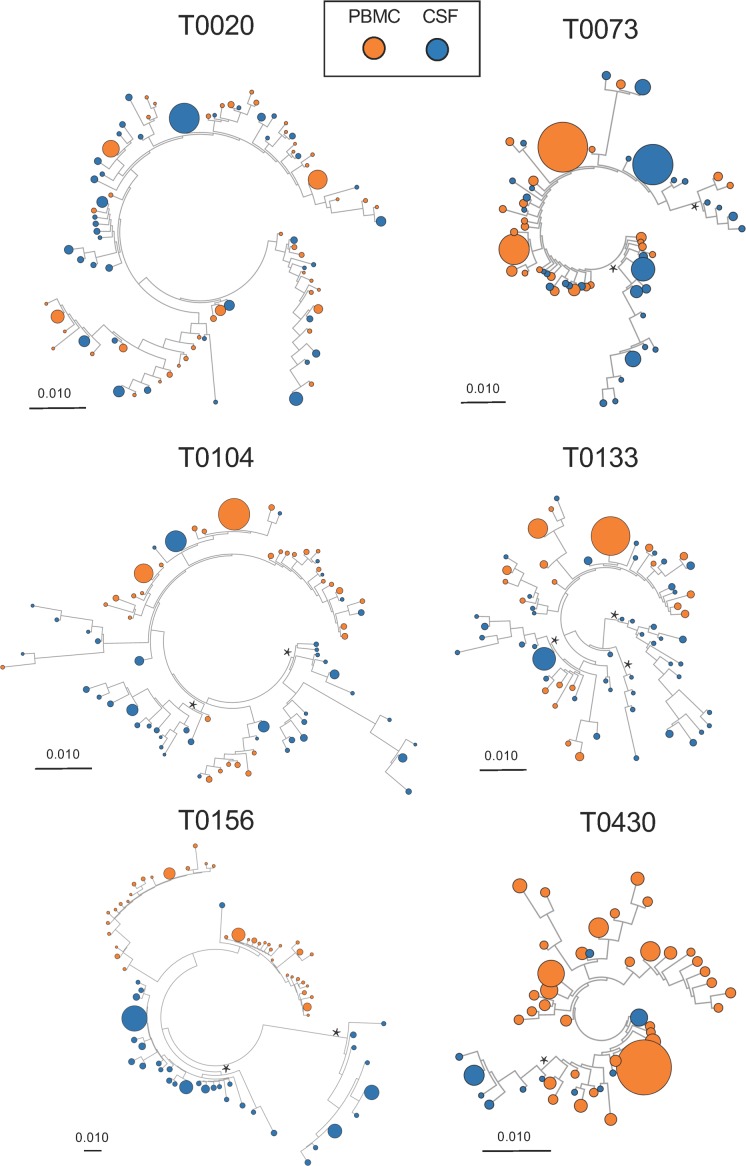
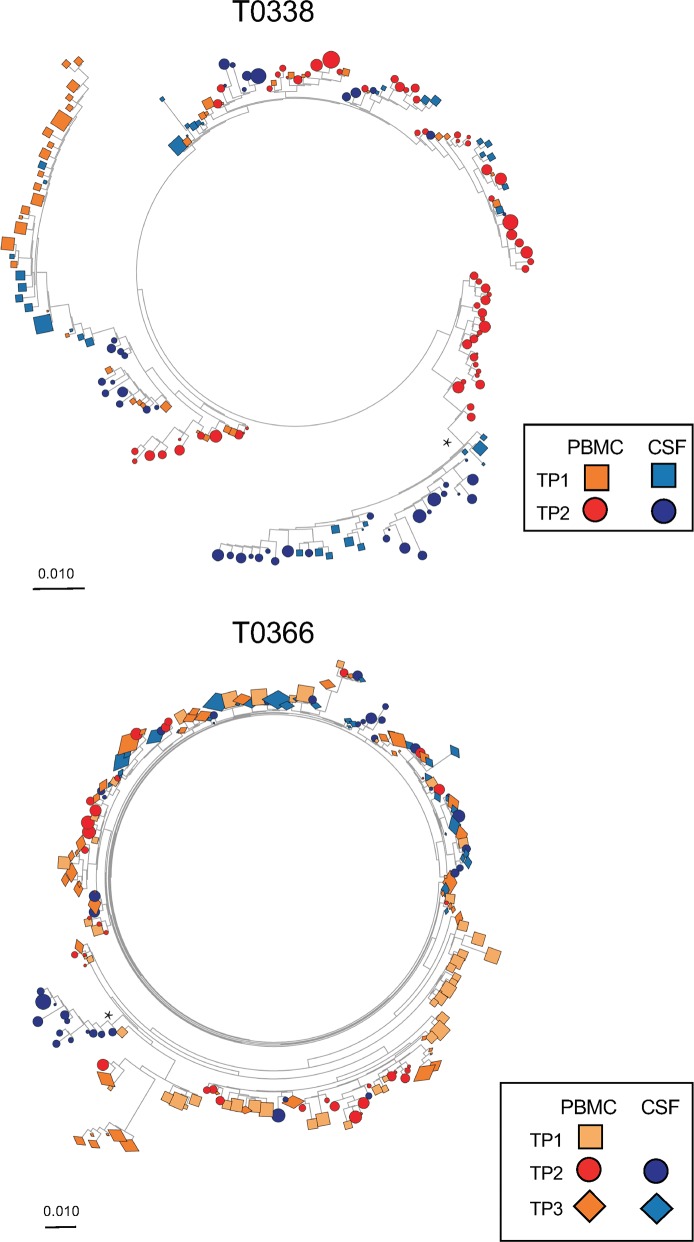
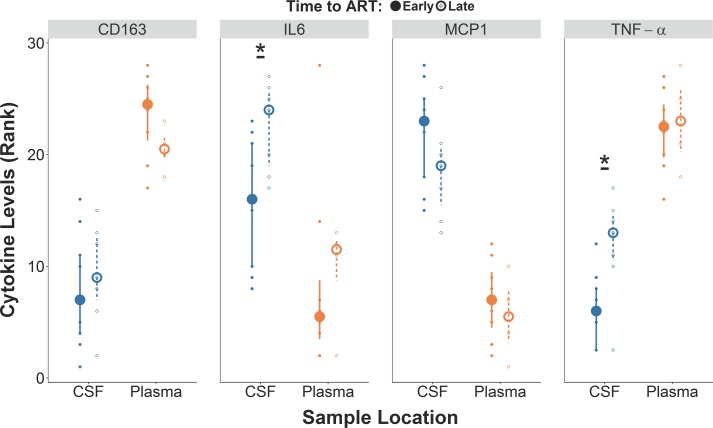
Even when antiretroviral therapy (ART) is started early after infection, HIV DNA might persist in the central nervous system (CNS), possibly contributing to inflammation, brain damage and neurocognitive impairment. Paired blood and cerebrospinal fluid (CSF) were collected from 16 HIV-infected individuals on suppressive ART: 9 participants started ART <4 months of the estimated date of infection (EDI) ("early ART"), and 7 participants started ART >14 months after EDI ("late ART"). For each participant, neurocognitive functioning was measured by Global Deficit Score (GDS). HIV DNA levels were measured in peripheral blood mononuclear cells (PBMCs) and CSF cell pellets by droplet digital (dd)PCR. Soluble markers of inflammation (sCD163, IL-6, MCP-1, TNF-α) and neuronal damage (neurofilament light [NFL]) were measured in blood and CSF supernatant by immunoassays. HIV-1 partial C2V3 env deep sequencing data (Roche 454) were obtained for 8 paired PBMC and CSF specimens and used for phylogenetic and compartmentalization analysis. Median exposure to ART at the time of sampling was 2.6 years (IQR: 2.2-3.7) and did not differ between groups. We observed that early ART was significantly associated with lower molecular diversity of HIV DNA in CSF (p<0.05), and lower IL-6 levels in CSF (p = 0.02), but no difference for GDS, NFL, or HIV DNA detectability compared to late ART. Compartmentalization of HIV DNA populations between CSF and blood was detected in 6 out of 8 participants with available paired HIV DNA sequences (2 from early and 4 from late ART group). Phylogenetic analysis confirmed the presence of monophyletic HIV DNA populations within the CSF in 7 participants, and the same population was repeatedly sampled over a 5 months period in one participant with longitudinal sampling. Such compartmentalized provirus in the CNS needs to be considered for the design of future eradication strategies and might contribute to the neuropathogenesis of HIV.
即使在感染后尽早开始抗逆转录病毒疗法(ART),HIV DNA仍可能在中枢神经系统(CNS)中持续存在,这可能会导致炎症、脑损伤和神经认知障碍。从16名接受抑制性ART治疗的HIV感染者中采集配对的血液和脑脊液(CSF):9名参与者在估计感染日期(EDI)<4个月时开始ART(“早期ART”),7名参与者在EDI>14个月后开始ART(“晚期ART”)。对每位参与者,通过总体缺陷评分(GDS)测量神经认知功能。通过液滴数字(dd)PCR在外周血单核细胞(PBMC)和CSF细胞沉淀中测量HIV DNA水平。通过免疫测定法在血液和CSF上清液中测量炎症(sCD163、IL-6、MCP-1、TNF-α)和神经元损伤(神经丝轻链[NFL])的可溶性标志物。获得了8对配对的PBMC和CSF标本的HIV-1部分C2V3 env深度测序数据(罗氏454),并用于系统发育和区室化分析。采样时ART的中位暴露时间为2.6年(IQR:2.2-3.7),两组之间无差异。我们观察到,与晚期ART相比,早期ART与CSF中HIV DNA较低的分子多样性显著相关(p<0.05),且与CSF中较低的IL-6水平相关(p = 0.02),但在GDS、NFL或HIV DNA可检测性方面无差异。在8名有可用配对HIV DNA序列的参与者中,有6名检测到CSF和血液之间HIV DNA群体的区室化(2名来自早期ART组,4名来自晚期ART组)。系统发育分析证实7名参与者的CSF中存在单系HIV DNA群体,并且在一名进行纵向采样的参与者中,在5个月的时间内对同一群体进行了重复采样。在未来根除策略的设计中需要考虑CNS中这种区室化的前病毒,并且它可能导致HIV的神经发病机制。