Seol Bomin, Shin Hyun-Il, Kim Jung-Yeon, Jeon Bo-Young, Kang Yoon-Joong, Pak Jhang-Ho, Kim Tong-Soo, Lee Hyeong-Woo
Department of Tropical Medicine and Parasitology, Inha University School of Medicine, Incheon, 22212, South Korea.
Division of Malaria and Parasitic Diseases, National Institute of Health, Korea Centers for Disease Control and Prevention, Osong, 363-951, South Korea.
Malar J. 2017 Jan 3;16(1):3. doi: 10.1186/s12936-016-1653-3.
Glutamate dehydrogenase of malaria parasites (pGDH) is widely used in rapid diagnostic tests for malaria. Variation in the pGDH gene among Korean isolates of Plasmodium vivax was analysed, and a recombinant pGDH protein was evaluated for use as antigens for the serodiagnosis of vivax malaria.
Genomic DNA was purified from blood samples of 20 patients and the pGDH gene of P. vivax was sequenced. Recombinant protein was prepared to determine the antigenicity of pGDH by enzyme-linked immunosorbent assay (ELISA).
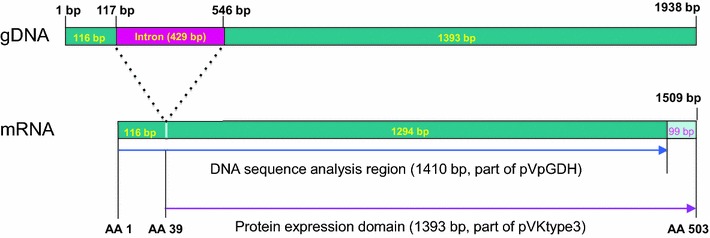
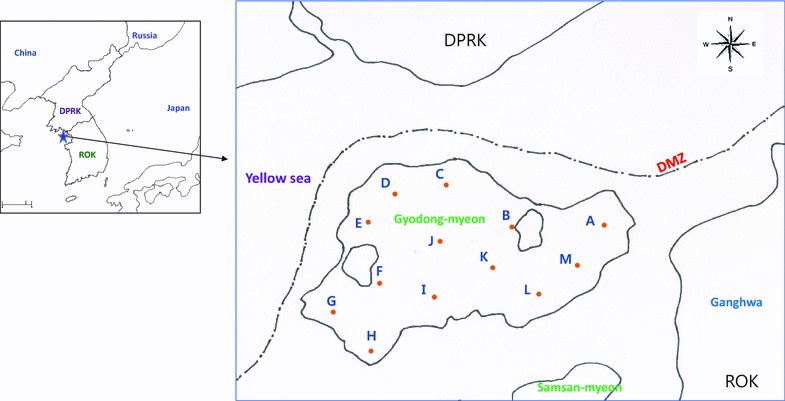
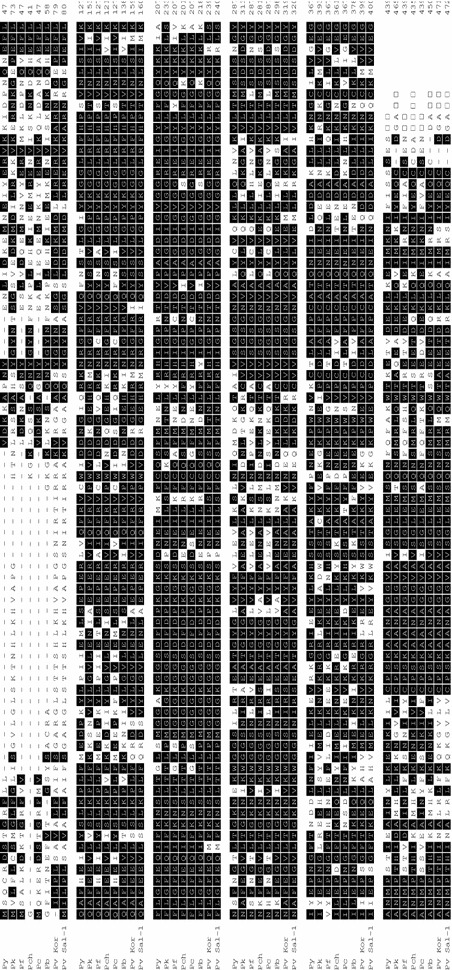
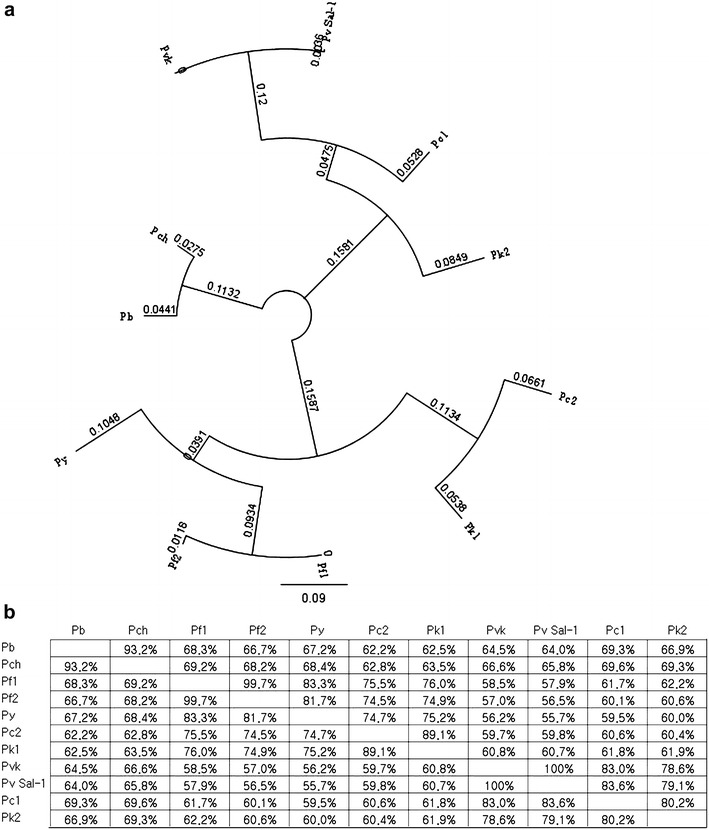
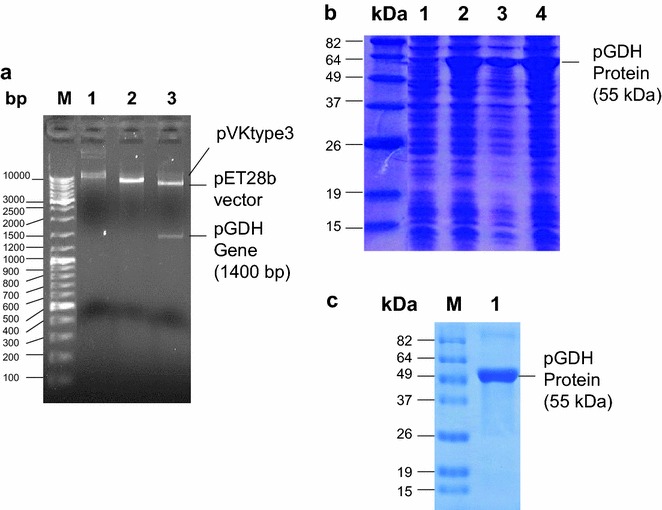
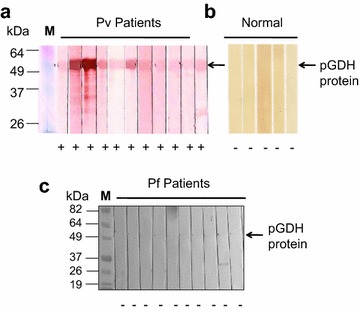
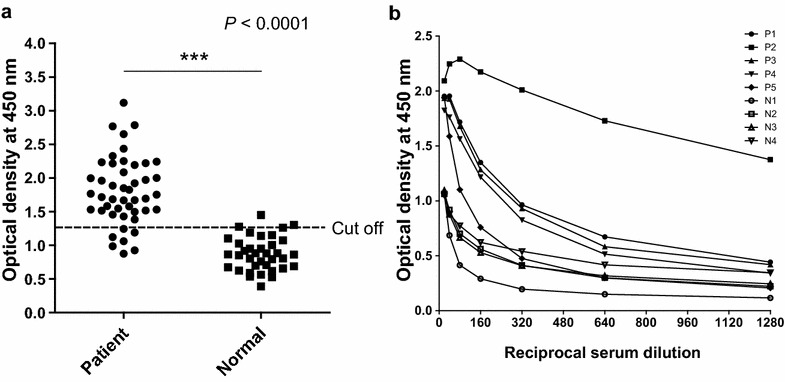
Partial sequence analysis of the P. vivax pGDH gene from the 20 Korean isolates showed that an open reading frame (ORF) of 1410 nucleotides encoded a deduced protein of 470 amino acids. The amino acid and nucleotide sequences were conserved among all the Korean isolates. This ORF showed 100% homology with P. vivax strain Sal-I (GenBank accession No. XP_001616617.1). The full ORF (amino acids 39-503), excluding the region before the intron, was cloned from isolate P. vivax Bucheon 3 (KJ726751) and subcloned into the expression vector pET28b for transformation into Escherichia coli BL21(DE3)pLysS. The expressed recombinant protein had a molecular mass of approximately 55 kDa and showed 84.8% sensitivity (39/46 cases) and 97.2% specificity (35/36 cases) in an ELISA. The efficacy of recombinant pGDH protein in seroepidemiological studies was also evaluated by ELISA using serum samples collected from 876 inhabitants of Gyodong-myeon, Ganghwa County, Incheon Metropolitan City. Of these samples, 91 (10.39%) showed a positive reaction with recombinant pGDH protein. Among the antibody-positive individuals, 13 (14.29%) had experienced malaria infection during the last 10 years.
The pGDH genes of P. vivax isolates from representative epidemic-prone areas of South Korea are highly conserved. Therefore, pGDH is expected to be a useful antigen in seroepidemiological studies. It was difficult to identify the foci of malaria transmission in Gyodong-myeon based on the patient distribution because of the very low parasitaemia of Korean vivax malaria. However, seroepidemiology with recombinant pGDH protein easily identified regions with the highest incidence of malaria within the study area. Therefore, recombinant pGDH protein may have a useful role in serodiagnosis.
疟原虫谷氨酸脱氢酶(pGDH)广泛用于疟疾快速诊断检测。分析了韩国间日疟原虫分离株中pGDH基因的变异情况,并评估了重组pGDH蛋白作为间日疟血清学诊断抗原的用途。
从20例患者的血样中纯化基因组DNA,并对间日疟原虫的pGDH基因进行测序。制备重组蛋白,通过酶联免疫吸附测定(ELISA)确定pGDH的抗原性。
对20株韩国间日疟原虫分离株的pGDH基因进行部分序列分析,结果显示1410个核苷酸的开放阅读框(ORF)编码一个推导的含470个氨基酸的蛋白质。所有韩国分离株的氨基酸和核苷酸序列均保守。该ORF与间日疟原虫Sal-I株(GenBank登录号XP_001616617.1)显示100%同源性。从间日疟原虫富川3株(KJ726751)中克隆了不含内含子前区域的完整ORF(氨基酸39 - 503),并亚克隆到表达载体pET28b中,转化到大肠杆菌BL21(DE3)pLysS中。表达的重组蛋白分子量约为55 kDa,在ELISA中显示出84.8%的敏感性(46例中的39例)和97.2%的特异性(36例中的35例)。还使用从仁川广域市江华郡槐洞面876名居民采集的血清样本,通过ELISA评估重组pGDH蛋白在血清流行病学研究中的效果。在这些样本中,91份(10.39%)与重组pGDH蛋白呈阳性反应。在抗体阳性个体中,13人(14.29%)在过去10年中曾感染过疟疾。
韩国代表性疟疾高发地区的间日疟原虫分离株的pGDH基因高度保守。因此,pGDH有望成为血清流行病学研究中的有用抗原。由于韩国间日疟原虫的寄生虫血症非常低,基于患者分布难以确定槐洞面的疟疾传播病灶。然而,重组pGDH蛋白的血清流行病学研究轻松识别出了研究区域内疟疾发病率最高的地区。因此,重组pGDH蛋白在血清学诊断中可能具有有用作用。