• 文献检索
  • 文档翻译
  • 深度研究
  • 学术资讯
  • Suppr Zotero 插件Zotero 插件
  • 邀请有礼
  • 套餐&价格
  • 历史记录
应用&插件
Suppr Zotero 插件Zotero 插件浏览器插件Mac 客户端Windows 客户端微信小程序
定价
高级版会员购买积分包购买API积分包
服务
文献检索文档翻译深度研究API 文档MCP 服务
关于我们
关于 Suppr公司介绍联系我们用户协议隐私条款
关注我们

Suppr 超能文献

核心技术专利:CN118964589B侵权必究
粤ICP备2023148730 号-1Suppr @ 2026

文献检索

告别复杂PubMed语法,用中文像聊天一样搜索,搜遍4000万医学文献。AI智能推荐,让科研检索更轻松。

立即免费搜索

文件翻译

保留排版,准确专业,支持PDF/Word/PPT等文件格式,支持 12+语言互译。

免费翻译文档

深度研究

AI帮你快速写综述,25分钟生成高质量综述,智能提取关键信息,辅助科研写作。

立即免费体验

瑞士关于药用植物的民族兽医学知识——意大利语区与德国西北部德语区的国内比较。

Swiss ethnoveterinary knowledge on medicinal plants - a within-country comparison of Italian speaking regions with north-western German speaking regions.

作者信息

Mayer Maria, Zbinden Mirjam, Vogl Christan R, Ivemeyer Silvia, Meier Beat, Amorena Michele, Maeschli Ariane, Hamburger Matthias, Walkenhorst Michael

机构信息

Faculty of Bioscience and Agri-Food and Environment Technologies, University of Teramo, Teramo, Italy.

Department of Livestock Science, Research Institute of Organic Agriculture, Ackerstrasse 113, Postfach, CH-5070, Frick, Switzerland.

出版信息

J Ethnobiol Ethnomed. 2017 Jan 3;13(1):1. doi: 10.1186/s13002-016-0106-y.

DOI:10.1186/s13002-016-0106-y
PMID:28049539
原文链接:https://pmc.ncbi.nlm.nih.gov/articles/PMC5209851/
Abstract

BACKGROUND

Ethnoveterinary knowledge in Europe may play an important role as a basis for sustainable treatment options for livestock. Aims of our study were (a) to compare the ethnoveterinary practices of two culturally and sociodemographically different regions of Switzerland, (b) to compare results with earlier ethnoveterinary studies conducted in Switzerland and in adjacent Italian regions and, (c) to evaluate possible reasons for regional differences in European ethnoveterinary medicine.

METHODS

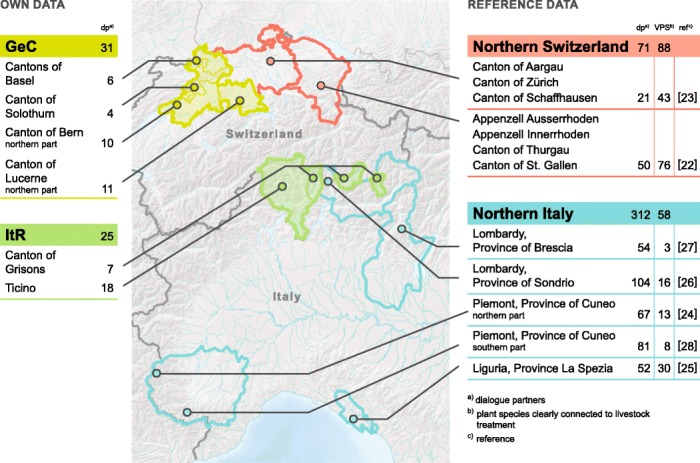
25 interviews were conducted in 2014 in all Italian speaking regions (ItR) of Switzerland, and 31 interviews were held in five north-western German speaking Cantons (GeC). Semi-structured questionnaires were used to collect detailed information regarding plant species, mode of preparation, dosage, route of administration, category of use, origin of knowledge, frequency of use, and satisfaction with outcomes of the treatments.

RESULTS

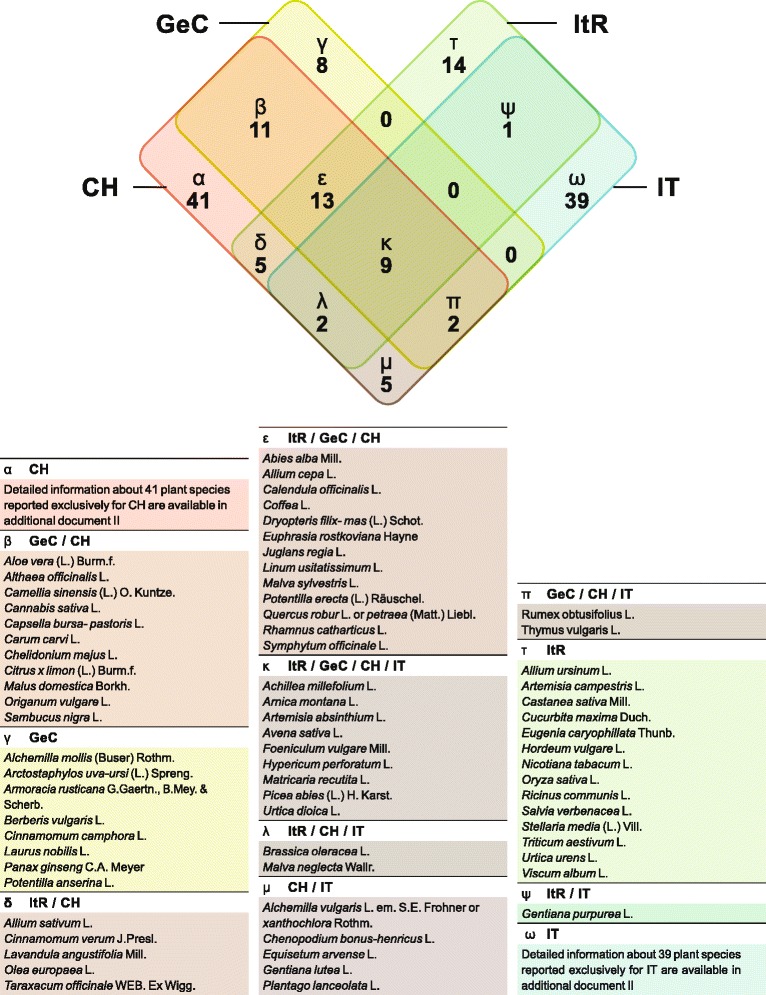
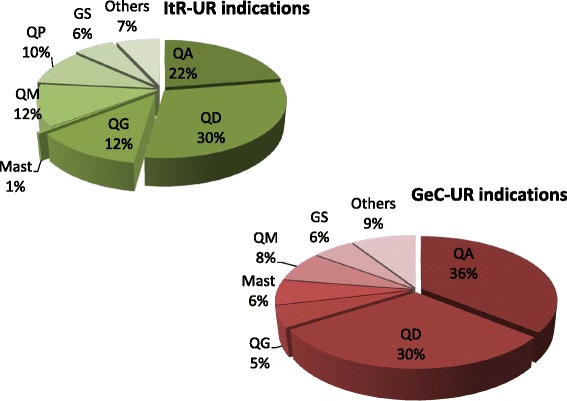
A total of 162 homemade remedies in ItR and 219 in GeC were reported, out of which 125 and 145, respectively, were reported to contain only one plant species (homemade single species herbal remedy report, HSHR). 44 ItR and 43 GeC plant species were reported to treat livestock, of which only a half were used in both regions. For each HSHR, we classified the treatment intention of all use reports (UR), leading to a total of 205 and 219 UR in ItR and GeC respectively. While cattle were the most often treated livestock species in both study regions, in ItR 40% of UR were administered to small ruminants. Main indications in both regions were gastrointestinal diseases and skin afflictions, but in ItR a high number of URs were reported as antiparasitics. URs were mainly handed down from the past generation, but in GeC the source of knowledge for 20% of URs were from courses. Regarding the used plant species, ItR showed a higher concordance with Swiss than Italian studies, but with some differences to all regions. A total of 22 (14 ItR; 8 GeC) plant species in this study have not been reported before in ethnoveterinary studies of Swiss and Italian alpine regions.

CONCLUSIONS

ItR and GeC, show differences and similarities with respect to their own ethnoveterinary practices and earlier Swiss and Italian ethnoveterinary studies. Linguistic, geographical, as well as social and farm-structural conditions influence the regional ethnoveterinary knowledge. However, political borders seem to be more important than language or geographical barriers.

摘要

背景

欧洲的民族兽医学知识可能作为家畜可持续治疗方案的基础发挥重要作用。我们研究的目的是:(a)比较瑞士两个文化和社会人口统计学不同地区的民族兽医实践;(b)将结果与瑞士及相邻意大利地区早期的民族兽医学研究结果进行比较;(c)评估欧洲民族兽医学区域差异的可能原因。

方法

2014年在瑞士所有意大利语区(ItR)进行了25次访谈,在五个德语区的西北州(GeC)进行了31次访谈。使用半结构化问卷收集有关植物种类、制备方式、剂量、给药途径、使用类别、知识来源、使用频率以及对治疗结果满意度的详细信息。

结果

ItR地区共报告了162种自制疗法,GeC地区报告了219种,其中分别有125种和145种据报告仅含有一种植物种类(自制单一物种草药疗法报告,HSHR)。报告了44种ItR地区和43种GeC地区的植物用于治疗家畜,其中只有一半在两个地区都有使用。对于每份HSHR,我们对所有使用报告(UR)的治疗意图进行了分类,ItR地区和GeC地区分别共有205份和219份UR。虽然牛是两个研究地区最常治疗的家畜种类,但在ItR地区,40%的UR用于小反刍动物。两个地区的主要适应症都是胃肠道疾病和皮肤疾病,但在ItR地区,大量UR被报告用于抗寄生虫。UR主要是从上一代传承下来的,但在GeC地区,20%的UR知识来源是课程。关于所使用的植物种类,ItR地区与瑞士研究的一致性高于与意大利研究的一致性,但与所有地区都存在一些差异。本研究中共有22种(14种ItR地区;8种GeC地区)植物种类在瑞士和意大利阿尔卑斯地区的民族兽医学研究中未曾报道过。

结论

ItR地区和GeC地区在其自身的民族兽医实践以及早期瑞士和意大利民族兽医学研究方面表现出差异和相似性。语言、地理以及社会和农场结构条件会影响区域民族兽医学知识。然而,政治边界似乎比语言或地理障碍更为重要。
https://cdn.ncbi.nlm.nih.gov/pmc/blobs/76d5/5209851/7724fc2a0718/13002_2016_106_Fig3_HTML.jpg
https://cdn.ncbi.nlm.nih.gov/pmc/blobs/76d5/5209851/e2325f1f06bb/13002_2016_106_Fig1_HTML.jpg
https://cdn.ncbi.nlm.nih.gov/pmc/blobs/76d5/5209851/6619e9f5ed70/13002_2016_106_Fig2_HTML.jpg
https://cdn.ncbi.nlm.nih.gov/pmc/blobs/76d5/5209851/7724fc2a0718/13002_2016_106_Fig3_HTML.jpg
https://cdn.ncbi.nlm.nih.gov/pmc/blobs/76d5/5209851/e2325f1f06bb/13002_2016_106_Fig1_HTML.jpg
https://cdn.ncbi.nlm.nih.gov/pmc/blobs/76d5/5209851/6619e9f5ed70/13002_2016_106_Fig2_HTML.jpg
https://cdn.ncbi.nlm.nih.gov/pmc/blobs/76d5/5209851/7724fc2a0718/13002_2016_106_Fig3_HTML.jpg

相似文献

1
Swiss ethnoveterinary knowledge on medicinal plants - a within-country comparison of Italian speaking regions with north-western German speaking regions.瑞士关于药用植物的民族兽医学知识——意大利语区与德国西北部德语区的国内比较。
J Ethnobiol Ethnomed. 2017 Jan 3;13(1):1. doi: 10.1186/s13002-016-0106-y.
2
Ethnoveterinary contemporary knowledge of farmers in pre-alpine and alpine regions of the Swiss cantons of Bern and Lucerne compared to ancient and recent literature - Is there a tradition?瑞士伯恩州和琉森州前阿尔卑斯山和阿尔卑斯山地区农民的民族兽医学当代知识与古代和现代文献相比——是否存在传统?
J Ethnopharmacol. 2019 Apr 24;234:225-244. doi: 10.1016/j.jep.2018.12.022. Epub 2018 Dec 17.
3
Ethnoveterinary knowledge of farmers in bilingual regions of Switzerland - is there potential to extend veterinary options to reduce antimicrobial use?瑞士双语地区农民的民族兽医学知识——是否有可能扩大兽医选择范围以减少抗生素使用?
J Ethnopharmacol. 2020 Jan 10;246:112184. doi: 10.1016/j.jep.2019.112184. Epub 2019 Aug 26.
4
What can we learn from past and recent Bavarian knowledge for the future development of European veterinary herbal medicine? An ethnoveterinary study.我们能从过去和最近的巴伐利亚知识中学到什么,以促进欧洲兽医草药学的未来发展?一项民族兽医研究。
J Ethnopharmacol. 2022 Apr 24;288:114933. doi: 10.1016/j.jep.2021.114933. Epub 2021 Dec 24.
5
Ethnoveterinary herbal remedies used by farmers in four north-eastern Swiss cantons (St. Gallen, Thurgau, Appenzell Innerrhoden and Appenzell Ausserrhoden).农民在瑞士东北部四个州(圣加仑、图尔高、内阿彭策尔和外阿彭策尔)使用的民族兽医草药疗法。
J Ethnobiol Ethnomed. 2014 Mar 31;10:32. doi: 10.1186/1746-4269-10-32.
6
An ethnoveterinary study of wild medicinal plants used by the Kyrgyz farmers.一份关于吉尔吉斯农民使用的野生药用植物的民族兽医学研究。
J Ethnopharmacol. 2022 Mar 1;285:114842. doi: 10.1016/j.jep.2021.114842. Epub 2021 Nov 17.
7
Plant and natural product based homemade remedies for veterinary uses by the Peul community in Benin.贝宁佩雷社区用于兽医用途的植物和天然产物自制疗法。
J Ethnopharmacol. 2020 Oct 28;261:113107. doi: 10.1016/j.jep.2020.113107. Epub 2020 Jun 12.
8
Farmers' knowledge in the Swiss canton Valais: cultural heritage with future significance for European veterinary medicine?瑞士瓦莱州农民的知识:对欧洲兽医具有未来意义的文化遗产?
J Ethnobiol Ethnomed. 2024 Aug 5;20(1):73. doi: 10.1186/s13002-024-00716-6.
9
Traditional use of herbal remedies in livestock by farmers in 3 Swiss cantons (Aargau, Zurich, Schaffhausen).瑞士三个州(阿尔高州、苏黎世州、沙夫豪森州)的农民在牲畜养殖中对草药疗法的传统应用。
Forsch Komplementmed. 2012;19(3):125-36. doi: 10.1159/000339336. Epub 2012 Jun 15.
10
Ethnoveterinary medicinal plants and their utilization by the people of Soro District, Hadiya Zone, southern Ethiopia.埃塞俄比亚南部哈迪亚地区索罗区的民族传统兽医药用植物及其利用
J Ethnobiol Ethnomed. 2024 Feb 22;20(1):21. doi: 10.1186/s13002-024-00651-6.

引用本文的文献

1
Medicinal plant species used for contraception and reproductive health care in rural Uganda.乌干达农村地区用于避孕和生殖健康护理的药用植物物种。
Heliyon. 2024 Dec 26;11(1):e41518. doi: 10.1016/j.heliyon.2024.e41518. eCollection 2025 Jan 15.
2
Multiple benefits of herbs: Polygonaceae species in veterinary pharmacology and livestock nutrition.草药的多种益处:蓼科植物在兽医药理学和家畜营养中的应用
Vet Anim Sci. 2024 Dec 2;27:100416. doi: 10.1016/j.vas.2024.100416. eCollection 2025 Mar.
3
Beyond the border: comparative ethnobotany in Valmalenco (SO, Italy) and Valposchiavo (Canton of Grisons, Switzerland).

本文引用的文献

1
Ethnoveterinary practices of Covasna County, Transylvania, Romania.罗马尼亚特兰西瓦尼亚科瓦斯纳县的民族兽医学实践
J Ethnobiol Ethnomed. 2015 May 6;11:35. doi: 10.1186/s13002-015-0020-8.
2
Treatment of organic livestock with medicinal plants: a systematic review of European ethnoveterinary research.药用植物对有机牲畜的治疗:欧洲民族兽医学研究的系统评价
Forsch Komplementmed. 2014;21(6):375-86. doi: 10.1159/000370216. Epub 2014 Dec 12.
3
Preliminary study of plants used in ethnoveterinary medicine in Tunisia and in Italy.突尼斯和意大利民族兽医学中使用的植物的初步研究。
跨越边界:意大利南部瓦尔马伦科与瑞士格劳宾登州瓦尔波斯基亚沃的比较民族植物学
J Ethnobiol Ethnomed. 2024 Aug 7;20(1):74. doi: 10.1186/s13002-024-00718-4.
4
Farmers' knowledge in the Swiss canton Valais: cultural heritage with future significance for European veterinary medicine?瑞士瓦莱州农民的知识:对欧洲兽医具有未来意义的文化遗产?
J Ethnobiol Ethnomed. 2024 Aug 5;20(1):73. doi: 10.1186/s13002-024-00716-6.
5
Use of medicinal plants by veterinary practitioners in Spain: A cross-sectional survey.西班牙兽医从业者对药用植物的使用:一项横断面调查。
Front Vet Sci. 2022 Dec 15;9:1060738. doi: 10.3389/fvets.2022.1060738. eCollection 2022.
6
The Importance of Pine Species in the Ethnomedicine of Transylvania (Romania).松树种在特兰西瓦尼亚(罗马尼亚)民族医学中的重要性。
Plants (Basel). 2022 Sep 6;11(18):2331. doi: 10.3390/plants11182331.
7
African smallholder farmers and the treatment of livestock diseases using ethnoveterinary medicine: A commentary.非洲小农户与使用民族兽医学治疗家畜疾病:一篇评论
Pastoralism. 2022;12(1):29. doi: 10.1186/s13570-022-00244-6. Epub 2022 Jun 30.
8
Relics and Historical Uses of Human Zootherapeutic Products in Contemporary Spanish Ethnoveterinary Medicine.当代西班牙民族兽医学中人类动物治疗产品的遗迹与历史用途
Vet Sci. 2021 Dec 11;8(12):323. doi: 10.3390/vetsci8120323.
9
A Review of Ethnoveterinary Knowledge, Biological Activities and Secondary Metabolites of Medicinal Woody Plants Used for Managing Animal Health in South Africa.南非用于管理动物健康的药用木本植物的民族兽医学知识、生物活性和次生代谢产物综述
Vet Sci. 2021 Oct 12;8(10):228. doi: 10.3390/vetsci8100228.
10
Ethnoveterinary Knowledge and Biological Evaluation of Plants Used for Mitigating Cattle Diseases: A Critical Insight Into the Trends and Patterns in South Africa.用于缓解牛疾病的植物的民族兽医学知识与生物学评估:对南非趋势和模式的批判性洞察
Front Vet Sci. 2021 Aug 19;8:710884. doi: 10.3389/fvets.2021.710884. eCollection 2021.
Afr J Tradit Complement Altern Med. 2014 Apr 3;11(3):189-99. doi: 10.4314/ajtcam.v11i3.27. eCollection 2014.
4
[Between empiricism and evidence - ( re ) activation of veterinary phytotherapy].[在经验主义与兽用植物疗法的证据(再)激活之间]
Forsch Komplementmed. 2014;21 Suppl 1:35-42. doi: 10.1159/000362396. Epub 2014 Jul 4.
5
[Looking to the future of herbal medicines].展望草药的未来
Forsch Komplementmed. 2014;21 Suppl 1:29-34. doi: 10.1159/000362395. Epub 2014 Jul 4.
6
[Efficacy in phytotherapy].[植物疗法的功效]
Forsch Komplementmed. 2014;21 Suppl 1:19-28. doi: 10.1159/000362394. Epub 2014 Jul 4.
7
Ethnoveterinary herbal remedies used by farmers in four north-eastern Swiss cantons (St. Gallen, Thurgau, Appenzell Innerrhoden and Appenzell Ausserrhoden).农民在瑞士东北部四个州(圣加仑、图尔高、内阿彭策尔和外阿彭策尔)使用的民族兽医草药疗法。
J Ethnobiol Ethnomed. 2014 Mar 31;10:32. doi: 10.1186/1746-4269-10-32.
8
Traditional knowledge on medicinal and food plants used in Val San Giacomo (Sondrio, Italy)--an alpine ethnobotanical study.传统的药用和食用植物知识在瓦尔圣贾科莫(意大利松德里奥)的应用——高山民族植物学研究。
J Ethnopharmacol. 2013 Jan 30;145(2):517-29. doi: 10.1016/j.jep.2012.11.024. Epub 2012 Dec 7.
9
Plant ethnoveterinary practices in two pyrenean territories of catalonia (iberian peninsula) and in two areas of the balearic islands and comparison with ethnobotanical uses in human medicine.植物民族兽医实践在加泰罗尼亚的两个比利牛斯地区(伊比利亚半岛)和巴利阿里群岛的两个地区,并与人类医学中的民族植物学用途进行比较。
Evid Based Complement Alternat Med. 2012;2012:896295. doi: 10.1155/2012/896295. Epub 2012 Jul 8.
10
Traditional use of herbal remedies in livestock by farmers in 3 Swiss cantons (Aargau, Zurich, Schaffhausen).瑞士三个州(阿尔高州、苏黎世州、沙夫豪森州)的农民在牲畜养殖中对草药疗法的传统应用。
Forsch Komplementmed. 2012;19(3):125-36. doi: 10.1159/000339336. Epub 2012 Jun 15.