Kawanishi Shosuke, Ohnishi Shiho, Ma Ning, Hiraku Yusuke, Oikawa Shinji, Murata Mariko
Faculty of Pharmaceutical Sciences, Suzuka University of Medical Science, Suzuka, Mie 513-8670 Japan.
Faculty of Nursing, Suzuka University of Medical Science, Suzuka, Mie 513-8670 Japan.
Genes Environ. 2017 Jan 1;38:26. doi: 10.1186/s41021-016-0055-7. eCollection 2016.
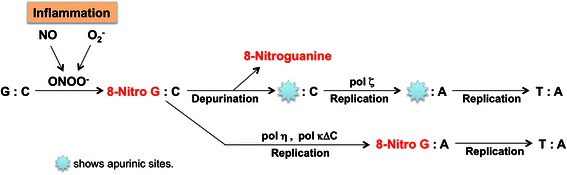
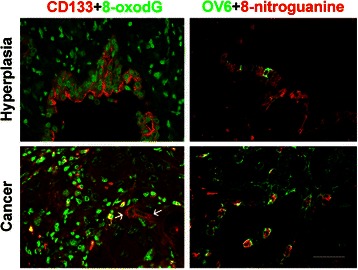
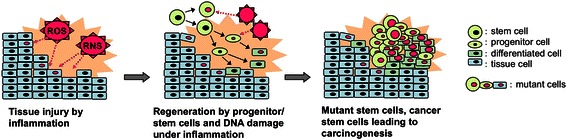
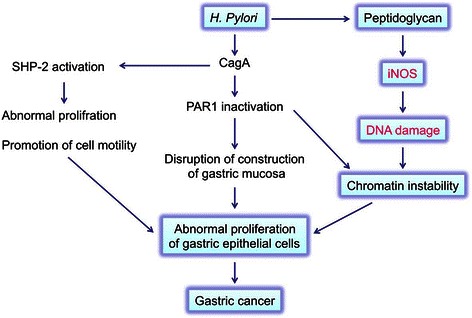
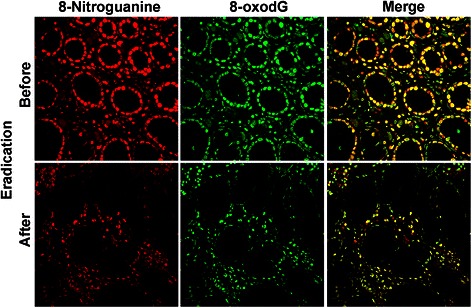
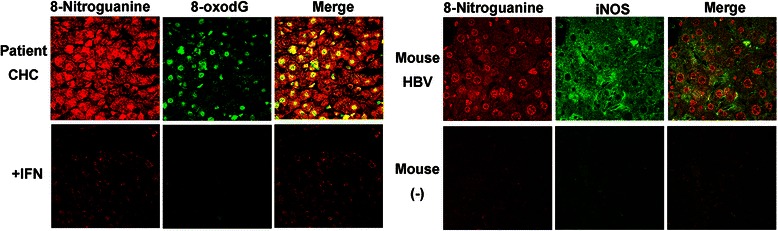
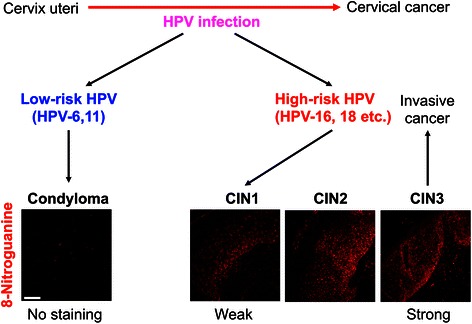
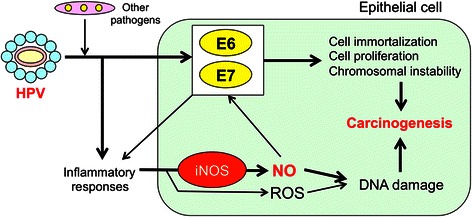
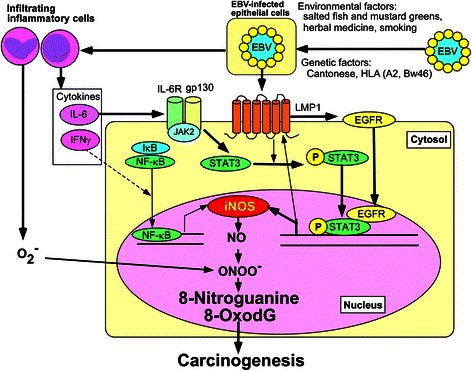
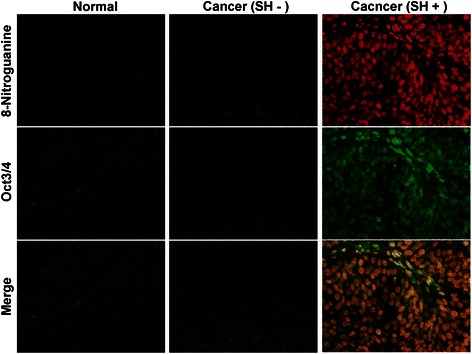
Infection and chronic inflammation have been recognized as important factors for carcinogenesis. Under inflammatory conditions, reactive oxygen species (ROS) and reactive nitrogen species (RNS) are generated from inflammatory and epithelial cells, and result in the formation of oxidative and nitrative DNA lesions, such as 8-oxo-7,8-dihydro-2'-deoxyguanosine (8-oxodG) and 8-nitroguanine. The DNA damage can cause mutations and has been implicated in inflammation-mediated carcinogenesis. It has been estimated that various infectious agents are carcinogenic to humans (IARC group 1), including bacterium (), viruses [hepatitis B virus (HBV), hepatitis C virus (HCV), human papillomavirus (HPV) and Epstein-Barr virus (EBV)] and parasites [ (SH) and (OV)]. , HBV/HCV, HPV, EBV, SH and OV are important risk factors for gastric cancer, hepatocellular carcinoma, nasopharyngeal carcinoma, bladder cancer, and cholangiocarcinoma, respectively. We demonstrated that 8-nitroguanine was strongly formed via inducible nitric oxide synthase (iNOS) expression at these cancer sites of patients. Moreover, 8-nitroguanine was formed in Oct3/4-positive stem cells in SH-associated bladder cancer tissues, and in Oct3/4- and CD133-positive stem cells in OV-associated cholangiocarcinoma tissues. Therefore, it is considered that nitrative and oxidative DNA damage in stem cells may play a key role in infection-related carcinogenesis via chronic inflammation.
感染和慢性炎症已被公认为致癌的重要因素。在炎症条件下,炎症细胞和上皮细胞会产生活性氧(ROS)和活性氮(RNS),导致氧化性和硝化性DNA损伤的形成,如8-氧代-7,8-二氢-2'-脱氧鸟苷(8-氧代dG)和8-硝基鸟嘌呤。DNA损伤可导致突变,并与炎症介导的致癌作用有关。据估计,多种感染因子对人类具有致癌性(国际癌症研究机构第1组),包括细菌()、病毒[乙型肝炎病毒(HBV)、丙型肝炎病毒(HCV)、人乳头瘤病毒(HPV)和爱泼斯坦-巴尔病毒(EBV)]以及寄生虫[(SH)和(OV)]。,HBV/HCV、HPV、EBV、SH和OV分别是胃癌、肝细胞癌、鼻咽癌、膀胱癌和胆管癌的重要危险因素。我们证明,在这些患者的癌症部位,8-硝基鸟嘌呤是通过诱导型一氧化氮合酶(iNOS)的表达强烈形成的。此外,在SH相关膀胱癌组织的Oct3/4阳性干细胞中以及OV相关胆管癌组织的Oct3/4和CD133阳性干细胞中形成了8-硝基鸟嘌呤。因此,人们认为干细胞中的硝化和氧化性DNA损伤可能在通过慢性炎症的感染相关致癌作用中起关键作用。