Medical Scientist Training Program, Perelman School of Medicine at the University of Pennsylvania, 3400 Civic Center Boulevard, Building 421, Philadelphia, PA 19104, USA.
Biomedical graduate Studies, Immunology Graduate Group, 357 Biomedical Research Building II/III, 421 Curie Boulevard, University of Pennsylvania, Philadelphia, PA 19104, USA.
Sci Rep. 2017 Jan 4;7:39649. doi: 10.1038/srep39649.
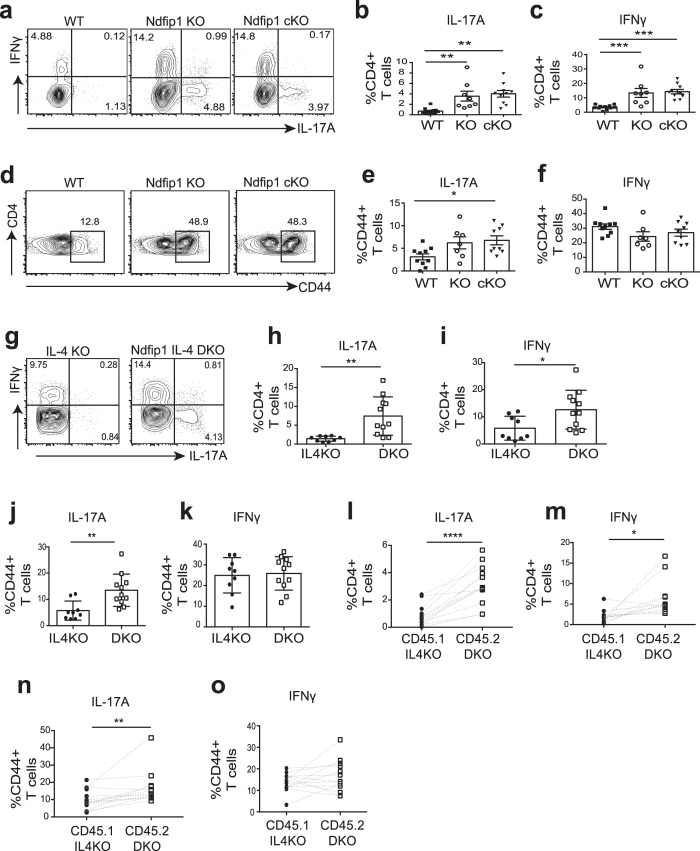
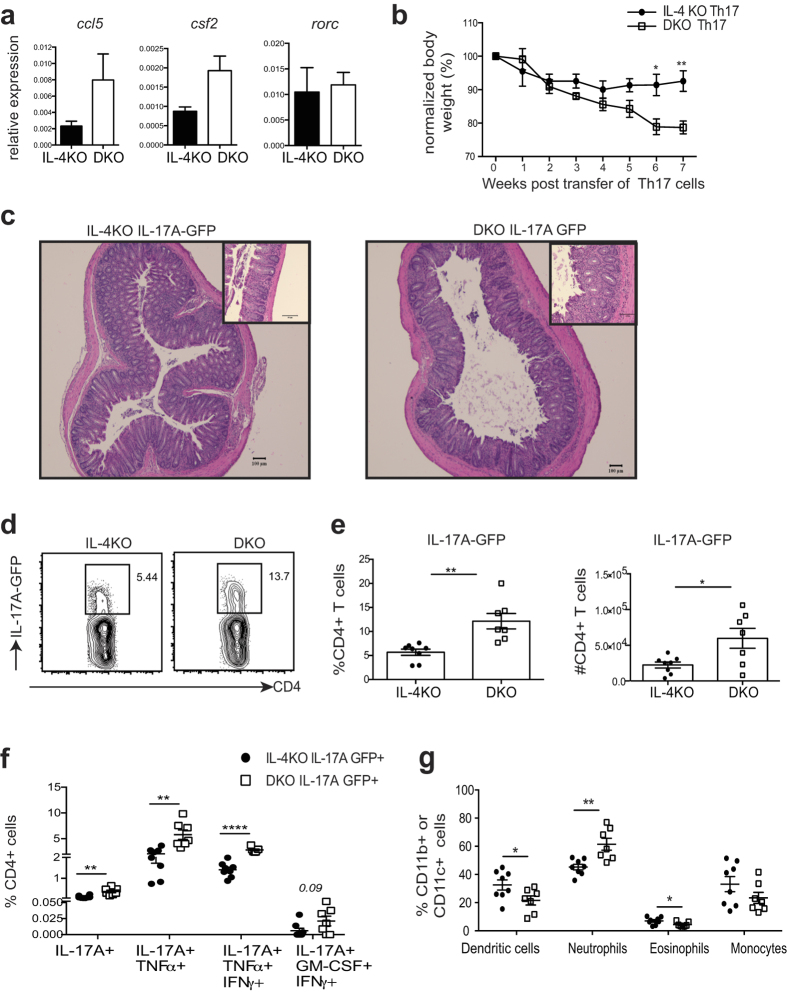
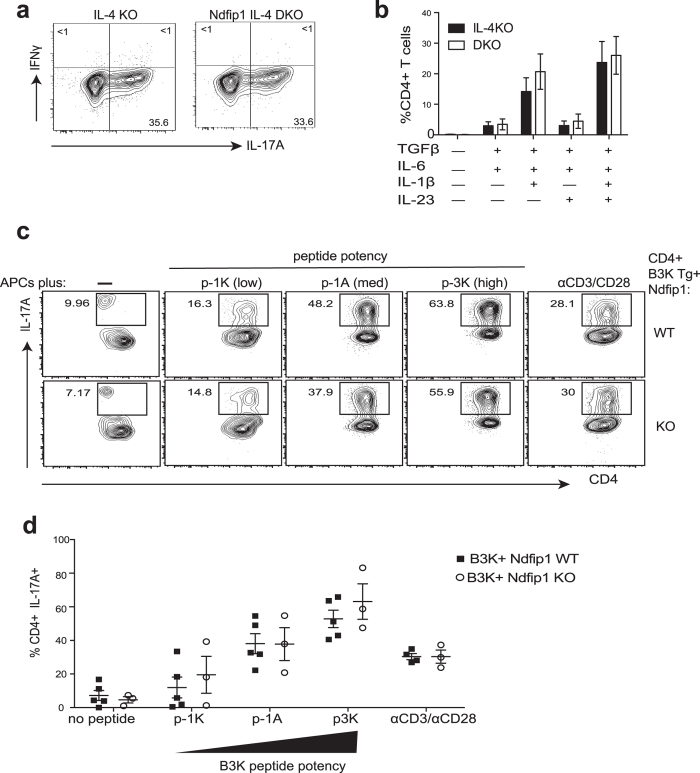
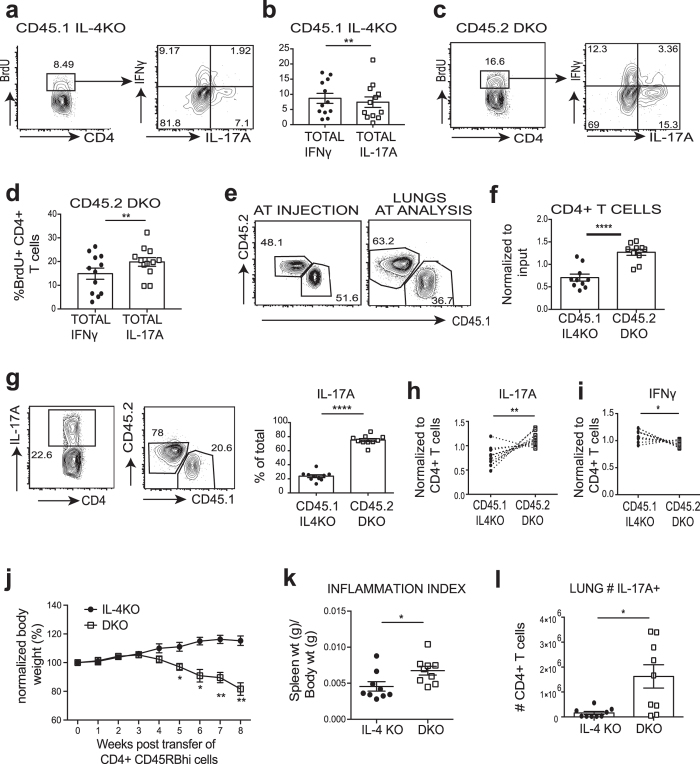
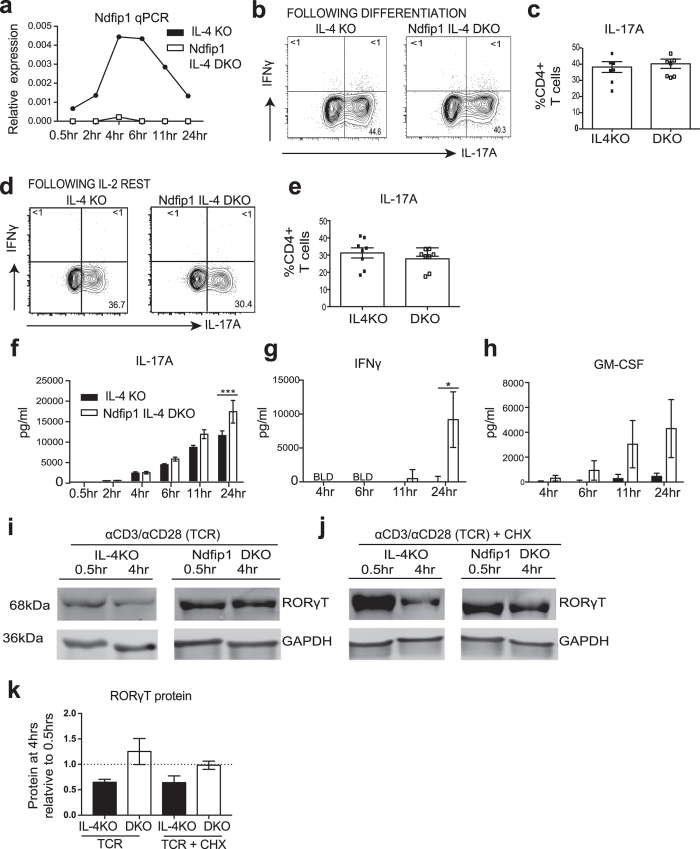
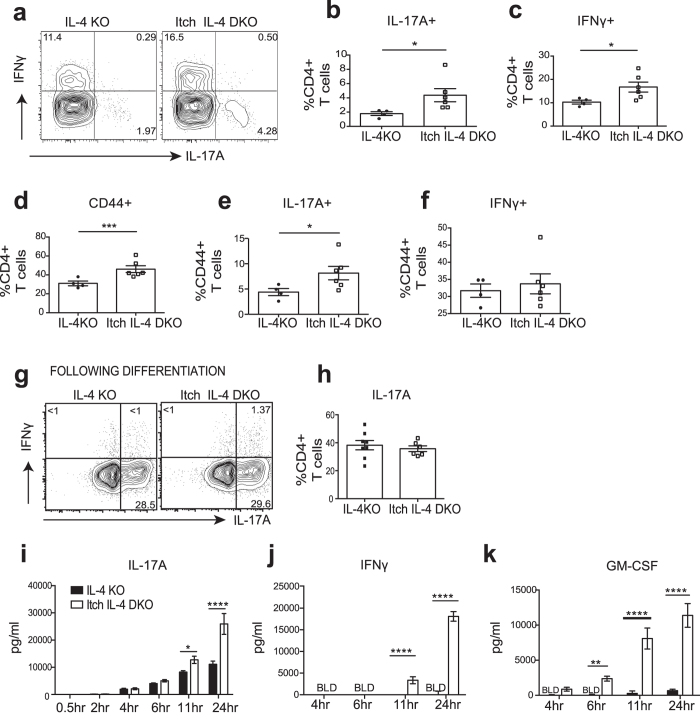
While Th17 cells can protect against colonization by pathogenic organisms, they also have the potential to become pathogenic and promote autoimmune and inflammatory diseases. Mechanisms that control their pathogenic potential remain poorly understood. Here we show that Ndfip1, a co-activator of the E3 ubiquitin ligase Itch, restricts the frequency and pathogenicity of Th17 cells. Mice lacking Ndfip1 have increased numbers of Th17 cells, and this increase is cell intrinsic. We found that Ndfip1 restricts production of the proinflammatory cytokines in Th17 cells. Increased cytokine production correlated with reduced degradation and accumulation of RORγT. When transferred in vivo, Th17 cells lacking Ndfip1 were more likely to maintain their ability to make IL-17, were more potent proinflammatory cytokine producers, and were powerful inducers of colitis. Together our data support an essential role for Ndfip1 in degrading RORγT and suppressing Th17 lineage stability, proinflammatory cytokine production, and pathogenicity.
虽然 Th17 细胞可以防止病原生物的定植,但它们也有可能成为病原体,并促进自身免疫和炎症性疾病。控制它们致病潜力的机制仍知之甚少。在这里,我们表明 Ndfip1(一种 E3 泛素连接酶 Itch 的共激活因子)限制了 Th17 细胞的频率和致病性。缺乏 Ndfip1 的小鼠 Th17 细胞数量增加,而这种增加是细胞内在的。我们发现 Ndfip1 限制了 Th17 细胞中促炎细胞因子的产生。细胞因子产生的增加与 RORγT 降解和积累的减少有关。当在体内转移时,缺乏 Ndfip1 的 Th17 细胞更有可能保持产生 IL-17 的能力,成为更强大的促炎细胞因子产生细胞,并有力地诱导结肠炎。总的来说,我们的数据支持 Ndfip1 在降解 RORγT 和抑制 Th17 谱系稳定性、促炎细胞因子产生和致病性方面的重要作用。