Tian She, Guo Xingjun, Yu Chao, Sun Chengyi, Jiang Jianxin
Department of Hepatic-Biliary-Pancreatic Surgery, The Affiliated Hospital of Guizhou Medical University, Guiyang, China.
Department of Biliary-Pancreatic Surgery, Affiliated Tongji Hospital, Tongji Medical College, Huazhong University of Science and Technology, Wuhan, China.
Oncotarget. 2017 Feb 14;8(7):11071-11082. doi: 10.18632/oncotarget.14360.
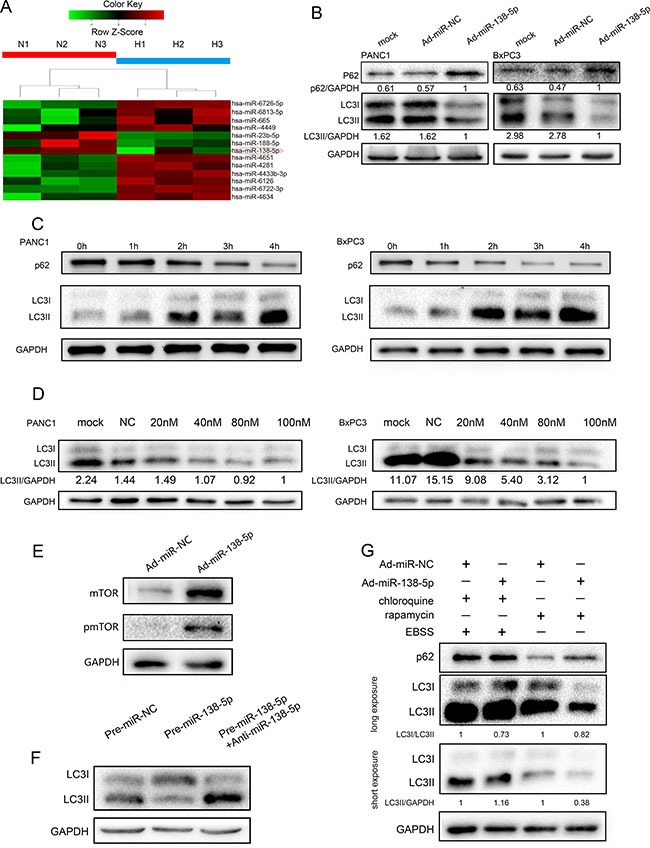
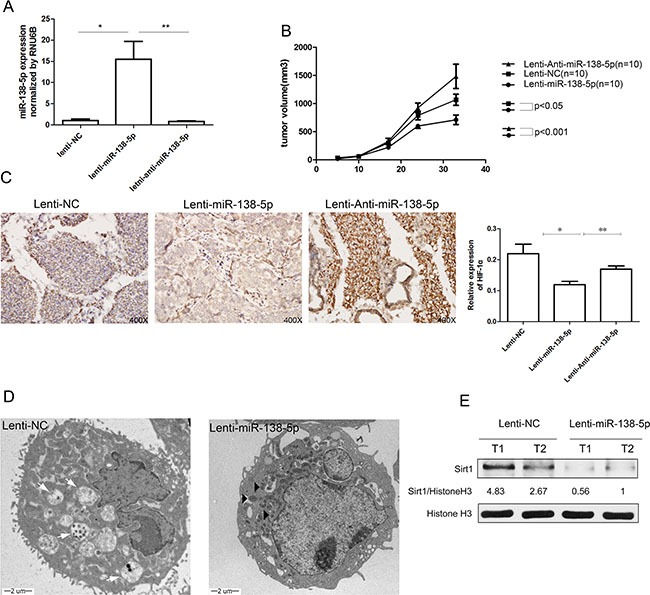
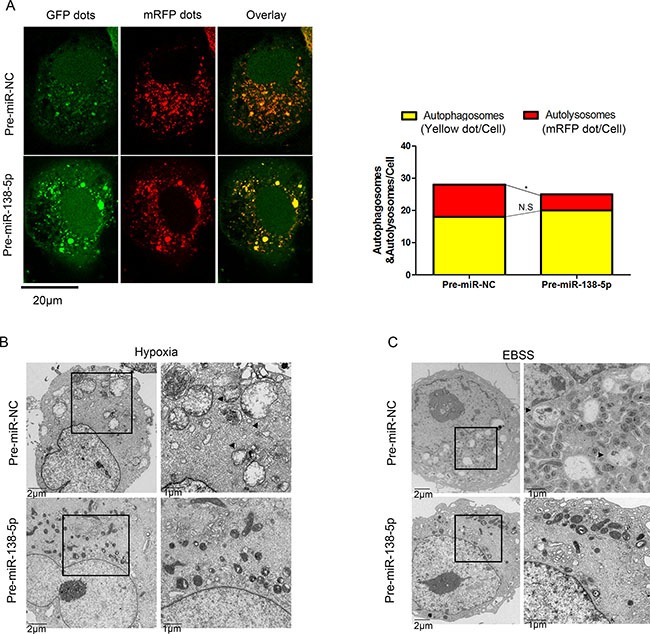
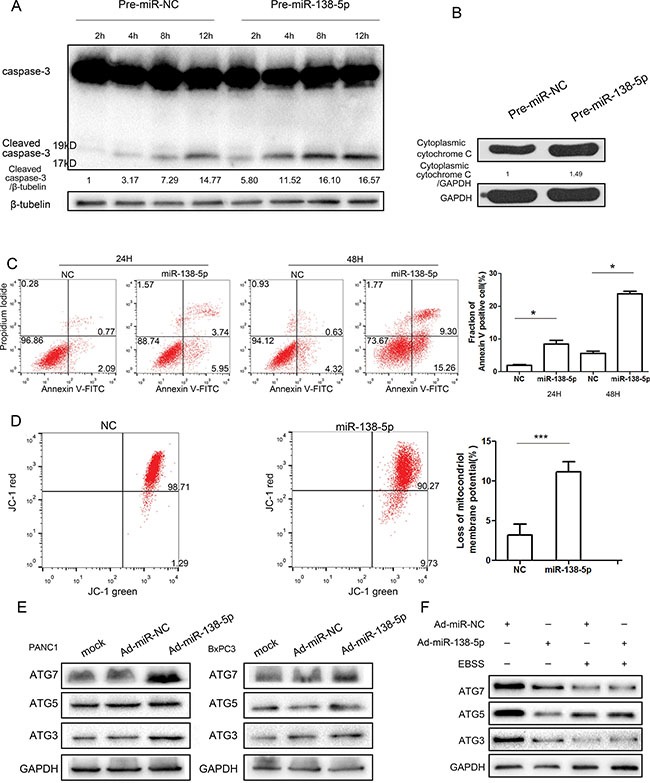
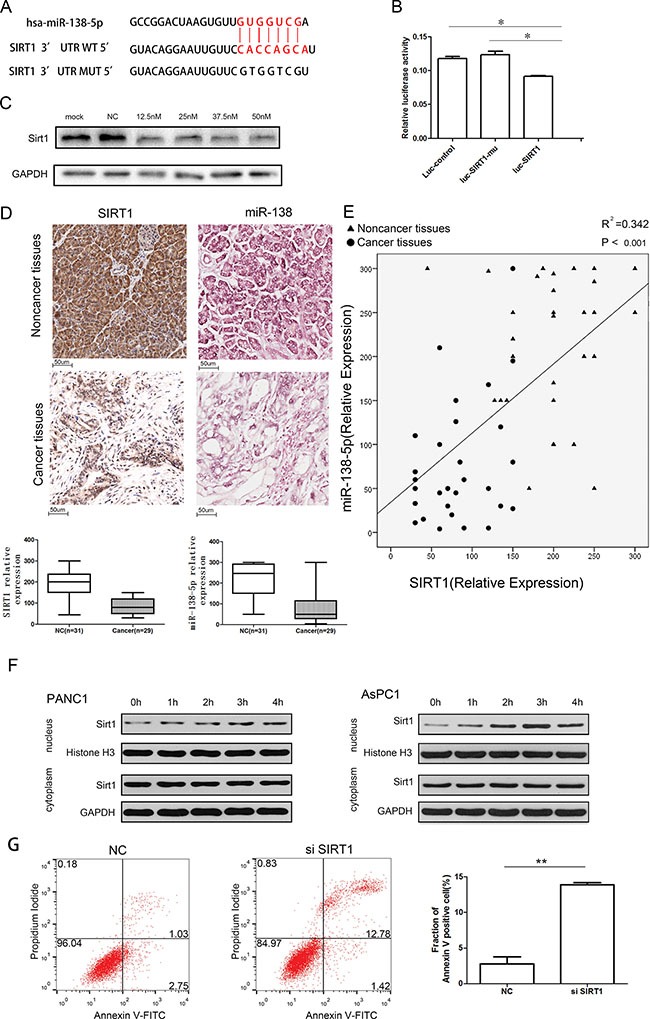
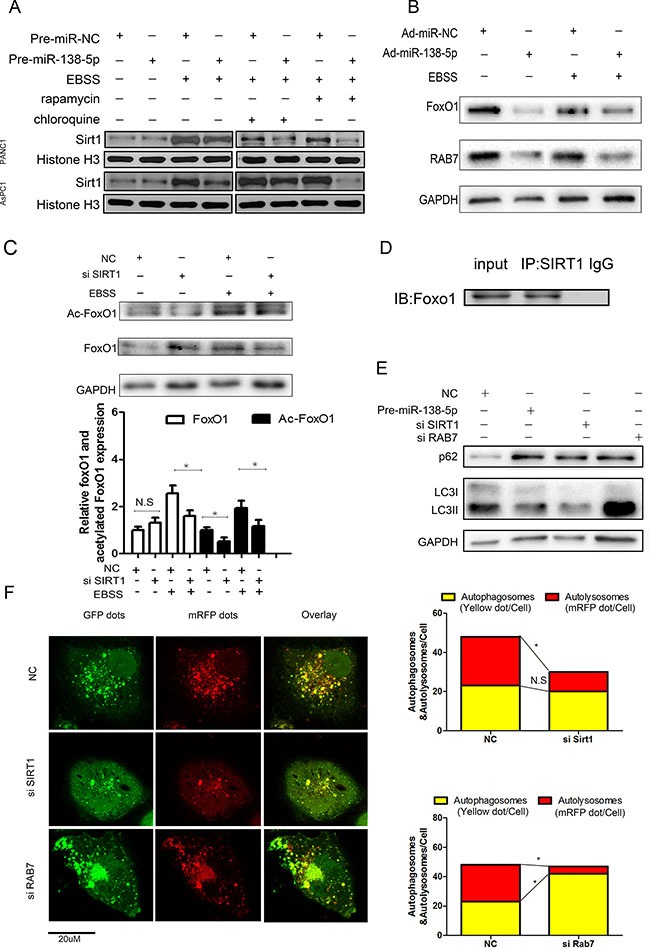
The role of microRNA in the aberrant autophagy that occurs in pancreatic cancer remains controversial. Because hypoxia is known to induce autophagy, we screened for differentially expressed microRNAs using a miRNA microarray with pancreatic cancer cells cultured under normoxic and hypoxic conditions. We found that miR-138-5p was among the most downregulated miRNA in hypoxia-stimulated cells, and that overexpression of miR-138-5p substantially reduced expression of autophagy markers. In addition, western blot and immunofluorescence analyses and electron microscopy revealed that miR-138-5p inhibited autophagy in pancreatic cancer cells and blocked serum starvation-induced autophagic flux independently of the typical autophagic signaling pathway. miR-138-5p had no effect on ATG3, ATG5, or ATG7, three primary autophagy-associated genes. Instead, miR-138-5p specifically targeted the SIRT1 3' untranslated region and suppressed autophagy by reducing the level of SIRT1, which acetylates FoxO1 and regulates autophagy via FoxO1/Rab7. SIRT1 or Rab7 knockdown blocked the SIRT1/FoxO1/Rab7 axis and suppressed autophagic inhibition by miR-138-5p. Finally, we found that miR-138-5p inhibited autophagy and tumor growth in vivo. These results indicate that miR-138-5p suppresses autophagy in pancreatic cancer by targeting SIRT1.
微小RNA在胰腺癌中发生的异常自噬中的作用仍存在争议。由于已知缺氧会诱导自噬,我们使用miRNA微阵列筛选了在常氧和缺氧条件下培养的胰腺癌细胞中差异表达的微小RNA。我们发现,miR-138-5p是缺氧刺激细胞中表达下调最明显的微小RNA之一,并且miR-138-5p的过表达显著降低了自噬标志物的表达。此外,蛋白质免疫印迹、免疫荧光分析和电子显微镜显示,miR-138-5p抑制胰腺癌细胞中的自噬,并独立于典型的自噬信号通路阻断血清饥饿诱导的自噬流。miR-138-5p对三个主要的自噬相关基因ATG3、ATG5或ATG7没有影响。相反,miR-138-5p特异性靶向SIRT1的3'非翻译区,并通过降低SIRT1的水平来抑制自噬,SIRT1可使FoxO1乙酰化并通过FoxO1/Rab7调节自噬。SIRT1或Rab7的敲低阻断了SIRT1/FoxO1/Rab7轴,并抑制了miR-138-5p对自噬的抑制作用。最后,我们发现miR-138-5p在体内抑制自噬和肿瘤生长。这些结果表明,miR-138-5p通过靶向SIRT1抑制胰腺癌中的自噬。