Liu Tangjingjun, Yao Yao, Zhang Gang, Wang Ye, Deng Bin, Song Jialei, Li Xiaogang, Han Fei, Xiao Xiao, Yang Jue, Xia Lei, Li You-Jun, Plachynta Maksym, Zhang Mu, Yan Chen, Mu Shuzhen, Luo Heng, Zacksenhaus Eldad, Hao Xiaojiang, Ben-David Yaacov
Department of Biology and Chemistry, The Key Laboratory of Chemistry for Natural Products of Guizhou Province and Chinese Academy of Sciences, Guizhou, China.
State Key Laboratory of Functions and Applications of Medicinal Plants, Guizhou Medical University, Guiyang, China.
Oncotarget. 2017 Mar 7;8(10):16728-16743. doi: 10.18632/oncotarget.14377.
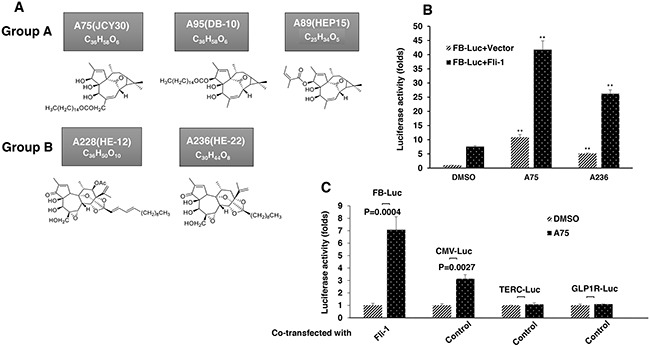
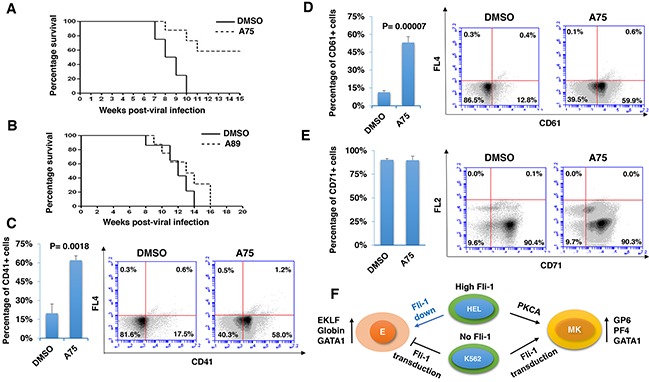
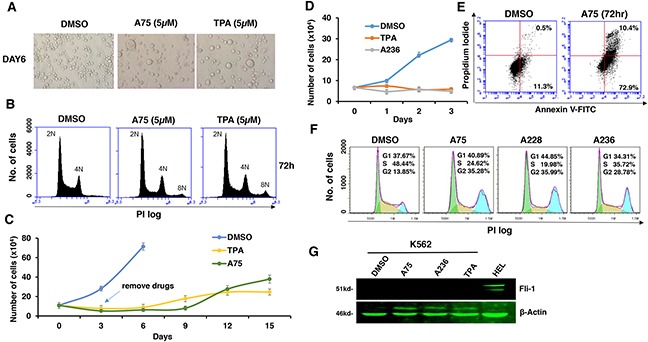
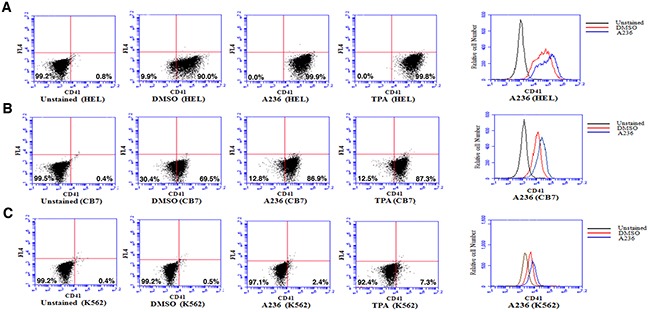
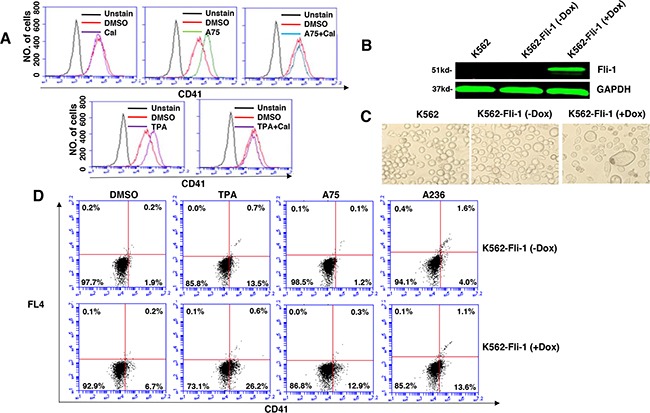
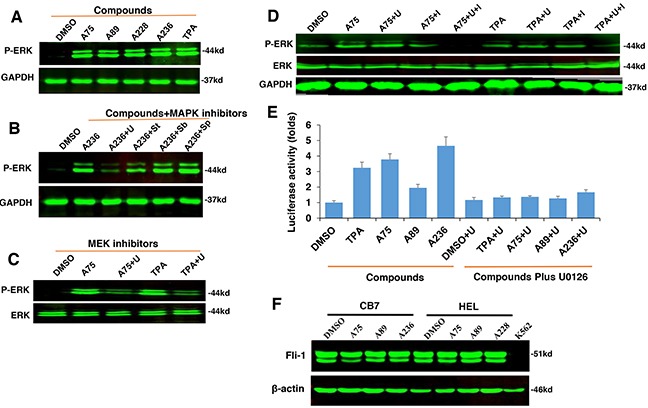
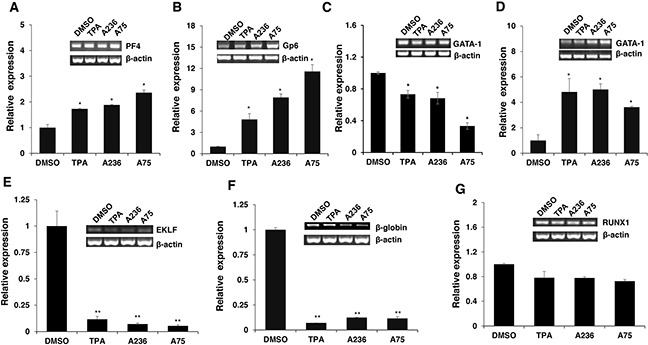
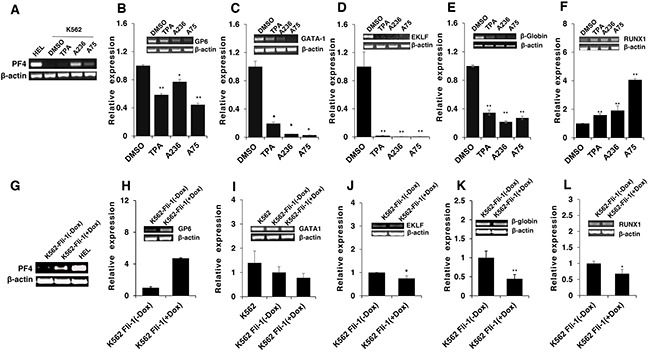
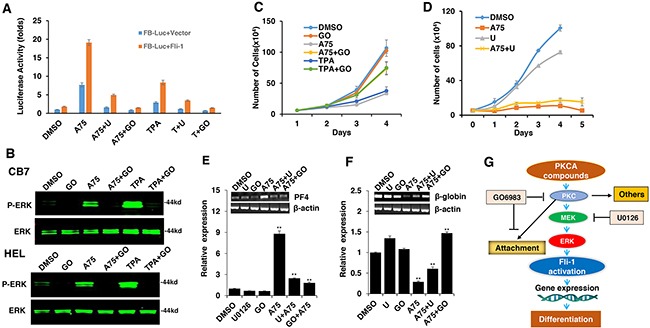
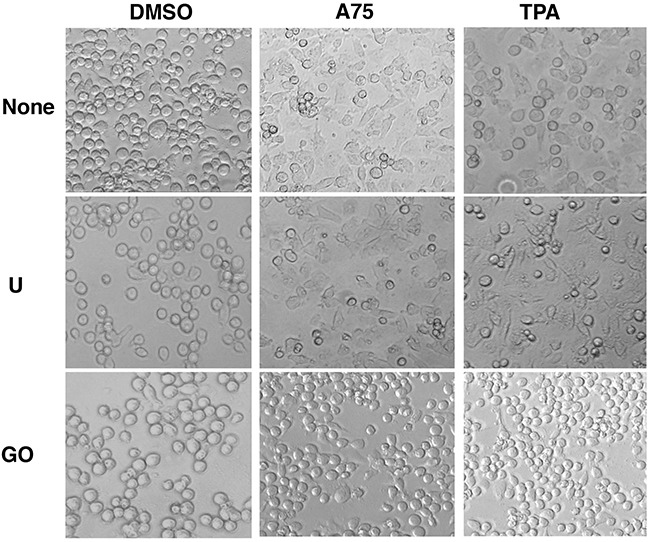
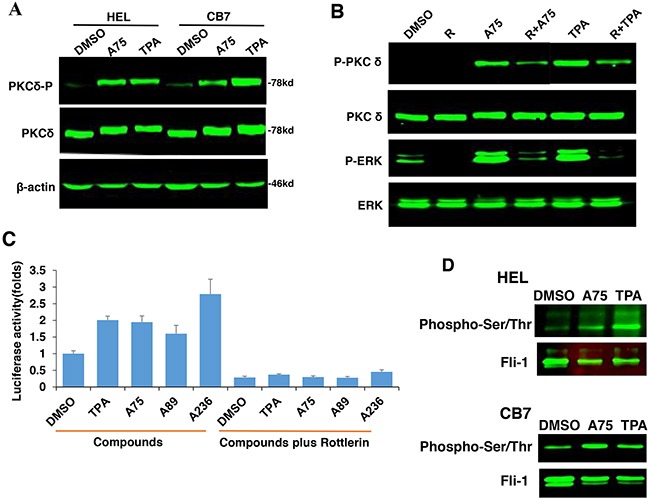
The ETS-related transcription factor Fli-1 affects many developmental programs including erythroid and megakaryocytic differentiation, and is frequently de-regulated in cancer. Fli-1 was initially isolated following retrovirus insertional mutagenesis screens for leukemic initiator genes, and accordingly, inhibition of this transcription factor can suppress leukemia through induction of erythroid differentiation. To search for modulators of Fli-1, we hereby performed repurposing drug screens with compounds isolated from Chinese medicinal plants. We identified agents that can transcriptionally activate or inhibit a Fli-1 reporter. Remarkably, agents that increased Fli-1 transcriptional activity conferred a strong anti-cancer activity upon Fli-1-expressing leukemic cells in culture. As opposed to drugs that suppress Fli1 activity and lead to erythroid differentiation, growth suppression by these new Fli-1 transactivating compounds involved erythroid to megakaryocytic conversion (EMC). The identified compounds are structurally related to diterpene family of small molecules, which are known agonists of protein kinase C (PKC). In accordance, these PKC agonists (PKCAs) induced PKC phosphorylation leading to activation of the mitogen-activated protein kinase (MAPK) pathway, increased cell attachment and EMC, whereas pharmacological inhibition of PKC or MAPK diminished the effect of our PKCAs. Moreover, in a mouse model of leukemia initiated by Fli-1 activation, the PKCA compounds exhibited strong anti-cancer activity, which was accompanied by increased presence of CD41/CD61 positive megakaryocytic cells in leukemic spleens. Thus, PKC agonists offer a novel approach to combat Fli-1-induced leukemia, and possibly other cancers,by inducing EMC in part through over-activation of the PKC-MAPK-Fli-1 pathway.
ETS相关转录因子Fli-1影响许多发育程序,包括红细胞和巨核细胞分化,并且在癌症中经常失调。Fli-1最初是在针对白血病起始基因的逆转录病毒插入诱变筛选后分离得到的,因此,抑制这种转录因子可以通过诱导红细胞分化来抑制白血病。为了寻找Fli-1的调节剂,我们在此用从中药植物中分离的化合物进行了药物再利用筛选。我们鉴定出了能够转录激活或抑制Fli-1报告基因的试剂。值得注意的是,增加Fli-1转录活性的试剂在培养中赋予表达Fli-1的白血病细胞强大的抗癌活性。与抑制Fli1活性并导致红细胞分化的药物相反,这些新的Fli-1反式激活化合物的生长抑制涉及红细胞向巨核细胞转化(EMC)。鉴定出的化合物在结构上与小分子二萜家族相关,而小分子二萜家族是蛋白激酶C(PKC)的已知激动剂。相应地,这些PKC激动剂(PKCAs)诱导PKC磷酸化,导致丝裂原活化蛋白激酶(MAPK)途径激活,增加细胞黏附及EMC,而PKC或MAPK的药理学抑制减弱了我们的PKCAs的作用。此外,在由Fli-1激活引发的白血病小鼠模型中,PKCA化合物表现出强大的抗癌活性,同时白血病脾脏中CD41/CD61阳性巨核细胞的存在增加。因此,PKC激动剂提供了一种新的方法来对抗Fli-1诱导的白血病以及可能的其他癌症,部分是通过过度激活PKC-MAPK-Fli-1途径诱导EMC来实现的。