Scheiber Melissa N, Watson Patricia M, Rumboldt Tihana, Stanley Connor, Wilson Robert C, Findlay Victoria J, Anderson Paul E, Watson Dennis K
Department of Pathology and Laboratory Medicine, The James E. Clyburn Research Center, Medical University of South Carolina, 68 President Street, Charleston, SC 29425.
Department of Medicine, Division of Hematology/Oncology, The James E. Clyburn Research Center, Medical University of South Carolina, 68 President Street, Charleston, SC 29425.
Neoplasia. 2014 Oct 23;16(10):801-13. doi: 10.1016/j.neo.2014.08.007. eCollection 2014 Oct.
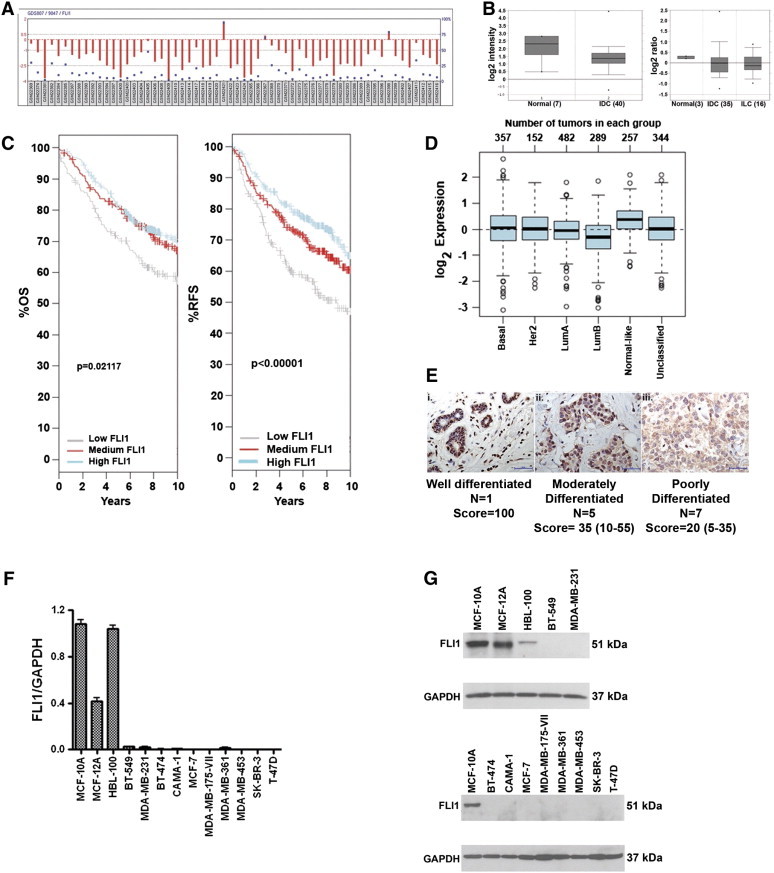
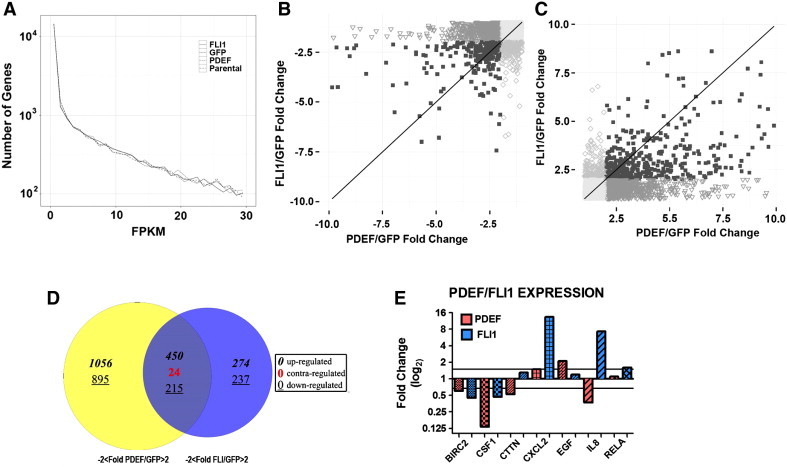
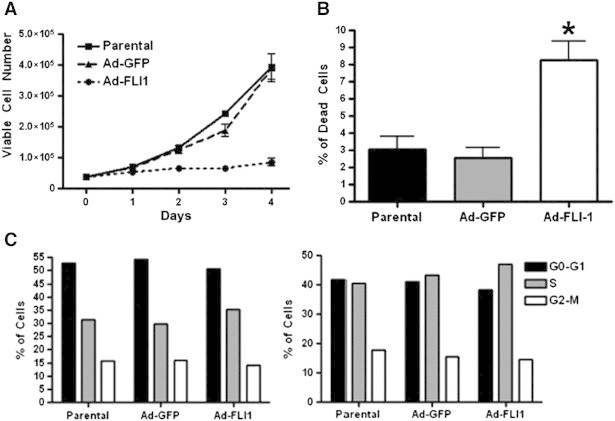
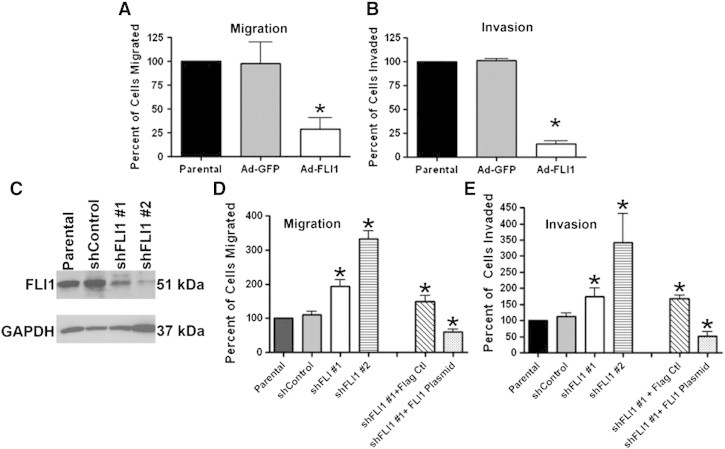
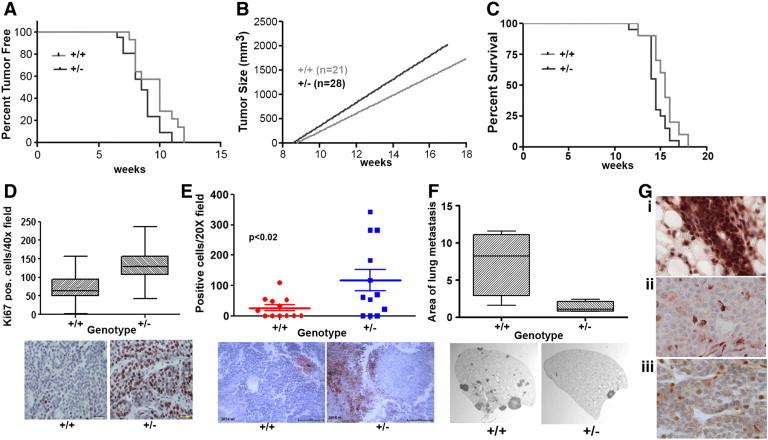
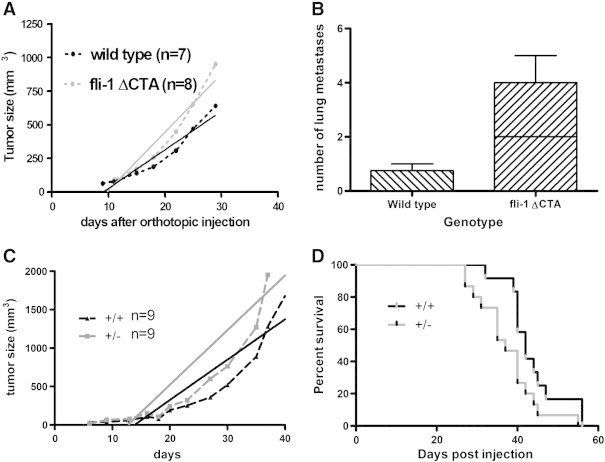
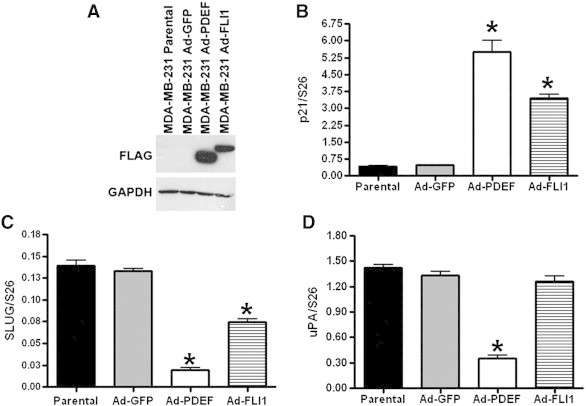
ETS factors have been shown to be dysregulated in breast cancer. ETS factors control the expression of genes involved in many biological processes, such as cellular proliferation, differentiation, and apoptosis. FLI1 is an ETS protein aberrantly expressed in retrovirus-induced hematological tumors, but limited attention has been directed towards elucidating the role of FLI1 in epithelial-derived cancers. Using data mining, we show that loss of FLI1 expression is associated with shorter survival and more aggressive phenotypes of breast cancer. Gain and loss of function cellular studies indicate the inhibitory effect of FLI1 expression on cellular growth, migration, and invasion. Using Fli1 mutant mice and both a transgenic murine breast cancer model and an orthotopic injection of syngeneic tumor cells indicates that reduced Fli1 contributes to accelerated tumor growth. Global expression analysis and RNA-Seq data from an invasive human breast cancer cell line with over expression of either FLI1 and another ETS gene, PDEF, shows changes in several cellular pathways associated with cancer, such as the cytokine-cytokine receptor interaction and PI3K-Akt signaling pathways. This study demonstrates a novel role for FLI1 in epithelial cells. In addition, these results reveal that FLI1 down-regulation in breast cancer may promote tumor progression.
ETS因子已被证明在乳腺癌中表达失调。ETS因子控制参与许多生物学过程的基因表达,如细胞增殖、分化和凋亡。FLI1是一种在逆转录病毒诱导的血液肿瘤中异常表达的ETS蛋白,但对阐明FLI1在上皮源性癌症中的作用关注有限。通过数据挖掘,我们发现FLI1表达缺失与乳腺癌患者较短的生存期和更具侵袭性的表型相关。功能获得和功能缺失的细胞研究表明,FLI1表达对细胞生长、迁移和侵袭具有抑制作用。使用Fli1突变小鼠以及转基因小鼠乳腺癌模型和同基因肿瘤细胞的原位注射表明,Fli1表达降低会导致肿瘤生长加速。对一种侵袭性人乳腺癌细胞系进行整体表达分析和RNA测序,该细胞系过表达FLI1和另一个ETS基因PDEF,结果显示与癌症相关的几个细胞通路发生了变化,如细胞因子-细胞因子受体相互作用和PI3K-Akt信号通路。本研究证明了FLI1在上皮细胞中的新作用。此外,这些结果表明,乳腺癌中FLI1的下调可能促进肿瘤进展。