Mukherjee Pranab K, Funchain Pauline, Retuerto Mauricio, Jurevic Richard J, Fowler Nicole, Burkey Brian, Eng Charis, Ghannoum Mahmoud A
Center for Medical Mycology, Department of Dermatology, Case Western Reserve University, University Hospitals Case Medical Center, Cleveland, OH, United States.
Genomic Medicine Institute, Lerner Research Institute, Taussig Cancer Institute, United States.
BBA Clin. 2016 Dec 18;7:8-15. doi: 10.1016/j.bbacli.2016.12.001. eCollection 2017 Jun.
Metabolomics represents a promising approach for discovering novel targets and biomarkers in head and neck squamous cell carcinoma (HNSCC). Here we used metabolomics to identify oral metabolites associated with HNSCC.
Tumor and adjacent normal tissue from surgical resections and presurgical oral washes as well as oral washes were collected from healthy participants. Metabolites extractions of these samples were analyzed by liquid chromatography-mass spectroscopy (LC/MS), LC/MS/MS and gas chromatography-MS (GC/MS).
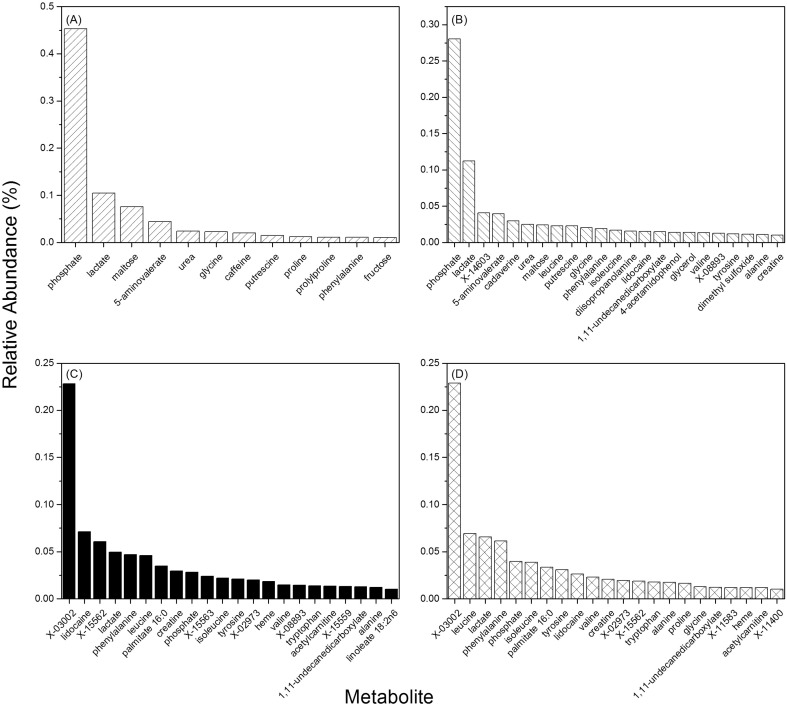
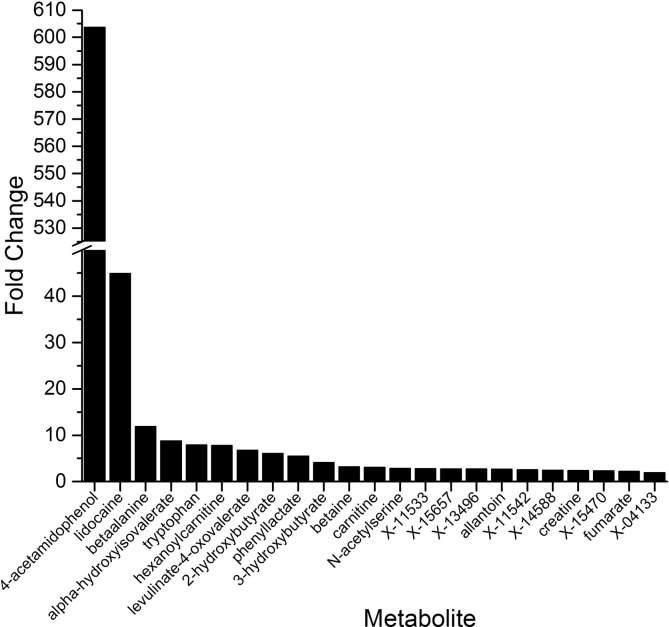
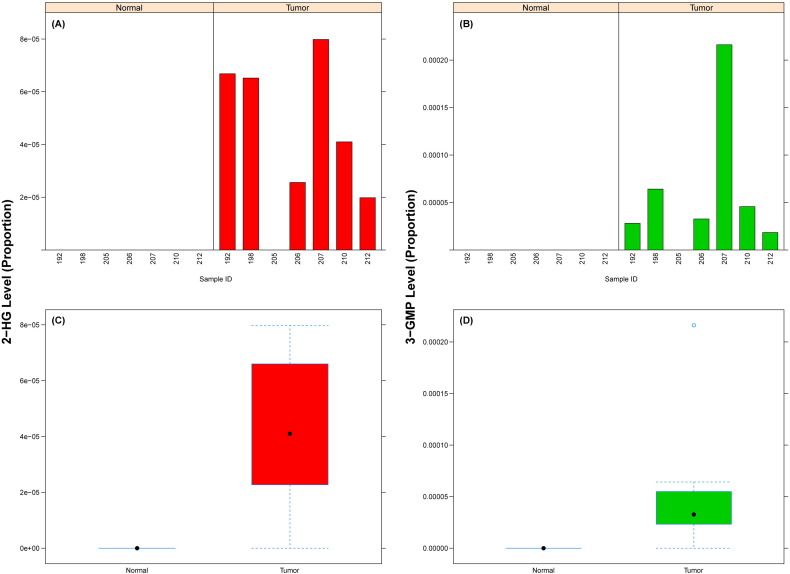
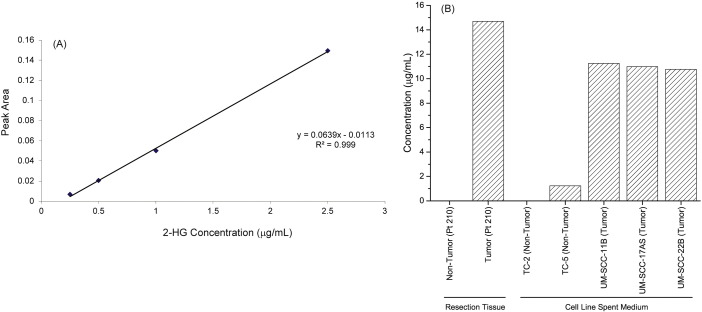
Among 28 samples obtained from 7 HNSCC cases and 7 controls, 422 metabolites were detected (269 identified and 153 unidentified). Oral washes contained 12 and 23 metabolites in healthy controls and HNSCC patients, respectively, with phosphate and lactate being the most abundant. Small molecules related to energy metabolism were significantly elevated in HNSCC patients compared to controls. Levels of beta-alanine, alpha-hydroxyisovalerate, tryptophan, and hexanoylcarnitine were elevated in HNSCC oral washes compared to healthy controls (range 7.8-12.2-fold). Resection tissues contained 22 metabolites, of which eight were overproduced in tumor by 1.9- to 12-fold compared to controls. TCA cycle analogs 2-hydroxyglutarate 2-HG) and 3-GMP were detected exclusively in tumor tissues. Targeted quantification of 2-HG in a representative HNSCC patient showed increase in tumor tissue (14.7 μg/mL), but undetectable in normal tissue. Moreover, high levels of 2-HG were detected in HNSCC cell lines but not in healthy primary oral keratinocyte cultures.
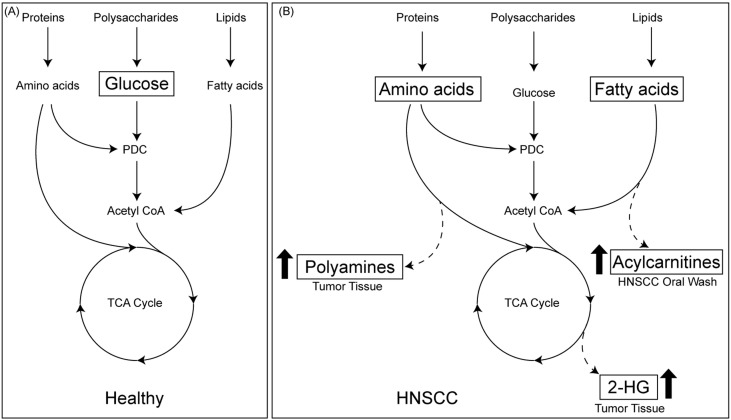
Oral metabolites related to energy metabolism were elevated in HNSCC, and acylcarnitine and 2HG may have potential as non-invasive biomarkers. Further validation in clinical studies is warranted.
代谢组学是一种在头颈部鳞状细胞癌(HNSCC)中发现新靶点和生物标志物的有前景的方法。在此,我们运用代谢组学来识别与HNSCC相关的口腔代谢物。
收集手术切除的肿瘤及相邻正常组织、术前口腔冲洗液,以及健康参与者的口腔冲洗液。这些样本的代谢物提取物通过液相色谱-质谱联用仪(LC/MS)、液相色谱-串联质谱联用仪(LC/MS/MS)和气相色谱-质谱联用仪(GC/MS)进行分析。
在从7例HNSCC病例和7例对照中获取的28个样本中,检测到422种代谢物(269种已鉴定,153种未鉴定)。健康对照和HNSCC患者的口腔冲洗液中分别含有12种和23种代谢物,其中磷酸盐和乳酸含量最为丰富。与对照相比,HNSCC患者中与能量代谢相关的小分子显著升高。与健康对照相比,HNSCC口腔冲洗液中β-丙氨酸、α-羟基异戊酸、色氨酸和己酰肉碱的水平升高(范围为7.8至12.2倍)。切除组织含有22种代谢物,其中8种在肿瘤中的产生量比对照高出1.9至12倍。三羧酸循环类似物2-羟基戊二酸(2-HG)和3-鸟苷酸仅在肿瘤组织中检测到。对一名代表性HNSCC患者的2-HG进行靶向定量分析显示,肿瘤组织中含量增加(14.7μg/mL),而正常组织中未检测到。此外,在HNSCC细胞系中检测到高水平的2-HG,但在健康的原代口腔角质形成细胞培养物中未检测到。
HNSCC中与能量代谢相关的口腔代谢物升高,酰基肉碱和2HG可能具有作为非侵入性生物标志物的潜力。有必要在临床研究中进行进一步验证。