Naveen B M, Joshi G R, Harikrishnan B
Department of Orthopaedics, Armed Forces Medical College (AFMC), Pune, 411040, India.
Strategies Trauma Limb Reconstr. 2017 Apr;12(1):11-18. doi: 10.1007/s11751-016-0272-4. Epub 2017 Jan 4.
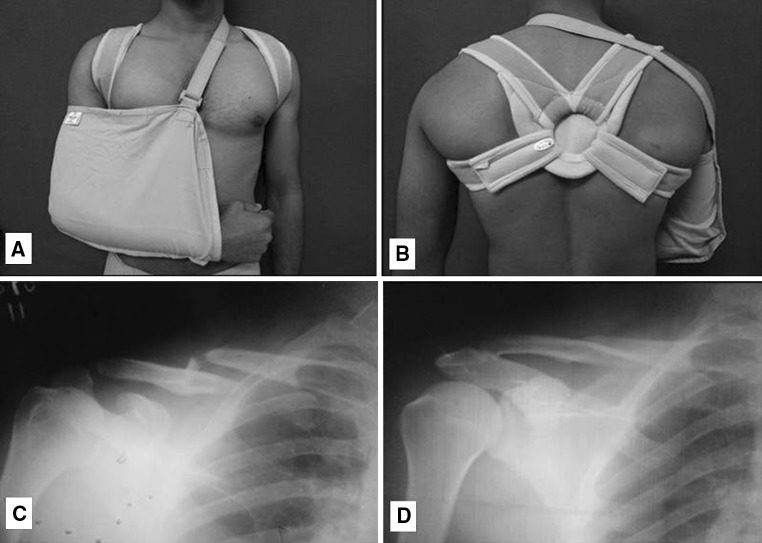
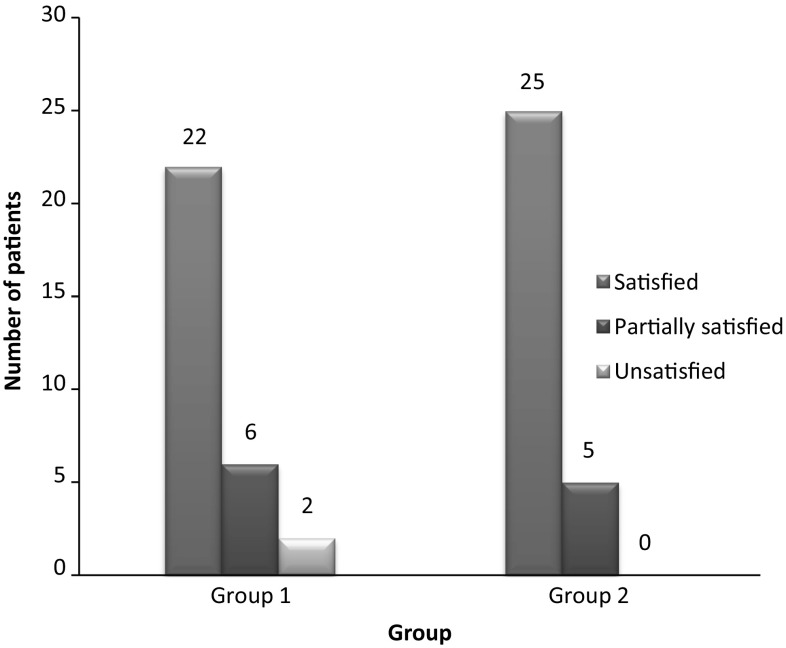
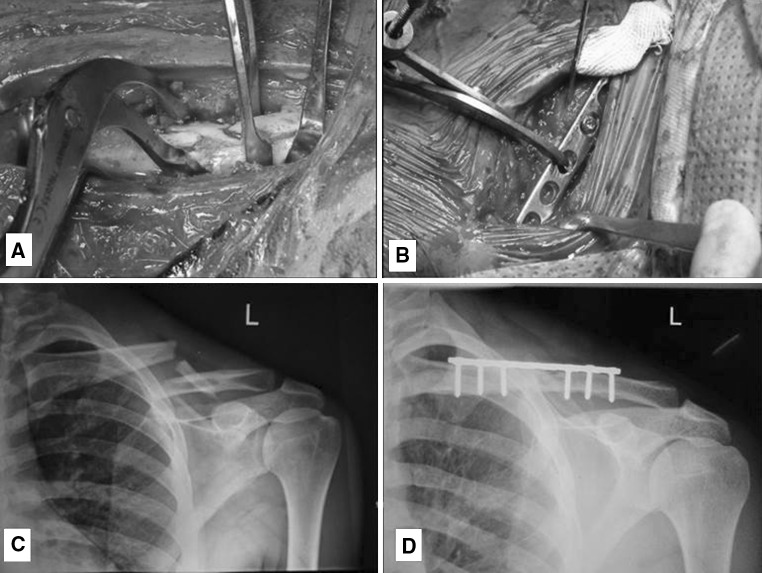
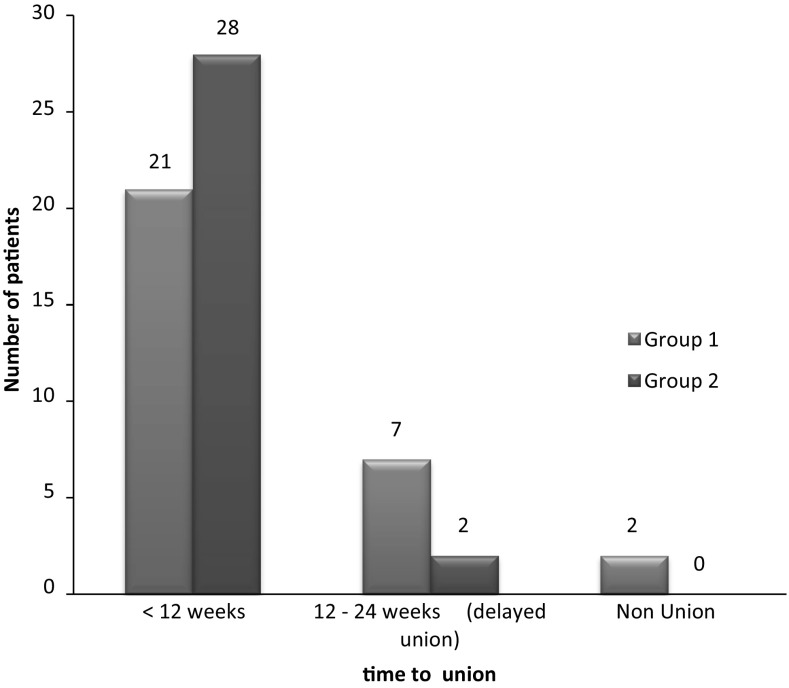
Clavicle fracture is a common injury due to its subcutaneous and relatively anterior position. Fractures affecting the middle third account for majority of all clavicular fractures. Both non-operative and surgical methods have been described for the management of this injury. However, there is no uniform consensus on the definite choice of treatment. Hence, this study was undertaken to compare conservative approach with primary internal plate fixation in mid-shaft clavicular fractures in terms of subjective outcome, functional outcome, the rates of nonunion and malunion and other local complications. Patients were allocated into two groups, each including 30 patients on alternate basis. Group 1 patients were managed conservatively, consisting of a figure-of-eight bandage and a sling, whereas patients of group 2 were treated surgically by plate fixation. Follow-up examination was done at 06 weeks, 03 and 06 months using patient's subjective evaluation, functional outcome, radiographic assessment and other complications. The study showed that time to union was significantly shorter in patients treated surgically and this group also showed a favorable Constant shoulder score at all follow-ups. Though there was no statistically significant difference between the groups with regard to complication rate, subjective outcome or functional outcome, the surgical intervention group fared better especially when considering overall outcome results. The present study showed that the time to union was lesser, rate of malunion and nonunion was lower, and Constant shoulder scores were higher in the surgical group. This affirms that while conservative treatment remains the treatment of choice for simple undisplaced mid-shaft clavicle fractures, for displaced and comminuted fractures the surgical intervention gives better outcomes and early functional recovery in young active adults.
锁骨骨折因其皮下且相对靠前的位置而成为一种常见损伤。累及中三分之一的骨折占所有锁骨骨折的大多数。对于该损伤的处理,非手术和手术方法均有描述。然而,在治疗的确切选择上尚无统一共识。因此,本研究旨在比较保守治疗与一期钢板内固定治疗中段锁骨骨折在主观结果、功能结果、骨不连和畸形愈合率以及其他局部并发症方面的差异。患者被交替分配到两组,每组各30例。第1组患者采用保守治疗,包括使用8字绷带和吊带,而第2组患者则通过钢板固定进行手术治疗。在术后6周、3个月和6个月进行随访检查,采用患者主观评估、功能结果、影像学评估及其他并发症情况。研究表明,手术治疗的患者骨折愈合时间明显缩短,且该组在所有随访中Constant肩关节评分也较好。尽管两组在并发症发生率、主观结果或功能结果方面无统计学显著差异,但手术干预组表现更佳,尤其是考虑总体结果时。本研究表明,手术组的骨折愈合时间更短,畸形愈合和骨不连发生率更低,Constant肩关节评分更高。这证实了对于简单无移位的中段锁骨骨折,保守治疗仍是首选治疗方法;而对于移位和粉碎性骨折,手术干预在年轻活跃的成年人中能带来更好的结果和早期功能恢复。