Herrera Acevedo Chonny, Scotti Luciana, Feitosa Alves Mateus, Formiga Melo Diniz Margareth De Fátima, Scotti Marcus Tullius
Post-Graduate Program in Natural and Synthetic Bioactive Products, Federal University of Paraíba, 58051-900 João Pessoa, PB, Brazil.
Molecules. 2017 Jan 3;22(1):79. doi: 10.3390/molecules22010079.
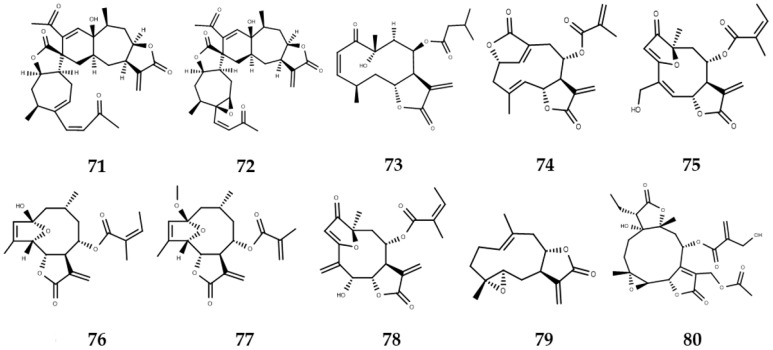
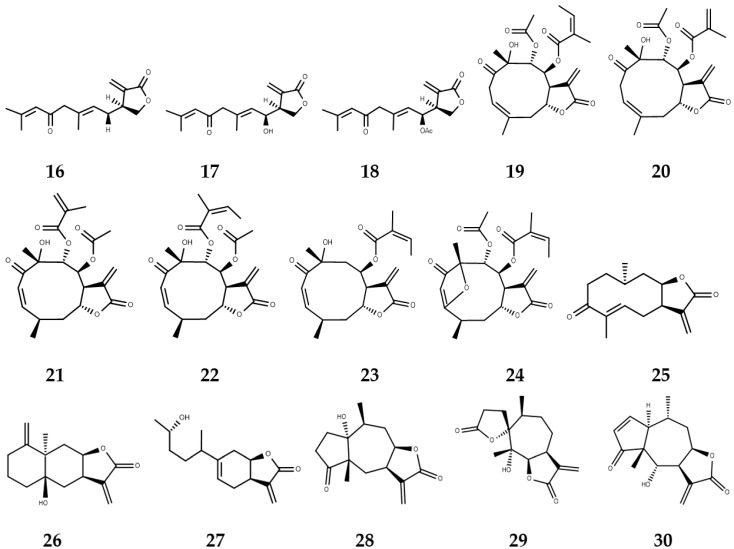
This review presents an survey to the biological importance of sesquiterpene lactones (SLs) in the fight against four infectious neglected tropical diseases (NTDs)-leishmaniasis, schistosomiasis, Chagas disease, and sleeping sickness-as alternatives to the current chemotherapies that display several problems such as low effectiveness, resistance, and high toxicity. Several studies have demonstrated the great potential of some SLs as therapeutic agents for these NTDs and the relationship between the protozoal activities with their chemical structure. Recently, Computer-Aided Drug Design (CADD) studies have helped increase the knowledge of SLs regarding their mechanisms, the discovery of new lead molecules, the identification of pharmacophore groups and increase the biological activity by employing in silico tools such as molecular docking, virtual screening and Quantitative-Structure Activity Relationship (QSAR) studies.
本综述对倍半萜内酯(SLs)在对抗四种被忽视的热带传染病(NTDs)——利什曼病、血吸虫病、恰加斯病和昏睡病——中的生物学重要性进行了调查,将其作为目前化疗方法的替代方案,目前的化疗方法存在有效性低、耐药性和高毒性等诸多问题。多项研究已证明某些SLs作为这些NTDs治疗药物的巨大潜力,以及原生动物活性与其化学结构之间的关系。最近,计算机辅助药物设计(CADD)研究有助于增加对SLs作用机制的了解,发现新的先导分子,识别药效基团,并通过使用分子对接、虚拟筛选和定量构效关系(QSAR)研究等计算机工具提高其生物活性。