Meng Chen, Quan Tai-Yong, Li Zhong-Yi, Cui Kang-Li, Yan Li, Liang Yu, Dai Jiu-Lan, Xia Guang-Min, Liu Shu-Wei
The Key Laboratory of Plant Cell Engineering and Germplasm Innovation, Ministry of Education, School of Life Sciences, Shandong University, Jinan, 250100, People's Republic of China.
CSIRO Agriculture, GPO Box 1600, Canberra, ACT 2601, Australia.
BMC Genomics. 2017 Jan 5;18(1):24. doi: 10.1186/s12864-016-3421-8.
Soil alkalinity shows significant constraints to crop productivity; however, much less attention has been paid to analyze the effect of soil alkalinity on plant growth and development. Shanrong No. 4 (SR4) is an alkalinity tolerant bread wheat cultivar selected from an asymmetric somatic hybridization between the bread wheat cultivar Jinan 177 (JN177) and tall wheatgrass (Thinopyrum ponticum), which is a suitable material for studying alkalinity tolerant associate genes.
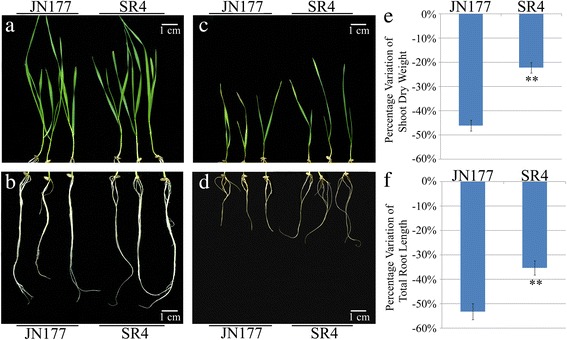
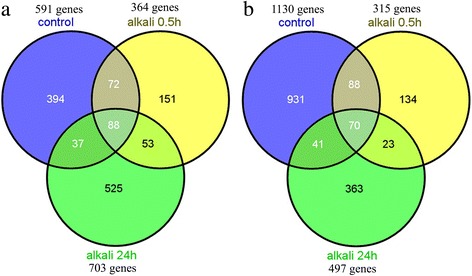
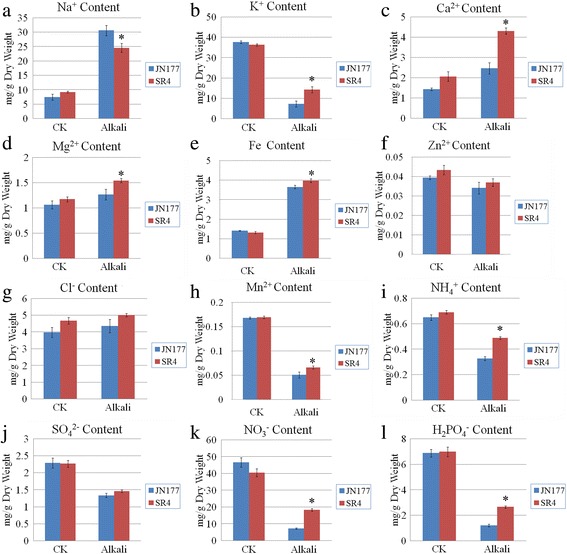
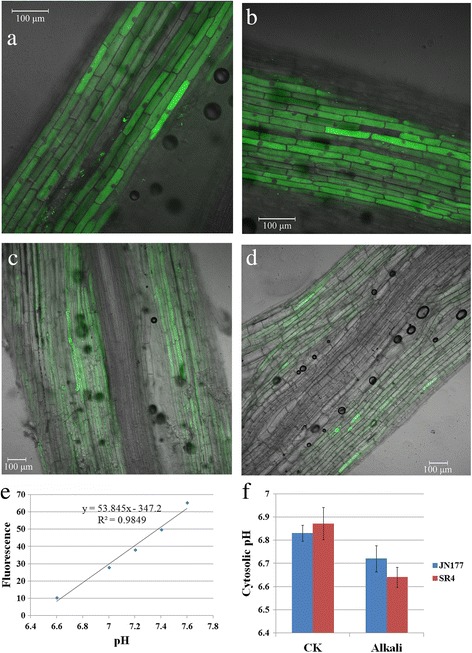
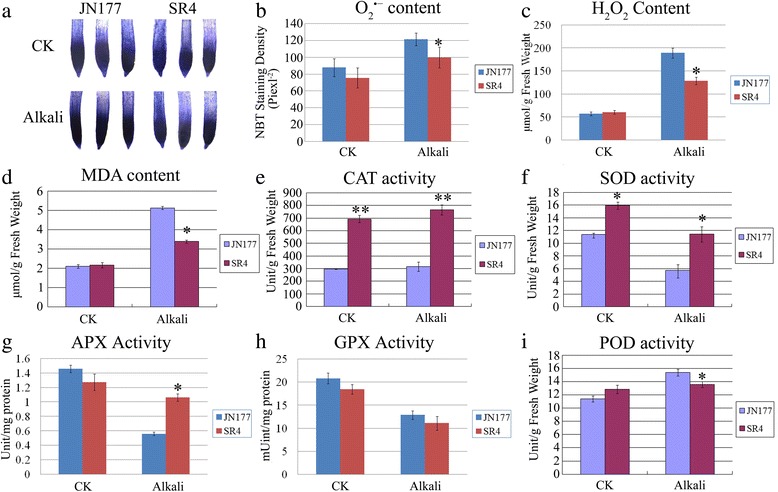
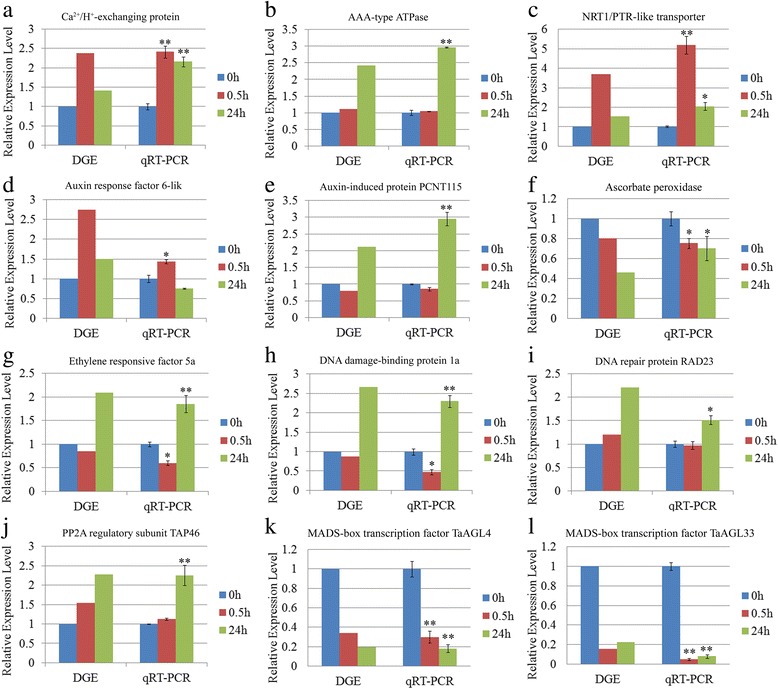
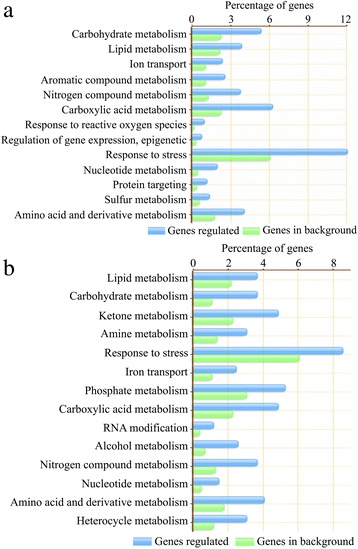
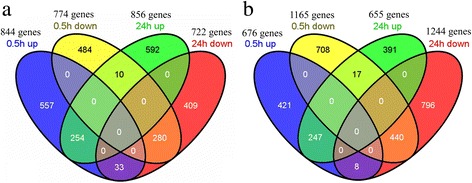
The growth of SR4 plant seedlings was less inhibited than that of JN177 when exposed to alkalinity stress conditions. The root cytosolic Na/K ratio in alkalinity stressed SR4 was lower than in JN177, while alkalinity stressed SR4 contained higher level of nutrient elements than in JN177. SR4 plant seedlings accumulated less malondialdehyde (MDA) and reactive oxygen species (ROS), it also showed higher activity of ROS scavenging enzymes than JN177 under alkalinity stress. The root intracellular pH decreased in both alkalinity stressed JN177 and SR4, however, it was much lower in SR4 than in JN177 under alkalinity stress. The transcriptomes of SR4 and JN177 seedlings exposed to alkalinity stress were analyzed by digital gene expression tag profiling method. Alkalinity stress conditions up- and down-regulated a large number of genes in the seedling roots that play the functions in the categories of transcription regulation, signal transduction and protein modification.
SR4 expresses a superior tolerance to alkaline stress conditions which is due to its strong absorbing ability for nutrient ions, a strong regulating ability for intracellular and rhizosphere pH and a more active ROS scavenging ability.
土壤碱化对作物生产力有显著限制;然而,分析土壤碱化对植物生长发育影响的研究却少得多。山融4号(SR4)是一个耐碱面包小麦品种,它是从小麦品种济南177(JN177)与高冰草(Thinopyrum ponticum)的不对称体细胞杂交中选育出来的,是研究耐碱相关基因的合适材料。
在碱性胁迫条件下,SR4植株幼苗的生长受到的抑制比JN177小。碱性胁迫下SR4的根部细胞质Na/K比值低于JN177,而碱性胁迫下SR4的营养元素含量高于JN177。SR4植株幼苗积累的丙二醛(MDA)和活性氧(ROS)较少,在碱性胁迫下其ROS清除酶活性也高于JN177。碱性胁迫下JN177和SR4的根细胞内pH均下降,但在碱性胁迫下SR4的根细胞内pH远低于JN177。采用数字基因表达标签谱法分析了碱性胁迫下SR4和JN177幼苗的转录组。碱性胁迫条件下,幼苗根中大量基因的表达上调和下调,这些基因在转录调控、信号转导和蛋白质修饰等类别中发挥作用。
SR4对碱性胁迫条件表现出较强的耐受性,这归因于其对营养离子的强大吸收能力、对细胞内和根际pH的强大调节能力以及更活跃的ROS清除能力。