Qin Hua-Zhang, Liu Lei, Liang Shao-Shan, Shi Jing-Song, Zheng Chun-Xia, Hou Qing, Lu Ying-Hui, Le Wei-Bo
National Clinical Research Center of Kidney Diseases, Jinling Hospital, Nanjing University School of Medicine, Nanjing, 210002, China.
BMC Nephrol. 2017 Jan 5;18(1):2. doi: 10.1186/s12882-016-0427-z.
The KDIGO Clinical Practice Guidelines for Glomerulonephritis recommended tacrolimus as an alternative regimen for the initial therapy for Idiopathic membranous nephropathy (IMN), however, large observational studies evaluating tacrolimus treatment in IMN remains rare.
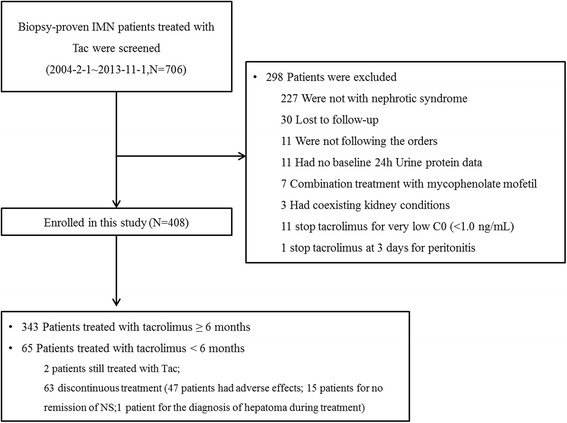
A total of 408 consecutive IMN patients with nephrotic syndrome who were treated with tacrolimus in Jinling Hospital were included. The effectiveness and safety of tacrolimus treatment in IMN were analyzed in this study.
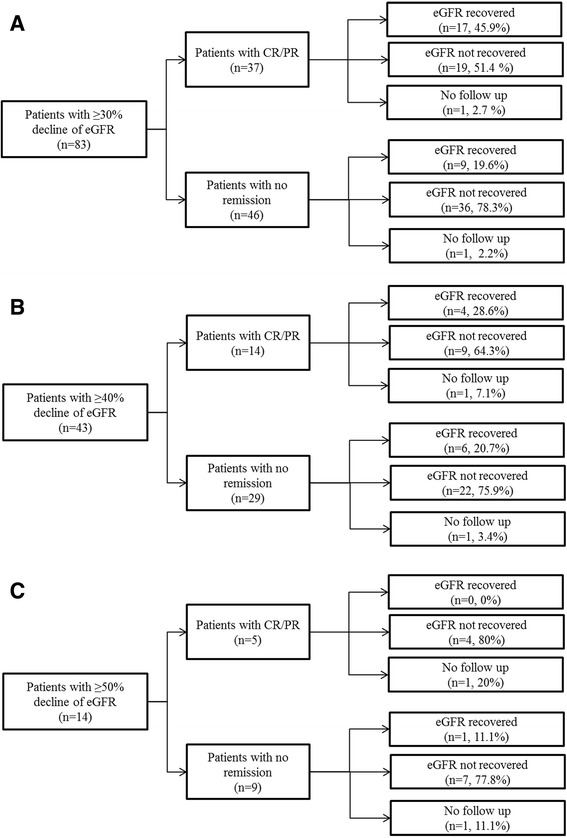
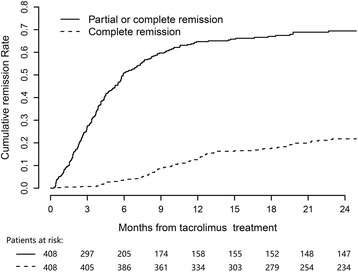
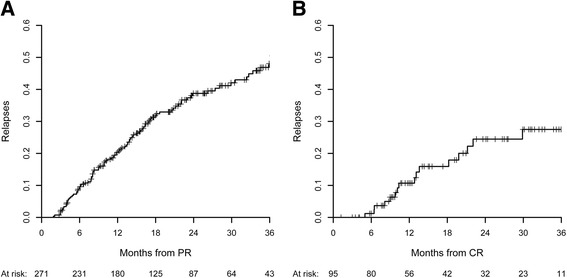
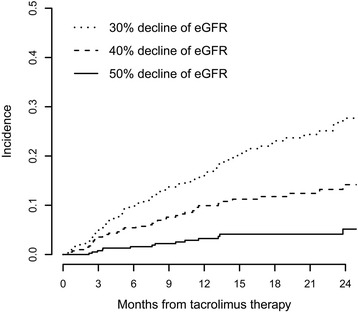
The cumulative partial or complete remission after tacrolimus therapy were 50%, 63% and 67% at 6, 12 and 24 months, respectively, and the cumulative complete remission rates were 4%, 13% and 23%, respectively. Multivariate logistic analysis showed that higher tacrolimus exposure during induction treatment, female gender, higher eGFR and no history of previous immunosuppressive therapy were independently associated with higher probability of remission. A relapse occurred in 101 of the 271 (37.3%) patients with partial or complete remission, and 18 of the 95 (18.9%) patients with complete remission. Tapering duration of tacrolimus and complete remission versus partial remission status were independent factors associated with risk of relapse. A decline in eGFR was the most frequent adverse event during tacrolimus treatment. During tacrolimus treatment, a ≥40% decrease in eGFR was observed in 43 (10.5%) patients.
Low dose tacrolimus is effective for IMN, with a total remission rate of 66% whereas with a rather high rate of relapse. However, the safety of tacrolimus treatment needs to be further validated in large randomized clinical trials.
KDIGO肾小球肾炎临床实践指南推荐他克莫司作为特发性膜性肾病(IMN)初始治疗的替代方案,然而,评估他克莫司治疗IMN的大型观察性研究仍然很少。
纳入了在金陵医院接受他克莫司治疗的408例连续性IMN肾病综合征患者。本研究分析了他克莫司治疗IMN的有效性和安全性。
他克莫司治疗后6个月、12个月和24个月的累积部分或完全缓解率分别为50%、63%和67%,累积完全缓解率分别为4%、13%和23%。多因素逻辑分析显示,诱导治疗期间较高的他克莫司暴露量、女性、较高的估算肾小球滤过率(eGFR)以及无既往免疫抑制治疗史与较高的缓解概率独立相关。271例部分或完全缓解的患者中有101例(37.3%)复发,95例完全缓解的患者中有18例(18.9%)复发。他克莫司减量持续时间以及完全缓解与部分缓解状态是与复发风险相关的独立因素。eGFR下降是他克莫司治疗期间最常见的不良事件。在他克莫司治疗期间,43例(10.5%)患者的eGFR下降≥40%。
低剂量他克莫司对IMN有效,总缓解率为66%,但复发率较高。然而,他克莫司治疗的安全性需要在大型随机临床试验中进一步验证。