Department of Global Health, Institute for Health Metrics and Evaluation, University of Washington, Seattle, Washington, USA.
Centre for Pharmaceutical Policy and Regulation, Utrecht University, Utrecht, The Netherlands.
BMJ Open. 2017 Jan 5;7(1):e012321. doi: 10.1136/bmjopen-2016-012321.
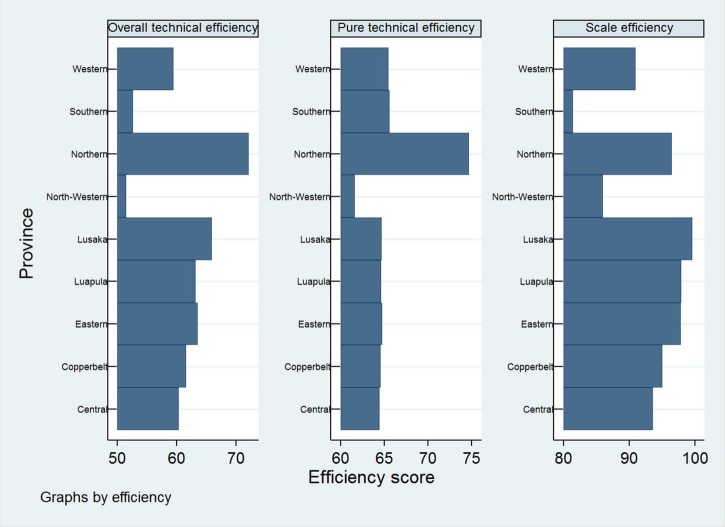
Despite tremendous efforts to scale up key maternal and child health interventions in Zambia, progress has not been uniform across the country. This raises fundamental health system performance questions that require further investigation. Our study investigates technical and scale efficiency (SE) in the delivery of maternal and child health services in the country.
The study focused on all 72 health districts of Zambia.
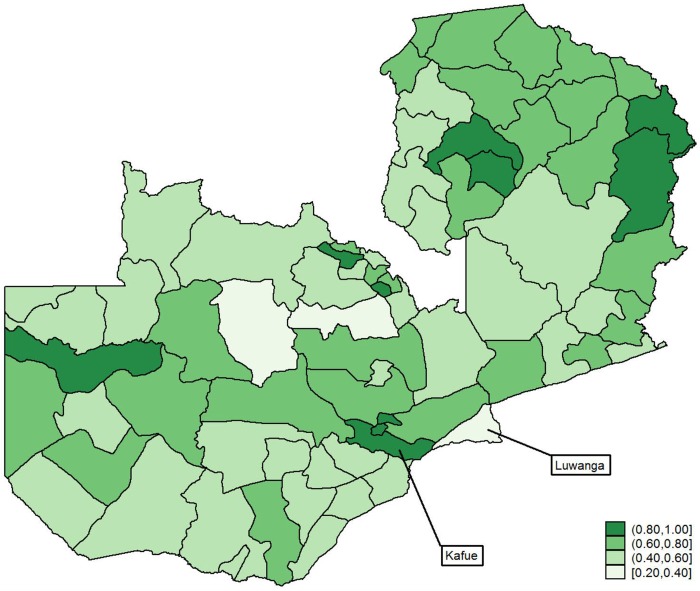
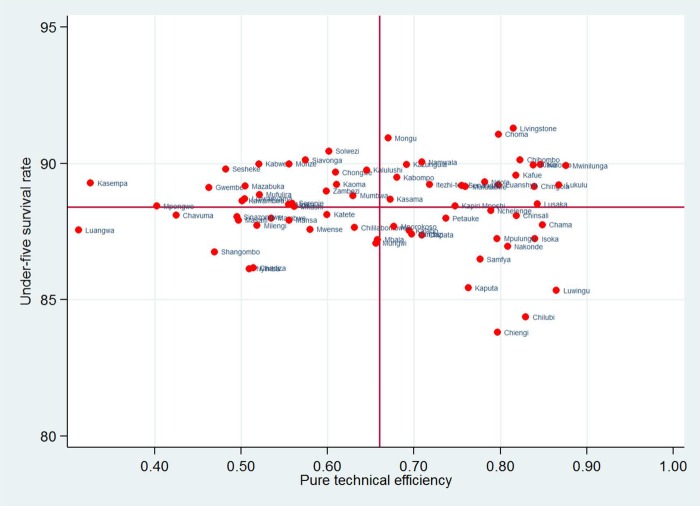
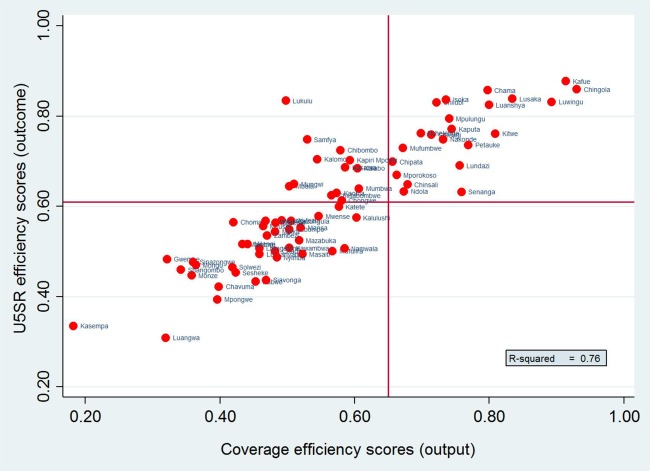
We compiled a district-level database comprising health outcomes (measured by the probability of survival to 5 years of age), health outputs (measured by coverage of key health interventions) and a set of health system inputs, namely, financial resources and human resources for health, for the year 2010. We used data envelopment analysis to assess the performance of subnational units across Zambia with respect to technical and SE, controlling for environmental factors that are beyond the control of health system decision makers.
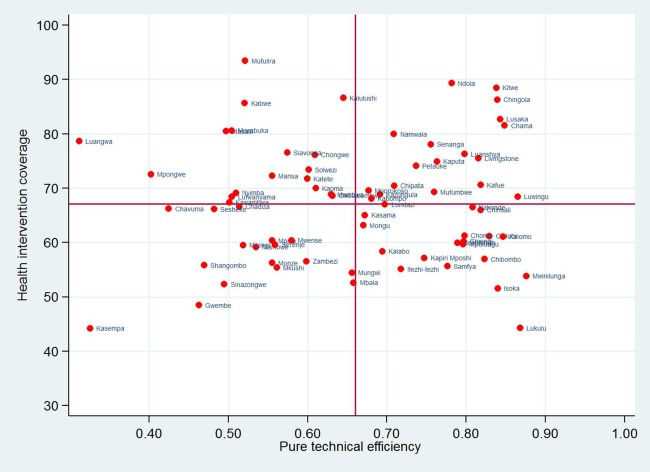
Nationally, average technical efficiency with respect to improving child survival was 61.5% (95% CI 58.2% to 64.8%), which suggests that there is a huge inefficiency in resource use in the country and the potential to expand services without injecting additional resources into the system. Districts that were more urbanised and had a higher proportion of educated women were more technically efficient. Improved cooking methods and donor funding had no significant effect on efficiency.
With the pressing need to accelerate progress in population health, decision makers must seek efficient ways to deliver services to achieve universal health coverage. Understanding the factors that drive performance and seeking ways to enhance efficiency offer a practical pathway through which low-income countries could improve population health without necessarily seeking additional resources.
尽管赞比亚在扩大关键母婴健康干预措施方面做出了巨大努力,但在全国范围内进展并不均衡。这引发了基本的卫生系统绩效问题,需要进一步调查。我们的研究调查了该国提供母婴保健服务的技术和规模效率(SE)。
研究集中在赞比亚的所有 72 个卫生区。
我们编制了一个地区层面的数据库,其中包含卫生结果(通过 5 岁时的生存概率衡量)、卫生产出(通过关键卫生干预措施的覆盖情况衡量)以及一套卫生系统投入,即财政资源和卫生人力资源,数据截至 2010 年。我们使用数据包络分析来评估赞比亚各次国家单位在技术和 SE 方面的表现,同时控制了卫生系统决策者无法控制的环境因素。
在全国范围内,提高儿童生存的技术效率平均为 61.5%(95%CI 58.2%至 64.8%),这表明该国在资源利用方面存在巨大的效率低下,并且有可能在不向系统注入额外资源的情况下扩大服务。城市化程度较高和受过教育的女性比例较高的地区技术效率更高。改进的烹饪方法和捐赠资金对效率没有显著影响。
由于迫切需要加快人口健康方面的进展,决策者必须寻求高效的服务提供方式,以实现全民健康覆盖。了解推动绩效的因素并寻求提高效率的方法为低收入国家在不寻求额外资源的情况下改善人口健康提供了一条切实可行的途径。