Bolzoni Marina, Ronchetti Domenica, Storti Paola, Donofrio Gaetano, Marchica Valentina, Costa Federica, Agnelli Luca, Toscani Denise, Vescovini Rosanna, Todoerti Katia, Bonomini Sabrina, Sammarelli Gabriella, Vecchi Andrea, Guasco Daniela, Accardi Fabrizio, Palma Benedetta Dalla, Gamberi Barbara, Ferrari Carlo, Neri Antonino, Aversa Franco, Giuliani Nicola
Myeloma Unit, Dept. of Medicine and Surgery, University of Parma, Italy.
Dept. of Oncology and Hemato-Oncology, University of Milan, Italy.
Haematologica. 2017 Apr;102(4):773-784. doi: 10.3324/haematol.2016.153841. Epub 2017 Jan 5.
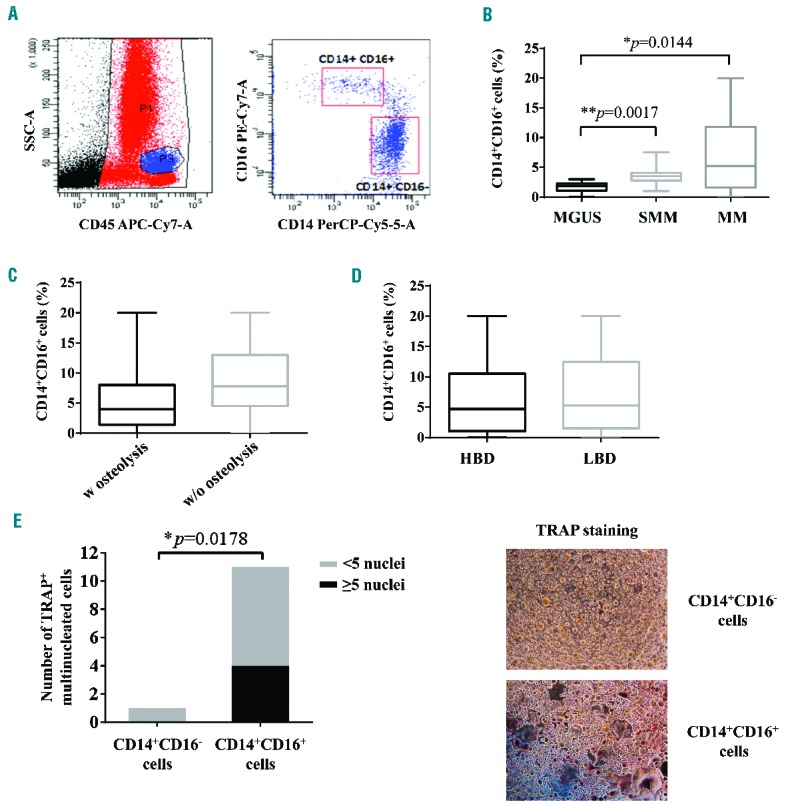
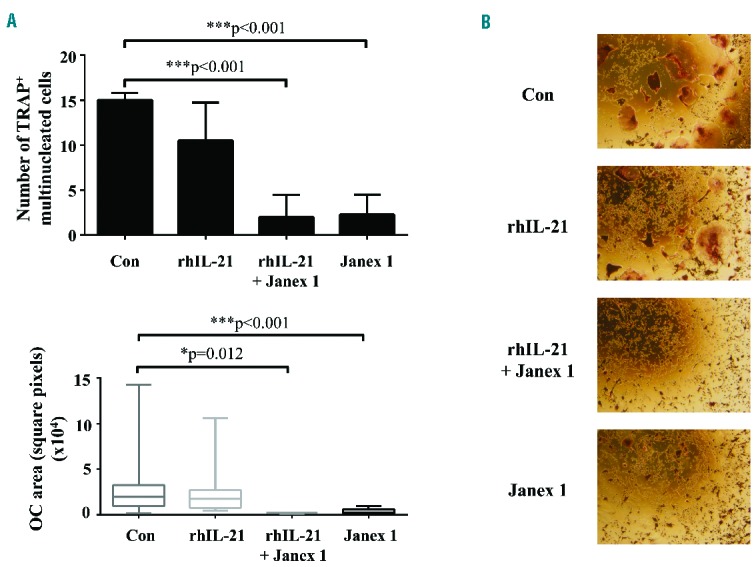
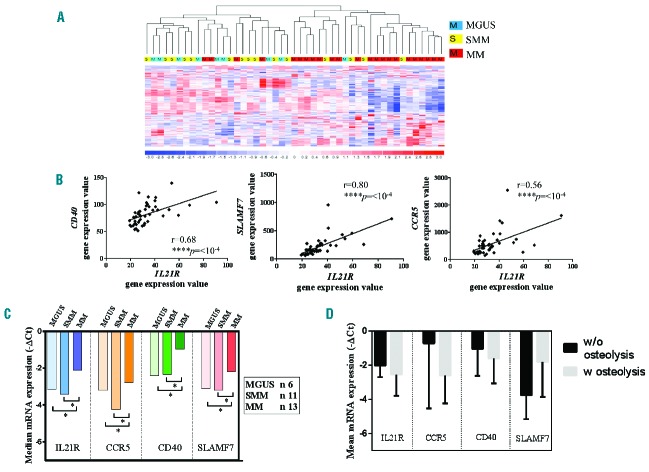
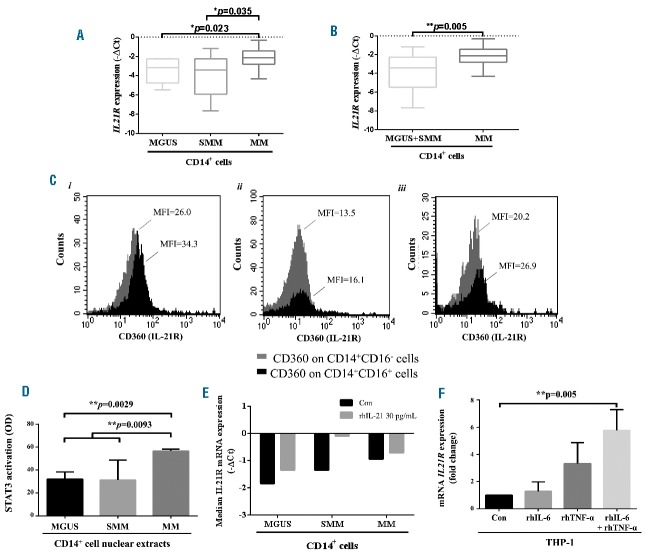
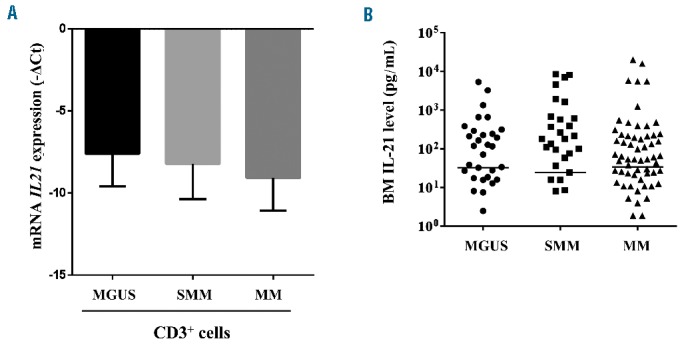
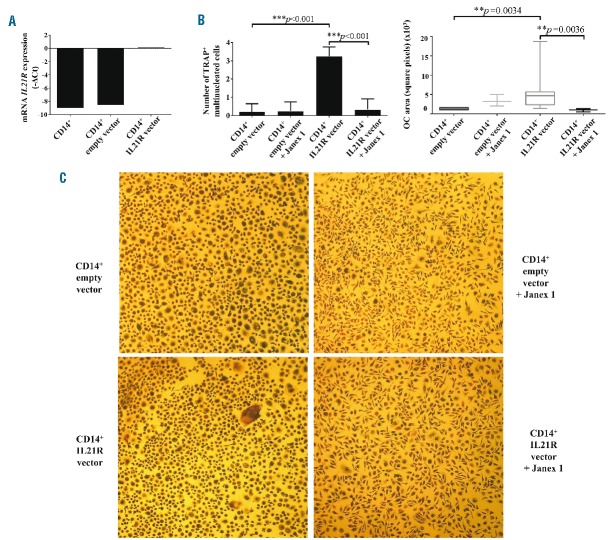
Bone marrow monocytes are primarily committed to osteoclast formation. It is, however, unknown whether potential primary alterations are specifically present in bone marrow monocytes from patients with multiple myeloma, smoldering myeloma or monoclonal gammopathy of undetermined significance. We analyzed the immunophenotypic and transcriptional profiles of bone marrow CD14 monocytes in a cohort of patients with different types of monoclonal gammopathies to identify alterations involved in myeloma-enhanced osteoclastogenesis. The number of bone marrow CD14CD16 cells was higher in patients with active myeloma than in those with smoldering myeloma or monoclonal gammopathy of undetermined significance. Interestingly, sorted bone marrow CD14CD16 cells from myeloma patients were more pro-osteoclastogenic than CD14CD16-cells in cultures Moreover, transcriptional analysis demonstrated that bone marrow CD14 cells from patients with multiple myeloma (but neither monoclonal gammopathy of undetermined significance nor smoldering myeloma) significantly upregulated genes involved in osteoclast formation, including mRNA over-expression by bone marrow CD14 cells was independent of the presence of interleukin-21. Consistently, interleukin-21 production by T cells as well as levels of interleukin-21 in the bone marrow were not significantly different among monoclonal gammopathies. Thereafter, we showed that over-expression in CD14 cells increased osteoclast formation. Consistently, interleukin-21 receptor signaling inhibition by Janex 1 suppressed osteoclast differentiation from bone marrow CD14 cells of myeloma patients. Our results indicate that bone marrow monocytes from multiple myeloma patients show distinct features compared to those from patients with indolent monoclonal gammopathies, supporting the role of over-expression by bone marrow CD14 cells in enhanced osteoclast formation.
骨髓单核细胞主要致力于破骨细胞的形成。然而,尚不清楚多发性骨髓瘤、冒烟型骨髓瘤或意义未明的单克隆丙种球蛋白病患者的骨髓单核细胞中是否特别存在潜在的原发性改变。我们分析了不同类型单克隆丙种球蛋白病患者队列中骨髓CD14单核细胞的免疫表型和转录谱,以确定参与骨髓瘤增强破骨细胞生成的改变。活动性骨髓瘤患者骨髓CD14CD16细胞的数量高于冒烟型骨髓瘤或意义未明的单克隆丙种球蛋白病患者。有趣的是,骨髓瘤患者分选的骨髓CD14CD16细胞在培养物中比CD14CD16细胞更具促破骨细胞生成能力。此外,转录分析表明,多发性骨髓瘤患者(而非意义未明的单克隆丙种球蛋白病或冒烟型骨髓瘤患者)的骨髓CD14细胞显著上调了参与破骨细胞形成的基因,包括 骨髓CD14细胞的mRNA过表达与白细胞介素-21的存在无关。一致地,单克隆丙种球蛋白病之间T细胞产生的白细胞介素-21以及骨髓中白细胞介素-21的水平没有显著差异。此后,我们表明 在CD14细胞中的过表达增加了破骨细胞的形成。同样,Janex 1对白细胞介素-21受体信号的抑制作用抑制了骨髓瘤患者骨髓CD14细胞的破骨细胞分化。我们的结果表明,与惰性单克隆丙种球蛋白病患者的骨髓单核细胞相比,多发性骨髓瘤患者的骨髓单核细胞表现出明显的特征,支持骨髓CD14细胞过表达在增强破骨细胞形成中的作用。