Neely Jamie M, Bezdek Máté J, Chirik Paul J
Department of Chemistry, Princeton University , Princeton, New Jersey 08544, United States.
ACS Cent Sci. 2016 Dec 28;2(12):935-942. doi: 10.1021/acscentsci.6b00283. Epub 2016 Dec 1.
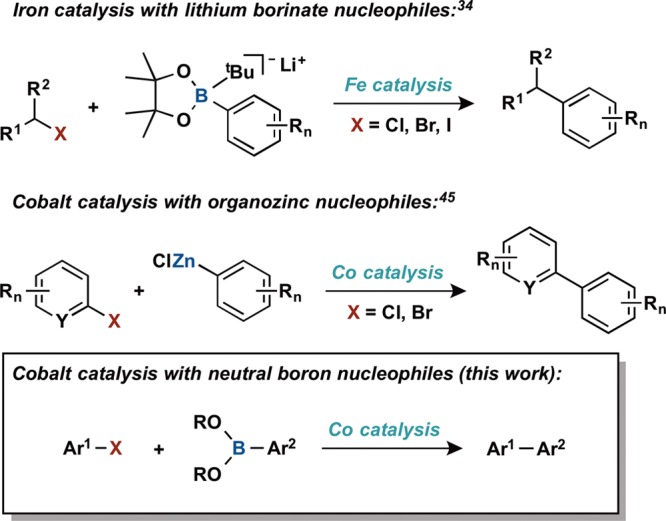
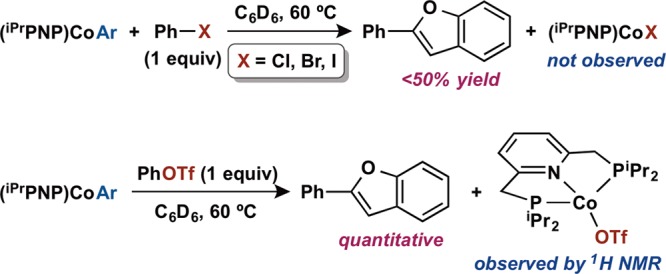
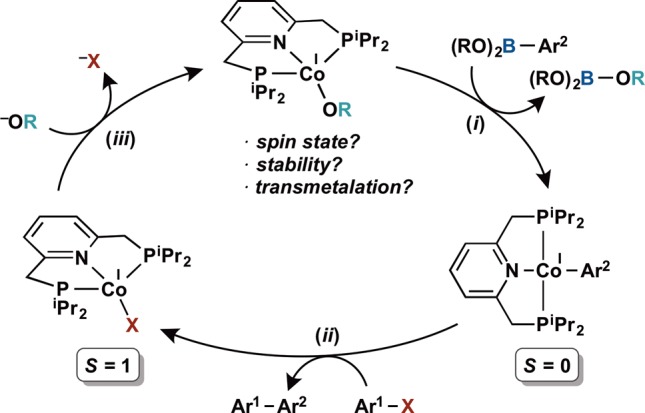
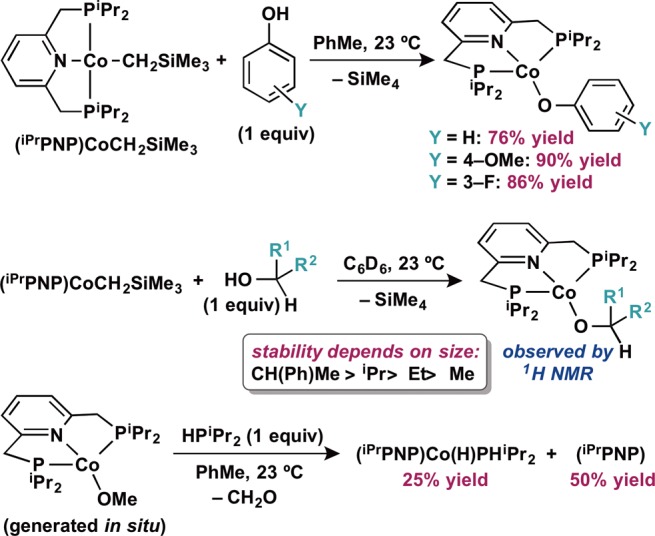
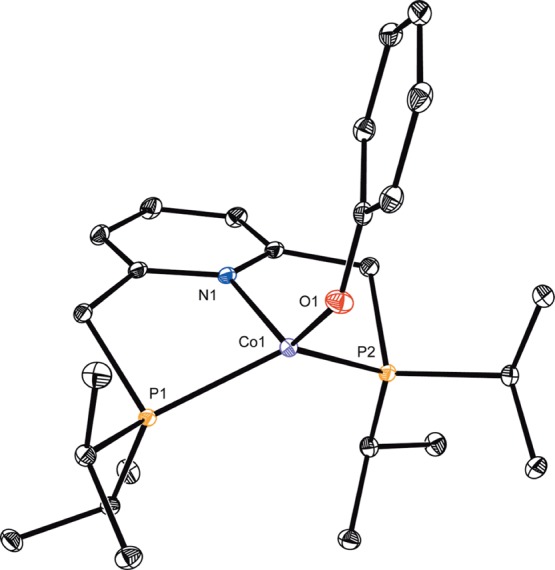
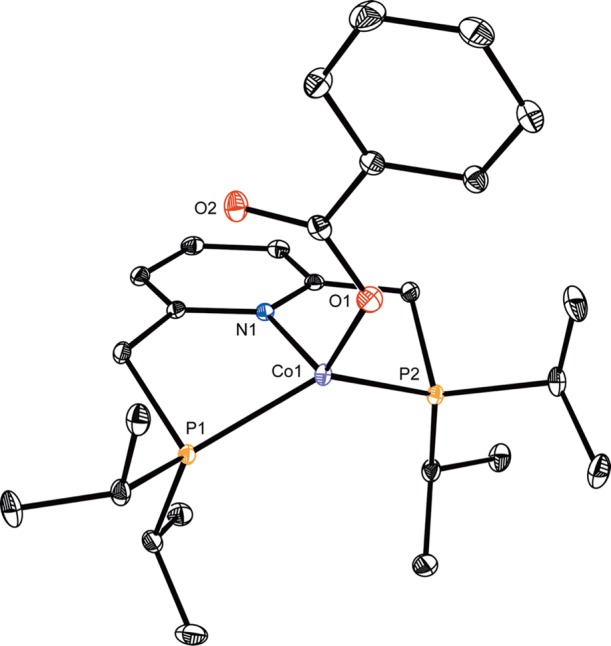
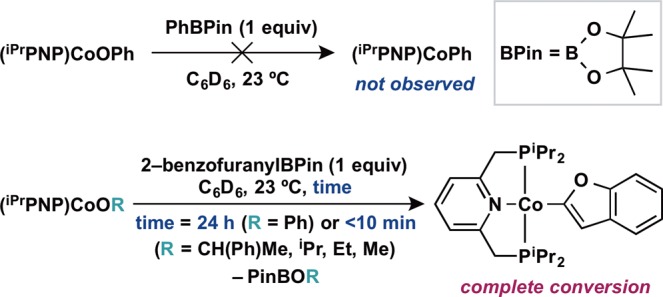
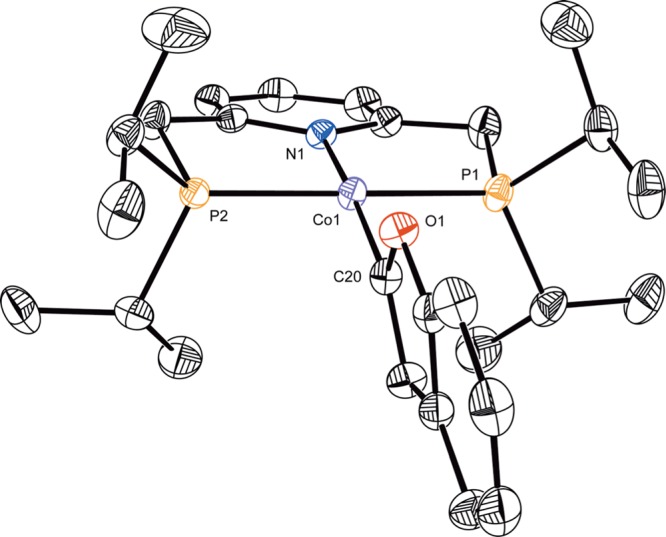
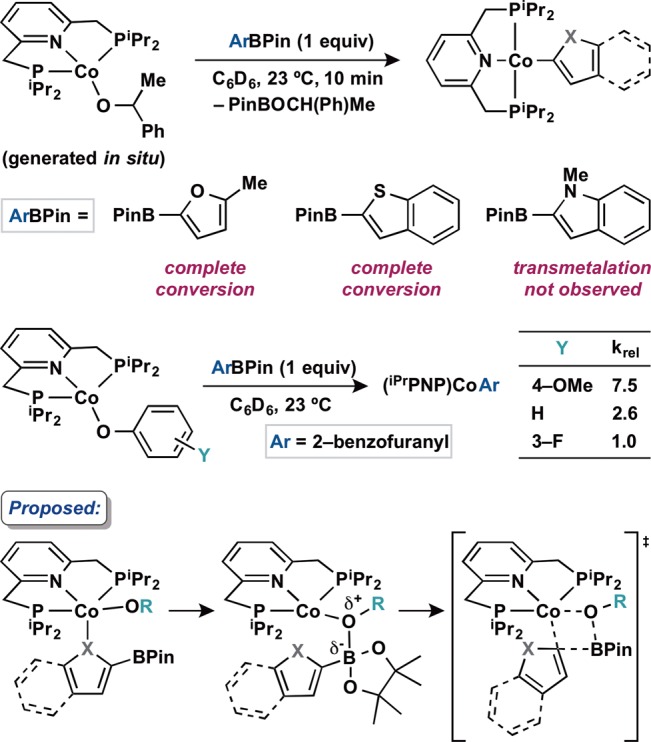
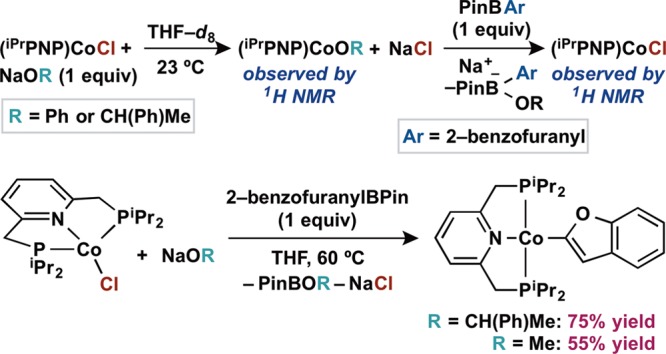
Among the fundamental transformations that comprise a catalytic cycle for cross coupling, transmetalation from the nucleophile to the metal catalyst is perhaps the least understood. Optimizing this elementary step has enabled the first example of a cobalt-catalyzed Suzuki-Miyaura cross coupling between aryl triflate electrophiles and heteroaryl boron nucleophiles. Key to this discovery was the preparation and characterization of a new class of tetrahedral, high-spin bis(phosphino)pyridine cobalt(I) alkoxide and aryloxide complexes, (PNP)CoOR, and optimizing their reactivity with 2-benzofuranylBPin (Pin = pinacolate). Cobalt compounds with small alkoxide substituents such as R = methyl and ethyl underwent swift transmetalation at 23 °C but also proved kinetically unstable toward β-H elimination. Secondary alkoxides such as R = Pr or CH(Ph)Me balanced stability and reactivity. Isolation and structural characterization of the product following transmetalation, (PNP)Co(2-benzofuranyl), established a planar, diamagnetic cobalt(I) complex, demonstrating the high- and low-spin states of cobalt(I) rapidly interconvert during this reaction. The insights from the studies in this elementary step guided selection of appropriate reaction conditions to enable the first examples of cobalt-catalyzed C-C bond formation between neutral boron nucleophiles and aryl triflate electrophiles, and a model for the successful transmetalation reactivity is proposed.
在构成交叉偶联催化循环的基本转化过程中,亲核试剂向金属催化剂的金属转移或许是了解最少的。对这一基本步骤的优化实现了首例钴催化芳基三氟甲磺酸酯亲电试剂与杂芳基硼亲核试剂之间的铃木-宫浦交叉偶联。这一发现的关键在于制备并表征了一类新型四面体、高自旋双(膦基)吡啶钴(I)醇盐和芳氧基配合物(PNP)CoOR,并优化了它们与2-苯并呋喃硼酸频哪醇酯(Pin = 频哪醇)的反应活性。具有小的醇盐取代基(如R = 甲基和乙基)的钴化合物在23℃下能迅速发生金属转移,但对β-H消除反应在动力学上也不稳定。仲醇盐(如R = Pr或CH(Ph)Me)则平衡了稳定性和反应活性。金属转移后产物(PNP)Co(2-苯并呋喃基)的分离和结构表征确定了一种平面、抗磁性的钴(I)配合物,表明钴(I)的高自旋态和低自旋态在该反应过程中能快速相互转化。在这一基本步骤中的研究所得见解指导了合适反应条件的选择,从而实现了首例中性硼亲核试剂与芳基三氟甲磺酸酯亲电试剂之间钴催化的C-C键形成,并提出了成功的金属转移反应活性模型。