Department of Biochemistry, University of Zurich, Winterthurerstrasse 190, 8057 Zurich, Switzerland.
Nat Commun. 2017 Jan 6;8:14033. doi: 10.1038/ncomms14033.
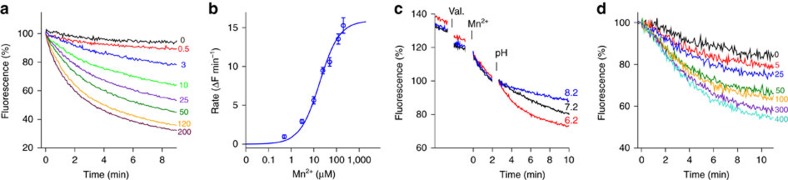
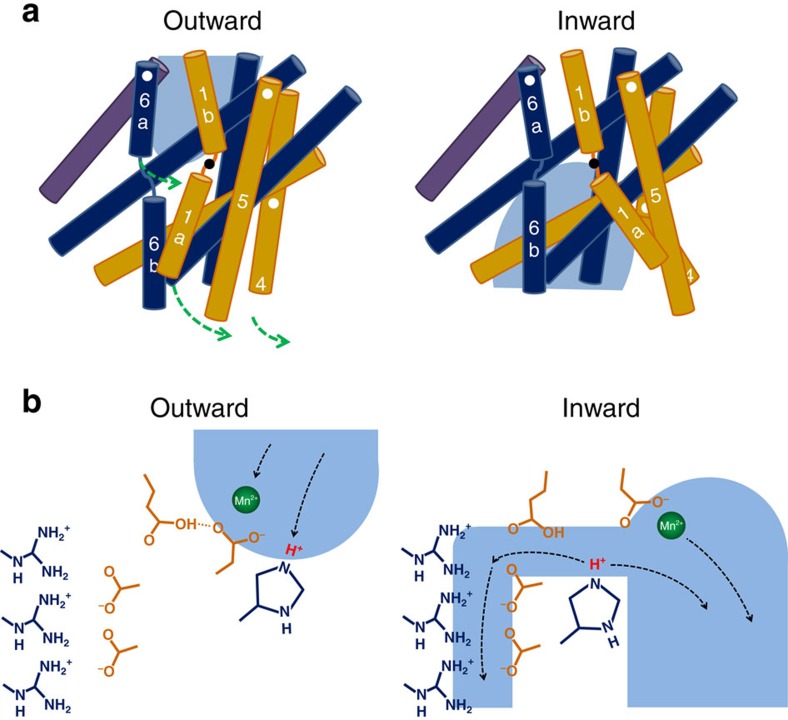
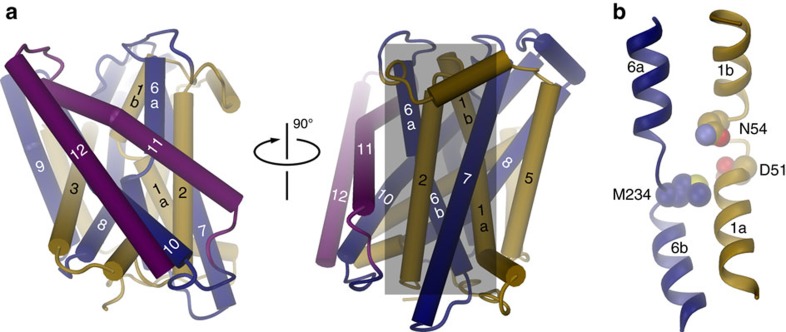
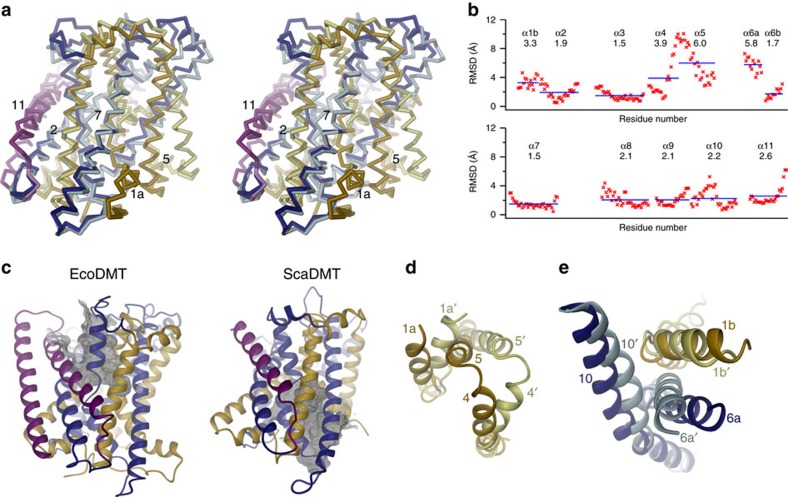
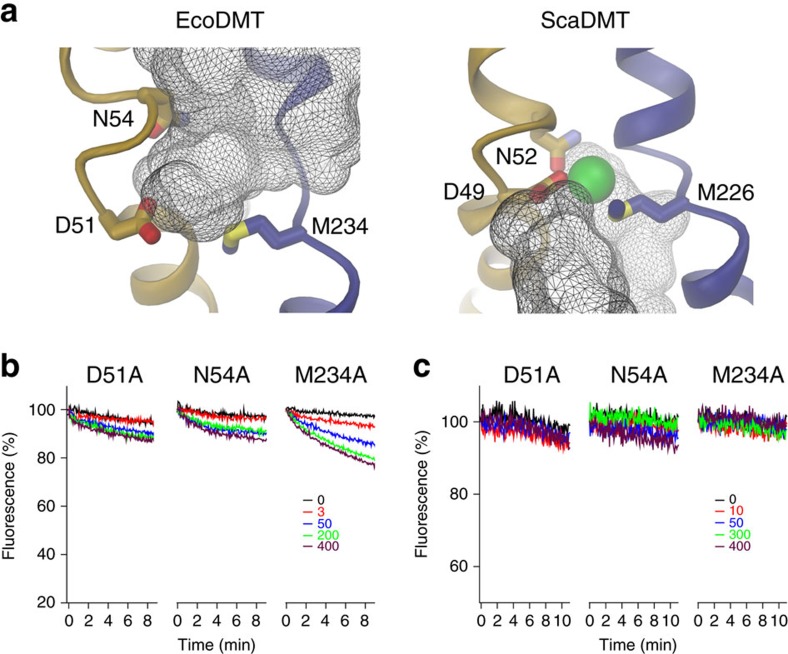
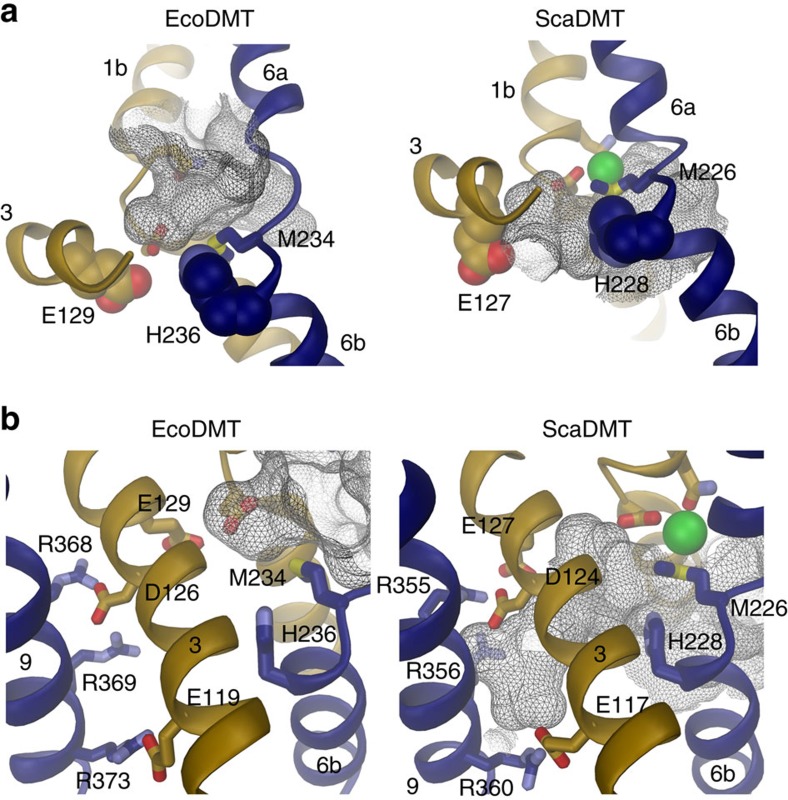
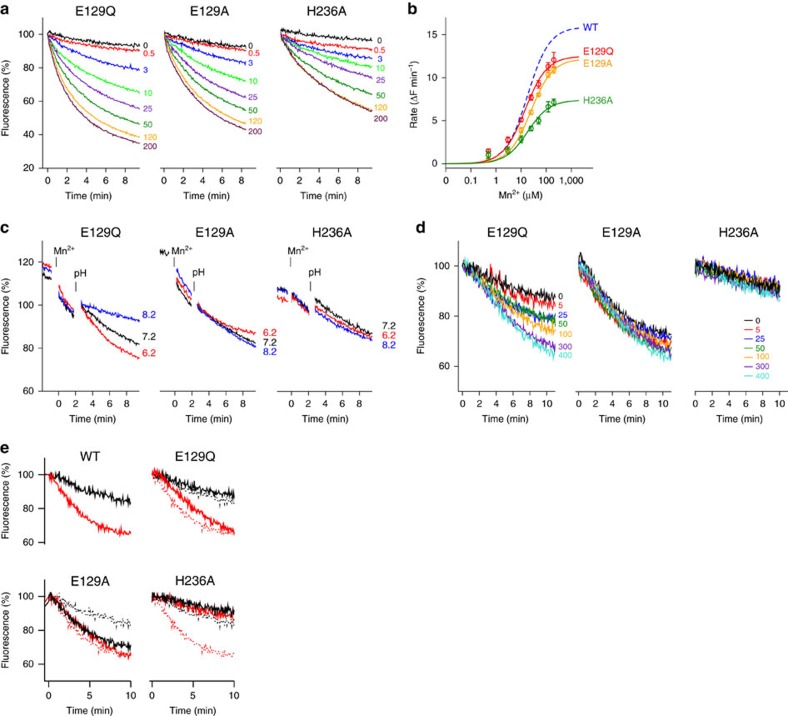
Secondary active transporters of the SLC11/NRAMP family catalyse the uptake of iron and manganese into cells. These proteins are highly conserved across all kingdoms of life and thus likely share a common transport mechanism. Here we describe the structural and functional properties of the prokaryotic SLC11 transporter EcoDMT. Its crystal structure reveals a previously unknown outward-facing state of the protein family. In proteoliposomes EcoDMT mediates proton-coupled uptake of manganese at low micromolar concentrations. Mutants of residues in the transition-metal ion-binding site severely affect transport, whereas a mutation of a conserved histidine located near this site results in metal ion transport that appears uncoupled to proton transport. Combined with previous results, our study defines the conformational changes underlying transition-metal ion transport in the SLC11 family and it provides molecular insight to its coupling to protons.
SLC11/NRAMP 家族的次级主动转运蛋白可催化铁和锰进入细胞。这些蛋白质在所有生命领域都高度保守,因此可能具有共同的运输机制。在这里,我们描述了原核 SLC11 转运蛋白 EcoDMT 的结构和功能特性。其晶体结构揭示了该蛋白家族以前未知的外向构象。在脂质体中,EcoDMT 介导锰在低微摩尔浓度下的质子偶联摄取。过渡金属离子结合位点残基的突变严重影响转运,而位于该位点附近的保守组氨酸的突变导致与质子转运解耦的金属离子转运。结合以前的结果,我们的研究定义了 SLC11 家族中过渡金属离子转运的构象变化,并为其与质子的偶联提供了分子见解。