Life Science Center of Tsukuba Advanced Research Alliance (TARA Center), University of Tsukuba, Tsukuba, Ibaraki 305-8577, Japan.
Graduate School of Life and Environmental Sciences, University of Tsukuba, Tsukuba, Ibaraki 305-8572, Japan.
Sci Rep. 2017 Jan 6;7:40056. doi: 10.1038/srep40056.
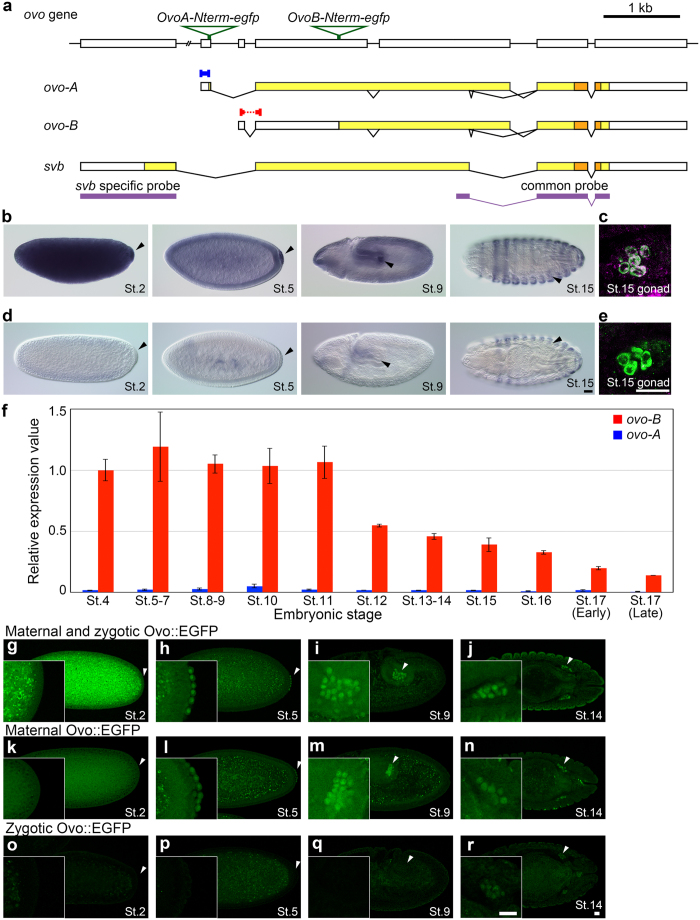
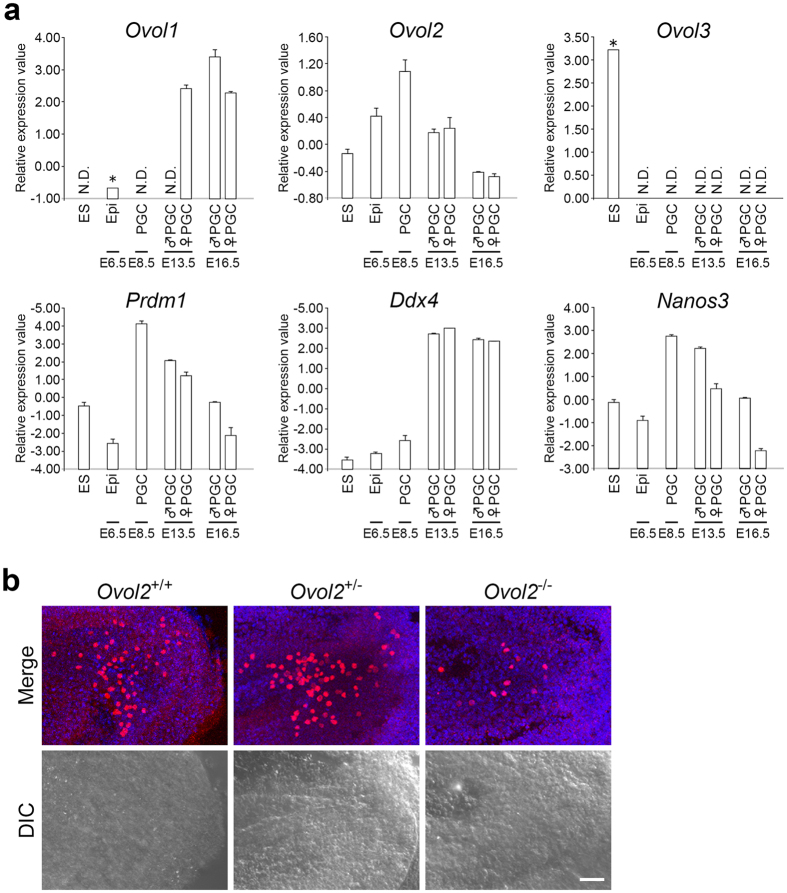
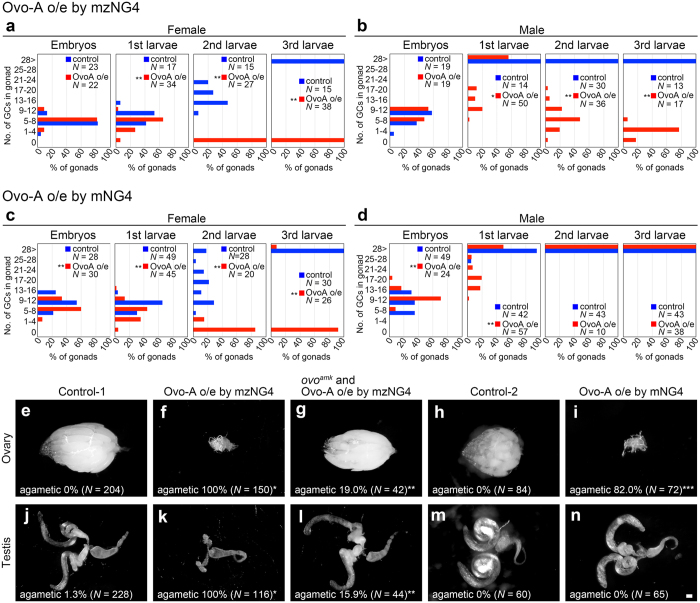
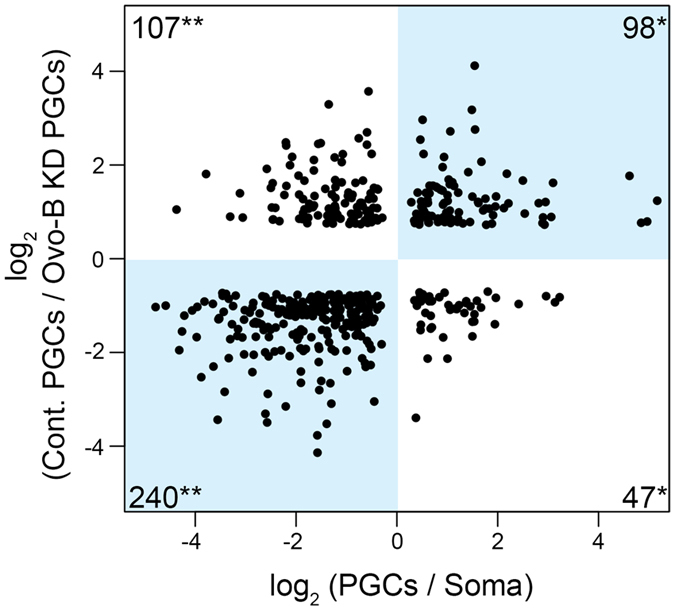
Ovo, which encodes a transcription factor with Zn-finger domains, is evolutionarily conserved among animals. In Drosophila, in addition to its zygotic function for egg production, maternal ovo activity is required in primordial germ cells (PGCs) for expression of germline genes such as vasa and nanos. In this study, we found that maternal Ovo accumulates in PGC nuclei during embryogenesis. In these cells, ovo serves a dual function: activation of genes expressed predominantly in PGCs, and conversely suppression of somatic genes. Reduction of ovo activity in PGCs makes them unable to develop normally into germ cells of both sexes. In mice, knockout of the ovo ortholog, Ovol2, which is expressed in PGCs, decreases the number of PGCs during early embryogenesis. These data strongly suggest that ovo acts as part of an evolutionarily conserved mechanism that regulates germline development in animals.
Ovo 编码具有锌指结构域的转录因子,在动物中具有进化保守性。在果蝇中,除了其在卵子发生中的合子功能外,母源性 Ovo 活性对于原始生殖细胞 (PGC) 中生殖系基因(如 vasa 和 nanos)的表达也是必需的。在这项研究中,我们发现母源性 Ovo 在胚胎发生过程中积累在 PGC 核中。在这些细胞中,ovo 具有双重功能:激活主要在 PGC 中表达的基因,以及相反地抑制体细胞基因。PGC 中 ovo 活性的降低使它们无法正常发育成两性的生殖细胞。在小鼠中,PGC 中表达的 ovo 同源物 Ovol2 的敲除会减少早期胚胎发生过程中的 PGC 数量。这些数据强烈表明,ovo 作为一个进化保守的机制的一部分,在动物中调节生殖系的发育。