Berg Marrit L, Cheung Kei Long, Hiligsmann Mickaël, Evers Silvia, de Kinderen Reina J A, Kulchaitanaroaj Puttarin, Pokhrel Subhash
Department of Health Services Research, CAPHRI Care and Public Health Research Institute, Maastricht University, Maastricht, The Netherlands.
Trimbos Institute, Netherlands Institute of Mental Health and Addiction, Utrecht, The Netherlands.
Addiction. 2017 Jun;112(6):946-967. doi: 10.1111/add.13748. Epub 2017 Feb 15.
To identify different types of models used in economic evaluations of smoking cessation, analyse the quality of the included models examining their attributes and ascertain their transferability to a new context.
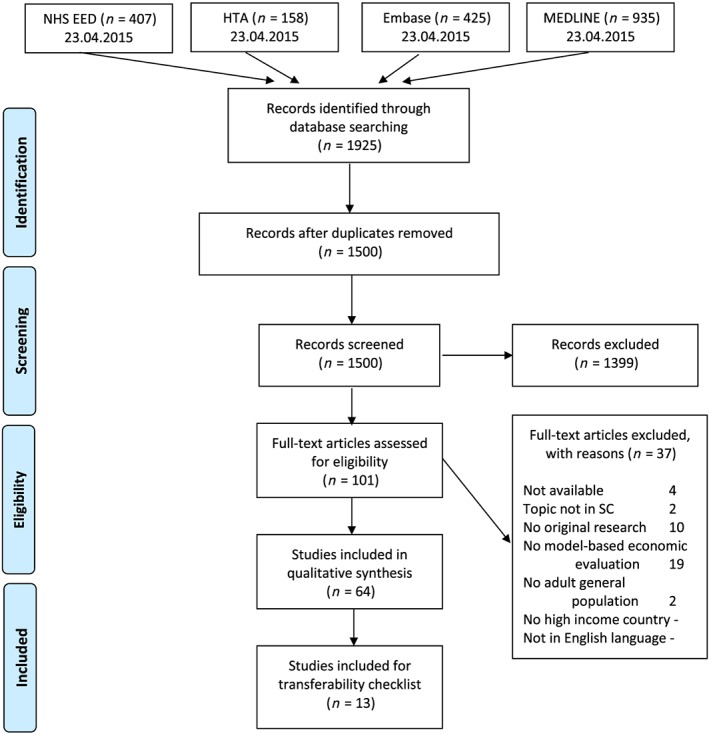
A systematic review of the literature on the economic evaluation of smoking cessation interventions published between 1996 and April 2015, identified via Medline, EMBASE, National Health Service (NHS) Economic Evaluation Database (NHS EED), Health Technology Assessment (HTA). The checklist-based quality of the included studies and transferability scores was based on the European Network of Health Economic Evaluation Databases (EURONHEED) criteria. Studies that were not in smoking cessation, not original research, not a model-based economic evaluation, that did not consider adult population and not from a high-income country were excluded.
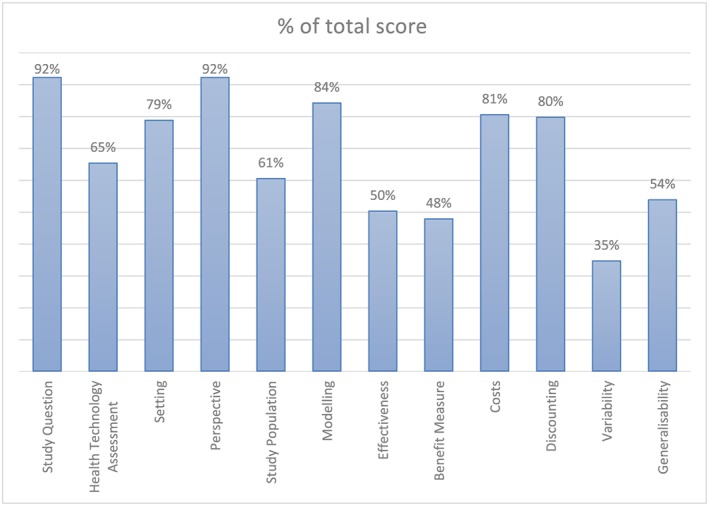
Among the 64 economic evaluations included in the review, the state-transition Markov model was the most frequently used method (n = 30/64), with quality adjusted life years (QALY) being the most frequently used outcome measure in a life-time horizon. A small number of the included studies (13 of 64) were eligible for EURONHEED transferability checklist. The overall transferability scores ranged from 0.50 to 0.97, with an average score of 0.75. The average score per section was 0.69 (range = 0.35-0.92). The relative transferability of the studies could not be established due to a limitation present in the EURONHEED method.
All existing economic evaluations in smoking cessation lack in one or more key study attributes necessary to be fully transferable to a new context.
识别戒烟经济评估中使用的不同类型模型,分析纳入模型的质量,考察其属性,并确定其向新环境的可转移性。
通过Medline、EMBASE、英国国家医疗服务体系(NHS)经济评估数据库(NHS EED)、卫生技术评估(HTA)对1996年至2015年4月发表的关于戒烟干预经济评估的文献进行系统综述。纳入研究基于清单的质量和可转移性得分基于欧洲卫生经济评估数据库网络(EURONHEED)标准。排除非戒烟研究、非原创研究、非基于模型的经济评估、未考虑成年人群以及非来自高收入国家的研究。
在综述纳入的64项经济评估中,状态转换马尔可夫模型是最常用的方法(n = 30/64),在终身视角下,质量调整生命年(QALY)是最常用的结果指标。纳入研究中少数(64项中的13项)符合EURONHEED可转移性清单标准。总体可转移性得分范围为0.50至0.97,平均得分为0.75。各部分平均得分0.69(范围 = 0.35 - 0.92)。由于EURONHEED方法存在局限性,无法确定这些研究的相对可转移性。
所有现有的戒烟经济评估都缺乏一项或多项完全转移到新环境所需的关键研究属性。