Ceulemans Laurens J, Verbeke Len, Decuypere Jean-Paul, Farré Ricard, De Hertogh Gert, Lenaerts Kaatje, Jochmans Ina, Monbaliu Diethard, Nevens Frederik, Tack Jan, Laleman Wim, Pirenne Jacques
Abdominal Transplant Surgery, University Hospitals Leuven, & Department of Microbiology and Immunology, KU Leuven, Belgium.
Liver and Biliopancreatic Disorders, University Hospitals Leuven, KU Leuven, Belgium.
PLoS One. 2017 Jan 6;12(1):e0169331. doi: 10.1371/journal.pone.0169331. eCollection 2017.
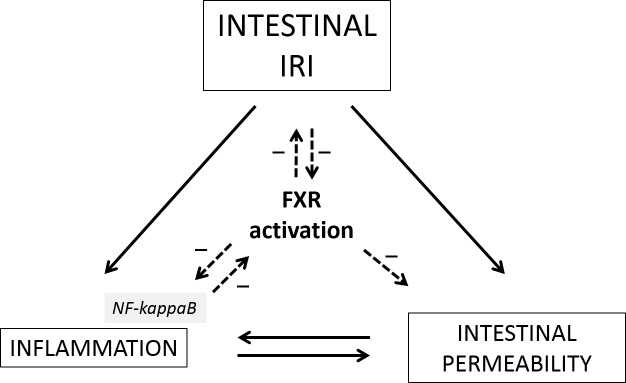
The farnesoid X receptor (FXR) is abundantly expressed in the ileum, where it exerts an enteroprotective role as a key regulator of intestinal innate immunity and homeostasis, as shown in pre-clinical models of inflammatory bowel disease. Since intestinal ischemia reperfusion injury (IRI) is characterized by hyperpermeability, bacterial translocation and inflammation, we aimed to investigate, for the first time, if the FXR-agonist obeticholic acid (OCA) could attenuate intestinal ischemia reperfusion injury.
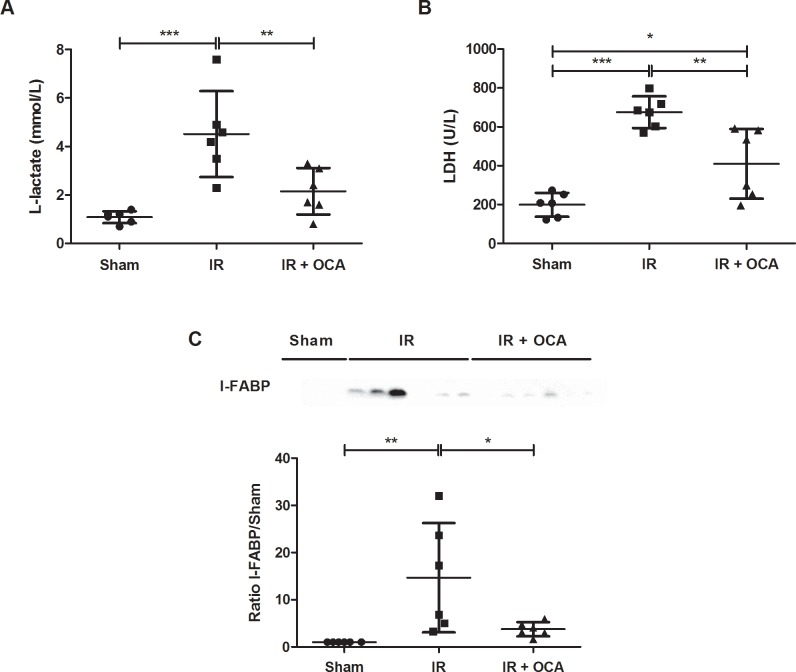
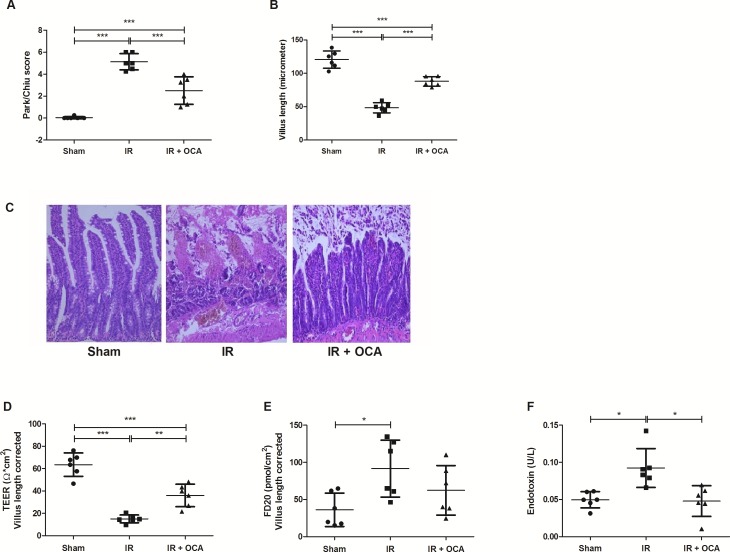
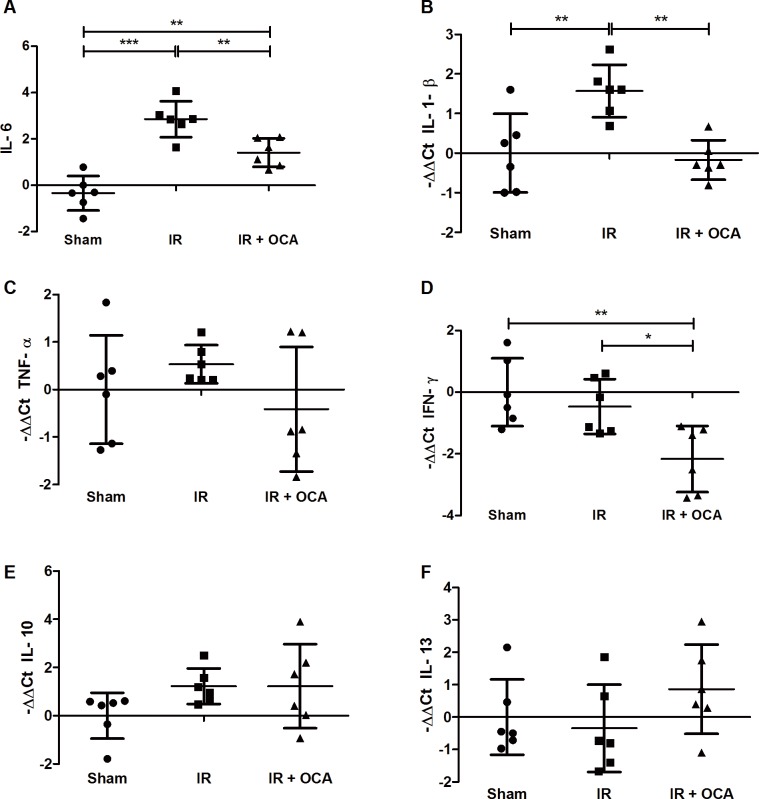
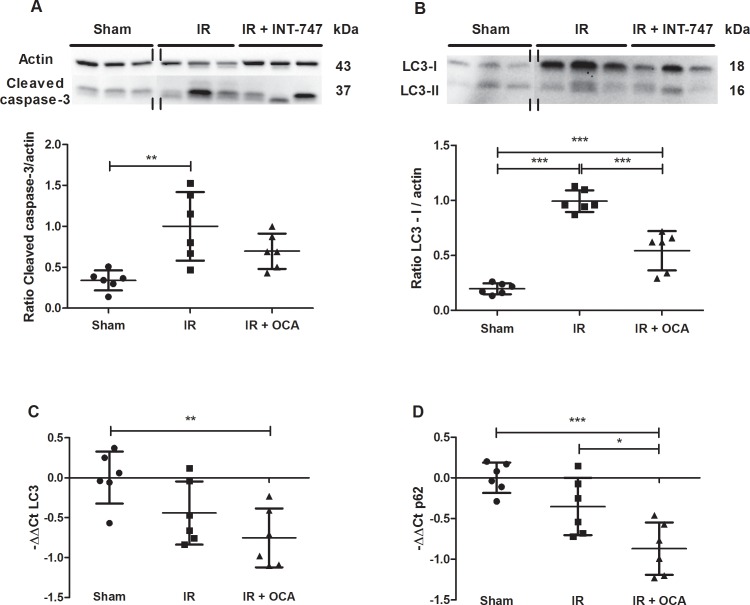
In a validated rat model of intestinal IRI (laparotomy + temporary mesenteric artery clamping), 3 conditions were tested (n = 16/group): laparotomy only (sham group); ischemia 60min+ reperfusion 60min + vehicle pretreatment (IR group); ischemia 60min + reperfusion 60min + OCA pretreatment (IR+OCA group). Vehicle or OCA (INT-747, 2*30mg/kg) was administered by gavage 24h and 4h prior to IRI. The following end-points were analyzed: 7-day survival; biomarkers of enterocyte viability (L-lactate, I-FABP); histology (morphologic injury to villi/crypts and villus length); intestinal permeability (Ussing chamber); endotoxin translocation (Lipopolysaccharide assay); cytokines (IL-6, IL-1-β, TNFα, IFN-γ IL-10, IL-13); apoptosis (cleaved caspase-3); and autophagy (LC3, p62).
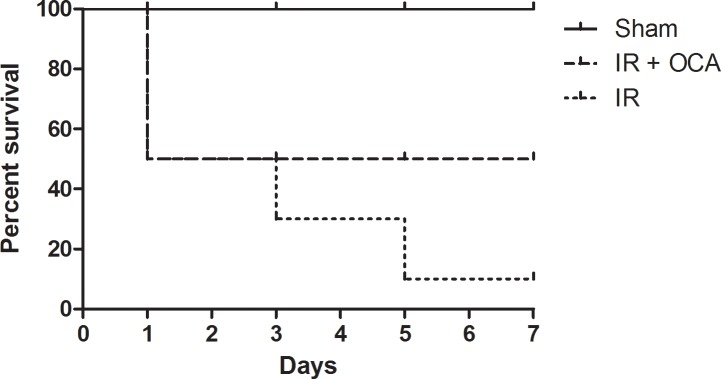
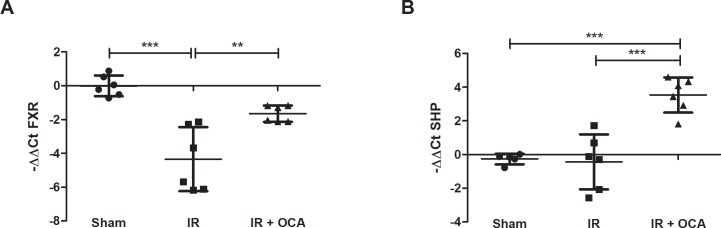
It was found that intestinal IRI was associated with high mortality (90%); loss of intestinal integrity (structurally and functionally); increased endotoxin translocation and pro-inflammatory cytokine production; and inhibition of autophagy. Conversely, OCA-pretreatment improved 7-day survival up to 50% which was associated with prevention of epithelial injury, preserved intestinal architecture and permeability. Additionally, FXR-agonism led to decreased pro-inflammatory cytokine release and alleviated autophagy inhibition.
Pretreatment with OCA, an FXR-agonist, improves survival in a rodent model of intestinal IRI, preserves the gut barrier function and suppresses inflammation. These results turn FXR into a promising target for various conditions associated with intestinal ischemia.
法尼酯X受体(FXR)在回肠中大量表达,在炎症性肠病的临床前模型中显示,它作为肠道固有免疫和内稳态的关键调节因子发挥肠保护作用。由于肠道缺血再灌注损伤(IRI)的特征是通透性增加、细菌易位和炎症,我们旨在首次研究FXR激动剂奥贝胆酸(OCA)是否能减轻肠道缺血再灌注损伤。
在一个经过验证的大鼠肠道IRI模型(剖腹术+临时肠系膜动脉夹闭)中,测试了3种情况(每组n = 16):仅剖腹术(假手术组);缺血60分钟+再灌注60分钟+载体预处理(IR组);缺血60分钟+再灌注60分钟+OCA预处理(IR+OCA组)。在IRI前24小时和4小时通过灌胃给予载体或OCA(INT-747,2×30mg/kg)。分析了以下终点指标:7天生存率;肠上皮细胞活力生物标志物(L-乳酸、I-FABP);组织学(绒毛/隐窝的形态学损伤和绒毛长度);肠道通透性(尤斯灌流小室);内毒素易位(脂多糖测定);细胞因子(IL-6、IL-1-β、TNFα、IFN-γ、IL-10、IL-13);凋亡(裂解的半胱天冬酶-3);以及自噬(LC3、p62)。
发现肠道IRI与高死亡率(90%)相关;肠道完整性丧失(结构和功能方面);内毒素易位增加和促炎细胞因子产生增加;以及自噬受到抑制。相反,OCA预处理使7天生存率提高了50%,这与预防上皮损伤、保留肠道结构和通透性有关。此外,FXR激动导致促炎细胞因子释放减少,并减轻了自噬抑制。
FXR激动剂OCA预处理可提高啮齿动物肠道IRI模型的生存率,保留肠道屏障功能并抑制炎症。这些结果使FXR成为与肠道缺血相关的各种病症的一个有前景的靶点。