Zhang Liwei, Li Guangyu, Sessa Roberto, Kang Gyeong Jin, Shi Meng, Ge Shaokui, Gong Anna Jiang, Wen Ying, Chintharlapalli Sudhakar, Chen Lu
Vision Science Graduate Group, University of California, Berkeley, California, United States 2Center for Eye Disease and Development, Program in Vision Science and School of Optometry, University of California, Berkeley, California, United States 3Department of Ophthalmology, Second Xiangya Hospital, Central South University, Changsha, China.
Vision Science Graduate Group, University of California, Berkeley, California, United States 2Center for Eye Disease and Development, Program in Vision Science and School of Optometry, University of California, Berkeley, California, United States.
Invest Ophthalmol Vis Sci. 2017 Jan 1;58(1):79-86. doi: 10.1167/iovs.16-20485.
Corneal transplantation remains the last hope for vision restoration, and lymphangiogenesis (LG) is a primary mediator of transplant rejection. This study was to investigate the specific role of angiopoietin-2 (Ang-2) in transplantation-associated LG and graft rejection.
Orthotopic corneal transplantation was performed between fully mismatched C57BL/6 (donor) and BALB/c (recipient) mice to assess the effects of Ang-2 blockade via neutralizing antibody. Grafts were evaluated in vivo by ophthalmic slit-lamp biomicroscopy and anterior segment optical coherence tomography (OCT) up to 8 weeks after surgery. Additionally, whole-mount corneas were analyzed for lymphatic and blood vessels and macrophages by immunofluorescent microscopy, and draining lymph nodes were assessed for donor-derived cells by flow cytometry.
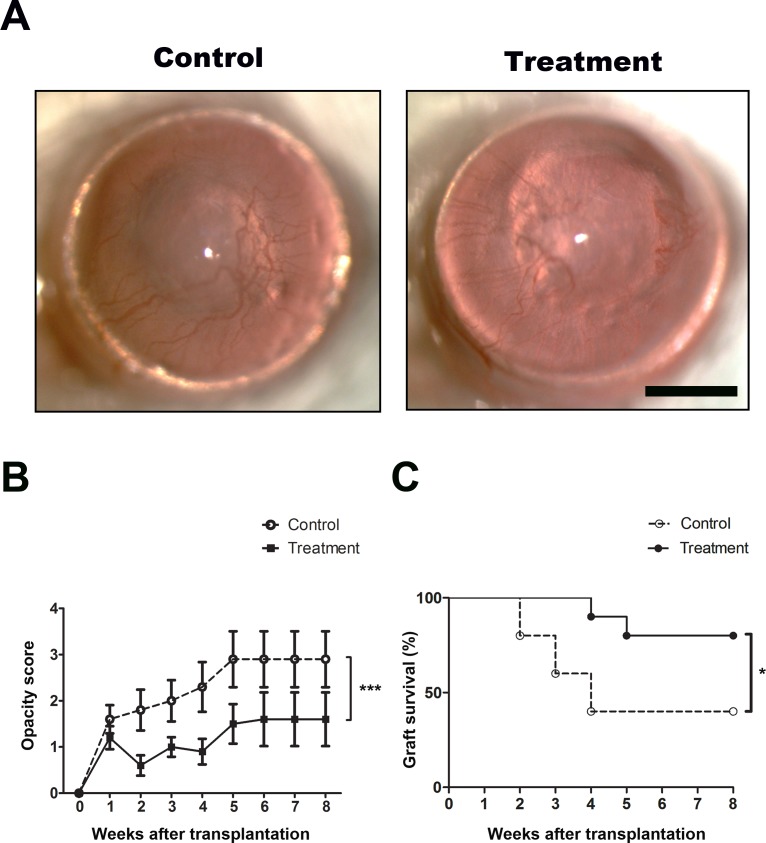
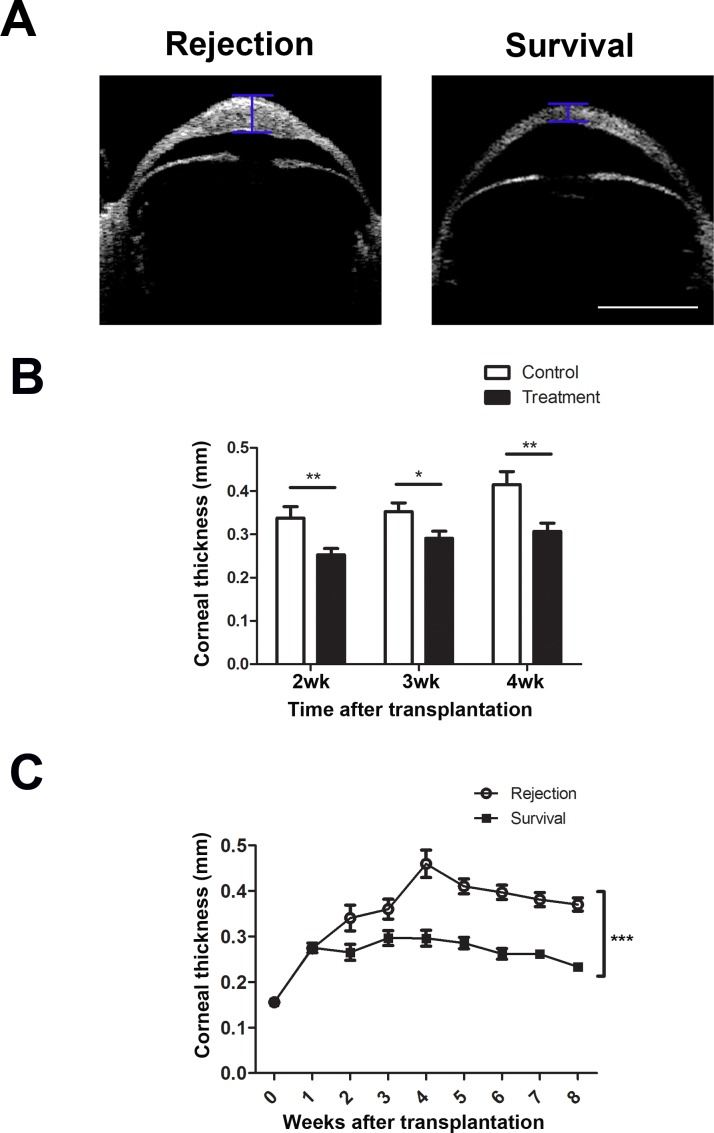
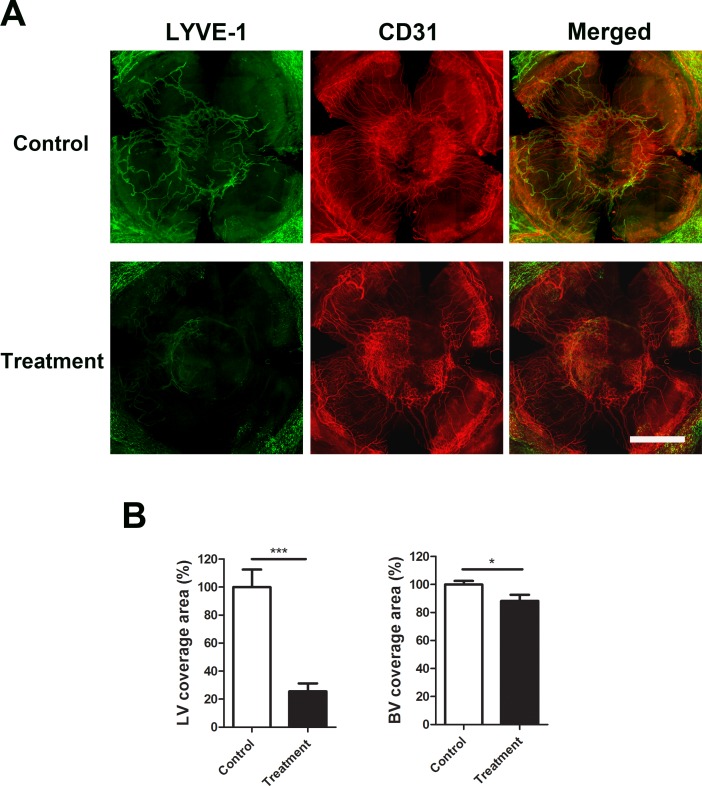
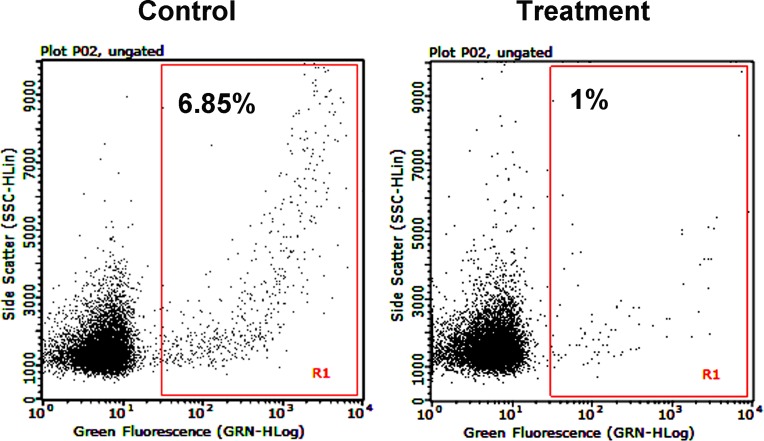
Anti-Ang-2 treatment significantly suppressed LG and graft rejection. In this study, we achieved 75% suppression of LG and 80% graft survival. Our approach also inhibited donor-derived cell trafficking to draining lymph nodes and affected macrophage morphologic phenotypes in the grafted corneas. Additionally, Ang-2 blockade also reduced central corneal thickening, a parameter strongly associated with graft rejection.
Ang-2 is critically involved in corneal transplant rejection and anti-Ang-2 treatment significantly improves the outcomes of corneal grafts. Moreover, we have shown that anterior segment OCT offers a new tool to monitor murine corneal grafts in vivo. This study not only reveals new mechanisms for transplant rejection, but also offers a novel strategy to treat it.
角膜移植仍是恢复视力的最后希望,而淋巴管生成(LG)是移植排斥反应的主要介导因素。本研究旨在探讨血管生成素-2(Ang-2)在移植相关LG和移植物排斥反应中的具体作用。
在完全不匹配的C57BL/6(供体)和BALB/c(受体)小鼠之间进行原位角膜移植,以评估通过中和抗体阻断Ang-2的效果。术后长达8周,通过眼科裂隙灯生物显微镜检查和眼前节光学相干断层扫描(OCT)对移植物进行体内评估。此外,通过免疫荧光显微镜分析全层角膜的淋巴管、血管和巨噬细胞,并通过流式细胞术评估引流淋巴结中的供体来源细胞。
抗Ang-2治疗显著抑制LG和移植物排斥反应。在本研究中,我们实现了75%的LG抑制率和80%的移植物存活率。我们的方法还抑制了供体来源细胞向引流淋巴结的迁移,并影响了移植角膜中巨噬细胞的形态表型。此外,阻断Ang-2还减少了中央角膜增厚,这是一个与移植物排斥反应密切相关的参数。
Ang-2在角膜移植排斥反应中起关键作用,抗Ang-2治疗显著改善角膜移植的效果。此外,我们已经证明眼前节OCT为体内监测小鼠角膜移植物提供了一种新工具。本研究不仅揭示了移植排斥反应的新机制,还提供了一种治疗移植排斥反应的新策略。