Cortez Daniel Nogueira, Macedo Maísa Mara Lopes, Souza Débora Aparecida Silva, Dos Santos Jéssica Caroline, Afonso Gesana Sousa, Reis Ilka Afonso, Torres Heloísa de Carvalho
Federal University of São João del-Rei (Centro Oeste Campus), Divinópolis, Brasil.
School of Nursing, Federal University of Minas Gerais, Belo Horizonte, Brazil.
BMC Public Health. 2017 Jan 6;17(1):41. doi: 10.1186/s12889-016-3937-5.
The prevalence of type 2 diabetes mellitus is increasing substantially worldwide, leading to serious economic effects, complications and deaths. This study evaluated the effectiveness of an empowerment program providing support for psychosocial, behavioral, and clinical aspects of diabetes to help Brazilian users of public health services obtain metabolic control of this condition.
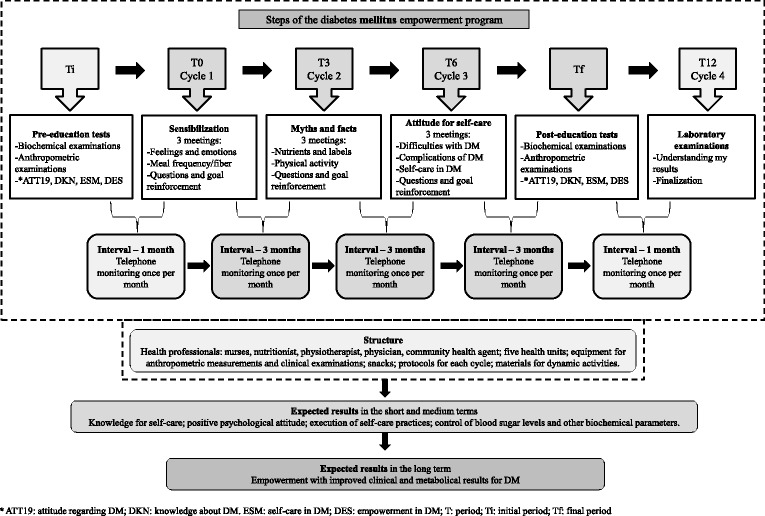
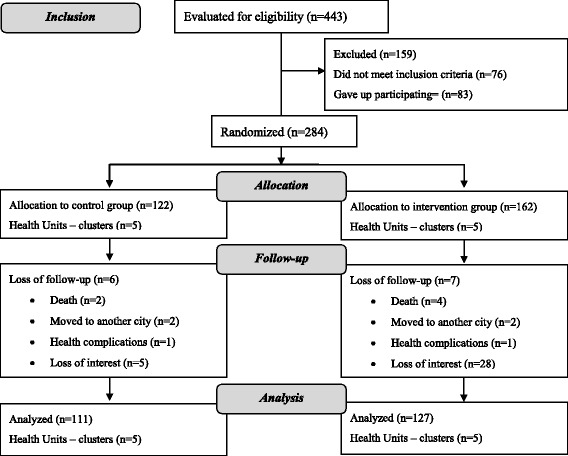
In this cluster randomized trial, participants aged 30-80 diagnosed with type 2 diabetes were recruited from ten Brazilian public health units in 2014 and 2015. Five units were randomly assigned to receive the empowerment program based on a behavior change protocol, and five continued to receive only conventional treatment. The primary outcome was the biochemical and anthropometric parameters, and the secondary outcomes were self-care, attitude, knowledge and empowerment related to diabetes. The effect of the experiment was defined as the percentage variation between the values at the initial and final periods. To evaluate this effect and to compare it in the two groups, tests were used for paired and independent samples, respectively.
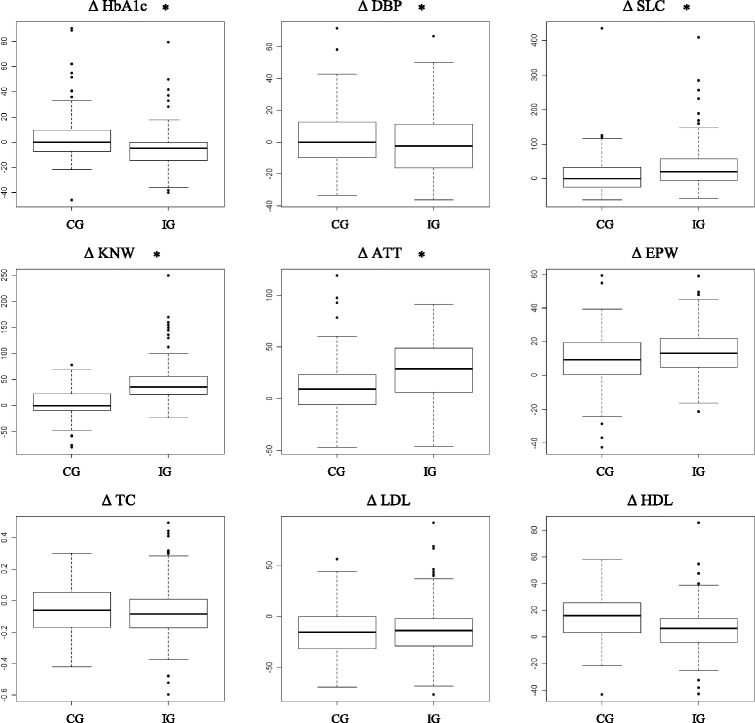
There were 238 participants: 127 and 111 in the intervention and control group, respectively. For glycated hemoglobin, the mean effect in the control and intervention groups was 3.93 and -5.13, respectively (p < 0.001). Levels of glycated hemoglobin and other metabolic indicators, as well as the most part of the secondary outcomes showed a significant difference in the experimental group compared to the control group.
The empowerment program improved metabolic control of type 2 diabetes in Brazilian users.
NCT02132338 - April 22, 2014.
2型糖尿病在全球的患病率正在大幅上升,导致严重的经济影响、并发症和死亡。本研究评估了一项赋权计划的有效性,该计划为糖尿病的心理社会、行为和临床方面提供支持,以帮助巴西公共卫生服务使用者实现对该疾病的代谢控制。
在这项整群随机试验中,2014年和2015年从巴西10个公共卫生单位招募了年龄在30 - 80岁、诊断为2型糖尿病的参与者。五个单位被随机分配接受基于行为改变方案的赋权计划,另外五个单位继续仅接受常规治疗。主要结局是生化和人体测量参数,次要结局是与糖尿病相关的自我护理、态度、知识和赋权。实验效果定义为初始和最终阶段数值之间的百分比变化。为评估这一效果并在两组之间进行比较,分别使用了配对样本和独立样本检验。
共有238名参与者,干预组和对照组分别有127名和111名。对于糖化血红蛋白,对照组和干预组的平均效果分别为3.93和 -5.13(p < 0.001)。与对照组相比,实验组的糖化血红蛋白水平和其他代谢指标以及大部分次要结局均存在显著差异。
赋权计划改善了巴西使用者2型糖尿病的代谢控制。
NCT02132338 - 2014年4月22日。