Chester Beatty Laboratories, Division of Cancer Biology, Institute of Cancer Research, 237 Fulham Road, London SW3 6JB, UK.
Chester Beatty Laboratories, Division of Cancer Biology, Institute of Cancer Research, 237 Fulham Road, London SW3 6JB, UK.
Cell Syst. 2017 Jan 25;4(1):84-96.e6. doi: 10.1016/j.cels.2016.11.015. Epub 2017 Jan 5.
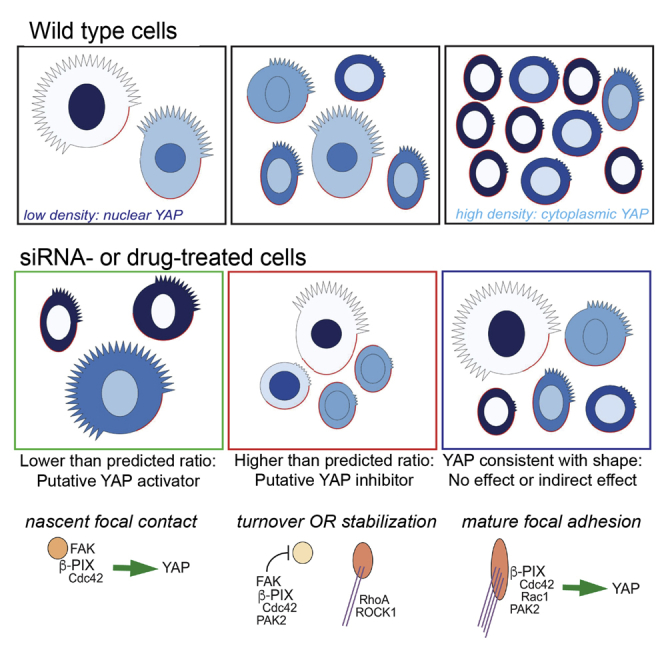
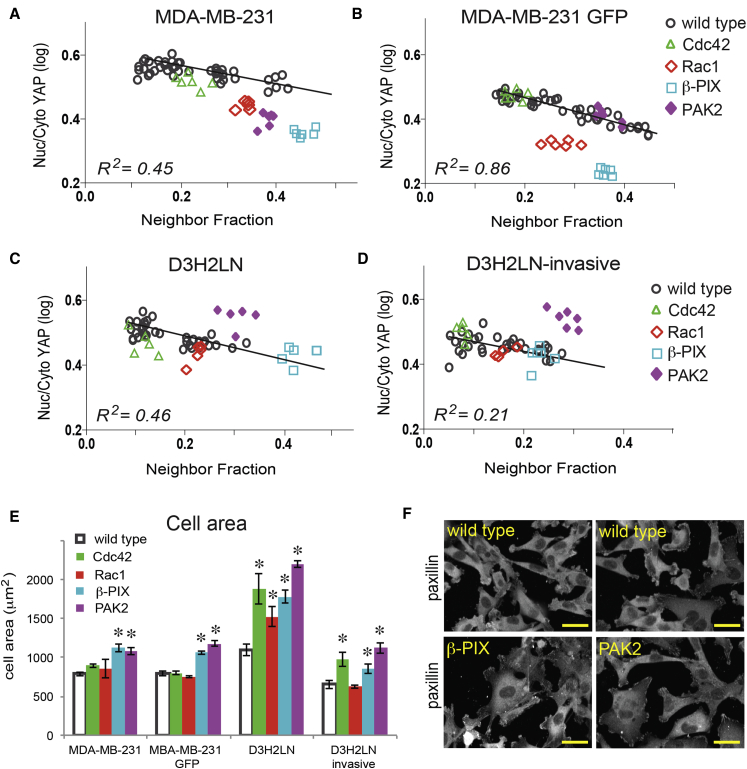
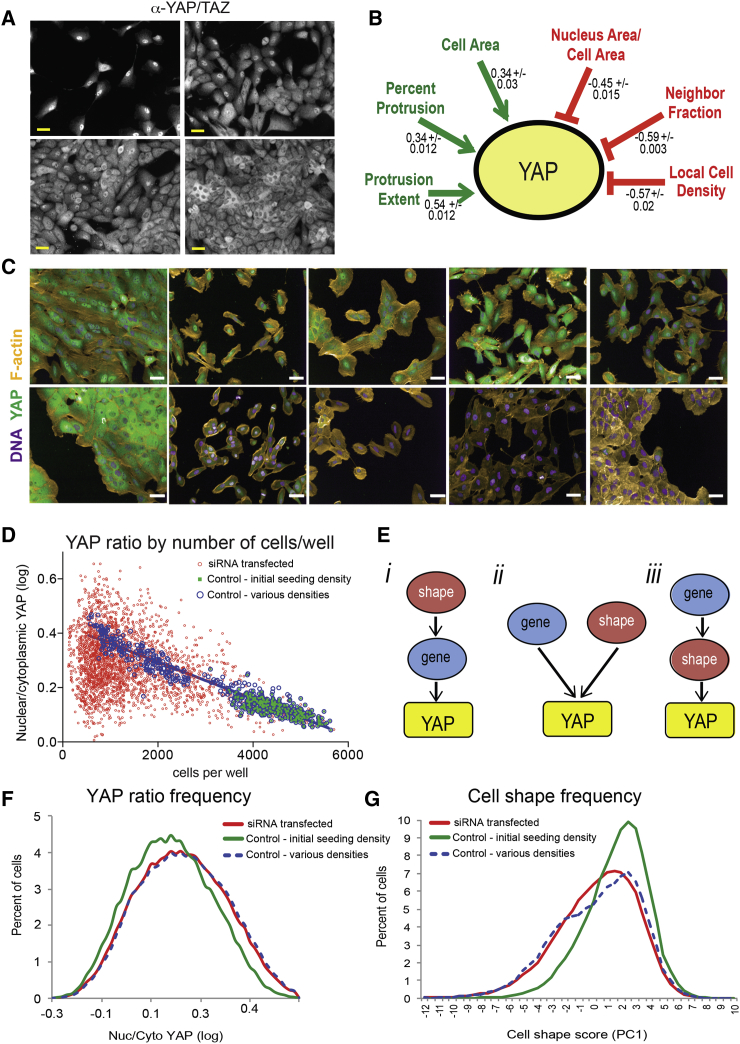
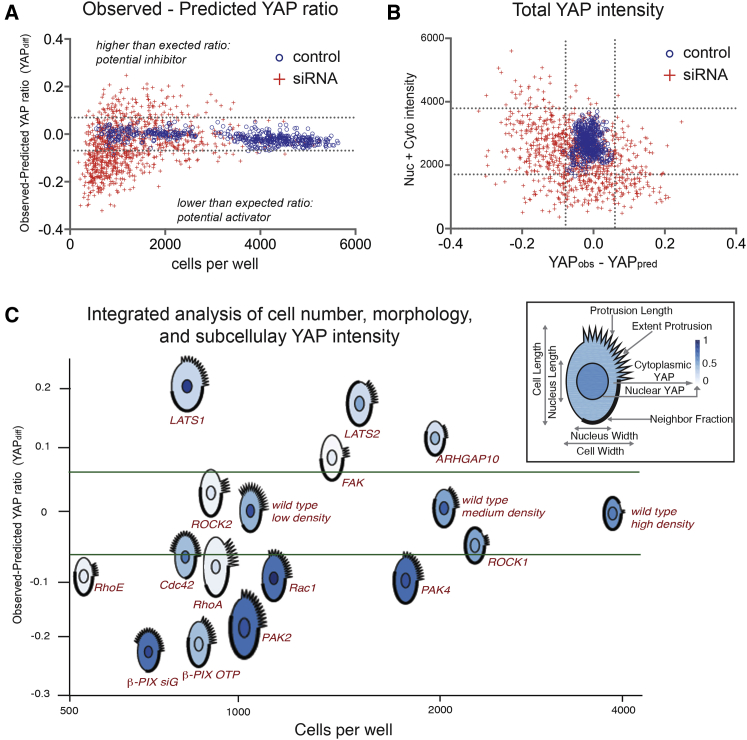
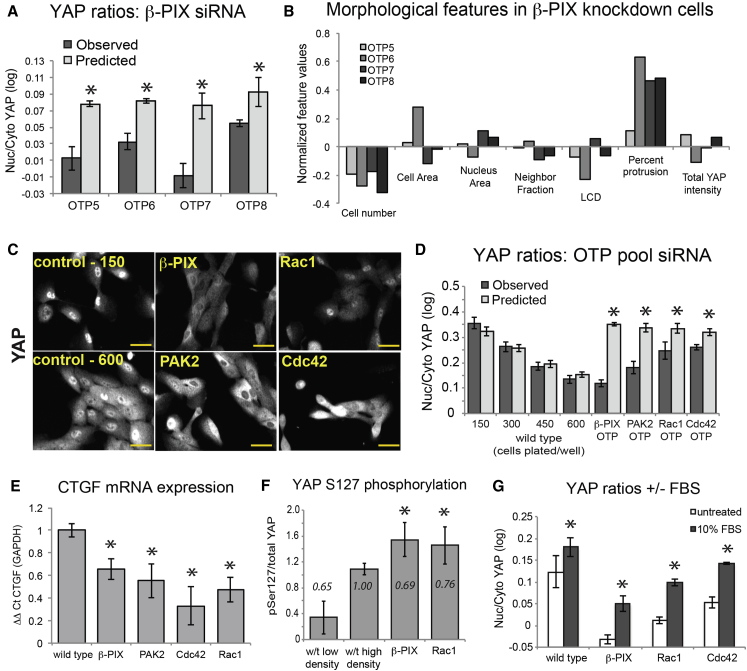
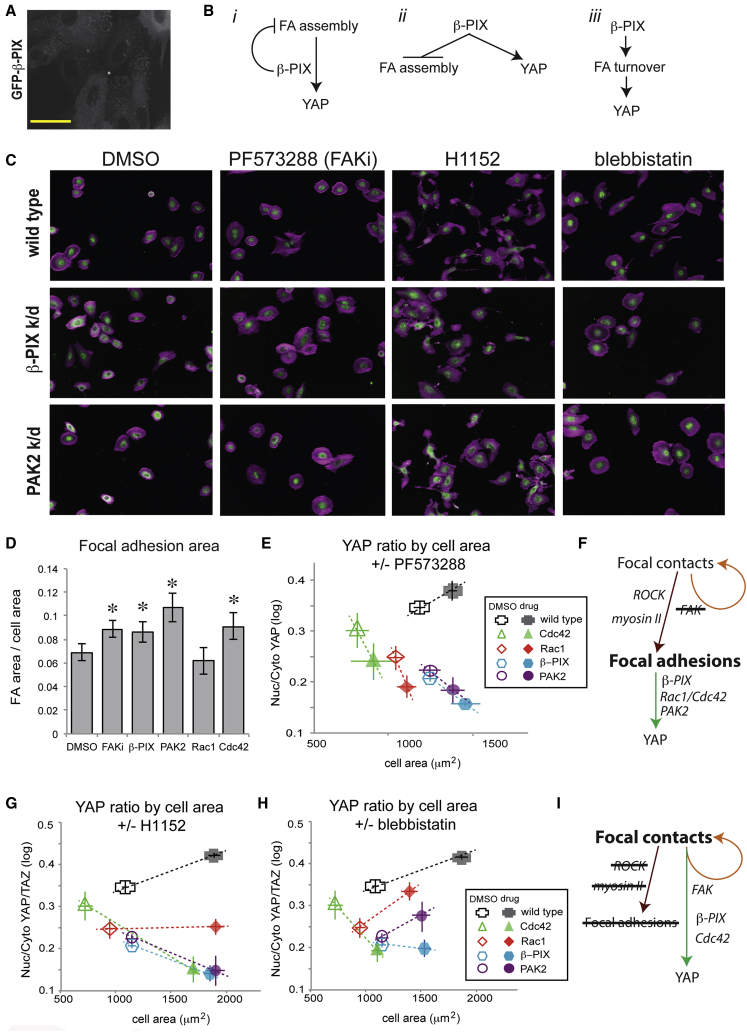
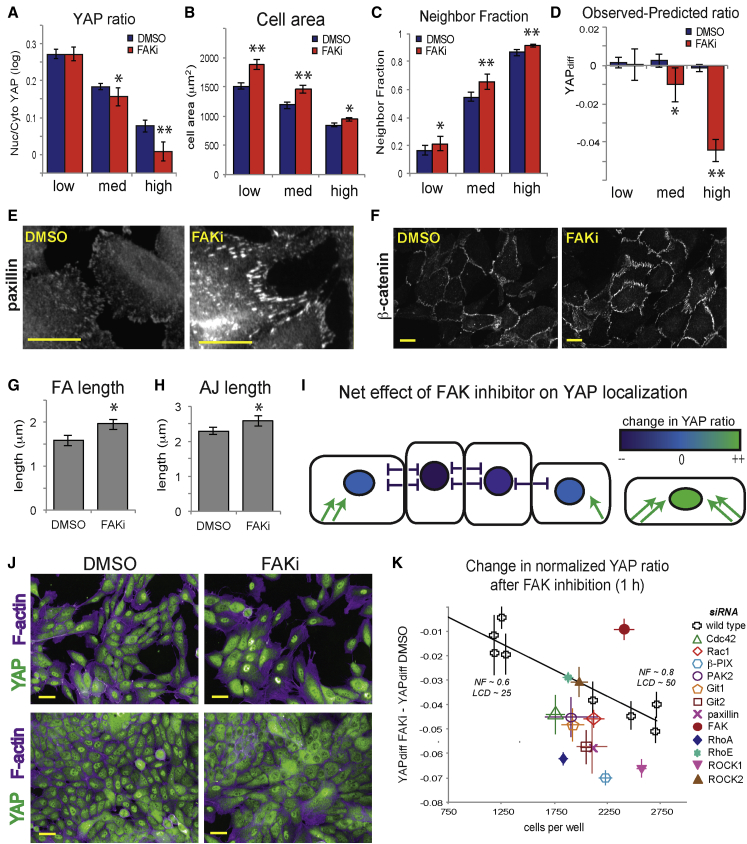
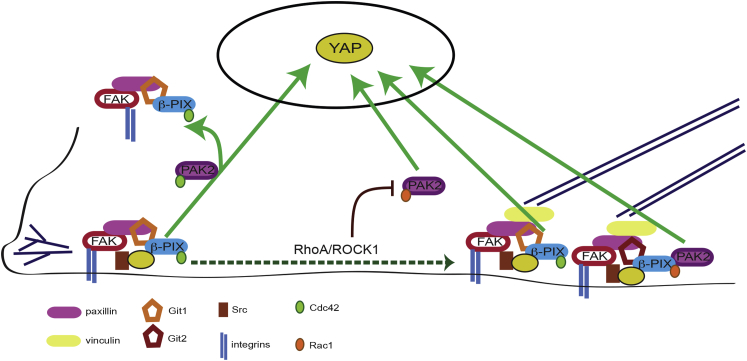
Mechanical signals from the extracellular matrix (ECM) and cellular geometry regulate the nuclear translocation of transcriptional regulators such as Yes-associated protein (YAP). Elucidating how physical signals control the activity of mechanosensitive proteins poses a technical challenge, because perturbations that affect cell shape may also affect protein localization indirectly. Here, we present an approach that mitigates confounding effects of cell-shape changes, allowing us to identify direct regulators of YAP localization. This method uses single-cell image analysis and statistical models that exploit the naturally occurring heterogeneity of cellular populations. Through systematic depletion of all human kinases, Rho family GTPases, GEFs, and GTPase activating proteins (GAPs), together with targeted chemical perturbations, we found that β-PIX, a Rac1/Ccd42 GEF, and PAK2, a Rac1/Cdc42 effector, drive both YAP activation and cell-ECM adhesion turnover during cell spreading. Our observations suggest that coupling YAP to adhesion dynamics acts as a mechano-timer, allowing cells to rapidly tune gene expression in response to physical signals.
细胞外基质(ECM)和细胞几何形状产生的机械信号调节转录调节因子如 Yes 相关蛋白(YAP)的核易位。阐明物理信号如何控制机械敏感蛋白的活性是一个技术挑战,因为影响细胞形状的干扰也可能间接地影响蛋白质定位。在这里,我们提出了一种方法,可以减轻细胞形状变化的混杂影响,使我们能够识别 YAP 定位的直接调节因子。该方法使用单细胞图像分析和统计模型,利用细胞群体的自然异质性。通过系统地耗尽所有人类激酶、Rho 家族 GTPases、GEFs 和 GTPase 激活蛋白(GAPs),以及靶向化学干扰,我们发现 Rac1/Ccd42 GEF β-PIX 和 Rac1/Cdc42 效应物 PAK2 驱动 YAP 的激活和细胞-ECM 黏附周转在细胞铺展过程中。我们的观察结果表明,将 YAP 与黏附动力学偶联作为机械定时器,使细胞能够快速响应物理信号调节基因表达。