Sero Julia E, Sailem Heba Zuhair, Ardy Rico Chandra, Almuttaqi Hannah, Zhang Tongli, Bakal Chris
Mol Syst Biol. 2015 Mar;11(3):790. doi: 10.15252/msb.20145644.
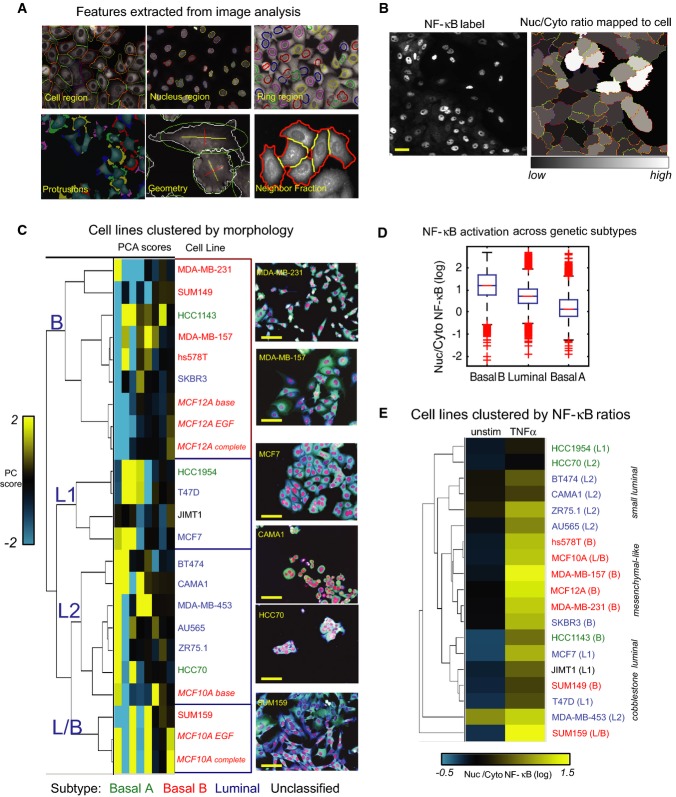
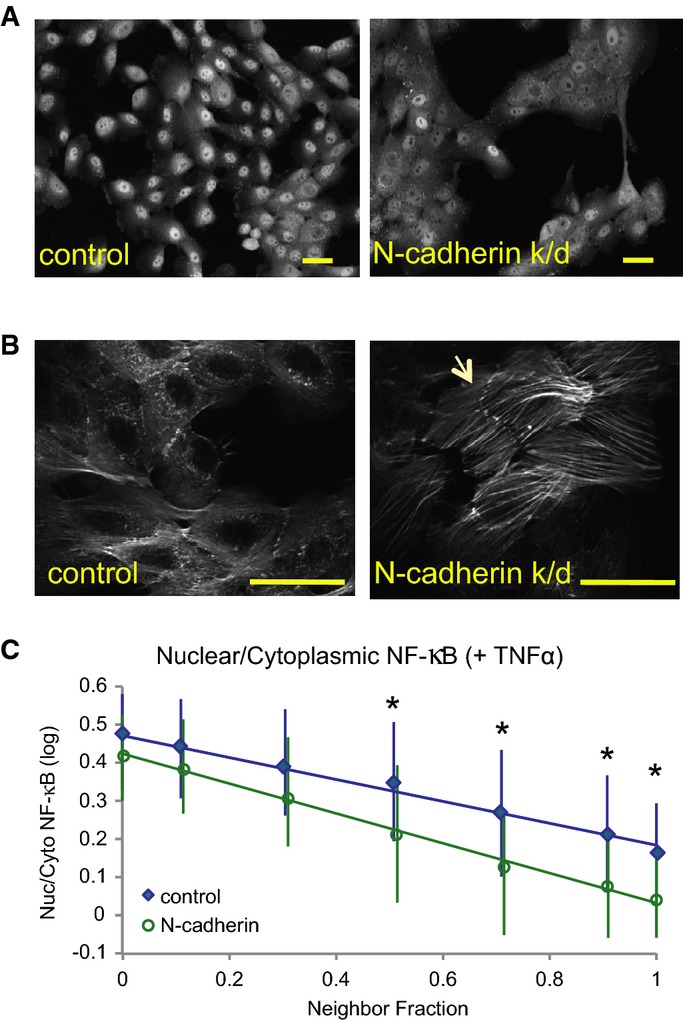
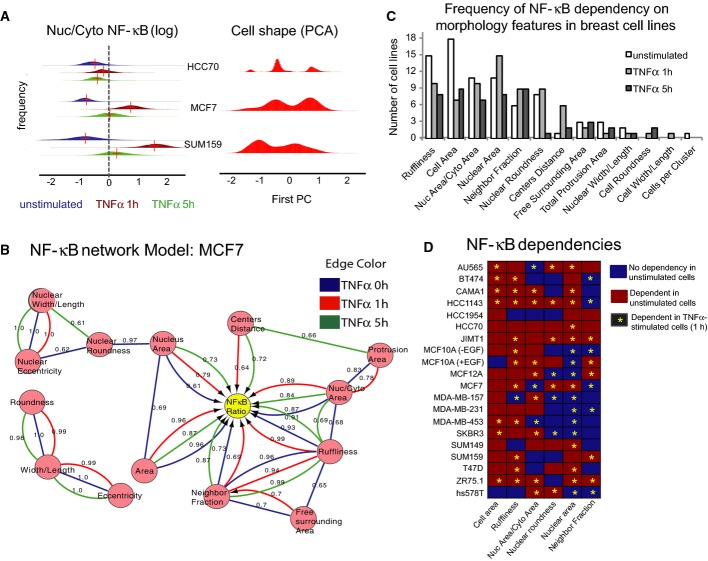
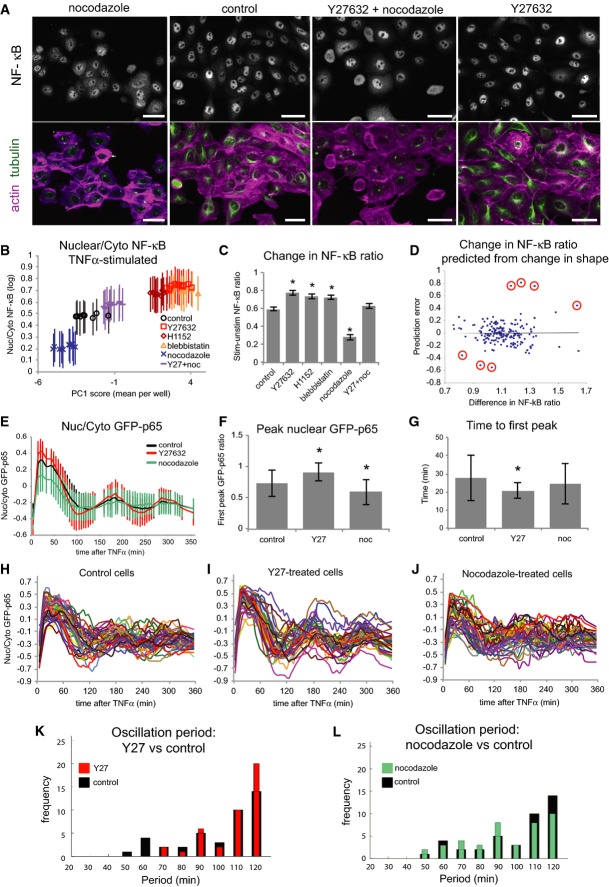
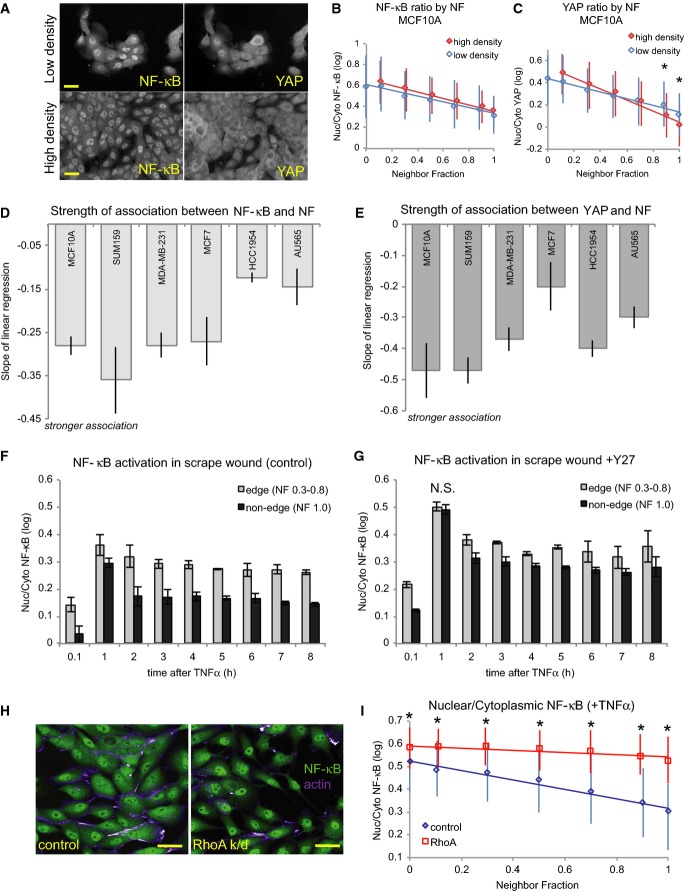
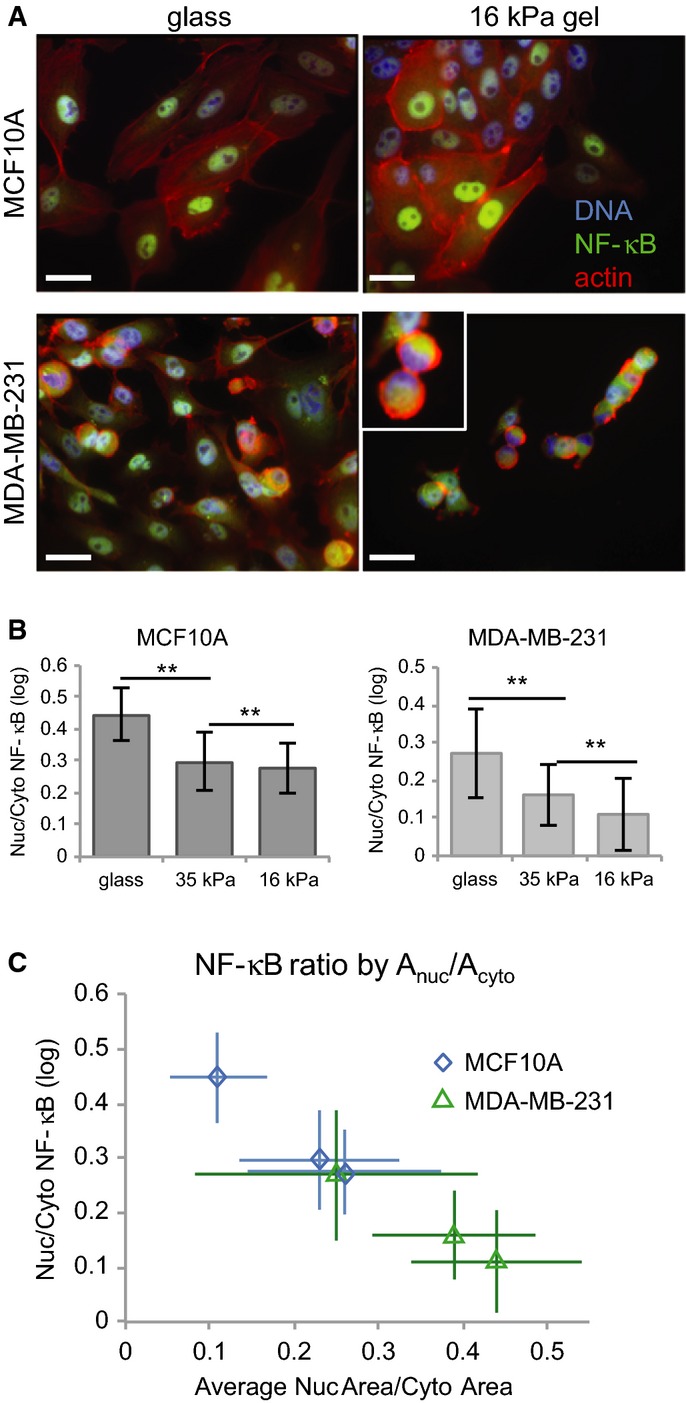
Although a great deal is known about the signaling events that promote nuclear translocation of NF-κB, how cellular biophysics and the microenvironment might regulate the dynamics of this pathway is poorly understood. In this study, we used high-content image analysis and Bayesian network modeling to ask whether cell shape and context features influence NF-κB activation using the inherent variability present in unperturbed populations of breast tumor and non-tumor cell lines. Cell–cell contact, cell and nuclear area, and protrusiveness all contributed to variability in NF-κB localization in the absence and presence of TNFα. Higher levels of nuclear NF-κB were associated with mesenchymal-like versus epithelial-like morphologies, and RhoA-ROCK-myosin II signaling was critical for mediating shape-based differences in NF-κB localization and oscillations. Thus, mechanical factors such as cell shape and the microenvironment can influence NF-κB signaling and may in part explain how different phenotypic outcomes can arise from the same chemical cues.
尽管人们对促进核因子κB(NF-κB)核转位的信号事件已经有了很多了解,但细胞生物物理学和微环境如何调节这一信号通路的动力学却知之甚少。在本研究中,我们使用高内涵图像分析和贝叶斯网络建模,利用乳腺肿瘤和非肿瘤细胞系未受干扰群体中存在的固有变异性,来探究细胞形状和环境特征是否会影响NF-κB的激活。细胞间接触、细胞和细胞核面积以及突出性均导致在有无肿瘤坏死因子α(TNFα)的情况下NF-κB定位的变异性。较高水平的核NF-κB与间充质样而非上皮样形态相关,并且RhoA-ROCK-肌球蛋白II信号传导对于介导基于形状的NF-κB定位和振荡差异至关重要。因此,诸如细胞形状和微环境等机械因素可以影响NF-κB信号传导,并且可能部分解释了相同化学信号如何产生不同的表型结果。