Friedman Jason, Korman Maria
Department of Physical Therapy, Sackler Faculty of Medicine, Tel Aviv UniversityTel Aviv, Israel; Sagol School of Neuroscience, Tel Aviv UniversityTel Aviv, Israel.
Department of Occupational Therapy, Faculty of Social Welfare and Health Sciences, University of Haifa Haifa, Israel.
Front Hum Neurosci. 2016 Dec 20;10:623. doi: 10.3389/fnhum.2016.00623. eCollection 2016.
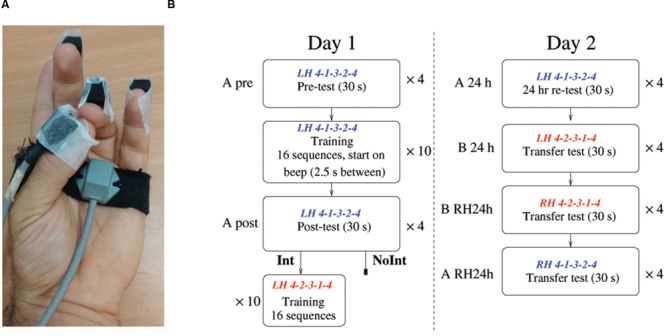
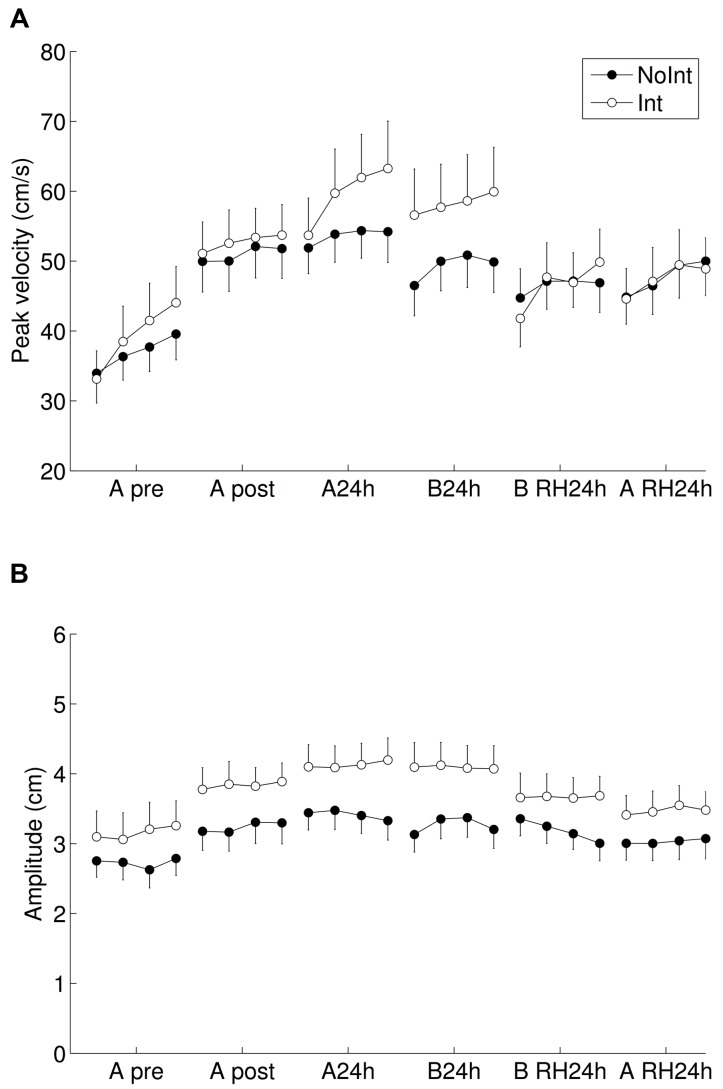
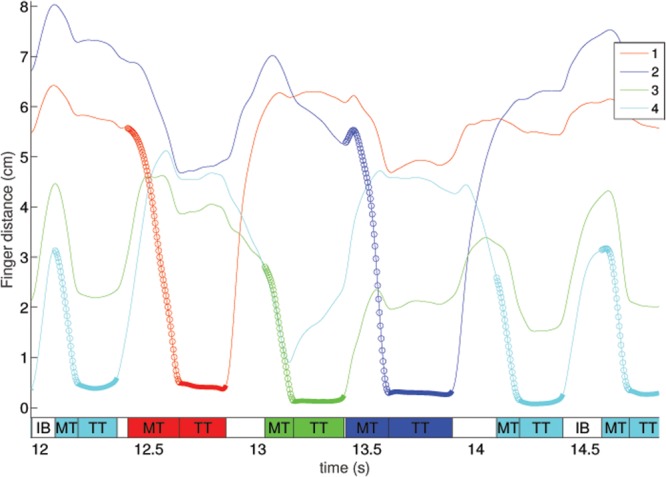
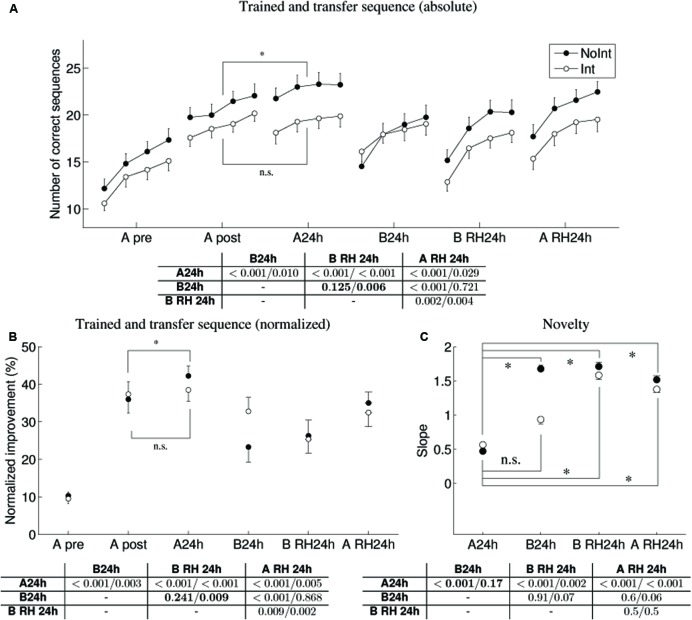
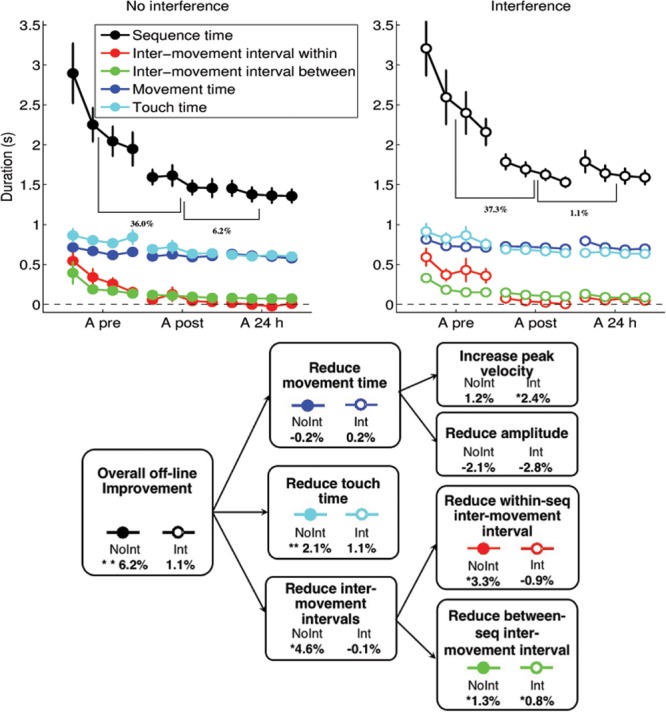
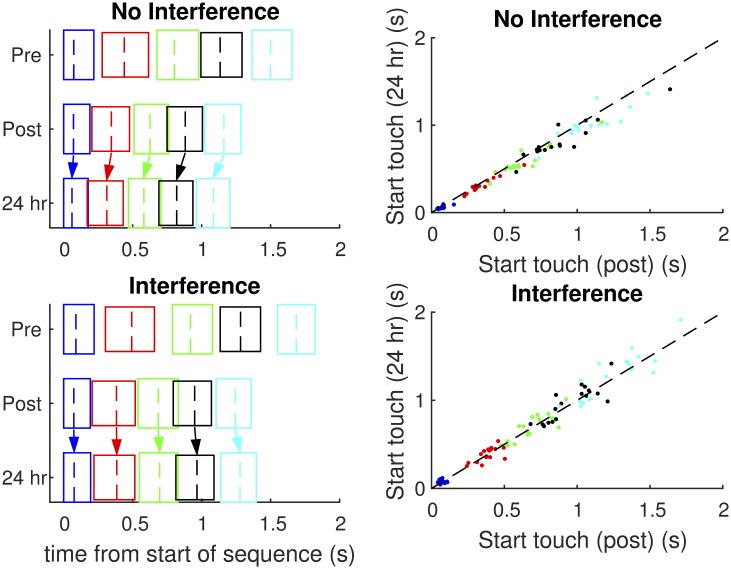
Acquisition of motor skills often involves the concatenation of single movements into sequences. Along the course of learning, sequential performance becomes progressively faster and smoother, presumably by optimization of both motor planning and motor execution. Following its encoding during training, "how-to" memory undergoes consolidation, reflecting transformations in performance and its neurobiological underpinnings over time. This offline post-training memory process is characterized by two phenomena: reduced sensitivity to interference and the emergence of delayed, typically overnight, gains in performance. Here, using a training protocol that effectively induces motor sequence memory consolidation, we tested temporal and kinematic parameters of performance within (online) and between (offline) sessions, and their sensitivity to retroactive interference. One group learned a given finger-to-thumb opposition sequence (FOS), and showed robust delayed (consolidation) gains in the number of correct sequences performed at 24 h. A second group learned an additional (interference) FOS shortly after the first and did not show delayed gains. Reduction of touch times and inter-movement intervals significantly contributed to the overall offline improvement of performance overnight. However, only the offline inter-movement interval shortening was selectively blocked by the interference experience. Velocity and amplitude, comprising movement time, also significantly changed across the consolidation period but were interference -insensitive. Moreover, they paradoxically canceled out each other. Current results suggest that shifts in the representation of the trained sequence are subserved by multiple processes: from distinct changes in kinematic characteristics of individual finger movements to high-level, temporal reorganization of the movements as a unit. Each of these processes has a distinct time course and a specific susceptibility to retroactive interference. This multiple-component view may bridge the gap in understanding the link between the behavioral changes, which define online and offline learning, and the biological mechanisms that support those changes.
运动技能的习得通常涉及将单个动作串联成序列。在学习过程中,序列执行会逐渐变得更快、更流畅,这大概是通过运动计划和运动执行的优化实现的。在训练过程中进行编码之后,“如何做”的记忆会经历巩固过程,反映出随着时间推移表现及其神经生物学基础的变化。这种训练后的离线记忆过程具有两个现象:对干扰的敏感性降低以及出现延迟的、通常是在一夜之间的表现提升。在这里,我们使用一种能有效诱导运动序列记忆巩固的训练方案,测试了在训练期间(在线)和训练之间(离线)的表现的时间和运动学参数,以及它们对逆向干扰的敏感性。一组学习了特定的手指对拇指对指序列(FOS),并在24小时时在正确执行的序列数量上表现出强劲的延迟(巩固)提升。第二组在第一组之后不久学习了另一个(干扰)FOS,没有表现出延迟提升。触摸时间和动作间间隔的减少对夜间表现的整体离线改善有显著贡献。然而,只有离线动作间间隔的缩短被干扰体验选择性地阻断。包括运动时间在内的速度和幅度在巩固期也有显著变化,但对干扰不敏感。此外,它们反常地相互抵消。当前结果表明,训练序列表征的变化由多个过程支持:从单个手指动作的运动学特征的明显变化到作为一个单元的动作的高级时间重组。这些过程中的每一个都有不同的时间进程和对逆向干扰特定的敏感性。这种多成分观点可能弥合在理解定义在线和离线学习的行为变化与支持这些变化的生物学机制之间的联系方面的差距。