Tremonte Patrizio, Succi Mariantonietta, Coppola Raffaele, Sorrentino Elena, Tipaldi Luca, Picariello Gianluca, Pannella Gianfranco, Fraternali Franca
Department of Agricultural, Environmental and Food Sciences (DiAAA), University of Molise Campobasso, Italy.
Institute of Food Science, National Research Council (ISA-CNR) Avellino, Italy.
Front Microbiol. 2016 Dec 20;7:1998. doi: 10.3389/fmicb.2016.01998. eCollection 2016.
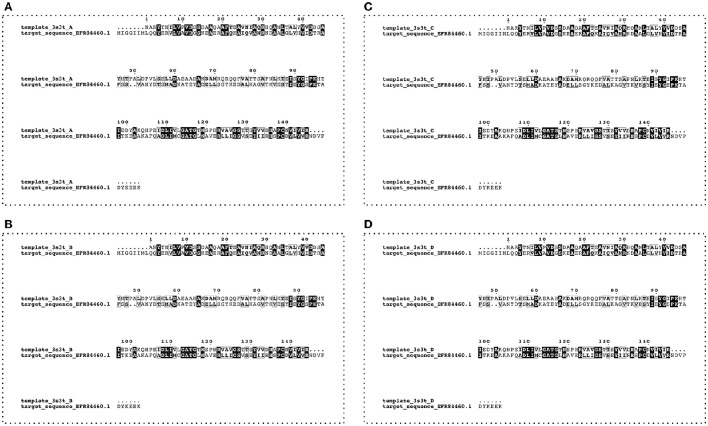
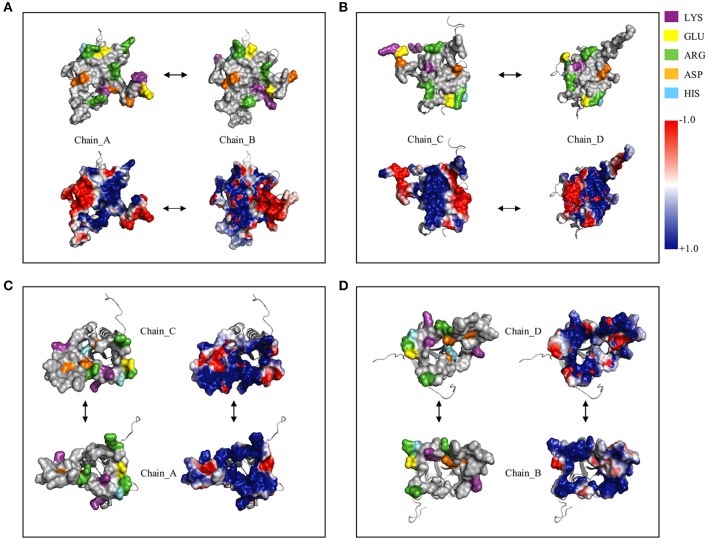
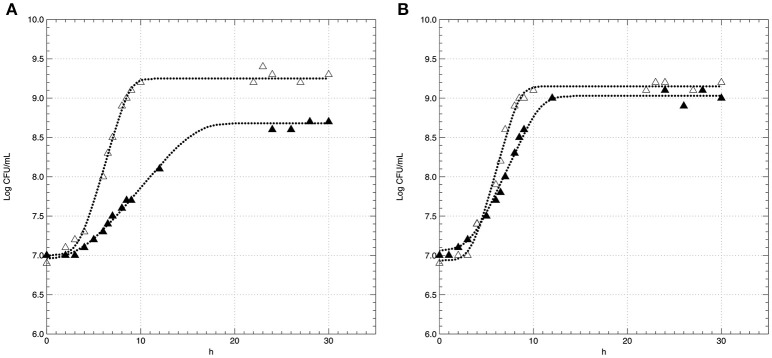
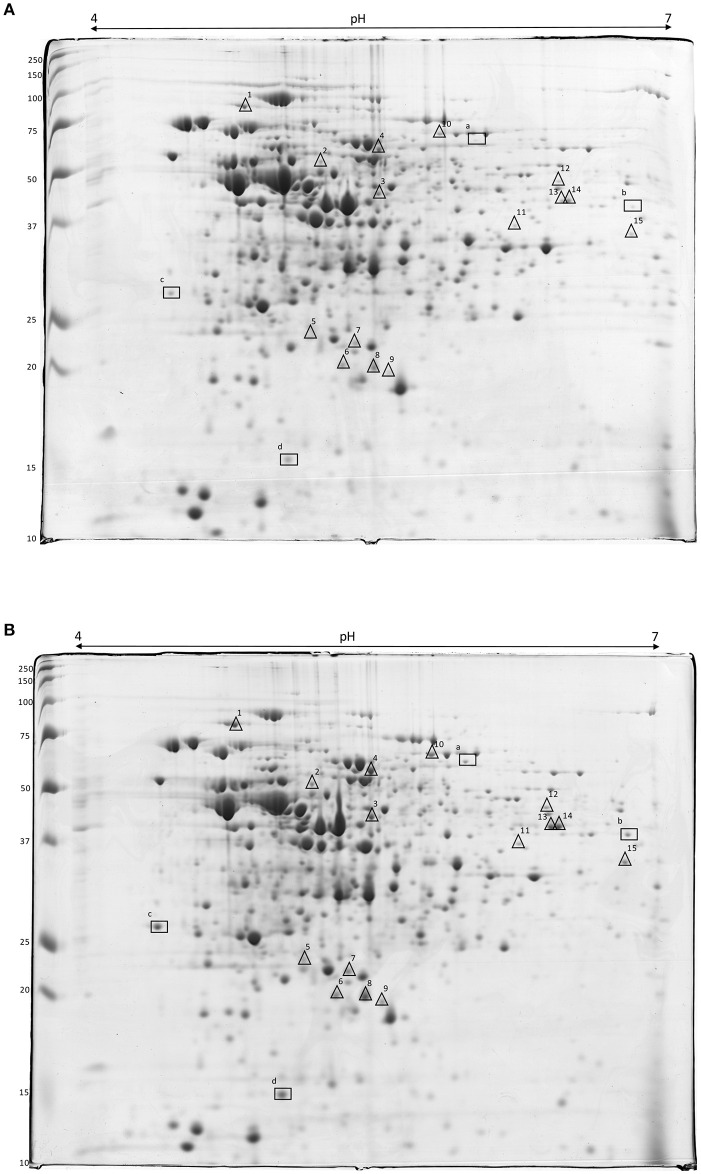
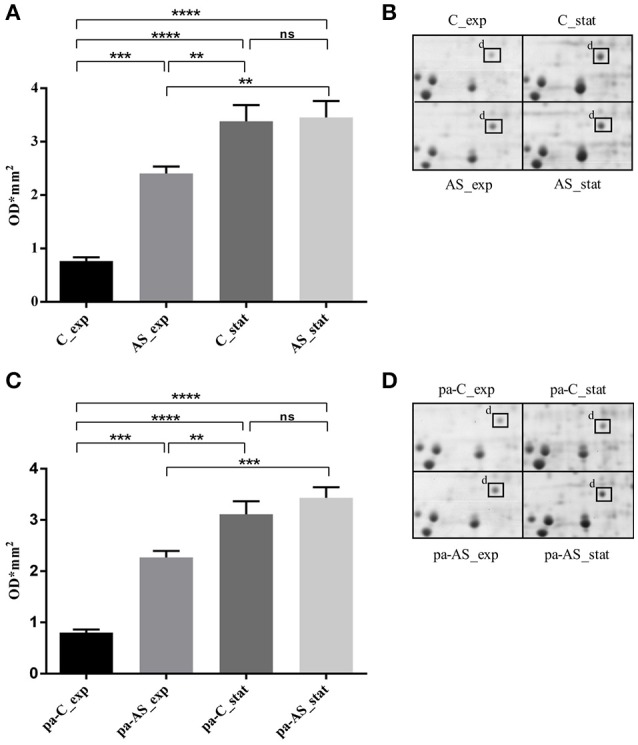
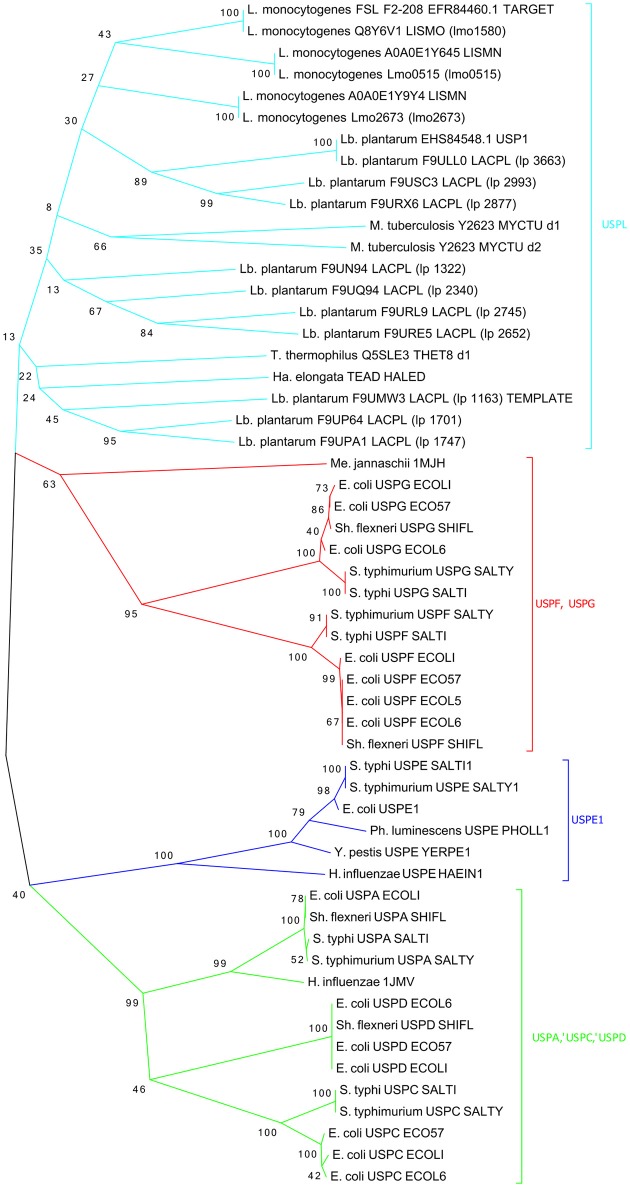
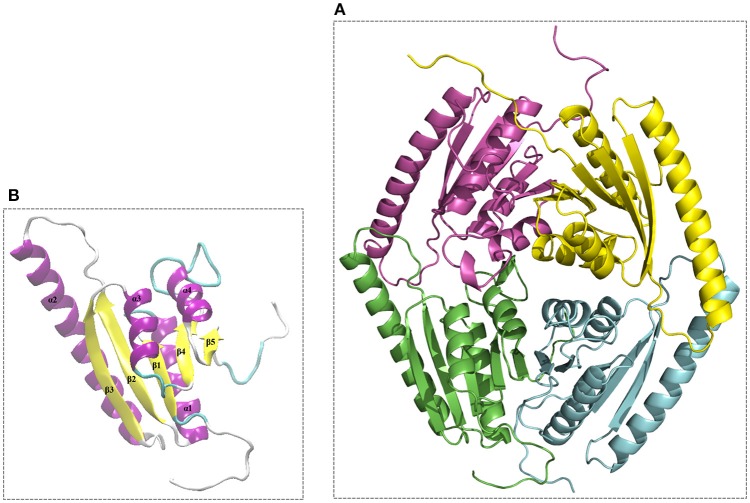
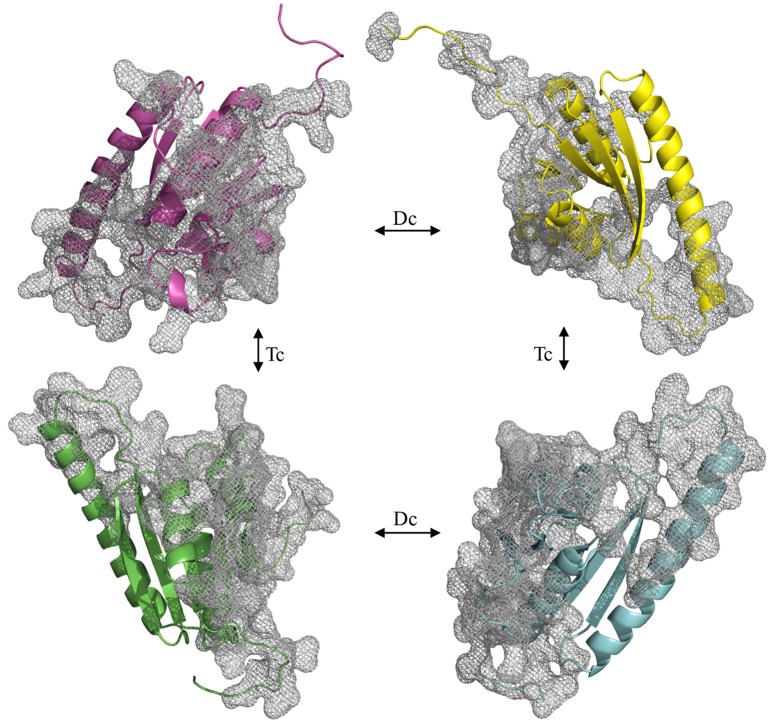
An Universal Stress Protein (USP) expressed under acid stress condition by ATCC 33090 was investigated. The USP was up-regulated not only in the stationary phase but also during the exponential growth phase. The three dimensional (3D) structure of USP was predicted using a combined proteomic and bioinformatics approach. Phylogenetic analysis showed that the USP from detected in our study was distant from the USPs of other bacteria (such as spp., spp.) and clustered in a separate and heterogeneous class including several USPs from spp. and spp. An important information on the studied USP was obtained from the 3D-structure established through the homology modeling procedure. In detail, the Model_USP-691 suggested that the investigated USP had a homo-tetrameric quaternary structure. Each monomer presented an architecture analogous to the Rossmann-like α/β-fold with five parallel β-strands, and four α-helices. The analysis of monomer-monomer interfaces and quality of the structure alignments confirmed the model reliability. In fact, the structurally and sequentially conserved hydrophobic residues of the β-strand 5 (in particular the residues V and V) were involved in the inter-chains contact. Moreover, the highly conserved residues I and H in the region α4 were involved in the dimer association and functioned as hot spots into monomer-monomer interface assembly. The hypothetical assembly of dimers was also supported by the large interface area and by the negative value of solvation free energy gain upon interface interaction. Finally, the structurally conserved ATP-binding motif G-2X-G-9X-G(S/T-N) suggested for a putative role of ATP in stabilizing the tetrameric assembly of the USP. Therefore, the results obtained from a multiple approach, consisting in the application of kinetic, proteomic, phylogenetic and modeling analyses, suggest that USP could be considered a new type of ATP-binding USP involved in the response to acid stress condition during the exponential growth phase.
对美国典型培养物保藏中心(ATCC)33090在酸胁迫条件下表达的一种通用应激蛋白(USP)进行了研究。该USP不仅在稳定期上调,在指数生长期也上调。采用蛋白质组学和生物信息学相结合的方法预测了USP的三维(3D)结构。系统发育分析表明,我们研究中检测到的USP与其他细菌(如 spp.、 spp.)的USP距离较远,聚集在一个单独的异质类群中,该类群包括来自 spp.和 spp.的几种USP。通过同源建模程序建立的3D结构获得了关于所研究USP的重要信息。详细来说,Model_USP - 691表明所研究的USP具有同四聚体四级结构。每个单体呈现出类似于罗斯曼样α/β折叠的结构,有五条平行的β链和四条α螺旋。单体 - 单体界面分析和结构比对质量证实了模型的可靠性。事实上,β链5结构和序列保守的疏水残基(特别是残基V和V)参与链间接触。此外,α4区域高度保守的残基I和H参与二聚体缔合,并在单体 - 单体界面组装中起热点作用。二聚体的假设组装也得到了大界面面积和界面相互作用时溶剂化自由能增益负值的支持。最后,结构保守的ATP结合基序G - 2X - G - 9X - G(S/T - N)表明ATP在稳定USP的四聚体组装中可能起作用。因此,通过动力学、蛋白质组学、系统发育和建模分析等多种方法获得的结果表明, USP可被认为是一种新型的ATP结合USP,参与指数生长期对酸胁迫条件的响应。