Per Tasir S, Khan Nafees A, Masood Asim, Fatma Mehar
Plant Physiology and Biochemistry Laboratory, Department of Botany, Aligarh Muslim University Aligarh, India.
Front Plant Sci. 2016 Dec 22;7:1933. doi: 10.3389/fpls.2016.01933. eCollection 2016.
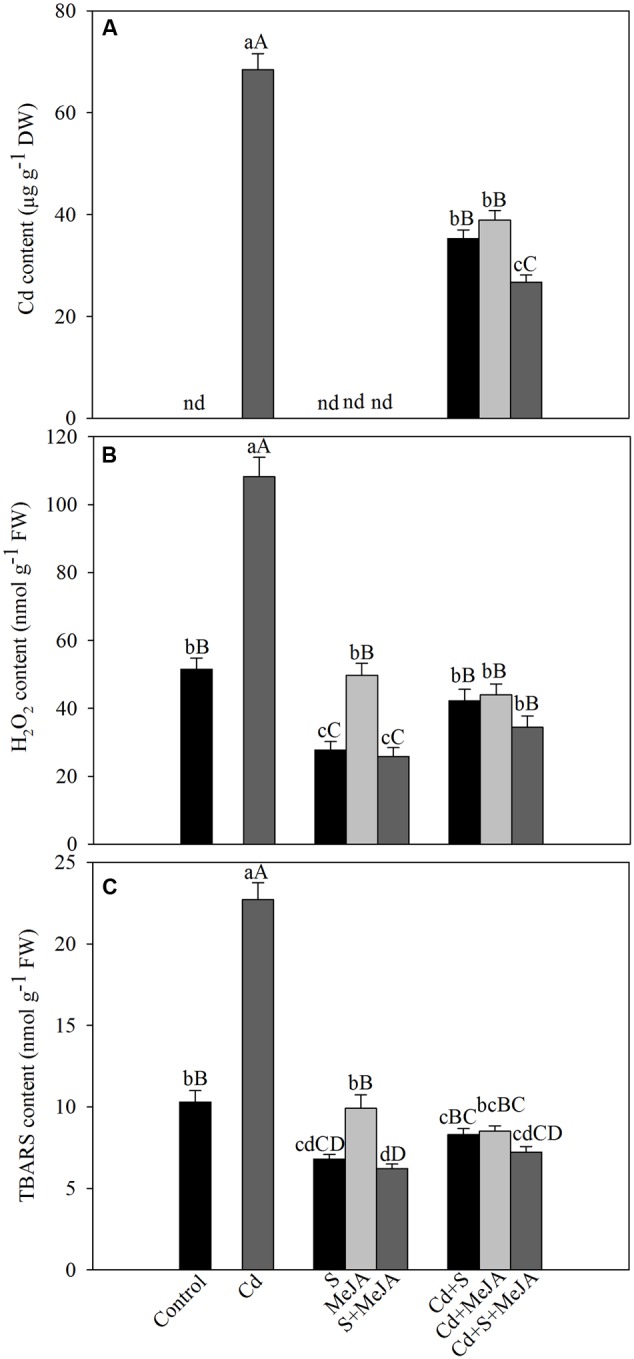
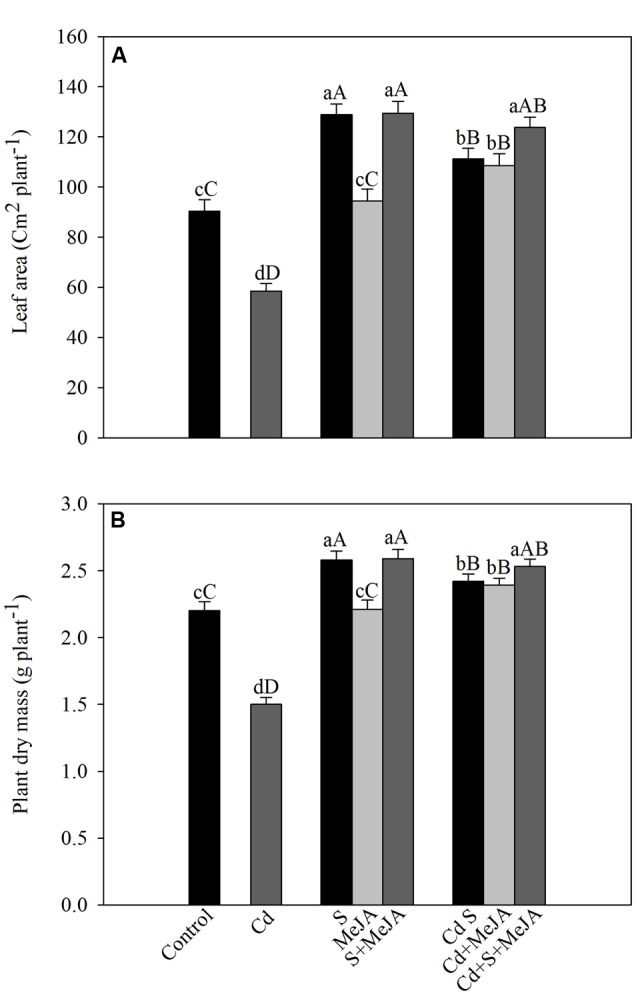
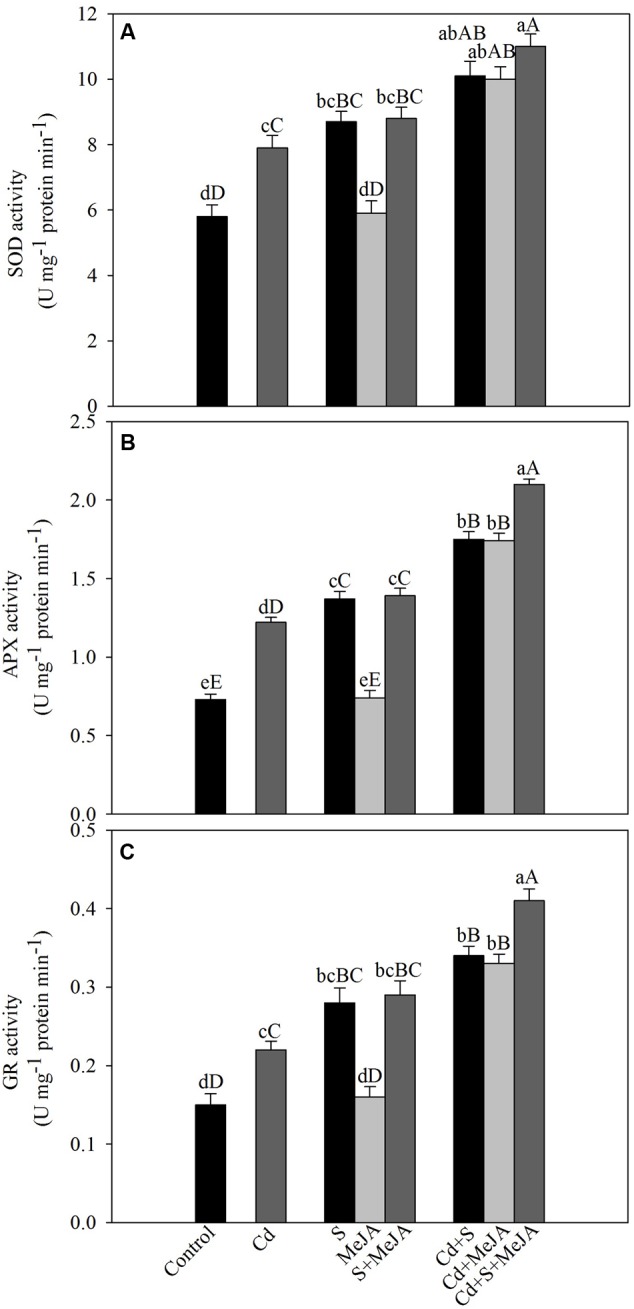
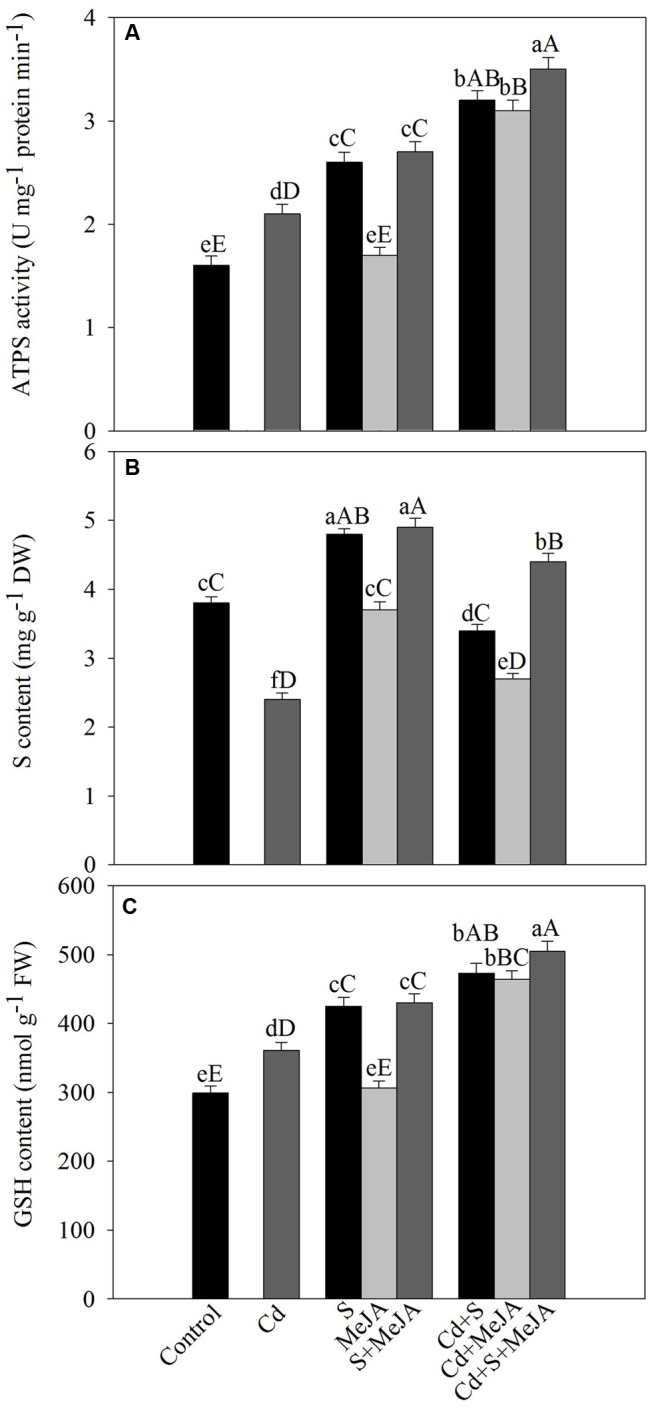
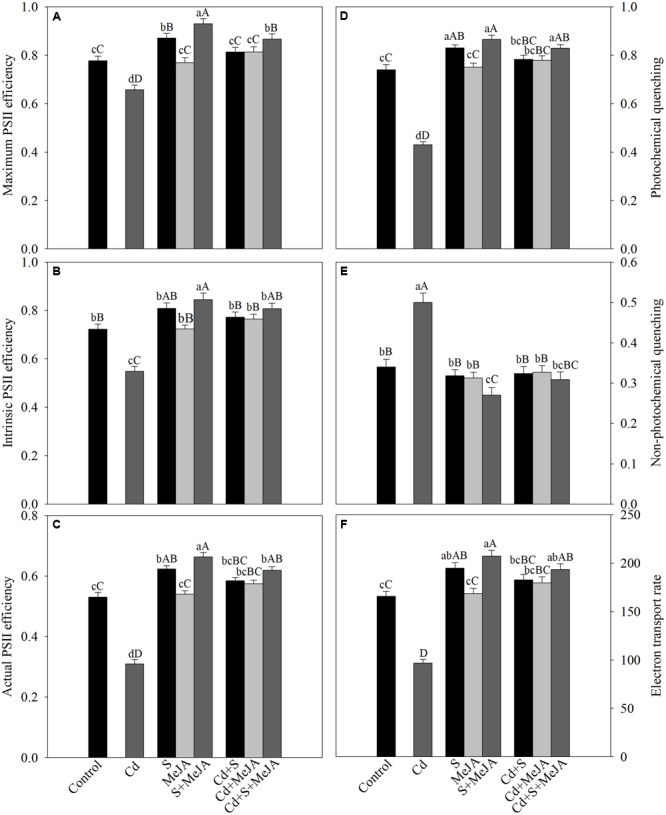
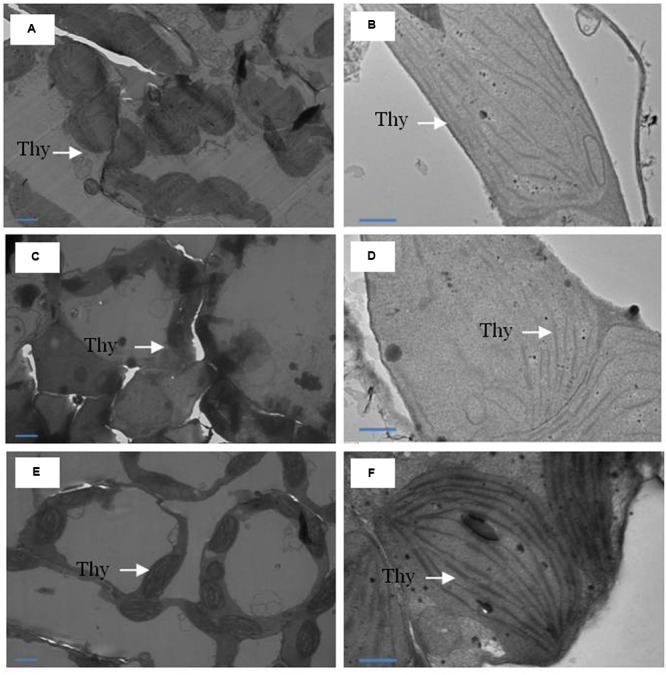
The effect of methyl jasmonate (MeJA) in mitigation of 50 μM cadmium (Cd) toxicity on structure and function of photosynthetic apparatus in presence or absence of 1.0 mM [Formula: see text] was investigated in mustard ( L. cv. Ro Agro 4001) at 30 days after sowing. Plants exhibited increased oxidative stress, impaired photosynthetic function when grown with Cd, but MeJA in presence of sulfur (S) more prominently ameliorated Cd effects through increased S-assimilation and production of reduced glutathione (GSH) and promoted photosynthetic functions. The transmission electron microscopy showed that MeJA protected chloroplast structure against Cd-toxicity. The use of GSH biosynthetic inhibitor, buthionine sulfoximine (BSO) substantiated the findings that ameliorating effect of MeJA was through GSH production. MeJA could not alleviate Cd effects when BSO was used due to unavailability of GSH even with the input of S. The study shows that MeJA regulates S-assimilation and GSH production for protection of structure and function of photosynthetic apparatus in mustard plants under Cd stress.
在播种后30天,研究了茉莉酸甲酯(MeJA)在有或无1.0 mM [公式:见正文] 的情况下对芥菜(L. cv. Ro Agro 4001)光合机构结构和功能的影响,以减轻50 μM镉(Cd)的毒性。与镉一起生长时,植物表现出氧化应激增加、光合功能受损,但在硫(S)存在的情况下,MeJA通过增加硫同化以及还原型谷胱甘肽(GSH)的产生,更显著地改善了镉的影响,并促进了光合功能。透射电子显微镜显示,MeJA保护叶绿体结构免受镉毒性影响。使用谷胱甘肽生物合成抑制剂丁硫氨酸亚砜胺(BSO)证实了MeJA的改善作用是通过产生谷胱甘肽这一发现。当使用BSO时,即使输入了硫,由于无法获得谷胱甘肽,MeJA也无法减轻镉的影响。该研究表明,在镉胁迫下,MeJA通过调节硫同化和谷胱甘肽的产生来保护芥菜植物光合机构的结构和功能。