Feng Min, Guo Sujie, Fan Shengtao, Zeng Xiaofeng, Zhang Ying, Liao Yun, Wang Jianbin, Zhao Ting, Wang Lichun, Che Yanchun, Wang Jingjing, Ma Na, Liu Longding, Yue Lei, Li Qihan
Yunnan Key Laboratory of Vaccine Research and Development on Severe Infectious Diseases, Institute of Medical Biology, Chinese Academy of Medical Sciences, Peking Union Medical College Kunming, China.
School of Forensic Medicine, Kunming Medical University Kunming, China.
Front Cell Infect Microbiol. 2016 Dec 21;6:192. doi: 10.3389/fcimb.2016.00192. eCollection 2016.
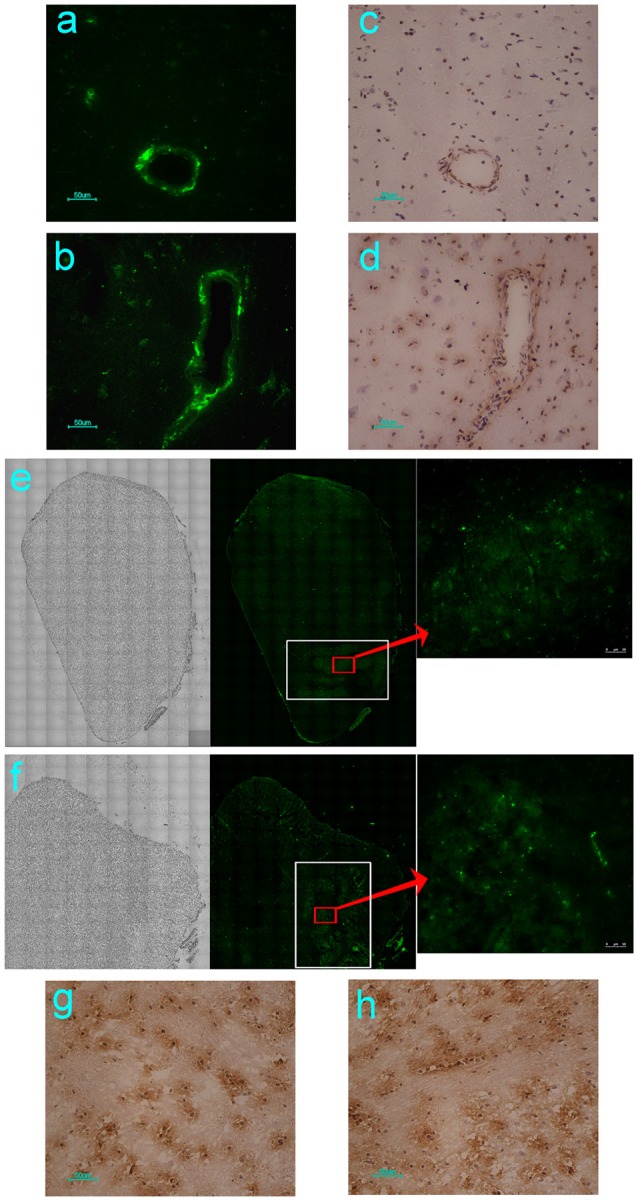
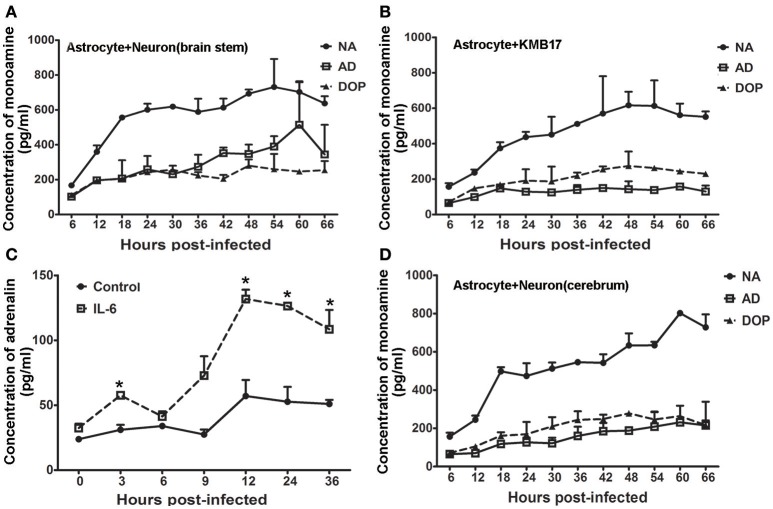
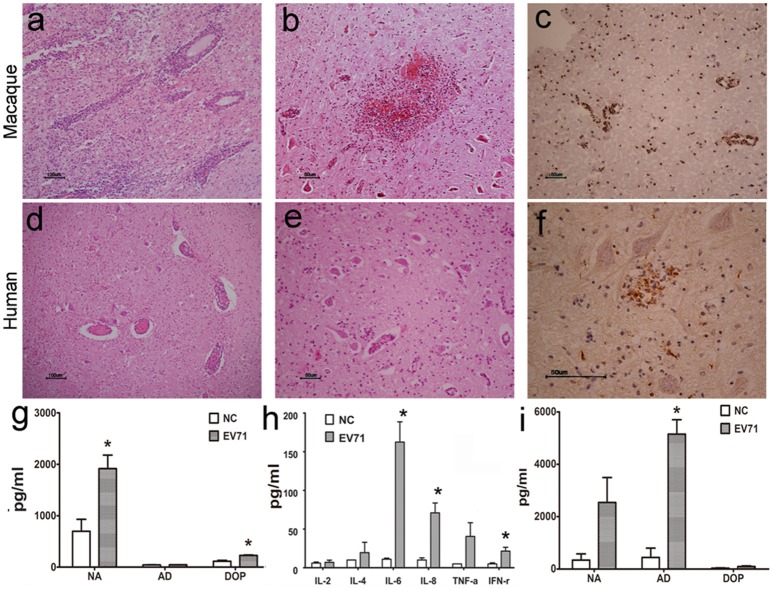
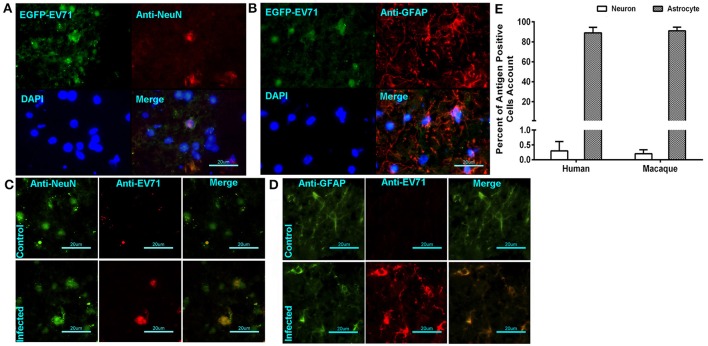
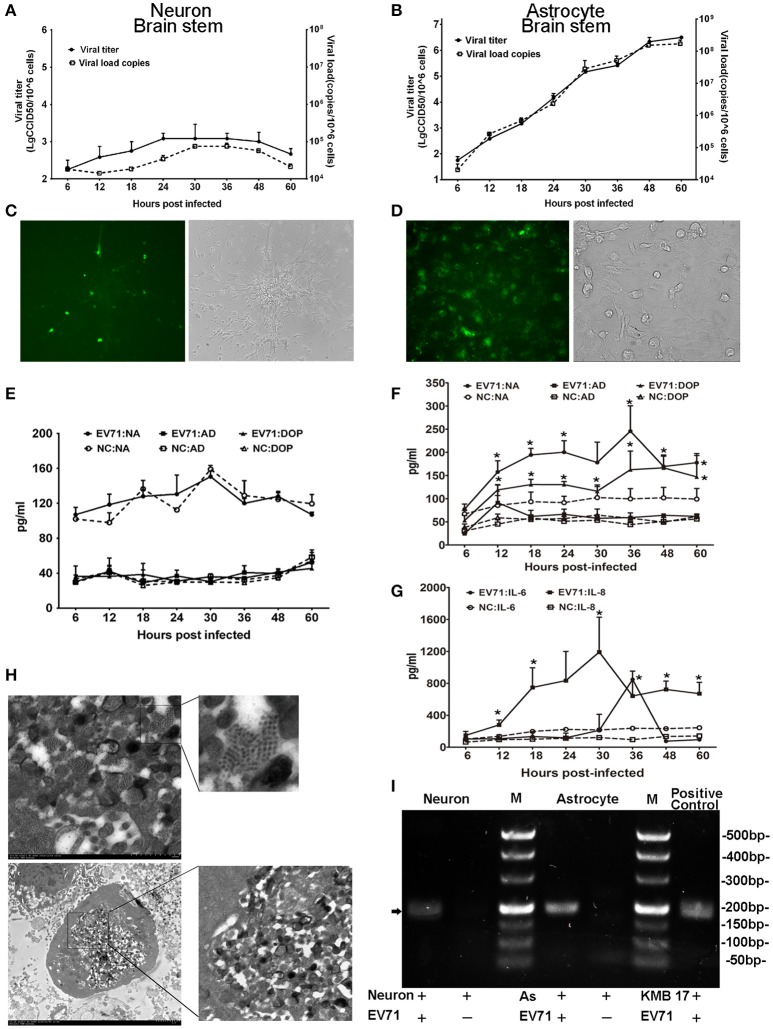
The pathological manifestations of fatal cases of human hand, foot, and mouth disease (HFMD) caused by enterovirus 71 (EV71) are characterized by inflammatory damage to the central nervous system (CNS). Here, the dynamic distribution of EV71 in the CNS and the subsequent pathological characteristics within different regions of neonatal rhesus macaque brain tissue were studied using a chimeric EV71 expressing green fluorescence protein. The results were compared with brain tissue obtained from the autopsies of deceased EV71-infected HFMD patients. These observations suggested that the virus was prevalent in areas around the blood vessels and nerve nuclei in the brain stem and showed a preference for astrocytes in the CNS. Interestingly, infected astrocytes within the and human and macaque systems exhibited increased expression of excitatory neurotransmitters and cytokines that also stimulated the neuronal secretion of the excitatory neurotransmitters noradrenalin and adrenalin, and this process most likely plays a role in the pathophysiological events that occur during EV71 infection.
由肠道病毒71型(EV71)引起的人类手足口病(HFMD)致死病例的病理表现以中枢神经系统(CNS)的炎性损伤为特征。在此,使用表达绿色荧光蛋白的嵌合EV71研究了EV71在新生恒河猴脑组织中枢神经系统中的动态分布以及不同区域随后的病理特征。将结果与从死于EV71感染的手足口病患者尸检中获得的脑组织进行比较。这些观察结果表明,该病毒在脑干血管和神经核周围区域普遍存在,并且在中枢神经系统中对星形胶质细胞表现出偏好。有趣的是,在人和猕猴系统中,受感染的星形胶质细胞中兴奋性神经递质和细胞因子的表达增加,这也刺激了神经元分泌兴奋性神经递质去甲肾上腺素和肾上腺素,并且这一过程很可能在EV71感染期间发生的病理生理事件中起作用。