Department of Biomedical Engineering, University of Virginia Health System, Charlottesville, Virginia, USA.
Medicine/Cardiology/Electrophysiology, University of Virginia Health System, Charlottesville, Virginia, USA.
J Magn Reson Imaging. 2017 Sep;46(3):887-896. doi: 10.1002/jmri.25613. Epub 2017 Jan 9.
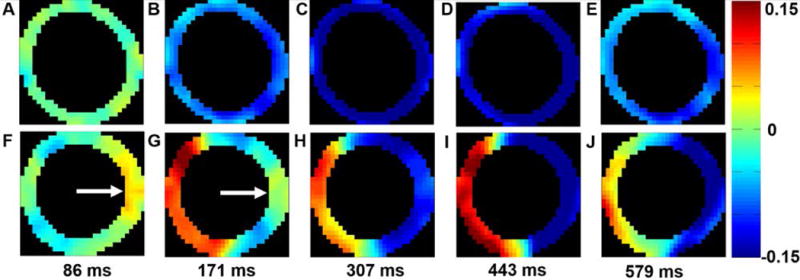
To image late mechanical activation and identify effective left-ventricular (LV) pacing sites for cardiac resynchronization therapy (CRT). There is variability in defining mechanical activation time, with some studies using the time to peak strain (TPS) and some using the time to the onset of circumferential shortening (TOS). We developed improved methods for imaging mechanical activation and evaluated them in heart failure (HF) patients undergoing CRT.
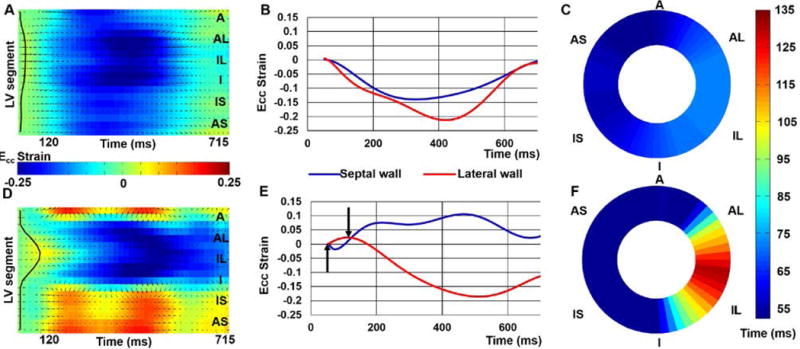
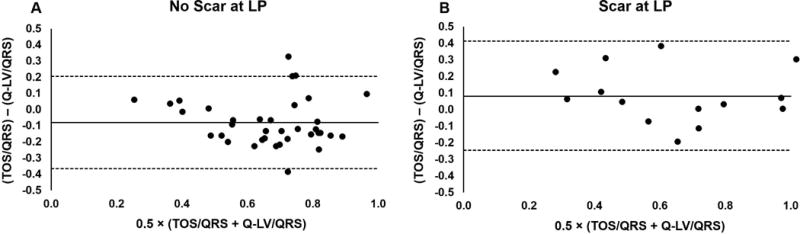
We applied active contours to cine displacement encoding with stimulated echoes (DENSE) strain images to detect TOS. Six healthy volunteers underwent magnetic resonance imaging (MRI) at 1.5T, and 50 patients underwent pre-CRT MRI (strain, scar, volumes) and echocardiography, assessment of the electrical activation time (Q-LV) at the LV pacing site, and echocardiography assessment of LV reverse remodeling 6 months after CRT. TPS at the LV pacing site was also measured by DENSE.
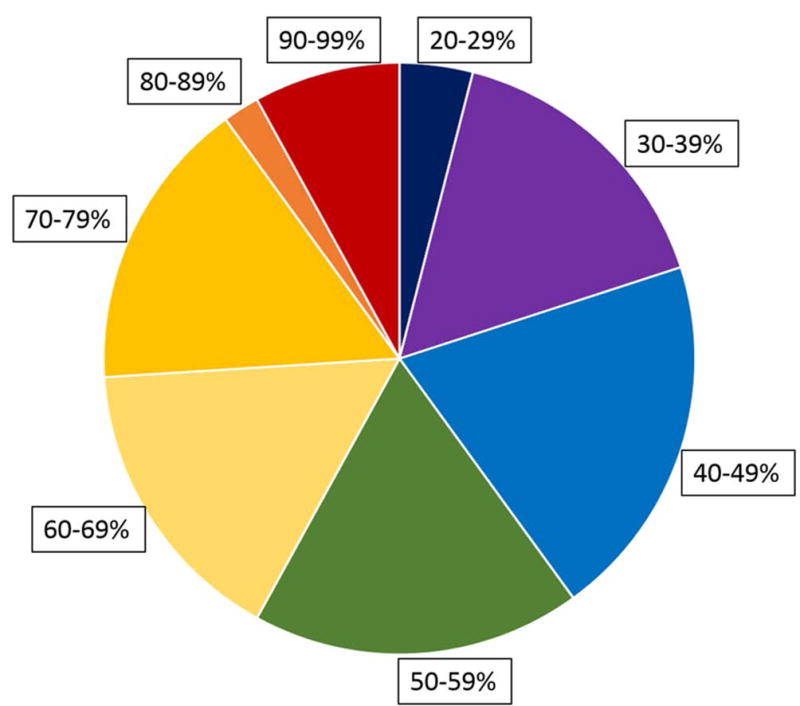
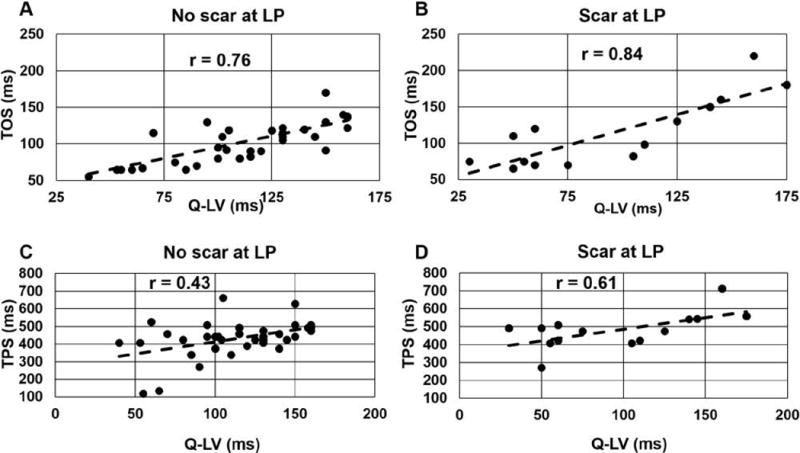
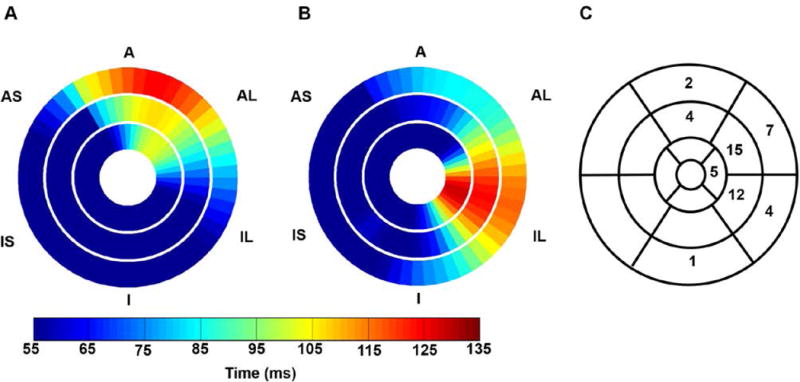
The latest TOS was greater in HF patients vs. healthy subjects (112 ± 28 msec vs. 61 ± 7 msec, P < 0.01). The correlation between TOS and Q-LV was strong (r > 0.75; P < 0.001) and better than between TPS and Q-LV (r < 0.62; P ≥ 0.006). Twenty-three of 50 patients had the latest activating segment in a region other than the mid-ventricular lateral wall, the most common site for the CRT LV lead. Using a multivariable model, TOS/QRS was significantly associated with LV reverse remodeling even after adjustment for overall dyssynchrony and scar (P < 0.05), whereas TPS was not (P = 0.49).
Late activation by cine DENSE TOS analysis is associated with improved LV reverse remodeling with CRT and deserves further study as a tool to achieve optimal LV lead placement in CRT.
1 Technical Efficacy: Stage 1 J. MAGN. RESON. IMAGING 2017;46:887-896.
为了对晚期机械激活进行成像,并确定心脏再同步治疗(CRT)的有效左心室(LV)起搏部位。定义机械激活时间的方法存在差异,有些研究使用峰值应变时间(TPS),有些则使用圆周缩短起始时间(TOS)。我们开发了改进的机械激活成像方法,并在接受 CRT 的心力衰竭(HF)患者中进行了评估。
我们将主动轮廓应用于电影位移编码刺激回波(DENSE)应变图像,以检测 TOS。六名健康志愿者在 1.5T 磁共振成像(MRI)下进行检查,50 名患者在 CRT 前进行 MRI(应变、瘢痕、容积)和超声心动图检查,评估 LV 起搏部位的电激活时间(Q-LV),以及 CRT 后 6 个月时 LV 逆向重构的超声心动图评估。通过 DENSE 还测量了 LV 起搏部位的 TPS。
HF 患者的最晚 TOS 大于健康受试者(112±28ms 比 61±7ms,P<0.01)。TOS 与 Q-LV 的相关性很强(r>0.75;P<0.001),优于 TPS 与 Q-LV 的相关性(r<0.62;P≥0.006)。50 名患者中有 23 名的最晚激活节段位于中侧心室外侧壁以外的区域,这是 CRT LV 导联最常见的部位。使用多变量模型,即使在调整了整体不同步和瘢痕后,TOS/QRS 与 LV 逆向重构仍显著相关(P<0.05),而 TPS 则没有(P=0.49)。
电影 DENSE TOS 分析的晚期激活与 CRT 后 LV 逆向重构的改善相关,值得进一步研究,作为 CRT 中实现最佳 LV 导联放置的工具。
1 技术功效:阶段 1 J. MAGN. RESON. IMAGING 2017;46:887-896。