Wang Xiaobo, Zheng Ze, Caviglia Jorge Matias, Corey Kathleen E, Herfel Tina M, Cai Bishuang, Masia Ricard, Chung Raymond T, Lefkowitch Jay H, Schwabe Robert F, Tabas Ira
Department of Medicine, Columbia University, New York, NY 10032, USA.
Department of Medicine, Columbia University, New York, NY 10032, USA.
Cell Metab. 2016 Dec 13;24(6):848-862. doi: 10.1016/j.cmet.2016.09.016. Epub 2016 Oct 27.
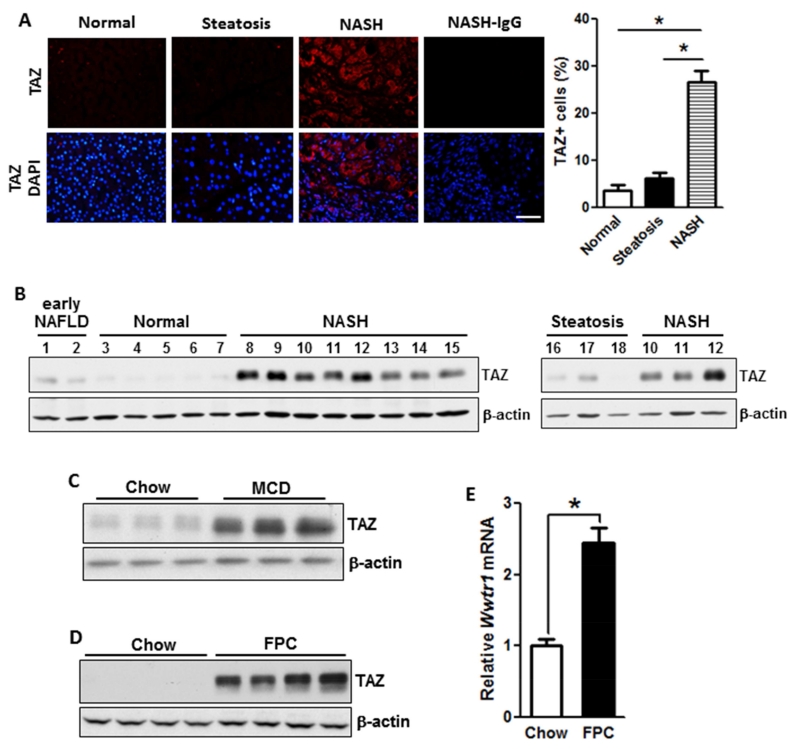
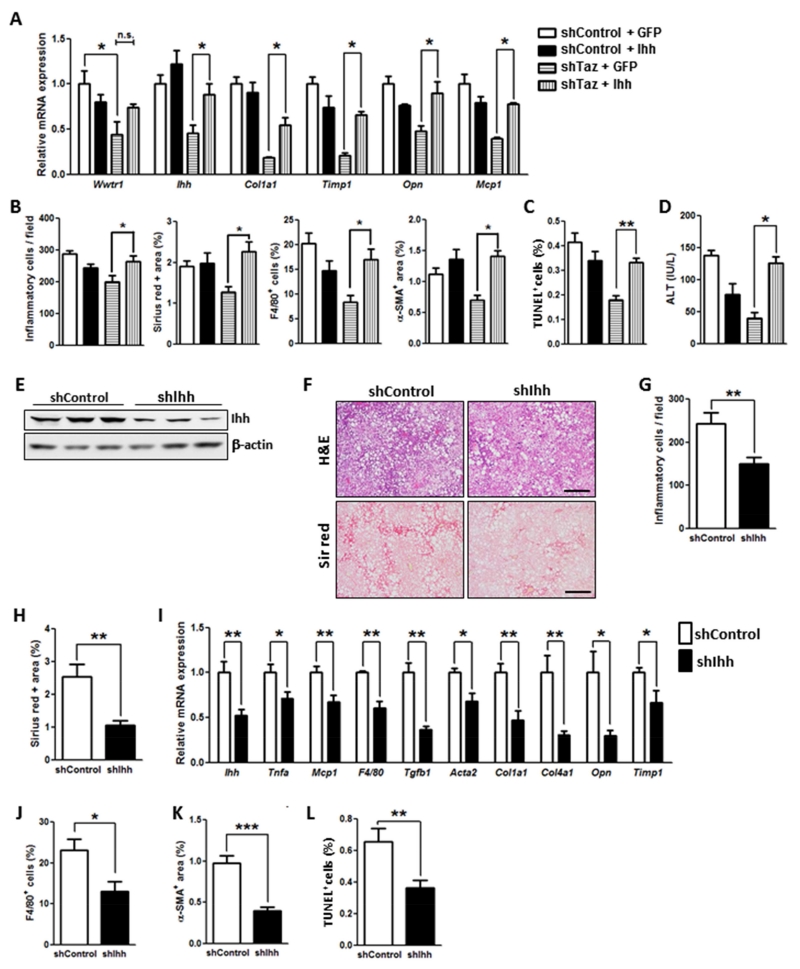
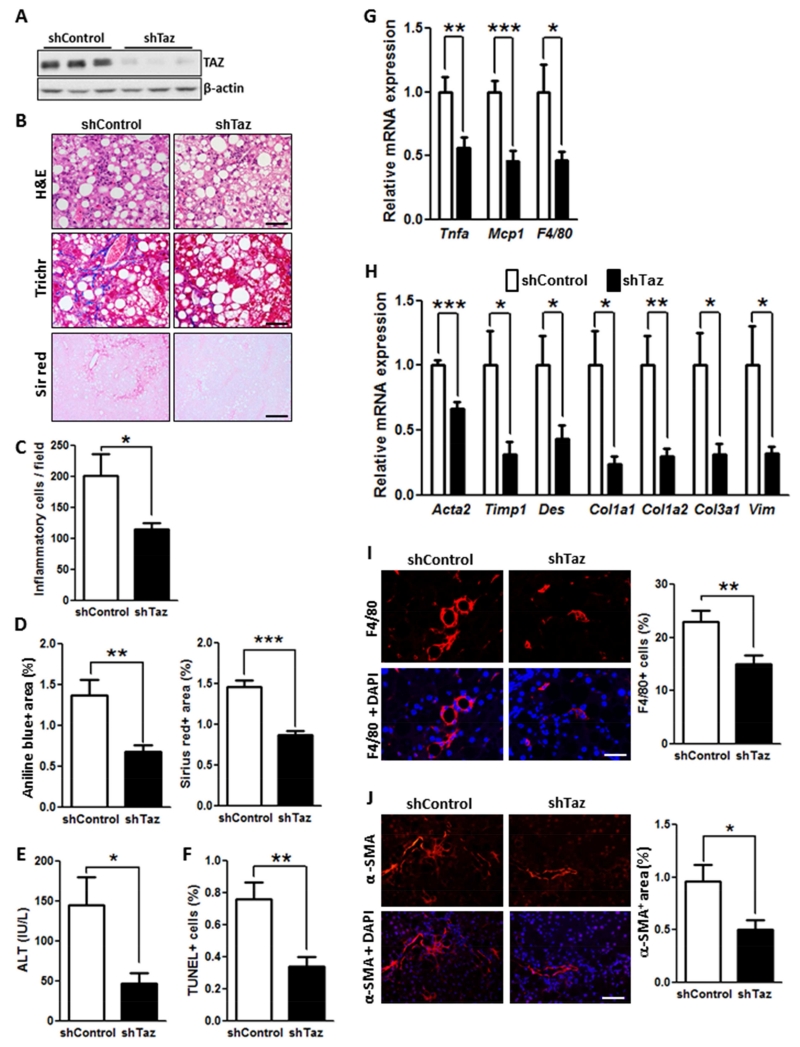
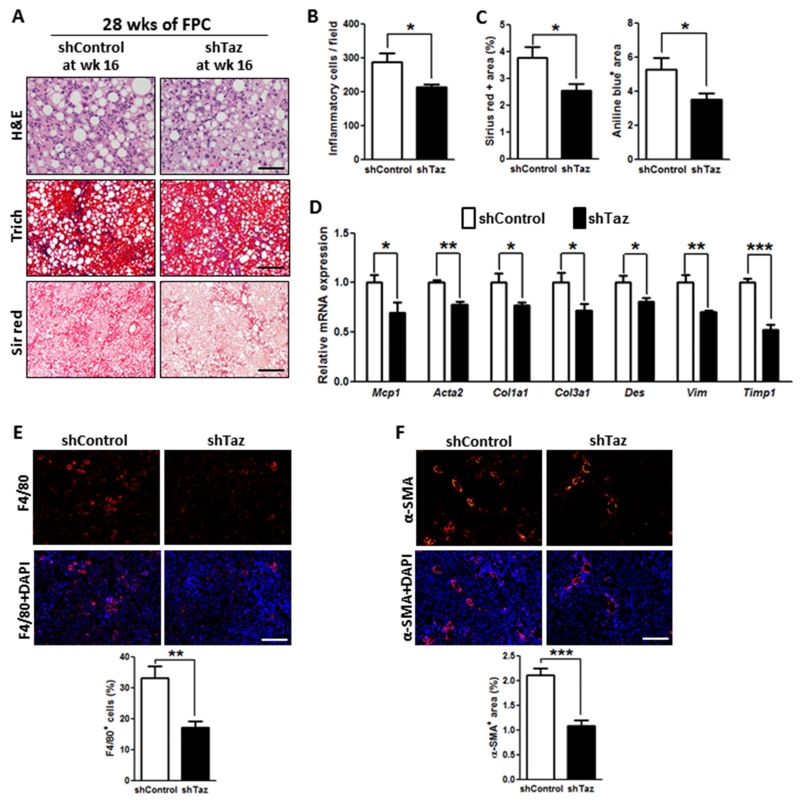
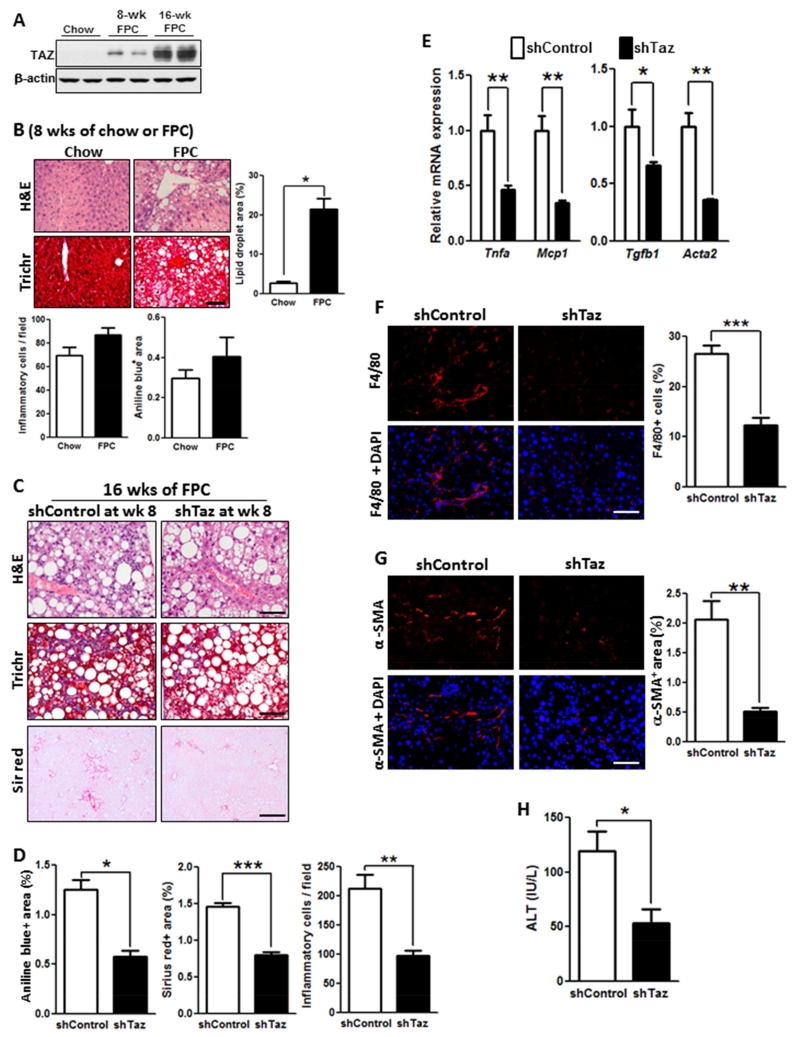
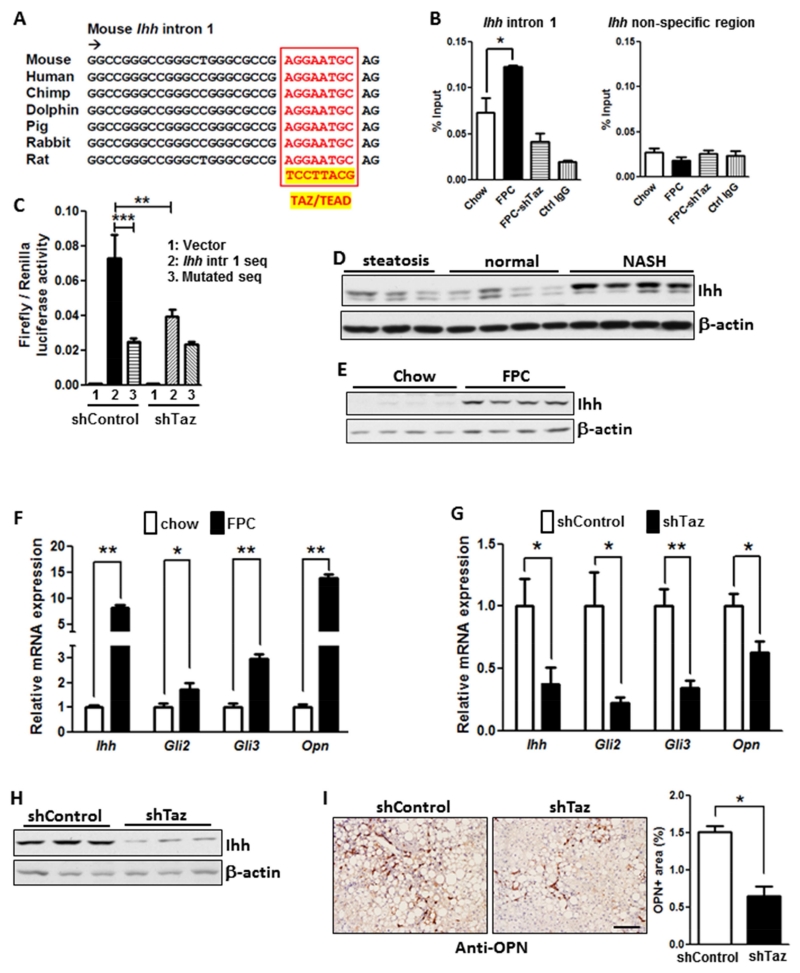
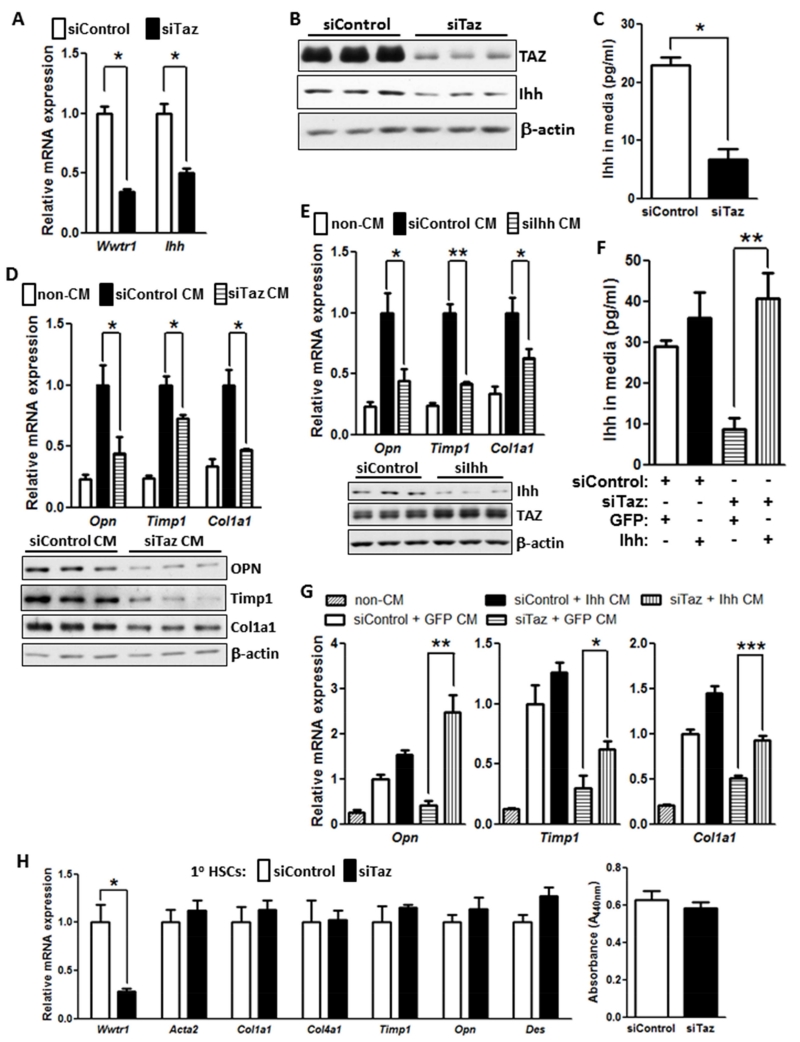
Nonalcoholic steatohepatitis (NASH) is a leading cause of liver disease worldwide. However, the molecular basis of how benign steatosis progresses to NASH is incompletely understood, which has limited the identification of therapeutic targets. Here we show that the transcription regulator TAZ (WWTR1) is markedly higher in hepatocytes in human and murine NASH liver than in normal or steatotic liver. Most importantly, silencing of hepatocyte TAZ in murine models of NASH prevented or reversed hepatic inflammation, hepatocyte death, and fibrosis, but not steatosis. Moreover, hepatocyte-targeted expression of TAZ in a model of steatosis promoted NASH features, including fibrosis. In vitro and in vivo mechanistic studies revealed that a key mechanism linking hepatocyte TAZ to NASH fibrosis is TAZ/TEA domain (TEAD)-mediated induction of Indian hedgehog (Ihh), a secretory factor that activates fibrogenic genes in hepatic stellate cells. In summary, TAZ represents a previously unrecognized factor that contributes to the critical process of steatosis-to-NASH progression.
非酒精性脂肪性肝炎(NASH)是全球肝脏疾病的主要病因。然而,良性脂肪变性如何进展为NASH的分子基础尚未完全明确,这限制了治疗靶点的确定。在此,我们发现转录调节因子TAZ(WWTR1)在人类和小鼠NASH肝脏的肝细胞中显著高于正常或脂肪变性肝脏。最重要的是,在NASH小鼠模型中沉默肝细胞TAZ可预防或逆转肝脏炎症、肝细胞死亡和纤维化,但不能逆转脂肪变性。此外,在脂肪变性模型中靶向肝细胞表达TAZ会促进NASH特征,包括纤维化。体外和体内机制研究表明,将肝细胞TAZ与NASH纤维化联系起来的关键机制是TAZ/TEA结构域(TEAD)介导的印度刺猬因子(Ihh)诱导,Ihh是一种分泌因子,可激活肝星状细胞中的促纤维化基因。总之,TAZ代表了一个先前未被认识的因素,它促成了从脂肪变性到NASH进展的关键过程。