Zhou H, Liu Y, Zhu R, Ding F, Wan Y, Li Y, Liu Z
State Key Laboratory of Molecular Oncology, National Cancer Center/Cancer Hospital, Chinese Academy of Medical Sciences and Peking Union Medical College, Collaborative Innovation Center for Cancer Medicine, Beijing, China.
Department of Cell Biology, University of Pittsburgh School of Medicine, Pittsburgh, Pennsylvania, USA.
Oncogene. 2017 Jun 8;36(23):3312-3321. doi: 10.1038/onc.2016.479. Epub 2017 Jan 9.
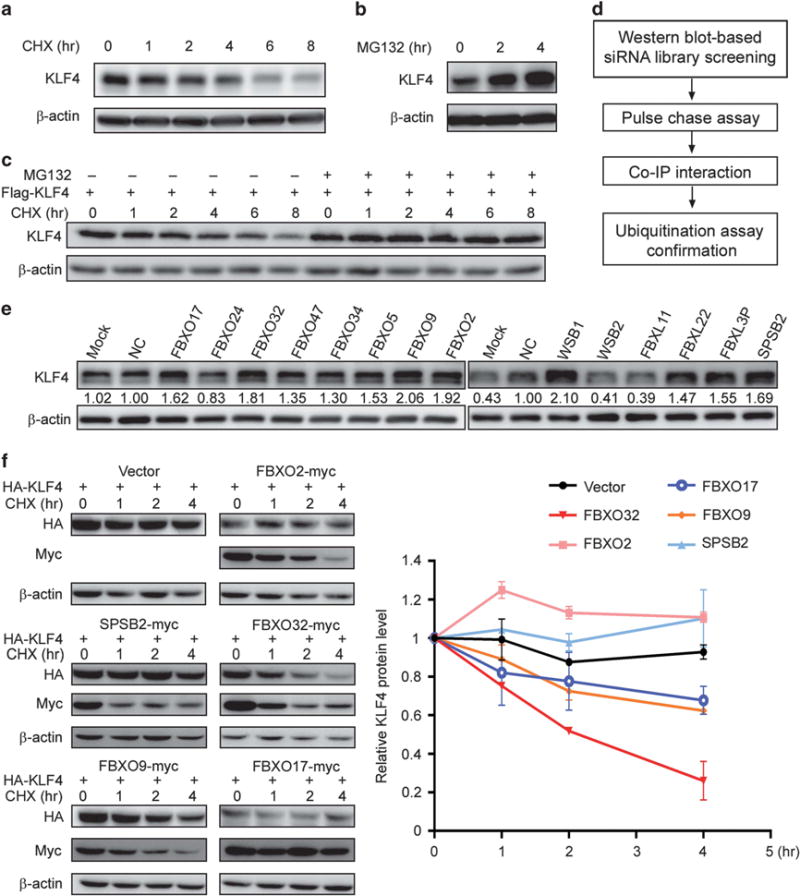
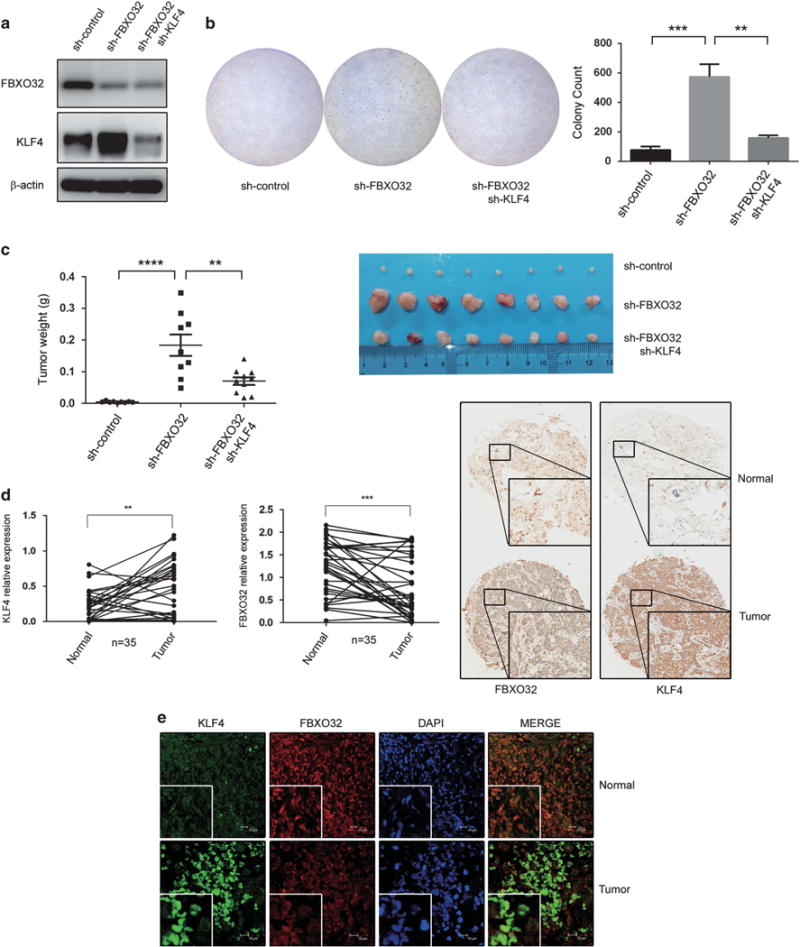
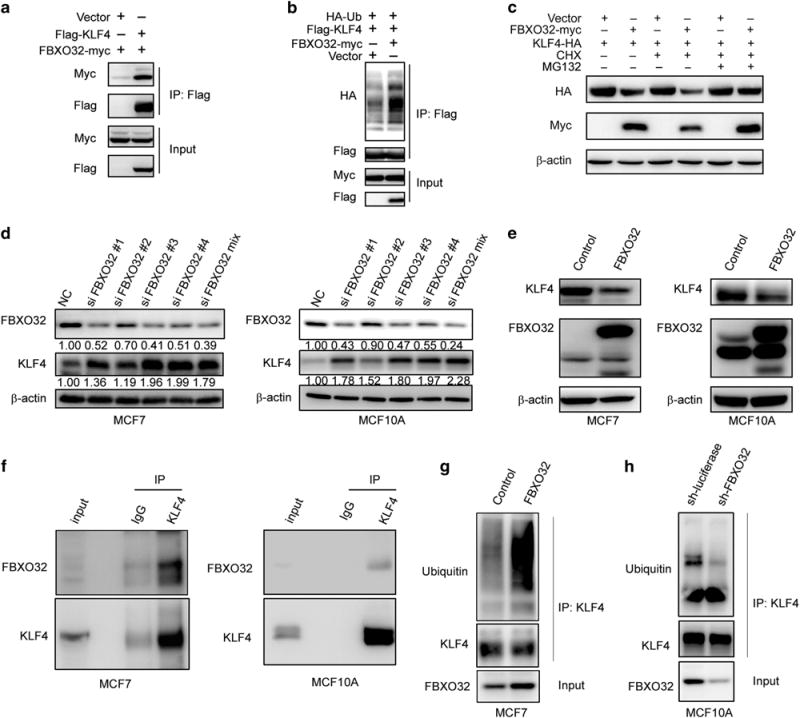
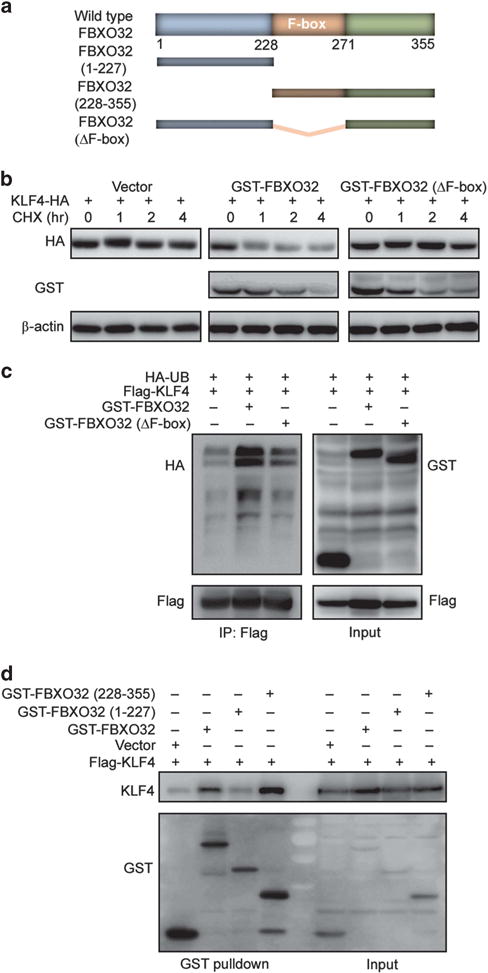
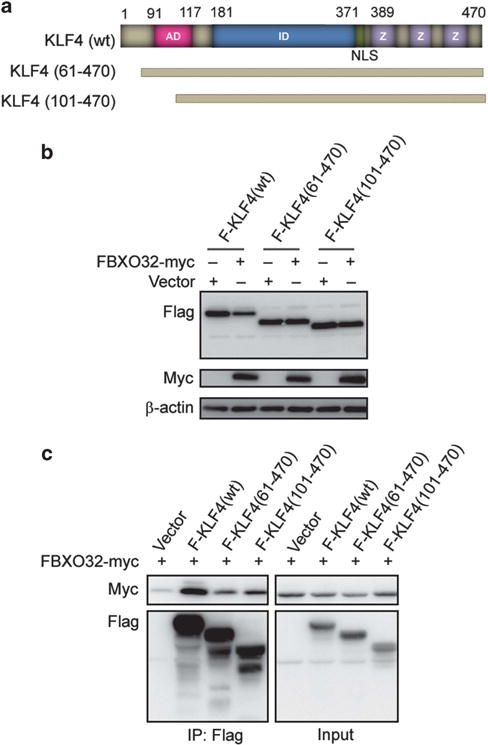
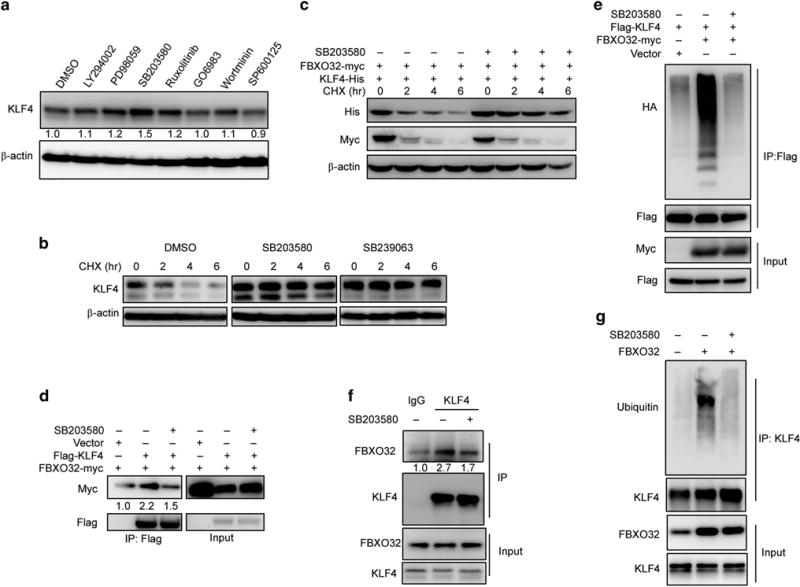
Krüppel-like factor 4 (KLF4, GKLF) is a zinc-finger transcription factor involved in a large variety of cellular processes, including apoptosis, cell cycle progression, as well as stem cell renewal. KLF4 is critical for cell fate decision and has an ambivalent role in tumorigenesis. Emerging data keep reminding us that KLF4 dysregulation either facilitates or impedes tumor progression, making it important to clarify the regulating network of KLF4. Like most transcription factors, KLF4 has a rather short half-life within the cell and its turnover must be carefully orchestrated by ubiquitination and ubiquitin-proteasome system. To better understand the mechanism of KLF4 ubiquitination, we performed a genome-wide screen of E3 ligase small interfering RNA library based on western blot and identified SCF-FBXO32 to be a new E3 ligase, which is responsible for KLF4 ubiquitination and degradation. The F-box domain is critical for FBXO32-dependent KLF4 ubiquitination and degradation. Furthermore, we demonstrated that FBXO32 physically interacts with the N-terminus (1-60 aa) of KLF4 via its C-terminus (228-355 aa) and directly targets KLF4 for ubiquitination and degradation. We also found out that p38 mitogen-activated protein kinase pathway may be implicated in FBXO32-mediated ubiquitination of KLF4, as p38 kinase inhibitor coincidently abrogates endogenous KLF4 ubiquitination and degradation, as well as FBXO32-dependent exogenous KLF4 ubiquitination and degradation. Finally, FBXO32 inhibits colony formation in vitro and primary tumor initiation and growth in vivo through targeting KLF4 into degradation. Our findings thus further elucidate the tumor-suppressive function of FBXO32 in breast cancer. These results expand our understanding of the posttranslational modification of KLF4 and of its role in breast cancer development and provide a potential target for diagnosis and therapeutic treatment of breast cancer.
Krüppel样因子4(KLF4,GKLF)是一种锌指转录因子,参与多种细胞过程,包括细胞凋亡、细胞周期进程以及干细胞更新。KLF4对细胞命运决定至关重要,并且在肿瘤发生中具有矛盾的作用。新出现的数据不断提醒我们,KLF4失调要么促进要么阻碍肿瘤进展,因此阐明KLF4的调控网络很重要。与大多数转录因子一样,KLF4在细胞内的半衰期相当短,其周转必须由泛素化和泛素-蛋白酶体系统精心调控。为了更好地理解KLF4泛素化的机制,我们基于蛋白质印迹对E3连接酶小干扰RNA文库进行了全基因组筛选,并确定SCF-FBXO32是一种新的E3连接酶,它负责KLF4的泛素化和降解。F-box结构域对于FBXO32依赖的KLF4泛素化和降解至关重要。此外,我们证明FBXO32通过其C末端(228-355个氨基酸)与KLF4的N末端(1-60个氨基酸)发生物理相互作用,并直接靶向KLF4进行泛素化和降解。我们还发现p38丝裂原活化蛋白激酶途径可能参与FBXO32介导的KLF4泛素化,因为p38激酶抑制剂同时消除了内源性KLF4的泛素化和降解以及FBXO32依赖的外源性KLF4的泛素化和降解。最后,FBXO32通过将KLF4靶向降解来抑制体外集落形成以及体内原发性肿瘤的起始和生长。因此,我们的研究结果进一步阐明了FBXO32在乳腺癌中的肿瘤抑制功能。这些结果扩展了我们对KLF4翻译后修饰及其在乳腺癌发展中的作用的理解,并为乳腺癌的诊断和治疗提供了一个潜在靶点。