Luo Aiping, Yu Xinfeng, Li Guichang, Ma Gang, Chen Hongyan, Ding Fang, Li Yi, Liu Zhihua
State Key Lab of Molecular Oncology, Cancer Institute & Hospital, Chinese Academy of Medical Sciences, Beijing, China.
Department of Pharmacology, School of Chemical Biology & Pharmaceutical Sciences, Capital Medical University, Beijing, China.
PLoS One. 2014 May 5;9(5):e96610. doi: 10.1371/journal.pone.0096610. eCollection 2014.
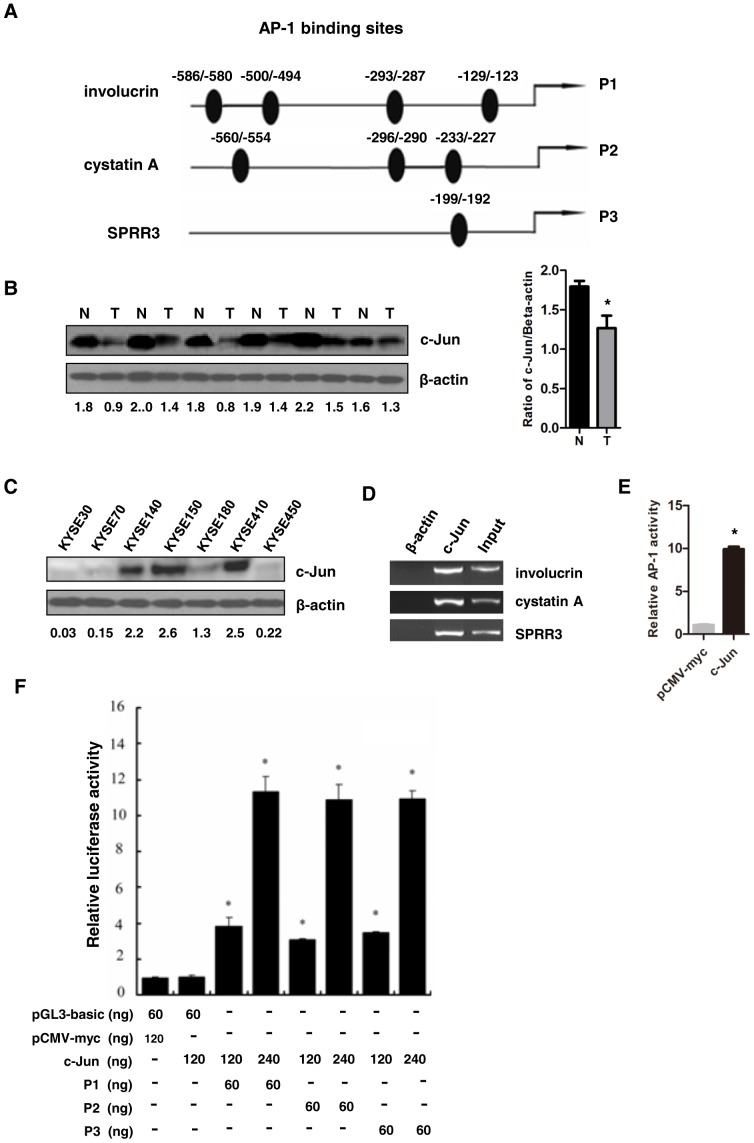
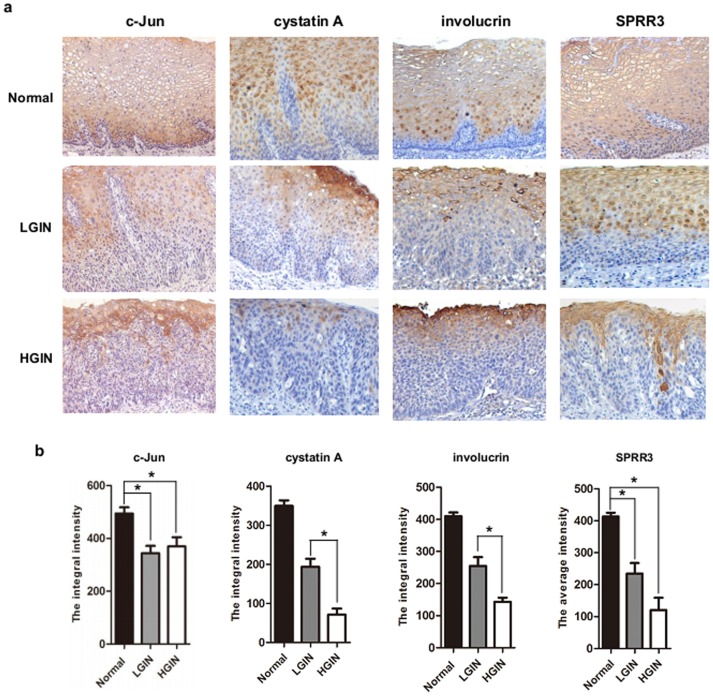
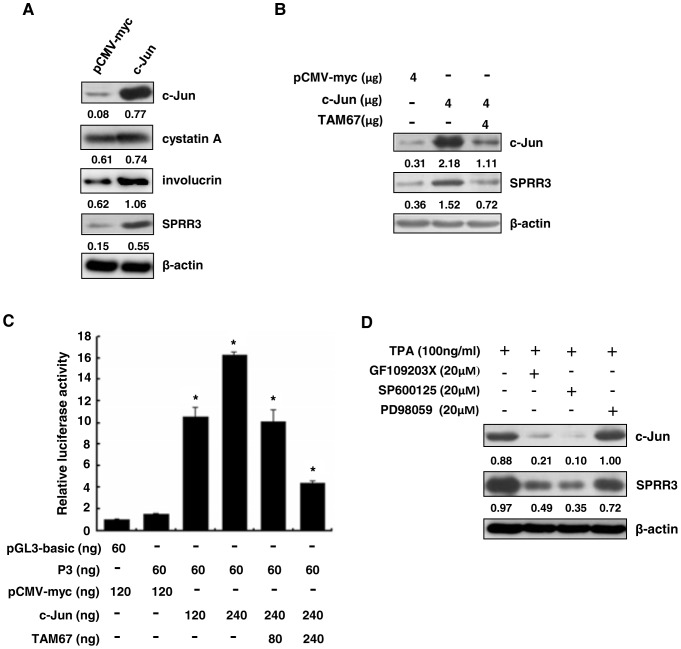
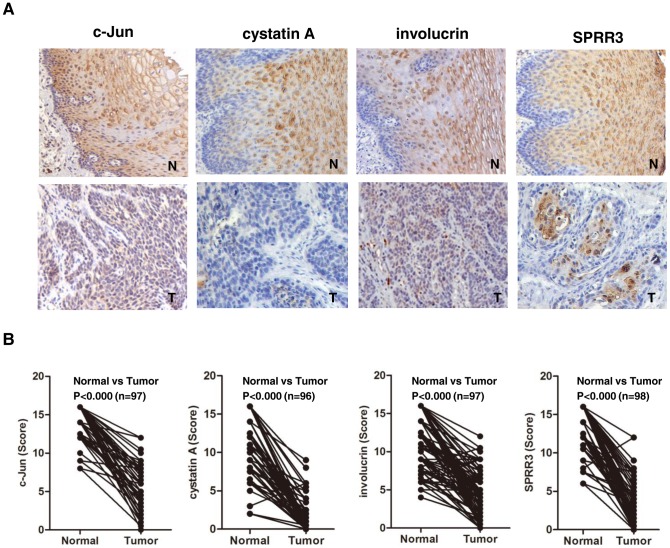
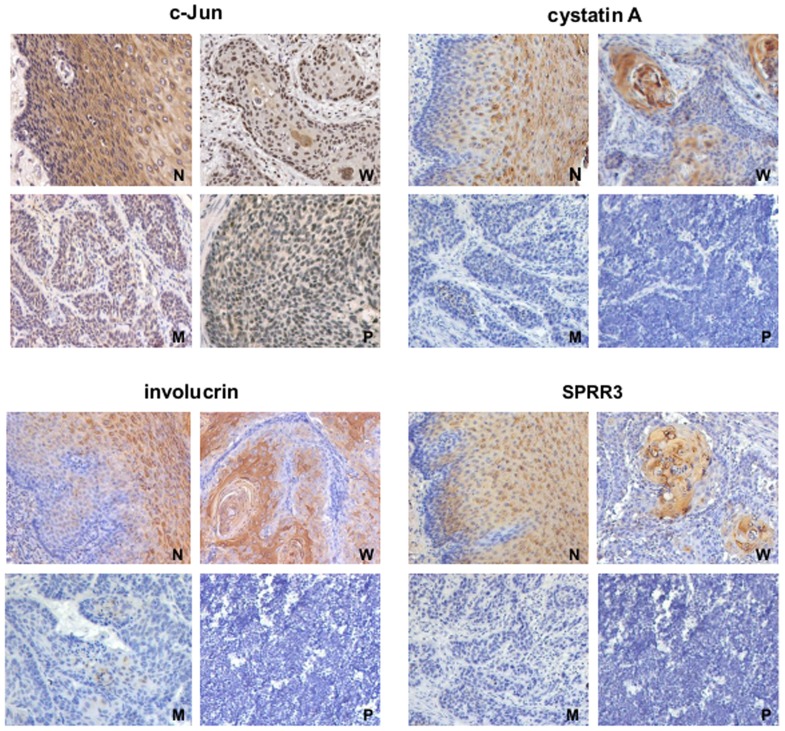
Transcription factor c-Jun plays a key role in controlling epithelium cell proliferation, apoptosis and differentiation. However, molecular mechanism and biological functions of c-Jun in squamous differentiation and the progression of esophageal squamous cell carcinoma (ESCC) remain elusive. In this study, we found that c-Jun bound directly to the promoter region, and activated the transcription of differentiation-associated genes including cystatin A, involucrin and SPRR3 in vivo. Ectopic expression of c-Jun enhanced SPRR3 transactivation in KYSE450 cells. Conversely, TAM67, a dominant negative mutant of c-Jun, inhibited SPRR3 transactivation. c-Jun increased expression of SPPR3 mainly via a PKC/JNK pathway in response to TPA in KYSE450 cells. Furthermore, c-Jun was remarkably reduced in esophageal cancer. Interestingly, cystatin A, involucrin and SPRR3 were significantly downregulated as well, and associated with differentiation grade. Expression of c-Jun was correlated with the expression of these genes in normal epithelium and ESCC. Importantly, the expression of these genes was remarkably decreased during the malignant transformation from normal epithelium to low-grade intraepithelial neoplasia (LGIN) or high-grade intraepithelial neoplasia (HGIN). The expression of cystatin A and involucrin was significantly reduced from LGIN to HGIN. These results suggest c-Jun was involved in the regulation of differentiation-associated genes in ESCC. These genes might serve as the potential markers in distinguishing normal epithelium from esophageal squamous intraepithelial neoplasia.
转录因子c-Jun在控制上皮细胞增殖、凋亡和分化中起关键作用。然而,c-Jun在鳞状分化及食管鳞状细胞癌(ESCC)进展中的分子机制和生物学功能仍不清楚。在本研究中,我们发现c-Jun直接结合到启动子区域,并在体内激活包括胱抑素A、外皮蛋白和小脯蛋白3等分化相关基因的转录。c-Jun的异位表达增强了KYSE450细胞中SPRR3的反式激活。相反,c-Jun的显性负性突变体TAM67抑制了SPRR3的反式激活。在KYSE450细胞中,c-Jun主要通过PKC/JNK途径响应佛波酯增加SPPR3的表达。此外,c-Jun在食管癌中显著降低。有趣的是,胱抑素A、外皮蛋白和SPRR3也显著下调,且与分化程度相关。在正常上皮和ESCC中,c-Jun的表达与这些基因的表达相关。重要的是,在从正常上皮向低级别上皮内瘤变(LGIN)或高级别上皮内瘤变(HGIN)的恶性转化过程中,这些基因的表达显著降低。从LGIN到HGIN,胱抑素A和外皮蛋白的表达显著减少。这些结果表明c-Jun参与了ESCC中分化相关基因的调控。这些基因可能作为区分正常上皮与食管鳞状上皮内瘤变的潜在标志物。