Priyamvada Hema, Akila M, Singh Raj Kamal, Ravikrishna R, Verma R S, Philip Ligy, Marathe R R, Sahu L K, Sudheer K P, Gunthe S S
EWRE Division, Department of Civil Engineering, Indian Institute of Technology Madras, Chennai, India.
Department of Chemical Engineering, Indian Institute of Technology Madras, Chennai, India.
PLoS One. 2017 Jan 10;12(1):e0169333. doi: 10.1371/journal.pone.0169333. eCollection 2017.
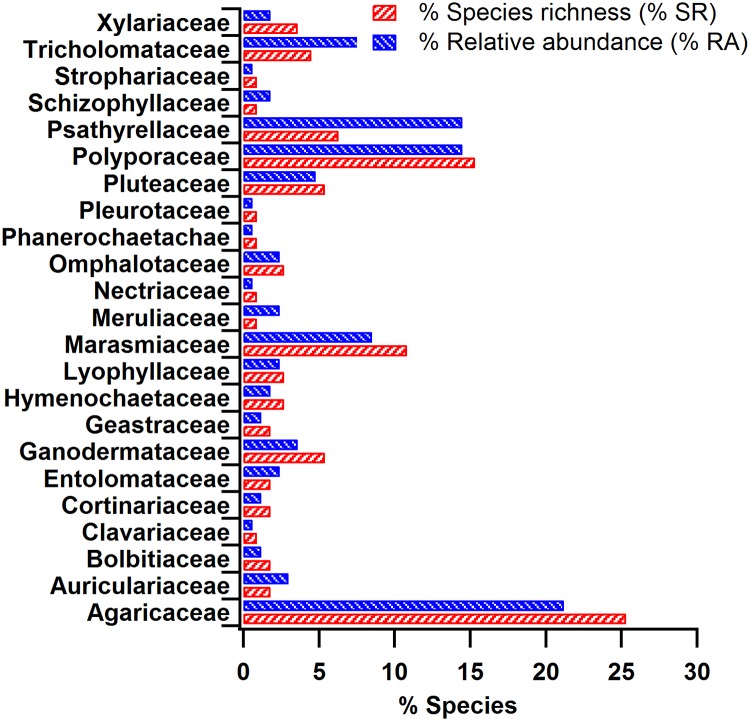
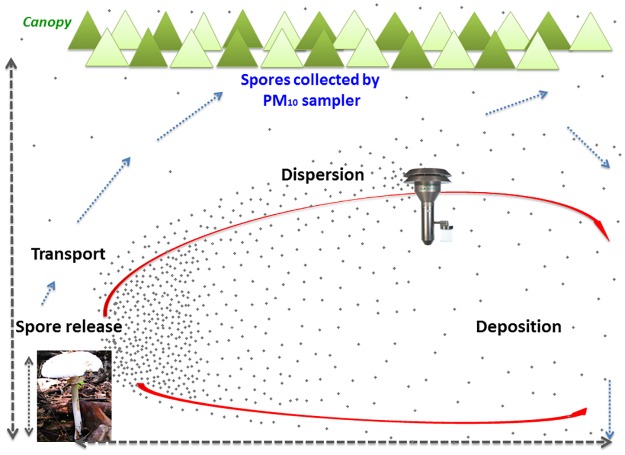
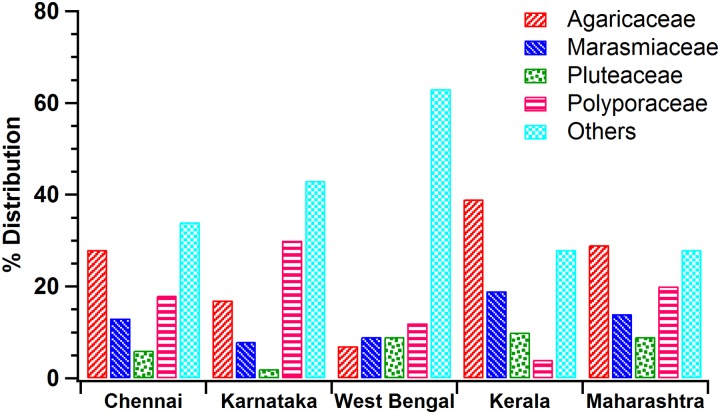
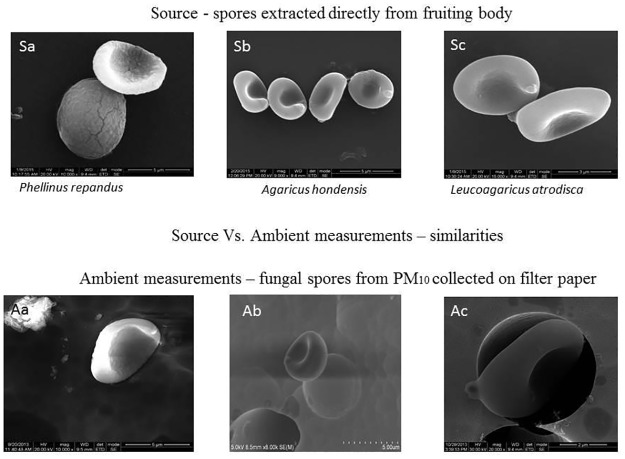
Macrofungi have long been investigated for various scientific purposes including their food and medicinal characteristics. Their role in aerobiology as a fraction of the primary biological aerosol particles (PBAPs), however, has been poorly studied. In this study, we present a source of macrofungi with two different but interdependent objectives: (i) to characterize the macrofungi from a tropical dry evergreen biome in southern India using advanced molecular techniques to enrich the database from this region, and (ii) to assess whether identified species of macrofungi are a potential source of atmospheric PBAPs. From the DNA analysis, we report the diversity of the terrestrial macrofungi from a tropical dry evergreen biome robustly supported by the statistical analyses for diversity conclusions. A total of 113 macrofungal species belonging to 54 genera and 23 families were recorded, with Basidiomycota and Ascomycota constituting 96% and 4% of the species, respectively. The highest species richness was found in the family Agaricaceae (25.3%) followed by Polyporaceae (15.3%) and Marasmiaceae (10.8%). The difference in the distribution of commonly observed macrofungal families over this location was compared with other locations in India (Karnataka, Kerala, Maharashtra, and West Bengal) using two statistical tests. The distributions of the terrestrial macrofungi were distinctly different in each ecosystem. We further attempted to demonstrate the potential role of terrestrial macrofungi as a source of PBAPs in ambient air. In our opinion, the findings from this ecosystem of India will enhance our understanding of the distribution, diversity, ecology, and biological prospects of terrestrial macrofungi as well as their potential to contribute to airborne fungal aerosols.
长期以来,大型真菌因其食用和药用特性等各种科学目的而受到研究。然而,它们作为主要生物气溶胶颗粒(PBAPs)一部分在空气生物学中的作用却鲜有研究。在本研究中,我们提出了一个关于大型真菌的研究,有两个不同但相互关联的目标:(i)使用先进的分子技术对印度南部热带干燥常绿生物群落中的大型真菌进行表征,以丰富该地区的数据库;(ii)评估已鉴定的大型真菌物种是否是大气PBAPs的潜在来源。通过DNA分析,我们报告了来自热带干燥常绿生物群落的陆生大型真菌的多样性,多样性结论得到了统计分析的有力支持。共记录了113种大型真菌,分属于54属23科,其中担子菌门和子囊菌门分别占物种的96%和4%。物种丰富度最高的是蘑菇科(25.3%),其次是多孔菌科(15.3%)和小皮伞科(10.8%)。使用两种统计测试方法,将该地点常见大型真菌科的分布差异与印度其他地点(卡纳塔克邦、喀拉拉邦、马哈拉施特拉邦和西孟加拉邦)进行了比较。每个生态系统中陆生大型真菌的分布明显不同。我们进一步试图证明陆生大型真菌作为环境空气中PBAPs来源的潜在作用。我们认为,来自印度这个生态系统的研究结果将增进我们对陆生大型真菌的分布、多样性、生态学和生物学前景以及它们对空气传播真菌气溶胶贡献潜力的理解。