Safaei Naser, Babaei Hossein, Azarfarin Rasoul, Jodati Ahmad-Reza, Yaghoubi Alireza, Sheikhalizadeh Mohammad-Ali
Cardiovascular Research Center, School of Medicine, Tabriz University of Medical Sciences, Tabriz, Iran.
Drug Applied Research Center, School of Pharmacy, Tabriz University of Medical Sciences, Tabriz, Iran.
Ann Card Anaesth. 2017 Jan-Mar;20(1):45-51. doi: 10.4103/0971-9784.197834.
This study aimed to test the beneficial effect of grape seed extract (GSE) (Vitis vinifera) and Vitamin C in oxidative stress and reperfusion injury induced by cardiopulmonary bypass (CPB) in coronary artery bypass surgery.
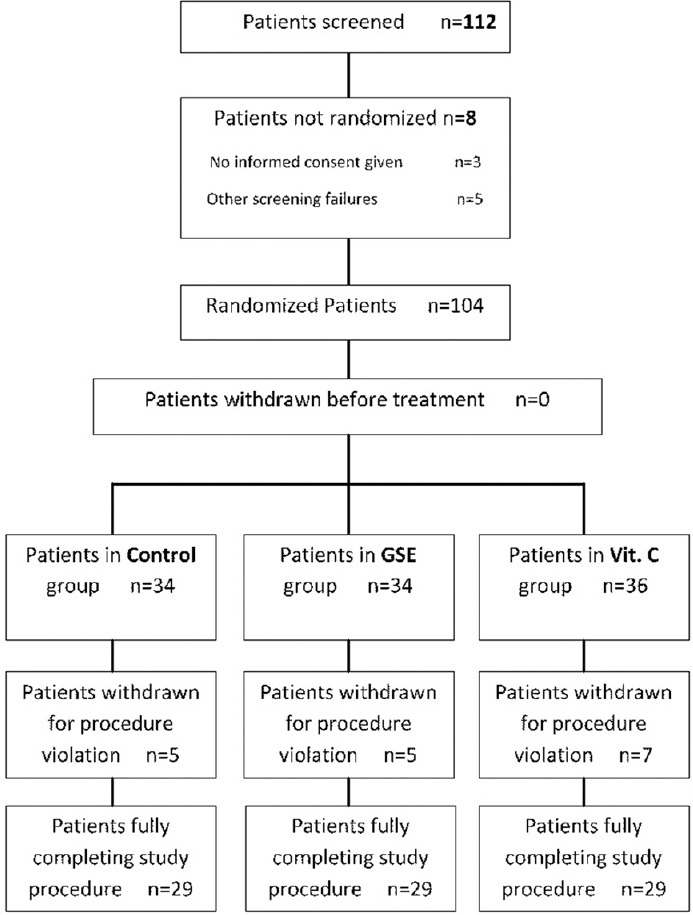
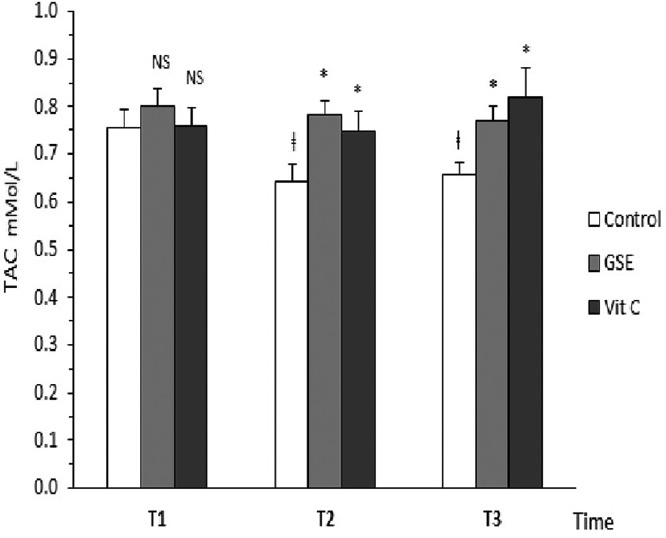
In this randomized trial, 87 patients undergoing elective and isolated coronary bypass surgery included. The patients were randomly assigned into three groups (n = 29 each): (1) Control group with no treatment, (2) GSE group who received the extract 24 h before operation, 100 mg every 6 h, orally, (3) Vitamin C group who received 25 mg/kg Vitamin C through CPB during surgery. Blood samples were taken from coronary sinus at (T1) just before aortic cross clamp; (T2) just before starting controlled aortic root reperfusion; and (T3) 10 min after root reperfusion. Some clinical parameters and biochemical markers were compared among the groups.
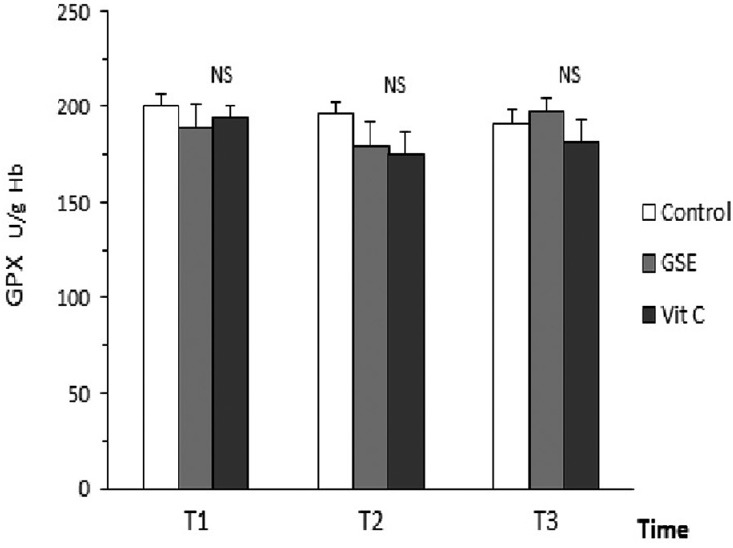
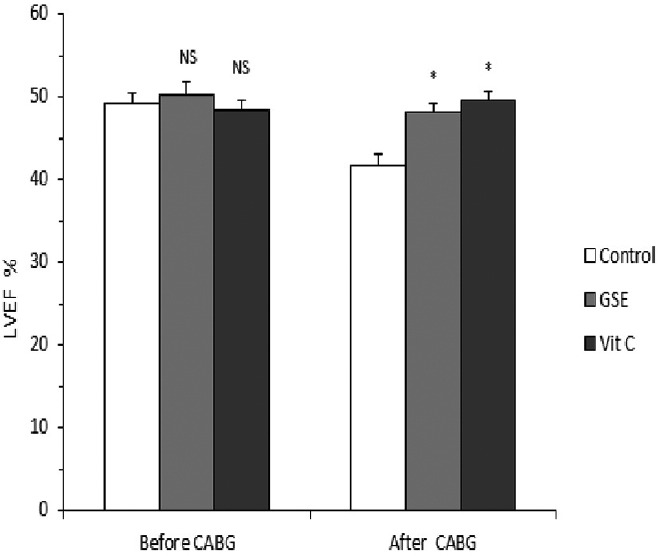
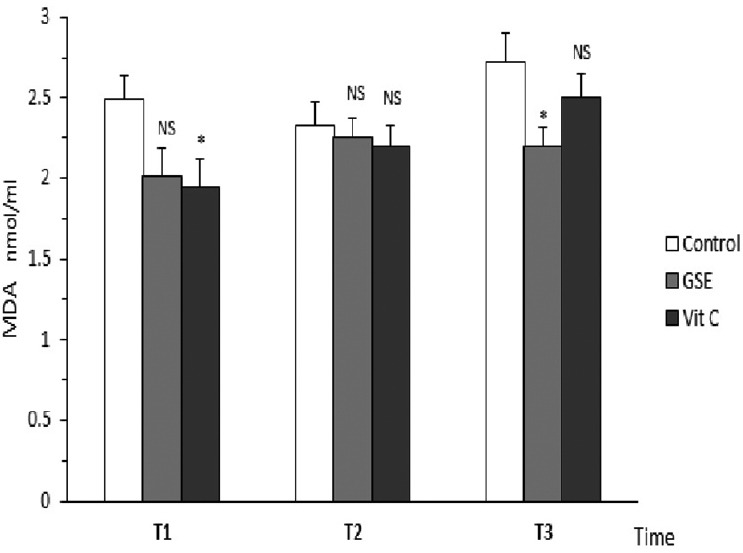
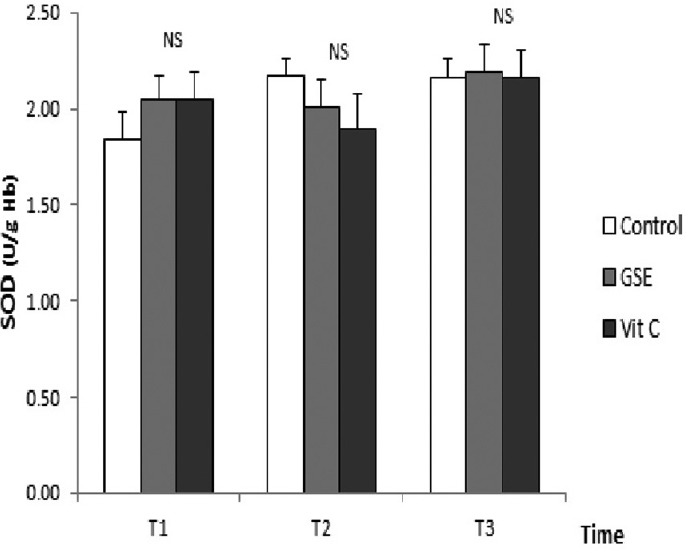
There were significant differences in tracheal intubation times, sinus rhythm return, and left ventricular function between treatment groups compared with control (P < 0.05). Total antioxidant capacity was higher (P < 0.05) in both grape seed and Vitamin C groups at T2 and T3 times. In reperfusion period, malondialdehyde level was increased in control group; however, it was significantly lower for the grape seed group (P = 0.04). The differences in the mean levels of superoxide dismutase and glutathione peroxidase among the three groups were not significant (P > 0.05 in all cases).
In our patients, GSE and Vitamin C had antioxidative effects and reduced deleterious effects of CPB during coronary artery bypass grafting surgery.
本研究旨在测试葡萄籽提取物(GSE)(葡萄)和维生素C对冠状动脉搭桥手术中体外循环(CPB)诱导的氧化应激和再灌注损伤的有益作用。
在这项随机试验中,纳入了87例行择期孤立冠状动脉搭桥手术的患者。患者被随机分为三组(每组n = 29):(1)未治疗的对照组;(2)GSE组,术前24小时接受提取物,每6小时口服100毫克;(3)维生素C组,手术期间通过CPB接受25毫克/千克维生素C。在主动脉交叉钳夹前(T1)、开始控制性主动脉根部再灌注前(T2)以及根部再灌注后10分钟(T3)从冠状窦采集血样。比较各组的一些临床参数和生化指标。
与对照组相比,治疗组在气管插管时间、窦性心律恢复和左心室功能方面存在显著差异(P < 0.05)。葡萄籽组和维生素C组在T2和T3时的总抗氧化能力均较高(P < 0.05)。在再灌注期,对照组丙二醛水平升高;然而,葡萄籽组显著较低(P = 0.04)。三组中超氧化物歧化酶和谷胱甘肽过氧化物酶的平均水平差异不显著(所有情况均为P > 0.05)。
在我们的患者中,GSE和维生素C具有抗氧化作用,并减少了冠状动脉搭桥手术期间CPB的有害影响。