Okuyama Hiromi, Tominaga Akira, Fukuoka Satoshi, Taguchi Takahiro, Kusumoto Yutaka, Ono Shiro
Laboratory of Immunology, Faculty of Pharmacy, Osaka Ohtani University, Tondabayashi, Osaka 584-8540, Japan.
Laboratory of Human Health and Medical Science, Graduate School of Kuroshio Science, and Department of Molecular Biology and Cellular Biology, Kochi Medical School, Kochi University, Nankoku, Kochi 783-8505, Japan.
Oncol Rep. 2017 Feb;37(2):684-694. doi: 10.3892/or.2017.5346. Epub 2017 Jan 2.
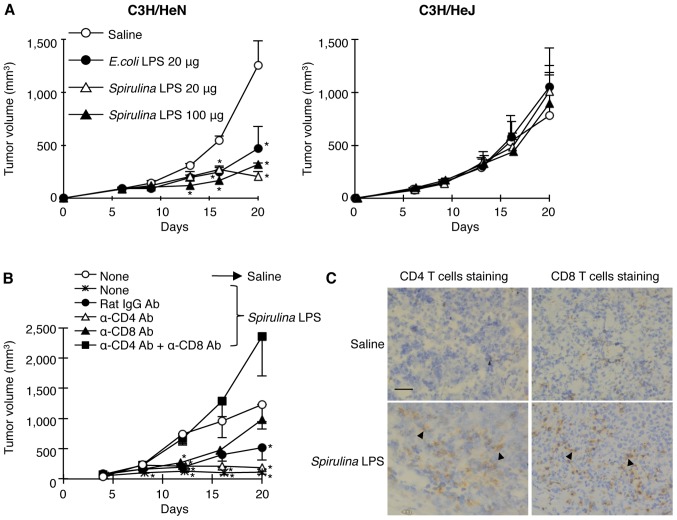
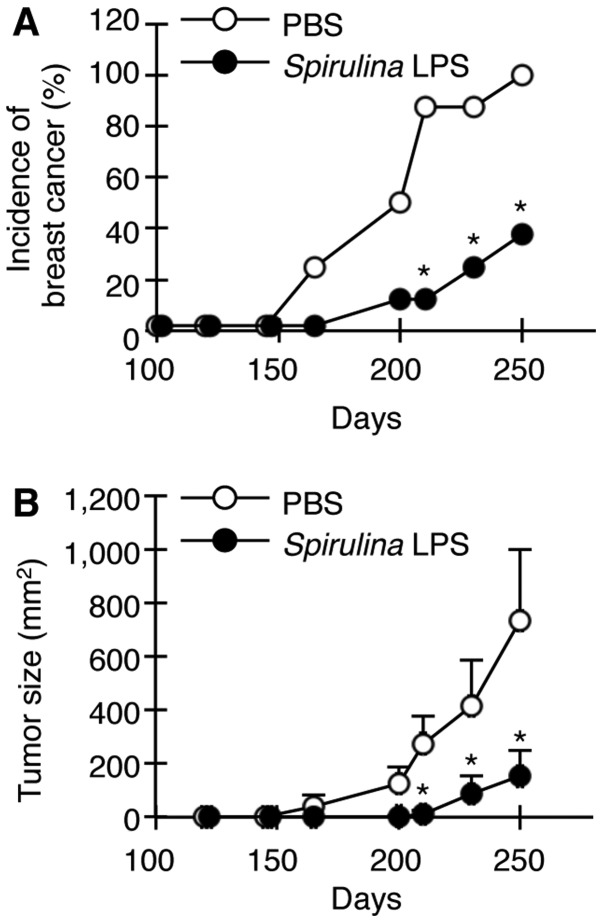
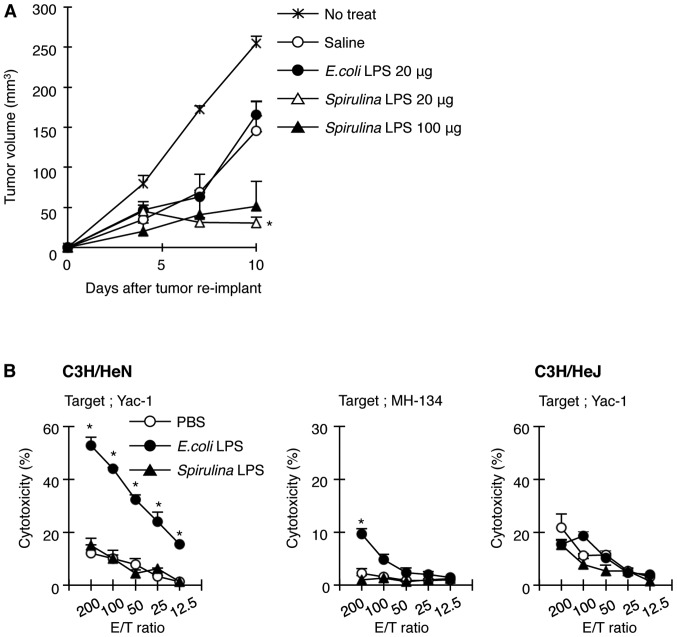
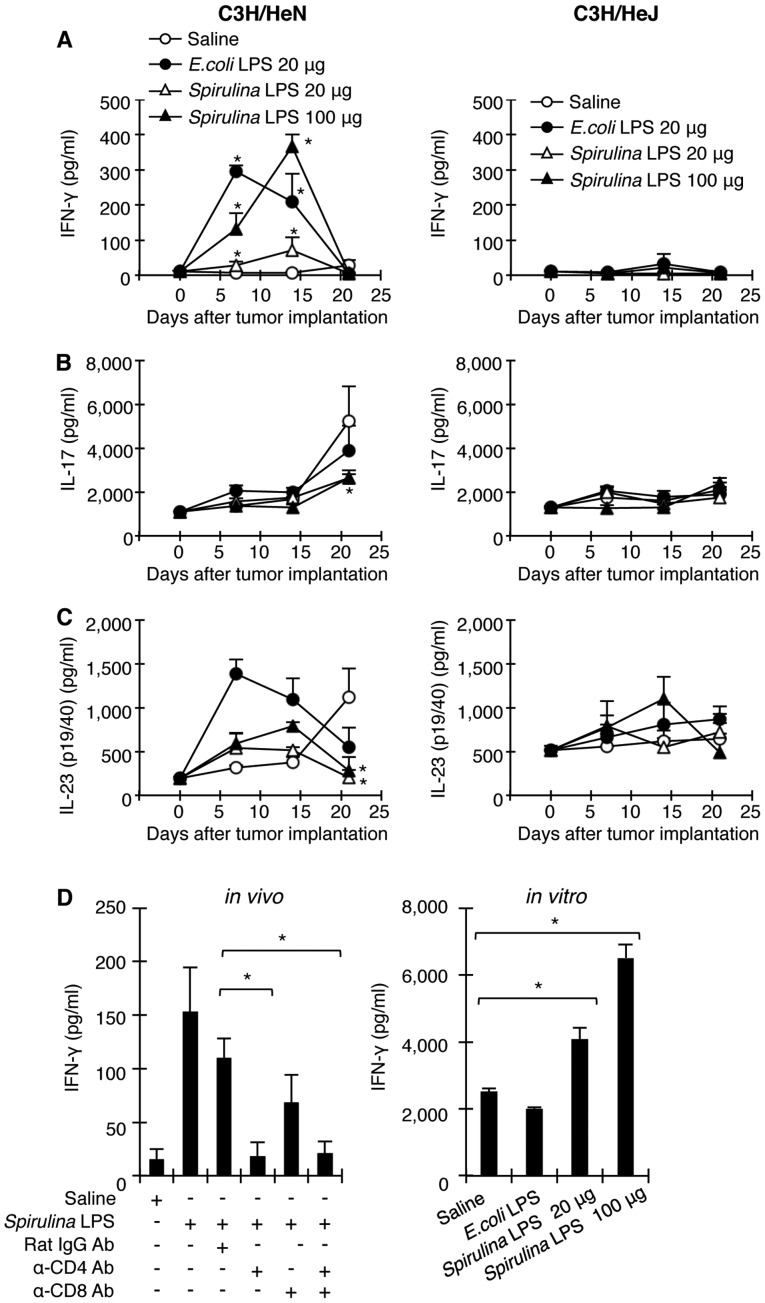
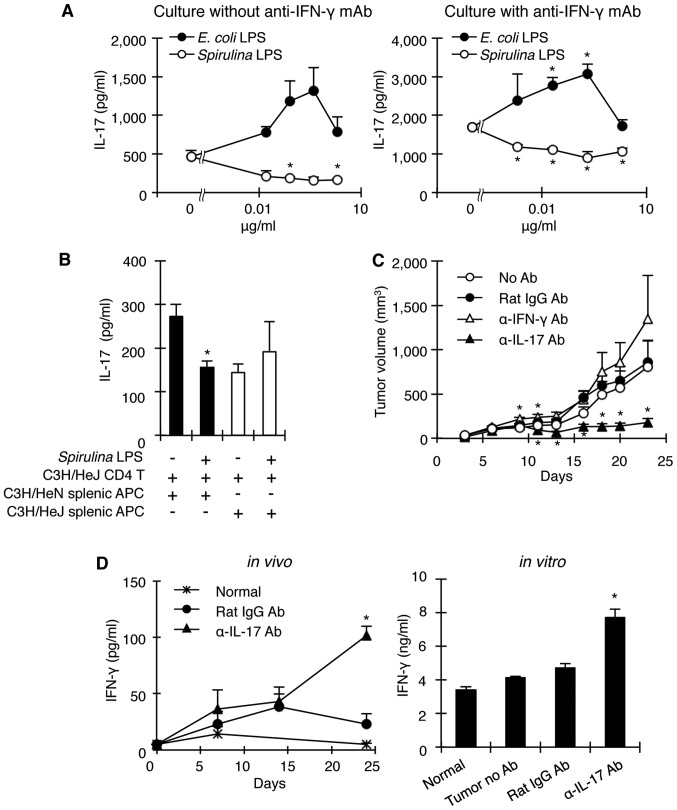
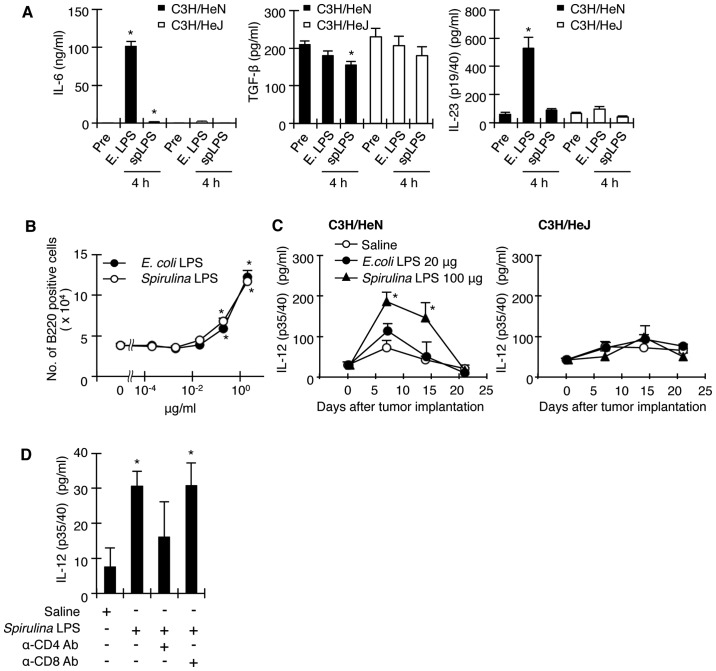
Th17 cells and the cytokine they produce, interleukin (IL)-17, play an important role in tumor progression in humans and in mice. IL-6 and IL-23 are critical cytokines for the differentiation and propagation of Th17 cells, respectively. Bacterial lipopolysaccharides (LPS) are known to stimulate immune cells to produce such inflammatory cytokines. Contrary to Escherichia coli (E. coli) LPS, LPS from Spirulina has low toxicity and barely induces in vivo production of IL-6 and IL-23 in mice. We examined the antitumor effects of Spirulina LPS compared to E. coli LPS in an MH134 hepatoma model. Administration of Spirulina LPS suppressed tumor growth in C3H/HeN mice, but not in Toll-like receptor 4 (TLR4)-mutant C3H/HeJ mice, by reducing serum levels of IL-17 and IL-23, while increasing interferon (IFN)-γ levels. The antitumor activity and IFN-γ production were mediated by T cells. Moreover, in vitro experiments showed that Spirulina LPS impaired the antigen-presenting function that supports the generation of IL-17-producing cells in a toll-like receptor (TLR)4-dependent manner. Of note, injection of anti-IL-17 antibody in tumor-bearing C3H/HeN mice in the absence of Spirulina LPS markedly suppressed tumor growth and augmented IFN-γ responses. Thus, our results support the notion that IFN-γ and IL-17/IL-23 mutually regulate Th17 and Th1 responses in tumor-bearing hosts, and Spirulina LPS modulates the balance of the IFN-γ-IL-17/IL-23 axis towards IFN-γ production, which leads to tumor inhibition. Furthermore, Spirulina LPS effectively inhibited the spontaneous development of mammary tumors. This study has important implications for the exploitation of TLR-based immunomodulators for cancer immunotherapy.
辅助性T细胞17(Th17细胞)及其产生的细胞因子白细胞介素(IL)-17在人类和小鼠的肿瘤进展中发挥着重要作用。IL-6和IL-23分别是Th17细胞分化和增殖的关键细胞因子。已知细菌脂多糖(LPS)可刺激免疫细胞产生此类炎性细胞因子。与大肠杆菌(E. coli)LPS相反,螺旋藻LPS毒性较低,在小鼠体内几乎不诱导产生IL-6和IL-23。我们在MH134肝癌模型中研究了螺旋藻LPS与大肠杆菌LPS相比的抗肿瘤作用。通过降低血清中IL-17和IL-23的水平,同时提高干扰素(IFN)-γ水平,给予螺旋藻LPS可抑制C3H/HeN小鼠的肿瘤生长,但对Toll样受体4(TLR4)突变的C3H/HeJ小鼠无效。抗肿瘤活性和IFN-γ的产生由T细胞介导。此外,体外实验表明,螺旋藻LPS以Toll样受体(TLR)4依赖的方式损害了支持产生IL-17细胞的抗原呈递功能。值得注意的是,在没有螺旋藻LPS的情况下,给荷瘤C3H/HeN小鼠注射抗IL-17抗体可显著抑制肿瘤生长并增强IFN-γ反应。因此,我们的结果支持以下观点:IFN-γ和IL-17/IL-23在荷瘤宿主中相互调节Th17和Th1反应,螺旋藻LPS调节IFN-γ-IL-17/IL-23轴的平衡,使其向产生IFN-γ的方向发展,从而导致肿瘤抑制。此外,螺旋藻LPS有效抑制了乳腺肿瘤的自发发展。本研究对于开发基于TLR的免疫调节剂用于癌症免疫治疗具有重要意义。