Key Laboratory for Experimental Teratology of Ministry of Education and Department of Microbiology, School of Basic Medical Science, Cheeloo College of Medicine, Shandong University, Jinan, 250012, Shandong, China.
Department of Periodontology, School and Hospital of Stomatology, Cheeloo College of Medicine, Shandong University & Shandong Key Laboratory of Oral Tissue Regeneration & Shandong Engineering Laboratory for Dental Materials and Oral Tissue Regeneration, Jinan, 250012, Shandong, China.
BMC Microbiol. 2021 Apr 20;21(1):122. doi: 10.1186/s12866-021-02188-0.
Oral lichen planus (OLP), a common clinical oral disease, is associated with an increased risk of malignant transformation. The mechanism underlying the pathogenesis of OLP is unknown. Oral dysbacteriosis is reported to be one of the aetiological factors of OLP. Although Helicobacter pylori infection is associated with various oral diseases, the correlation between H. pylori infection and OLP is unclear. This study aimed to investigate the effect of H. pylori infection on OLP pathogenesis and oral microbiome composition in the Chinese population, which has a high incidence of H. pylori infection.
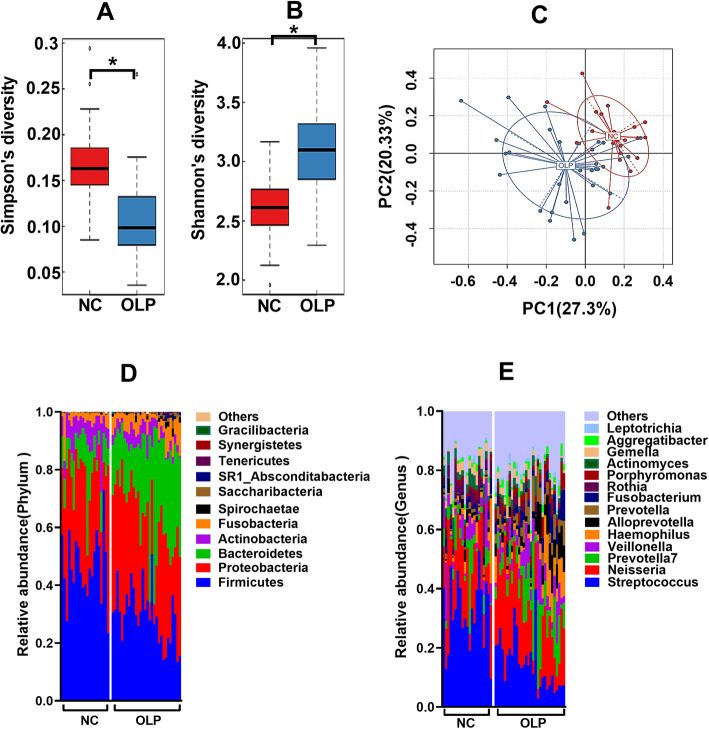
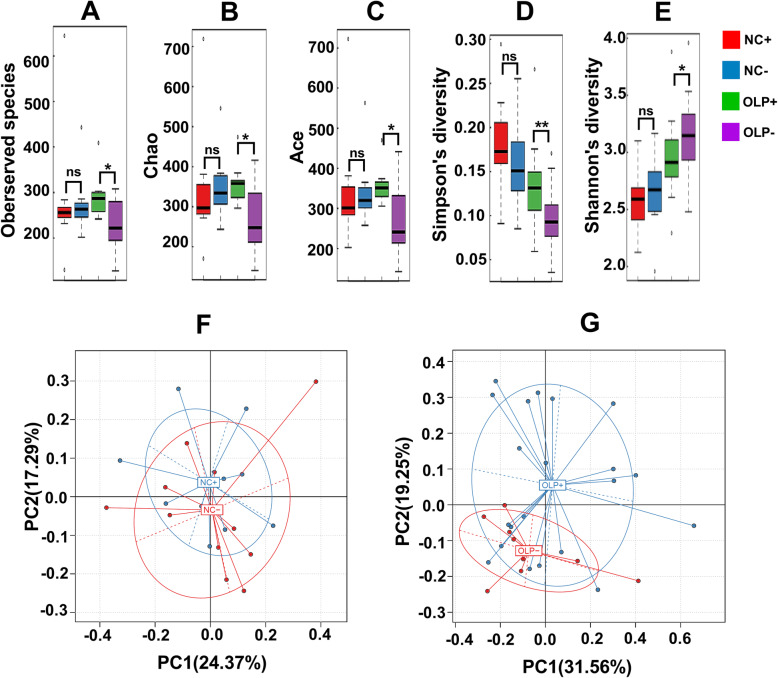
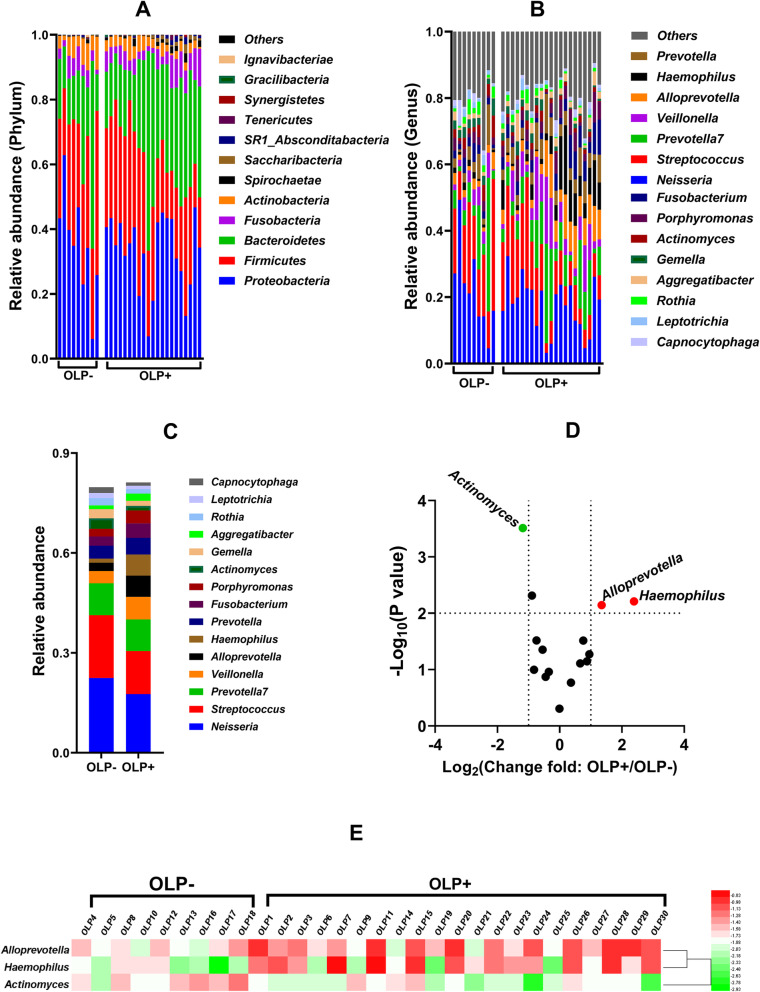
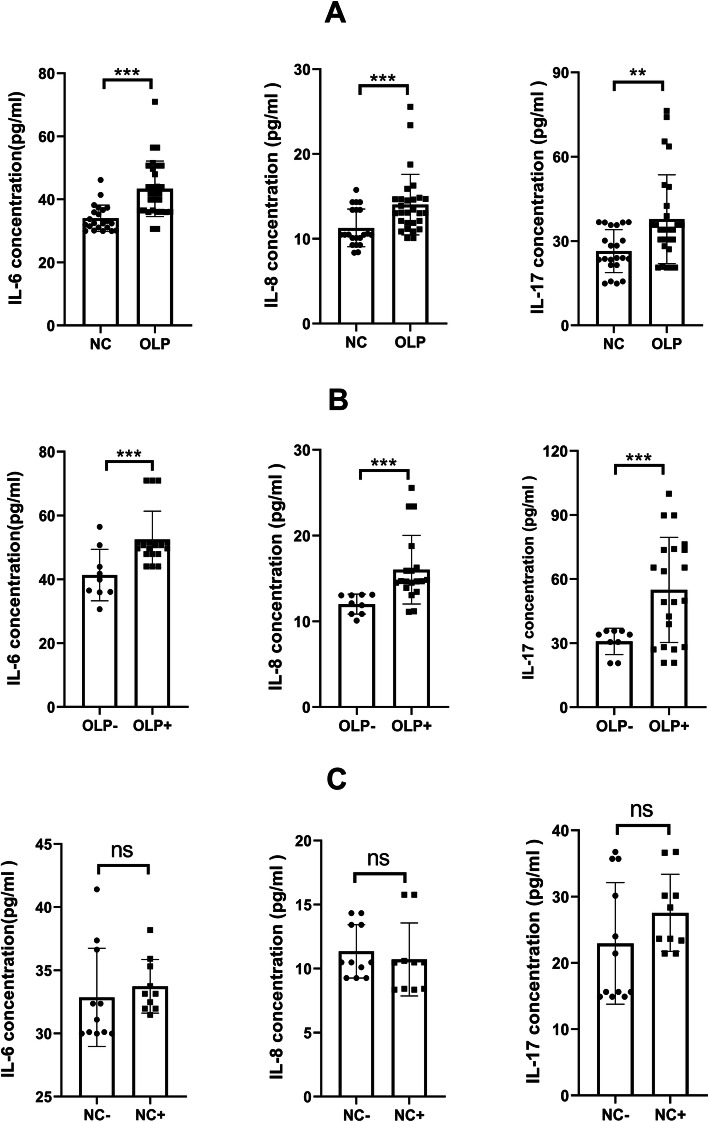
In this study, saliva samples of 30 patients with OLP (OLP group) and 21 negative controls (NC group) were collected. H. pylori infection was detected using the carbon-13-labeled urea breath test (UBT). The saliva samples were divided into the following four groups based on the H. pylori status: H. pylori-positive OLP (OLP+), H. pylori-positive NC (NC+), H. pylori-negative OLP (OLP-), and H. pylori-negative NC (NC-). Oral microbiome compositions were significantly different between the OLP and NC groups and between the OLP- and OLP+ groups. Compared with those in the OLP- group, those in the OLP+ group had a higher incidence of erosive OLP and higher levels of salivary cytokines. In contrast, the oral microbiome composition and cytokine levels were not significantly different between the NC- and NC+ groups.
This is the first report to demonstrate that H. pylori infection is significantly correlated with the pathogenesis of erosive OLP.
口腔扁平苔藓(OLP)是一种常见的临床口腔疾病,与恶性转化的风险增加有关。OLP 发病机制的机制尚不清楚。口腔菌群失调被报道是 OLP 的病因之一。尽管幽门螺杆菌感染与各种口腔疾病有关,但 H. pylori 感染与 OLP 的相关性尚不清楚。本研究旨在探讨 H. pylori 感染对中国高发人群 OLP 发病机制和口腔微生物群组成的影响。
本研究收集了 30 例 OLP 患者(OLP 组)和 21 例阴性对照(NC 组)的唾液样本。采用碳 13 标记尿素呼气试验(UBT)检测 H. pylori 感染。根据 H. pylori 状态将唾液样本分为以下四组:H. pylori 阳性 OLP(OLP+)、H. pylori 阳性 NC(NC+)、H. pylori 阴性 OLP(OLP-)和 H. pylori 阴性 NC(NC-)。OLP 组和 NC 组以及 OLP-组和 OLP+组之间的口腔微生物群组成存在显著差异。与 OLP-组相比,OLP+组中糜烂性 OLP 的发生率更高,唾液细胞因子水平更高。相比之下,NC-组和 NC+组之间的口腔微生物群组成和细胞因子水平没有显著差异。
这是首次报道 H. pylori 感染与糜烂性 OLP 的发病机制显著相关。