Nasu Kentaro, Yamaguchi Kazunori, Takanashi Tomoka, Tamai Keiichi, Sato Ikuro, Ine Shoji, Sasaki Osamu, Satoh Kennichi, Tanaka Nobuyuki, Tanaka Yuetsu, Fukushima Takuya, Harigae Hideo, Sugamura Kazuo
Division of Molecular and Cellular Oncology, Miyagi Cancer Center Research Institute, Natori, Japan.
Department of Hematology and Rheumatology, Tohoku University Graduate School of Medicine, Sendai, Japan.
Cancer Sci. 2017 Mar;108(3):435-443. doi: 10.1111/cas.13163.
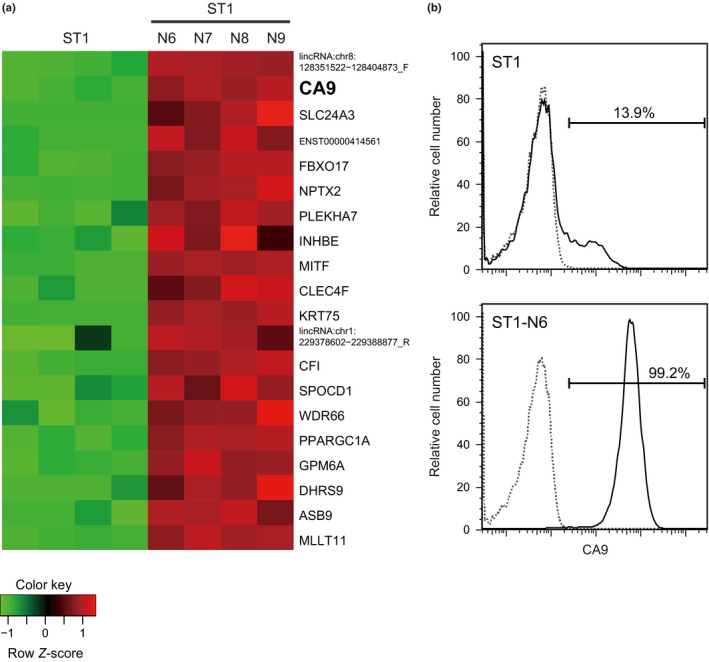
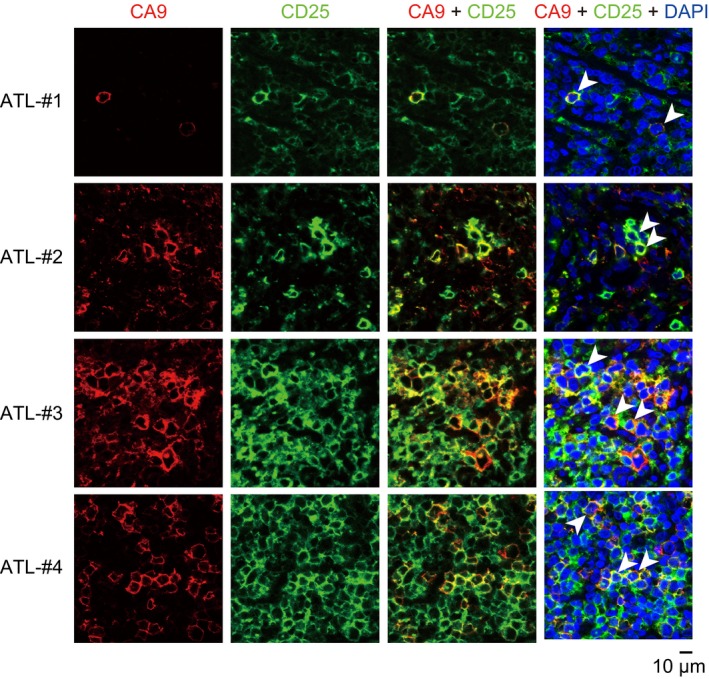
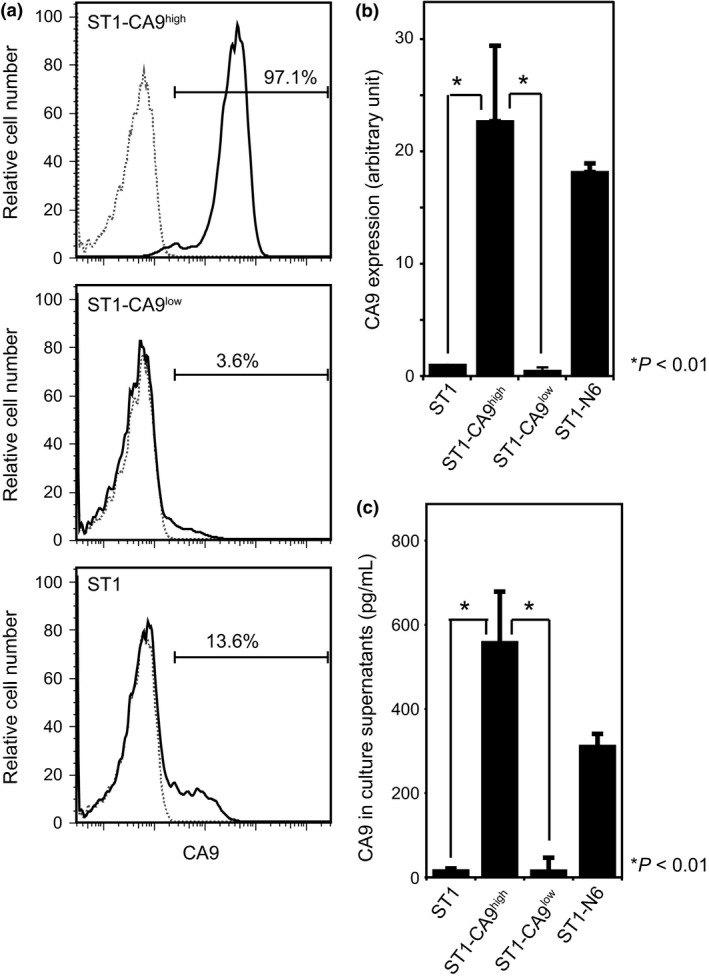
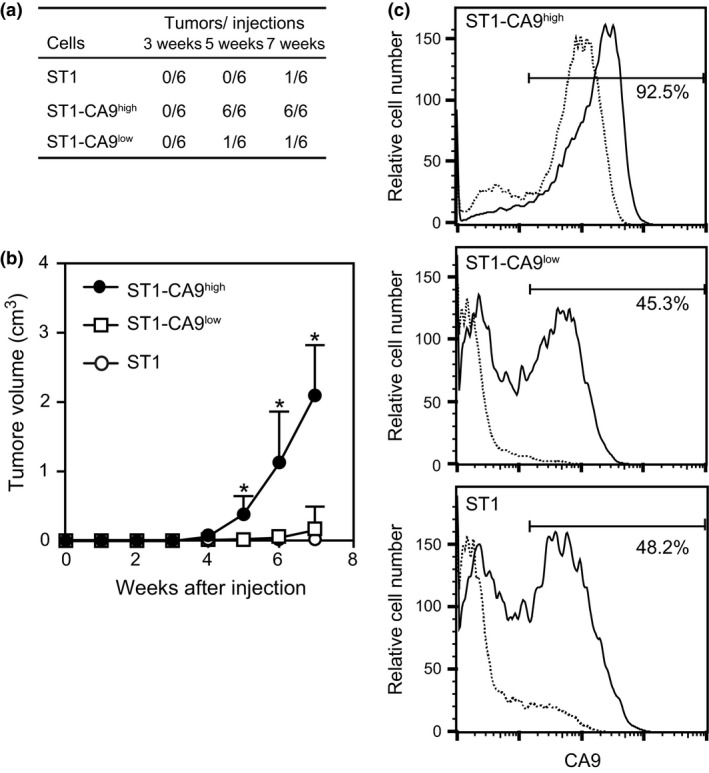
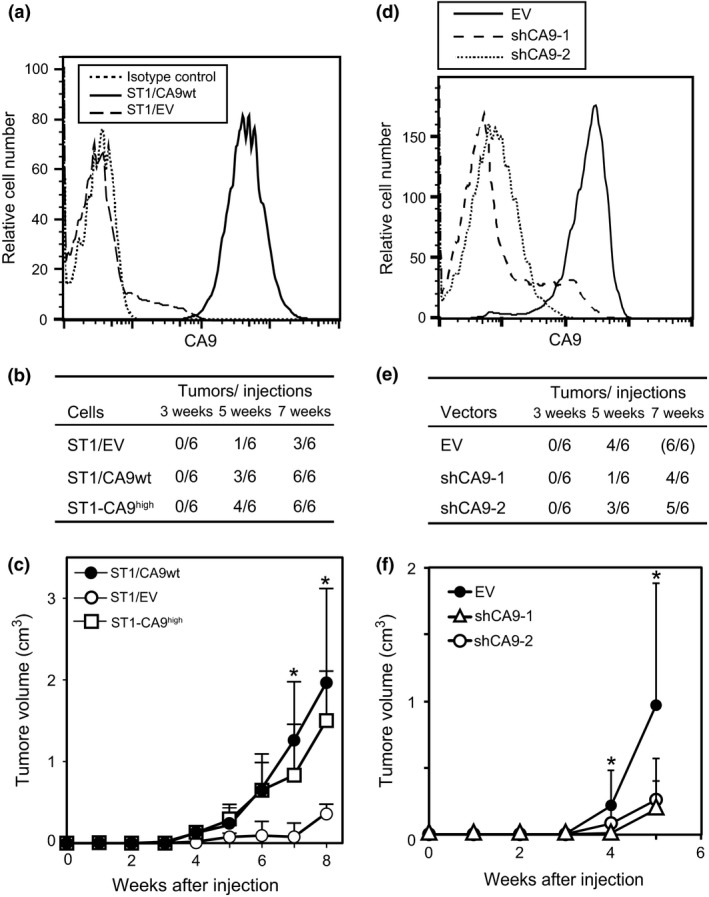
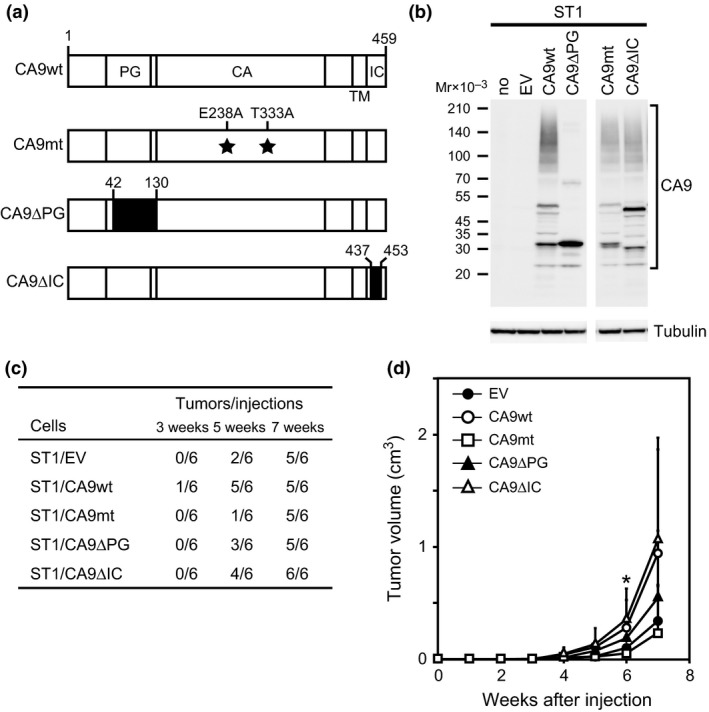
Carbonic anhydrase IX (CA9) is a membrane-associated carbonic anhydrase that regulates cellular pH, is upregulated in various solid tumors, and is considered to be a therapeutic target. Here, we describe the essential role of CA9 in the tumorigenicity of cells derived from human adult T-cell leukemia/lymphoma (ATL). We previously established the highly tumorigenic ST1-N6 subline from the ATL-derived ST1 cell line by serial xenotransplantation in NOG mice. In the present study, we first show that CA9 expression is strongly enhanced in ST1-N6 cells. We then sorted ST1 cells by high or low CA9 expression and established ST1-CA9 and ST1-CA9 sublines. ST1-CA9 cells, like ST1-N6 cells, were more strongly tumorigenic than ST1-CA9 or parental ST1 cells when injected into NOG mice. Knockdown of CA9 with shRNAs suppressed the ability of ST1-CA9 cells to initiate tumors, and the tumorigenicity of ST1 cells was significantly enhanced by introducing wild-type CA9 or a CA9 mutant with deletion of an intracytoplasmic domain. However, a CA9 with point mutations in the catalytic site did not increase the tumorigenicity of ST1 cells. Furthermore, we detected a small population of CA9 CD25 cells in lymph nodes of ATL patients. These findings suggest that CA9, and particularly its carbonic anhydrase activity, promotes the tumorigenicity of ATL-derived cells and may be involved in malignant development of lymphoma-type ATL.
碳酸酐酶IX(CA9)是一种与膜相关的碳酸酐酶,可调节细胞pH值,在多种实体瘤中上调,被认为是一个治疗靶点。在此,我们描述了CA9在源自成人T细胞白血病/淋巴瘤(ATL)的细胞致瘤性中的重要作用。我们之前通过在NOG小鼠中连续异种移植,从源自ATL的ST1细胞系建立了高致瘤性的ST1-N6亚系。在本研究中,我们首先表明ST1-N6细胞中CA9表达强烈增强。然后我们根据CA9表达的高低对ST1细胞进行分选,建立了ST1-CA9高表达和ST1-CA9低表达亚系。当注入NOG小鼠时,ST1-CA9高表达细胞与ST1-N6细胞一样,比ST1-CA9低表达细胞或亲本ST1细胞具有更强的致瘤性。用短发夹RNA(shRNA)敲低CA9可抑制ST1-CA9高表达细胞引发肿瘤的能力,通过引入野生型CA9或缺失胞质结构域的CA9突变体,ST1细胞的致瘤性显著增强。然而,催化位点有单点突变的CA9并未增加ST1细胞的致瘤性。此外,我们在ATL患者的淋巴结中检测到一小群CA9⁺CD25⁺细胞。这些发现表明,CA9,特别是其碳酸酐酶活性,促进了源自ATL的细胞的致瘤性,可能参与了淋巴瘤型ATL的恶性发展。