Department of Oral and Maxillofacial Plastic Surgery, Martin Luther University Halle-Wittenberg, 06120 Halle (Saale), Germany.
Department of Radiotherapy, Martin Luther University Halle-Wittenberg, 06120 Halle (Saale), Germany.
Int J Mol Sci. 2019 Jan 16;20(2):375. doi: 10.3390/ijms20020375.
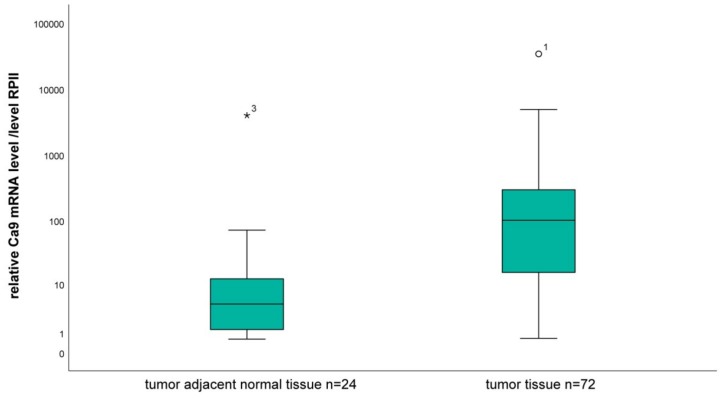
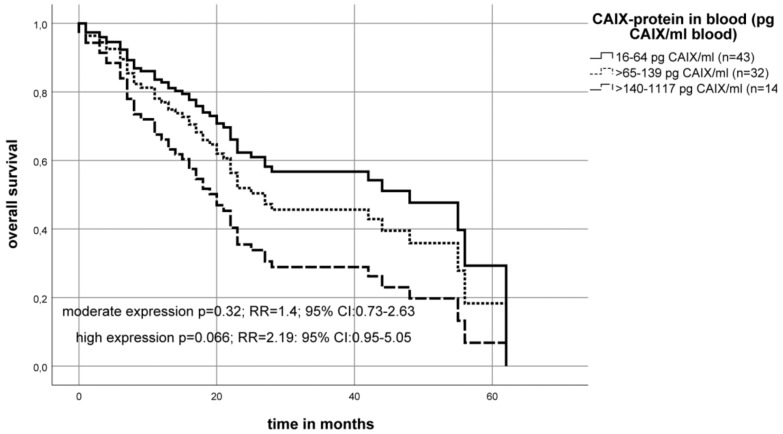
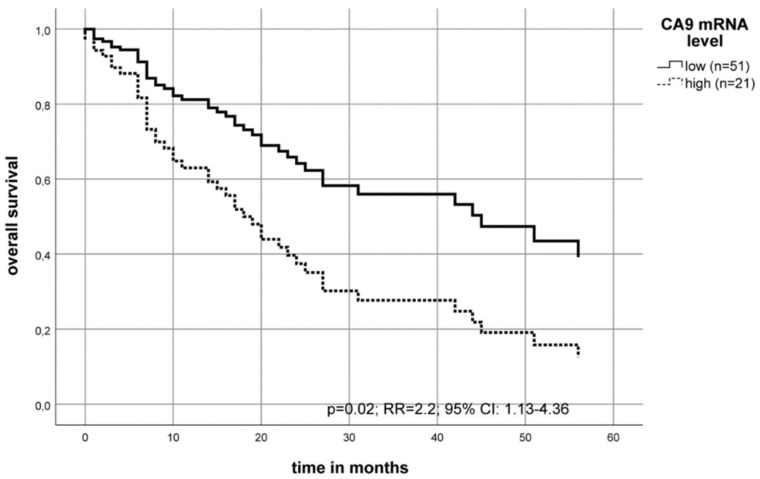
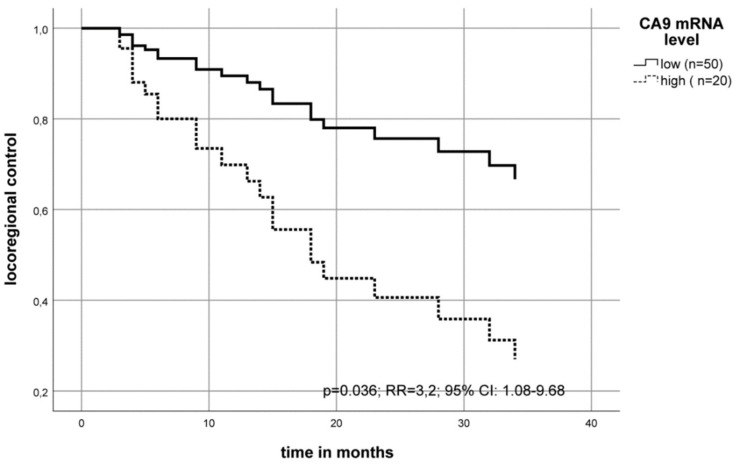
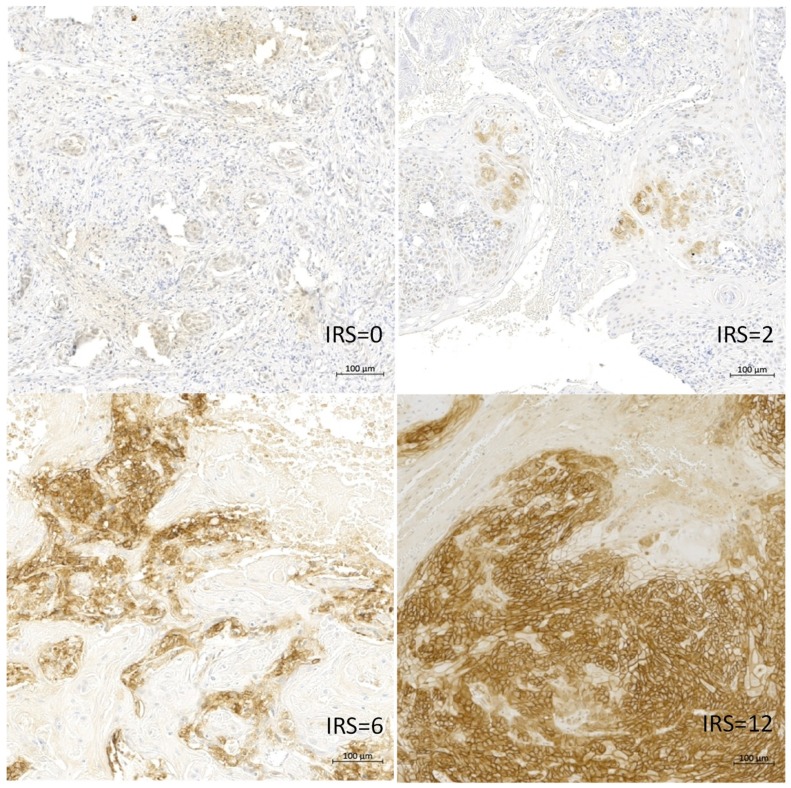
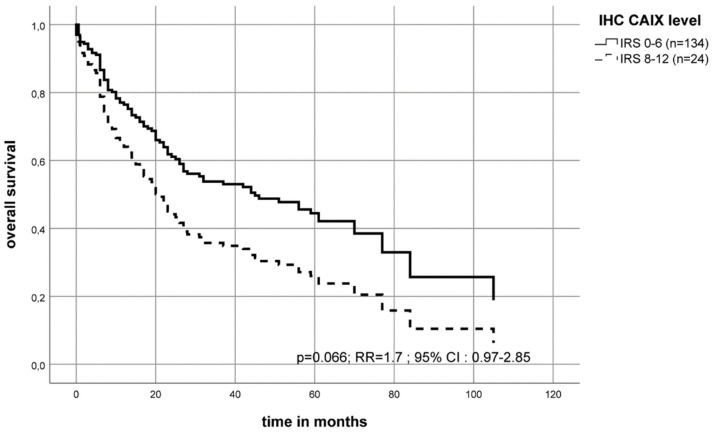
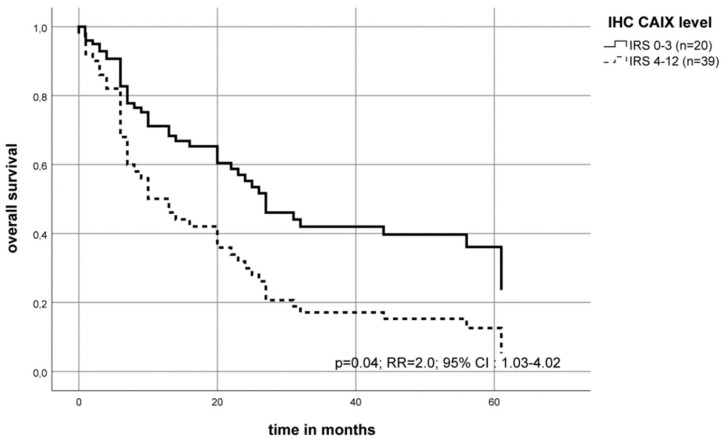
s Carbonic anhydrase 9 (CAIX) is an important protein that stabilizes the extracellular pH value and is transcriptionally regulated by hypoxia-inducible factor 1 (HIF1), but more stable than HIF1α. Here we show a comparative study that examines the prognostic value of CA9 mRNA, CAIX protein of tumor cells and secreted CAIX protein for oral squamous cell carcinoma (OSCC) patients. Tumor samples from 72 OSCC patients and 24 samples of normal tissue were analyzed for CA9 mRNA levels. A total of 158 OSCC samples were stained for CAIX by immunohistochemistry and 89 blood serum samples were analyzed by ELISA for soluble CAIX protein content. Survival analyses were performed by Kaplan⁻Meier and Cox's regression analysis to estimate the prognostic effect of CA9/CAIX in OSCC patients. The CA9 mRNA and CAIX protein levels of tumor cells correlated with each other, but not with those of the secreted CAIX protein level of the blood of patients. ROC curves showed a significant ( < 0.001) higher mRNA-level of CA9 in OSCC samples than in adjacent normal tissue. Cox's regression analysis revealed an increased risk (i) of death for patients with a high CA9 mRNA level (RR = 2.2; p = 0.02), (ii) of locoregional recurrence (RR = 3.2; p = 0.036) at higher CA9 mRNA levels and (iii) of death at high CAIX protein level in their tumors (RR = 1.7; p = 0.066) and especially for patients with advanced T4-tumors (RR = 2.0; p = 0.04). However, the secreted CAIX protein level was only as a trend associated with prognosis in OSCC (RR = 2.2; p = 0.066). CA9/CAIX is an independent prognostic factor for OSCC patients and therefore a potential therapeutic target.
碳酸酐酶 9(CAIX)是一种重要的蛋白质,可稳定细胞外 pH 值,并受缺氧诱导因子 1(HIF1)转录调控,但比 HIF1α更稳定。在这里,我们进行了一项比较研究,检查了 CA9mRNA、肿瘤细胞中的 CAIX 蛋白和分泌的 CAIX 蛋白对口腔鳞状细胞癌(OSCC)患者的预后价值。分析了 72 例 OSCC 患者和 24 例正常组织的肿瘤样本中的 CA9mRNA 水平。用免疫组织化学法对 158 例 OSCC 样本进行了 CAIX 染色,并用 ELISA 法分析了 89 例血清样本中可溶性 CAIX 蛋白含量。通过 Kaplan-Meier 和 Cox 回归分析进行生存分析,以估计 CA9/CAIX 在 OSCC 患者中的预后作用。肿瘤细胞中的 CA9mRNA 和 CAIX 蛋白水平相互相关,但与患者血液中分泌的 CAIX 蛋白水平无关。ROC 曲线显示,OSCC 样本中的 CA9mRNA 水平明显高于相邻正常组织(<0.001)。Cox 回归分析显示,CA9mRNA 水平较高的患者死亡风险增加(i)(RR=2.2;p=0.02),(ii)局部复发风险增加(RR=3.2;p=0.036),(iii)肿瘤中 CAIX 蛋白水平较高的死亡风险增加(RR=1.7;p=0.066),尤其是 T4 期肿瘤患者(RR=2.0;p=0.04)。然而,分泌的 CAIX 蛋白水平仅与 OSCC 的预后呈趋势相关(RR=2.2;p=0.066)。CA9/CAIX 是 OSCC 患者的独立预后因素,因此是一个潜在的治疗靶点。