Zhu Huaiyang, Leiss Lina, Yang Ning, Rygh Cecilie B, Mitra Siddhartha S, Cheshier Samuel H, Weissman Irving L, Huang Bin, Miletic Hrvoje, Bjerkvig Rolf, Enger Per Ø, Li Xingang, Wang Jian
Department of Biomedicine, University of Bergen, Bergen, Norway.
Department of Oncology, Shandong Chest Hospital, Jinan, China.
Oncotarget. 2017 Feb 14;8(7):12145-12157. doi: 10.18632/oncotarget.14553.
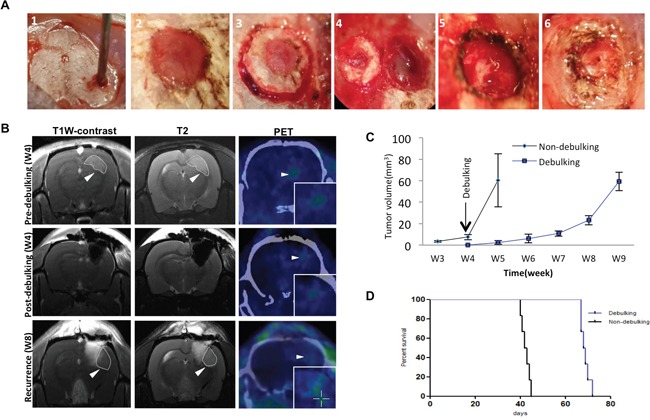
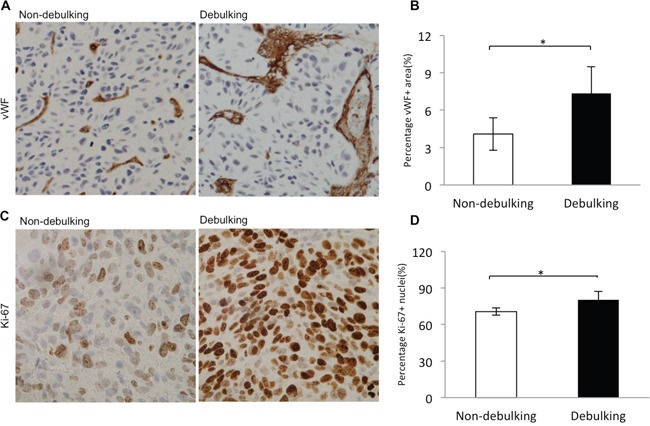
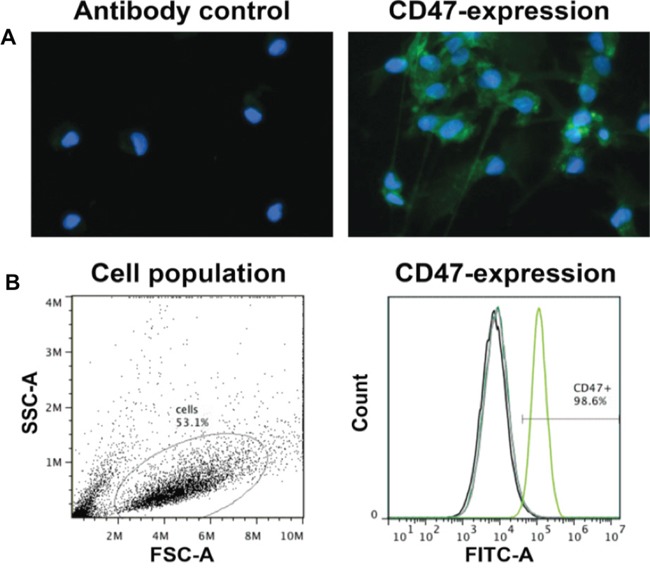
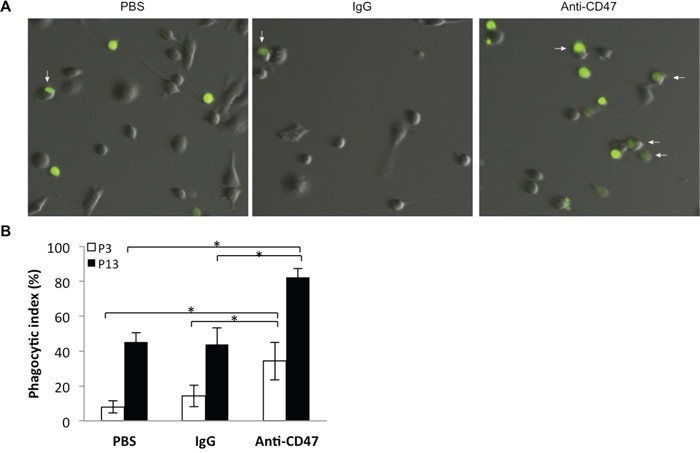
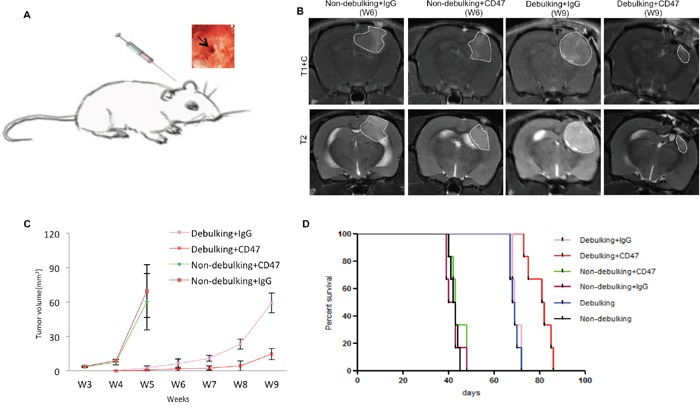
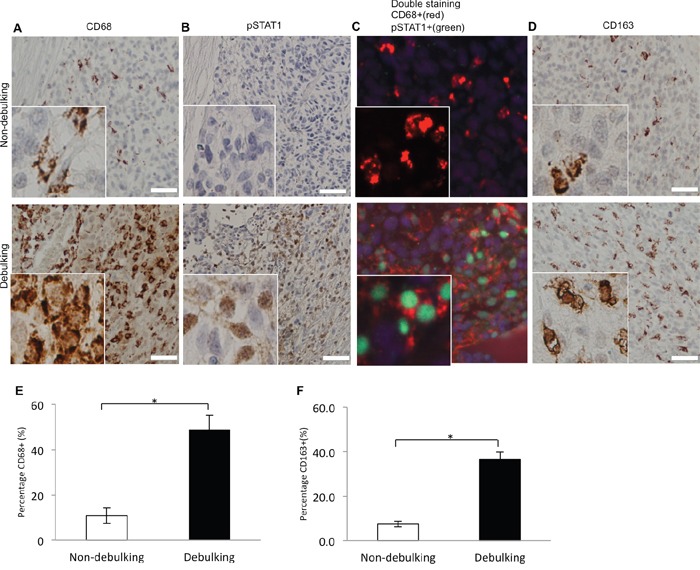
Surgical resection is a standard component of treatment in the clinical management of patients with glioblastoma multiforme (GBM). However, experimental therapies are rarely investigated in the context of tumor debulking in preclinical models. Here, a surgical debulking GBM xenograft model was developed in nude rats, and was used in combination with CD47 blocking immunotherapy, a novel treatment strategy that triggers phagocytosis of tumor cells by macrophages in diverse cancer types including GBM. Orthotopic patient-derived xenograft tumors expressing CD47 were resected at 4 weeks after implantation and immediately thereafter treated with anti-CD47 or control antibodies injected into the cavity. Debulking prolonged survival (median survival, 68.5 vs 42.5 days, debulking and non-debulking survival times, respectively; n = 6 animals/group; P = 0.0005). Survival was further improved in animals that underwent combination treatment with anti-CD47 mAbs (median survival, 81.5 days vs 69 days, debulking + anti-CD47 vs debulking + control IgG, respectively; P = 0.0007). Immunohistochemistical staining of tumor sections revealed an increase in recruitment of cells positive for CD68, a marker for macrophages/immune cell types, to the surgical site (50% vs 10%, debulking vs non-debulking, respectively). Finally, analysis of tumor protein lysates on antibody microarrays demonstrated an increase in pro-inflammatory cytokines, such as CXCL10, and a decrease in angiogenic proteins in debulking + anti-CD47 vs non-debulking + IgG tumors. The results indicated that surgical resection combined with anti-CD47 blocking immunotherapy promoted an inflammatory response and prolonged survival in animals, and is therefore an attractive strategy for clinical translation.
手术切除是多形性胶质母细胞瘤(GBM)患者临床治疗的标准组成部分。然而,在临床前模型中,很少在肿瘤减瘤的背景下研究实验性疗法。在此,我们在裸鼠中建立了一种手术减瘤的GBM异种移植模型,并将其与CD47阻断免疫疗法联合使用,这是一种新的治疗策略,可触发巨噬细胞对包括GBM在内的多种癌症类型的肿瘤细胞进行吞噬作用。在植入后4周切除原位患者来源的表达CD47的异种移植肿瘤,然后立即向瘤腔内注射抗CD47或对照抗体进行治疗。减瘤延长了生存期(中位生存期分别为68.5天和42.5天,分别为减瘤和未减瘤的生存时间;每组n = 6只动物;P = 0.0005)。接受抗CD47单克隆抗体联合治疗的动物生存期进一步延长(中位生存期分别为81.5天和69天,分别为减瘤+抗CD47与减瘤+对照IgG;P = 0.0007)。肿瘤切片的免疫组织化学染色显示,巨噬细胞/免疫细胞类型的标志物CD68阳性细胞向手术部位的募集增加(分别为50%和10%,减瘤组与未减瘤组)。最后,对抗体微阵列上的肿瘤蛋白裂解物进行分析表明,与未减瘤+IgG肿瘤相比,减瘤+抗CD47肿瘤中促炎细胞因子如CXCL10增加,血管生成蛋白减少。结果表明,手术切除联合抗CD47阻断免疫疗法可促进炎症反应并延长动物生存期,因此是一种有吸引力的临床转化策略。