1Institute of Pathology, University of Bern, Bern, Switzerland.
2Baxter Laboratory for Stem Cell Biology, Department of Microbiology and Immunology, Stanford University School of Medicine, Stanford, California.
Thyroid. 2019 Jul;29(7):979-992. doi: 10.1089/thy.2018.0555. Epub 2019 May 10.
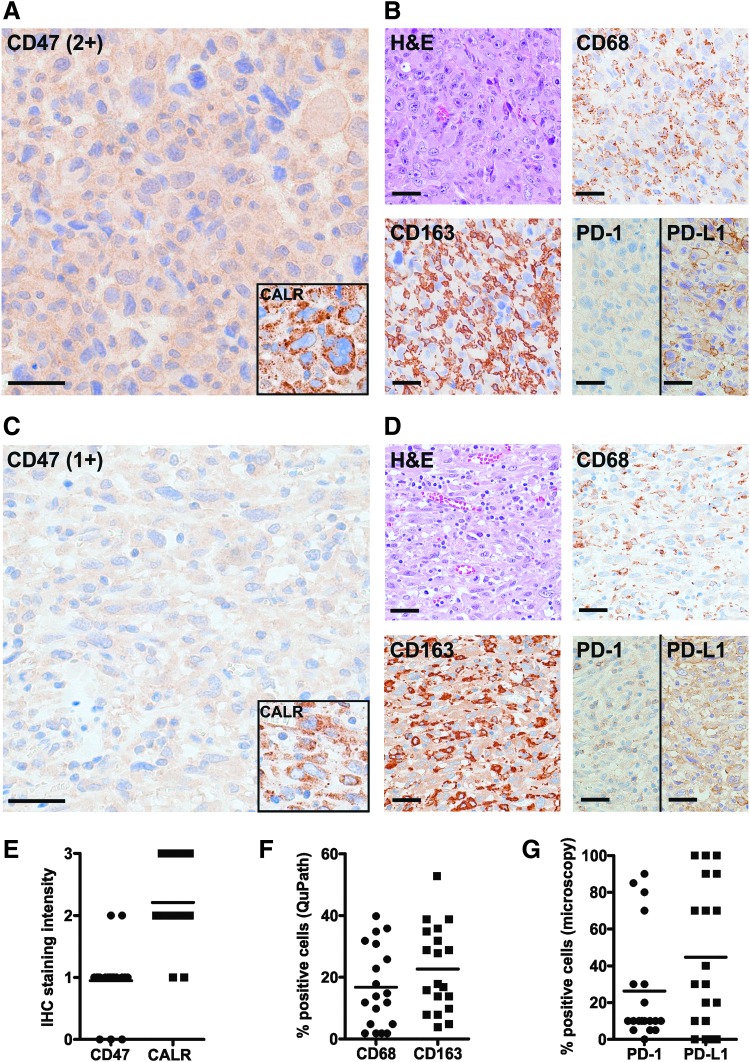
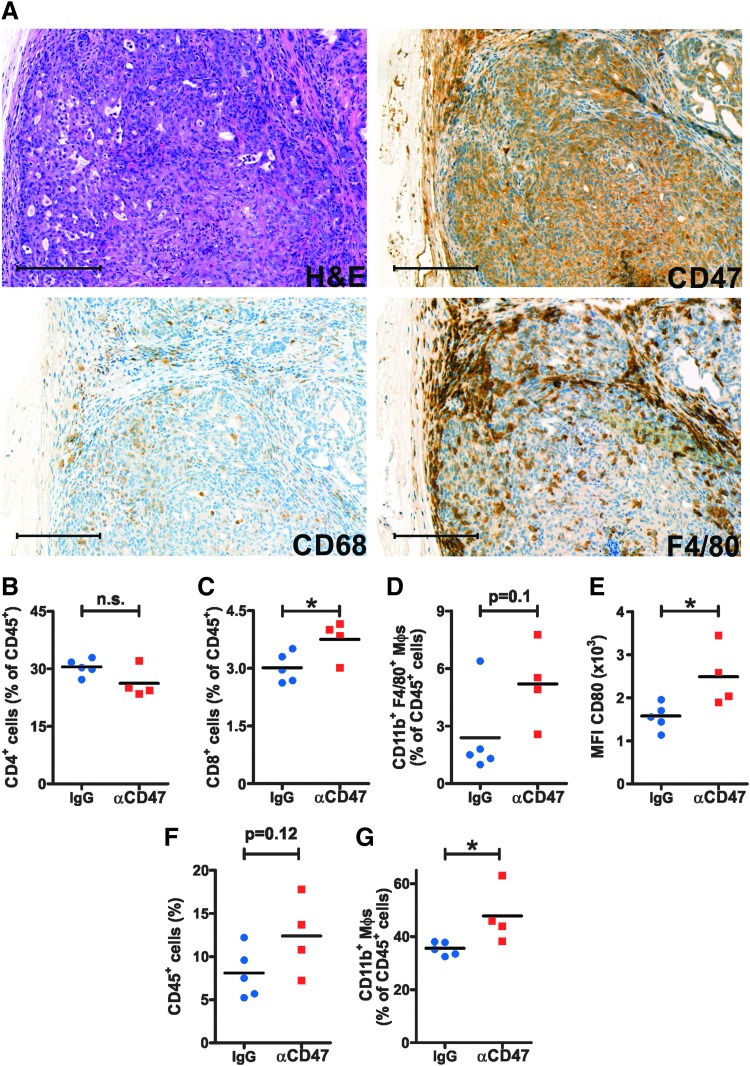
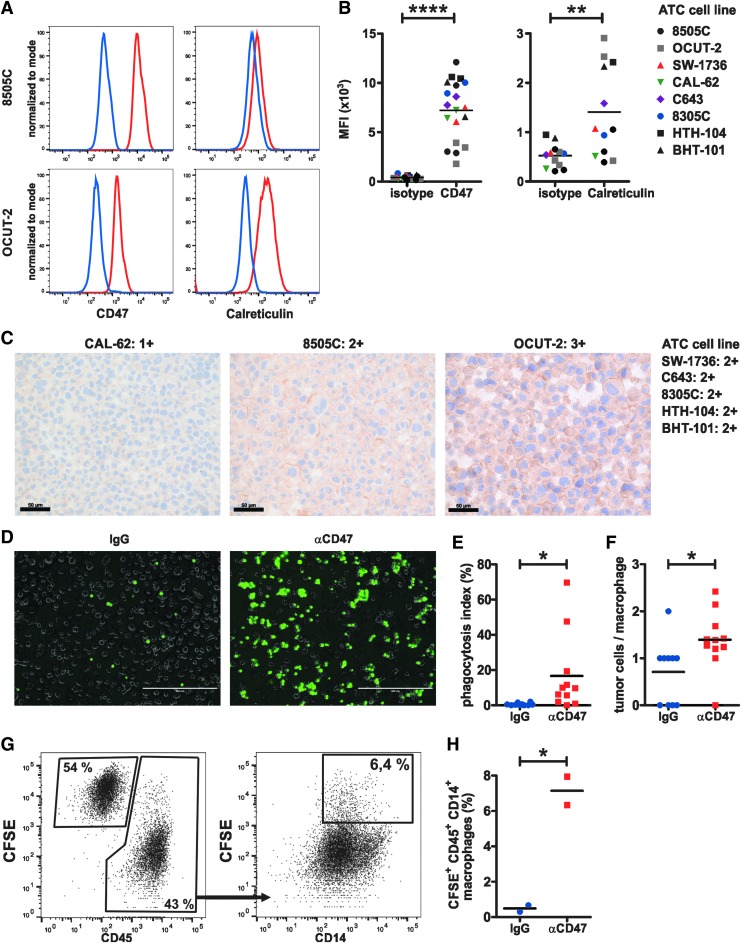
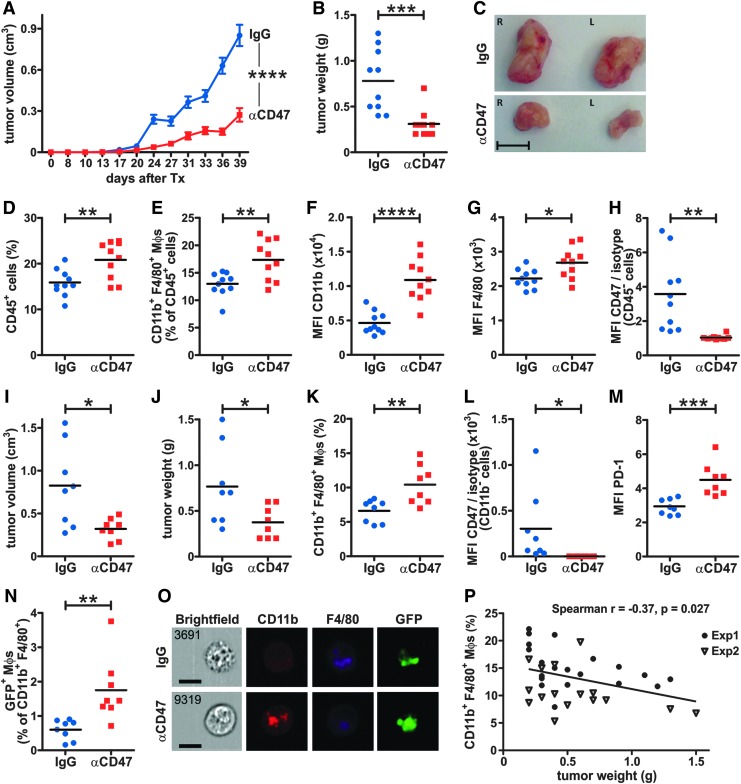
Anaplastic thyroid carcinoma (ATC) is one of the most aggressive human cancers, with a median survival of only three to six months. Standard treatment options and even targeted therapies have so far failed to improve long-term overall survival. Thus, novel treatment modalities for ATC, such as immunotherapy, are urgently needed. CD47 is a "don't eat me" signal, which prevents cancer cells from phagocytosis by binding to signal regulatory protein alpha on macrophages. So far, the role of macrophages and the CD47-signal regulatory protein alpha signaling axis in ATC is not well understood. This study analyzed 19 primary human ATCs for macrophage markers, CD47 expression, and immune checkpoints by immunohistochemistry. ATC cell lines and a fresh ATC sample were assessed by flow cytometry for CD47 expression and macrophage infiltration, respectively. CD47 was blocked in phagocytosis assays of co-cultured macrophages and ATC cell lines. Anti-CD47 antibody treatment was administered to ATC cell line xenotransplanted immunocompromised mice, as well as to tamoxifen-induced ATC double-transgenic mice. Human ATC samples were heavily infiltrated by CD68- and CD163-expressing tumor-associated macrophages (TAMs), and expressed CD47 and calreticulin, the dominant pro-phagocytic molecule. In addition, ATC tissues expressed the immune checkpoint molecules programmed cell death 1 and programmed death ligand 1. Blocking CD47 promoted the phagocytosis of ATC cell lines by macrophages . Anti-CD47 antibody treatment of ATC xenotransplanted mice increased the frequency of TAMs, enhanced the expression of macrophage activation markers, augmented tumor cell phagocytosis, and suppressed tumor growth. In double-transgenic ATC mice, CD47 was expressed on tumor cells, and blocking CD47 increased TAM frequencies. Targeting CD47 or CD47 in combination with programmed cell death 1 may potentially improve the outcomes of ATC patients and may represent a valuable addition to the current standard of care.
间变性甲状腺癌 (ATC) 是最具侵袭性的人类癌症之一,中位生存期仅为三到六个月。标准治疗方案甚至靶向治疗迄今为止都未能改善长期总生存率。因此,迫切需要 ATC 的新型治疗方法,如免疫疗法。CD47 是一种“不要吃我”的信号,通过与巨噬细胞上的信号调节蛋白 alpha 结合,防止癌细胞被吞噬。迄今为止,巨噬细胞和 CD47-信号调节蛋白 alpha 信号轴在 ATC 中的作用尚不清楚。本研究通过免疫组化分析了 19 例原发性人 ATC 中的巨噬细胞标志物、CD47 表达和免疫检查点。通过流式细胞术分别评估 ATC 细胞系和新鲜 ATC 样本的 CD47 表达和巨噬细胞浸润。在共培养的巨噬细胞和 ATC 细胞系的吞噬实验中阻断 CD47。将抗 CD47 抗体治疗应用于 ATC 细胞系异种移植免疫缺陷小鼠以及他莫昔芬诱导的 ATC 双转基因小鼠。人 ATC 样本被大量表达 CD68 和 CD163 的肿瘤相关巨噬细胞 (TAMs) 浸润,并表达 CD47 和钙网蛋白,这是主要的吞噬前分子。此外,ATC 组织还表达免疫检查点分子程序性细胞死亡 1 和程序性死亡配体 1。阻断 CD47 促进了巨噬细胞对 ATC 细胞系的吞噬作用。抗 CD47 抗体治疗 ATC 异种移植小鼠增加了 TAMs 的频率,增强了巨噬细胞激活标志物的表达,增加了肿瘤细胞的吞噬作用,并抑制了肿瘤生长。在双转基因 ATC 小鼠中,肿瘤细胞表达 CD47,阻断 CD47 增加了 TAMs 的频率。靶向 CD47 或 CD47 联合程序性细胞死亡 1 可能潜在地改善 ATC 患者的预后,并可能成为当前治疗标准的有价值补充。