Heinicke Matthew P, Jackman Todd R, Bauer Aaron M
Department of Natural Sciences, University of Michigan-Dearborn, 4901 Evergreen Rd., Dearborn, MI, 48128, USA.
Department of Biology, Villanova University, 800 Lancaster Avenue, Villanova, PA, 19085, USA.
BMC Evol Biol. 2017 Jan 11;17(1):9. doi: 10.1186/s12862-016-0846-2.
Geckos of the genus Pachydactylus and their close relatives comprise the most species-rich clade of lizards in sub-Saharan Africa. Many explanations have been offered to explain species richness patterns of clades. In the Pachydactylus group, one possible explanation is a history of diversification via geographic isolation. If geographic isolation has played a key role in facilitating diversification, then we expect species in more species-rich subclades to have smaller ranges than species in less diverse subclades. We also expect traits promoting geographic isolation to be correlated with small geographic ranges. In order to test these expectations, we performed phylogenetic analyses and tested for correlations among body size, habitat choice, range sizes, and diversification rates in the Pachydactylus group.
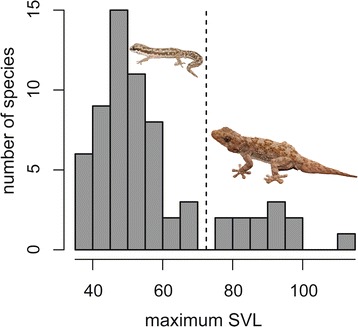
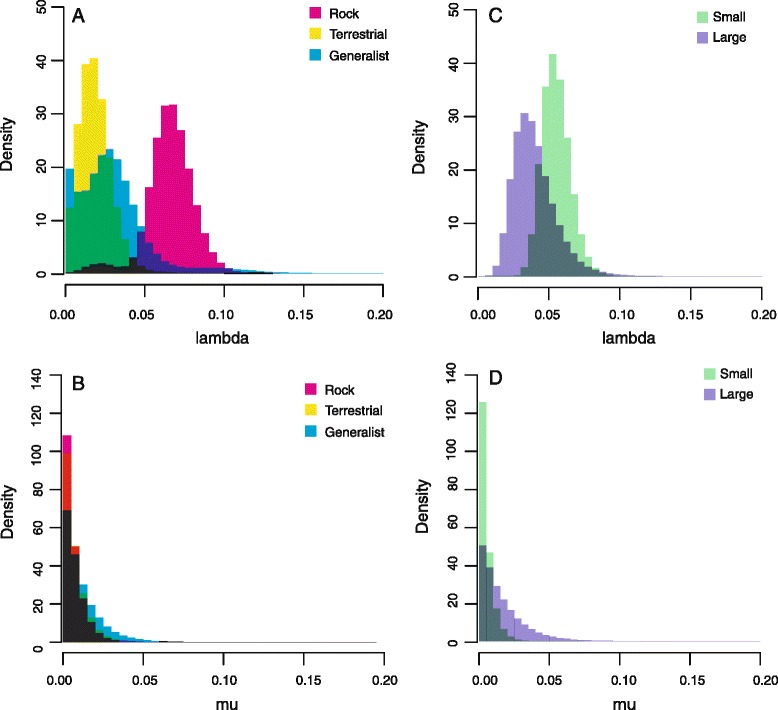
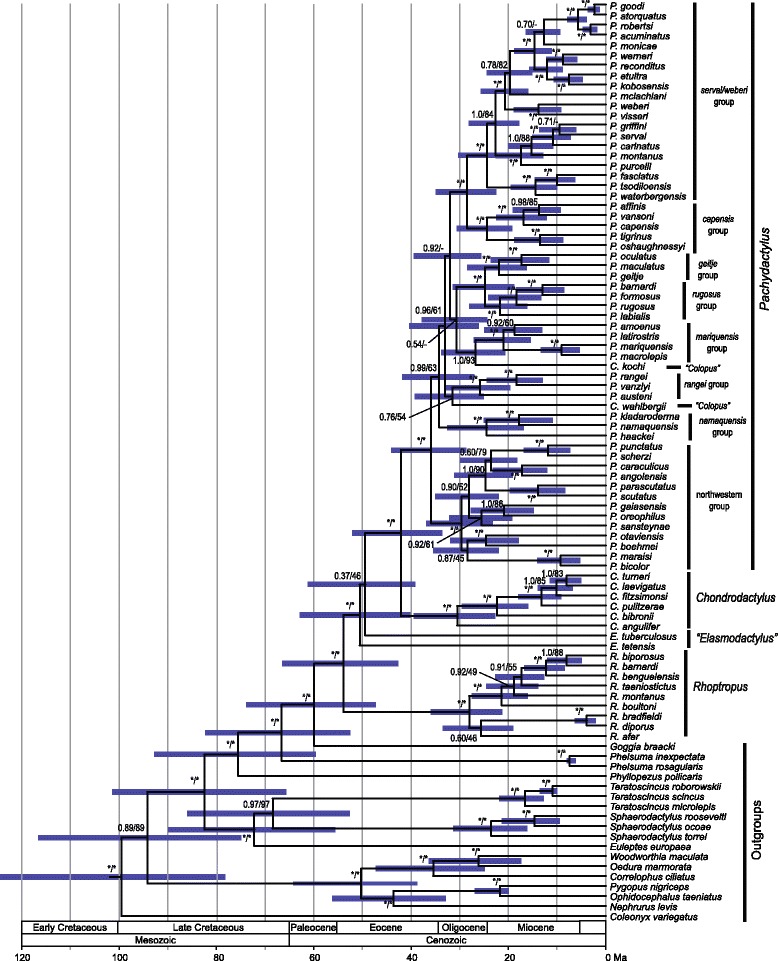
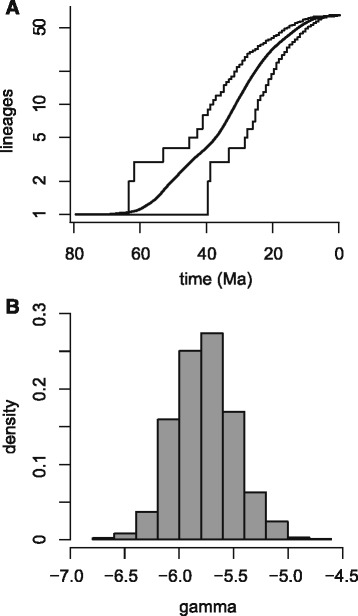
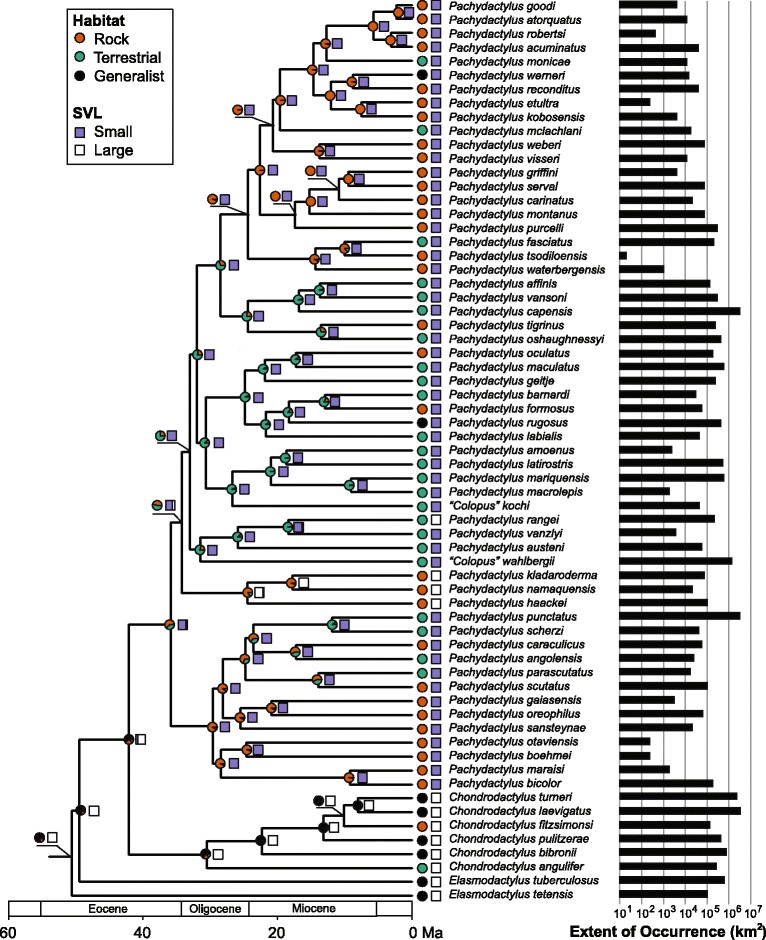
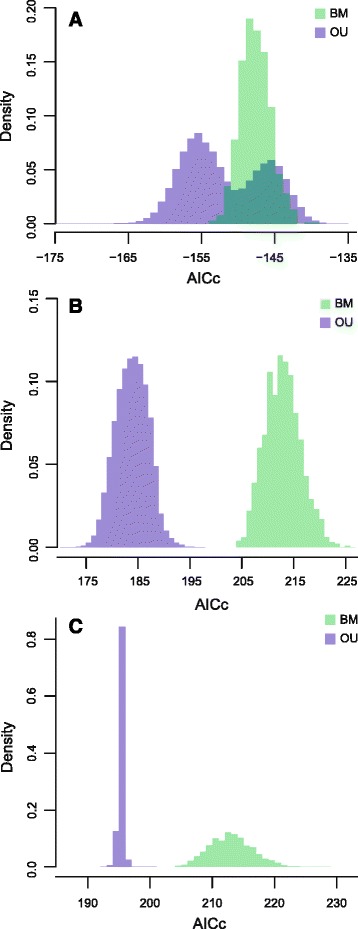
Both body size and habitat use are inferred to have shifted multiple times across the phylogeny of the Pachydactylus group, with large size and generalist habitat use being ancestral for the group. Geographic range size is correlated with both of these traits. Small-bodied species have more restricted ranges than large-bodied species, and rock-dwelling species have more restricted ranges than either terrestrial or generalist species. Rock-dwelling and small body size are also associated with higher rates of diversification, and subclades retaining ancestral conditions for these traits are less species rich than subclades in which shifts to small body size and rocky habitat use have occurred. The phylogeny also illustrates inadequacies of the current taxonomy of the group.
The results are consistent with a model in which lineages more likely to become geographically isolated diversify to a greater extent, although some patterns also resemble those expected of an adaptive radiation in which ecological divergence acts as a driver of speciation. Therefore, the Pachydactylus group may represent an intermediate between clades in which radiation is adaptive versus those in which it is non-adaptive.
厚趾虎属壁虎及其近缘物种构成了撒哈拉以南非洲蜥蜴中物种最丰富的进化枝。人们提出了许多解释来阐释进化枝的物种丰富度模式。在厚趾虎类群中,一种可能的解释是通过地理隔离实现多样化的历史。如果地理隔离在促进多样化方面发挥了关键作用,那么我们预计物种丰富度较高的亚进化枝中的物种分布范围要比多样性较低的亚进化枝中的物种分布范围小。我们还预计促进地理隔离的特征与较小的地理分布范围相关。为了检验这些预期,我们进行了系统发育分析,并测试了厚趾虎类群中体型、栖息地选择、分布范围大小和多样化速率之间的相关性。
在厚趾虎类群的系统发育过程中,体型和栖息地利用都被推断发生了多次变化,大体型和广泛的栖息地利用是该类群的祖先特征。地理分布范围大小与这两个特征都相关。体型小的物种分布范围比体型大的物种更受限,栖息于岩石的物种分布范围比陆生或广泛栖息的物种更受限。栖息于岩石和小体型也与更高的多样化速率相关,保留这些特征祖先条件的亚进化枝的物种丰富度低于发生了向小体型和岩石栖息地利用转变的亚进化枝。系统发育也说明了该类群当前分类法的不足之处。
结果与一个模型一致,即更有可能在地理上隔离的谱系会在更大程度上多样化,尽管一些模式也类似于预期的适应性辐射模式,其中生态分化是物种形成的驱动力。因此,厚趾虎类群可能代表了适应性辐射进化枝和非适应性辐射进化枝之间的中间类型。