Funabashi Teruki, Katoh Yohei, Michisaka Saki, Terada Masaya, Sugawa Maho, Nakayama Kazuhisa
Graduate School of Pharmaceutical Sciences, Kyoto University, Kyoto 606-8501, Japan.
Graduate School of Pharmaceutical Sciences, Kyoto University, Kyoto 606-8501, Japan
Mol Biol Cell. 2017 Mar 1;28(5):624-633. doi: 10.1091/mbc.E16-09-0648. Epub 2017 Jan 11.
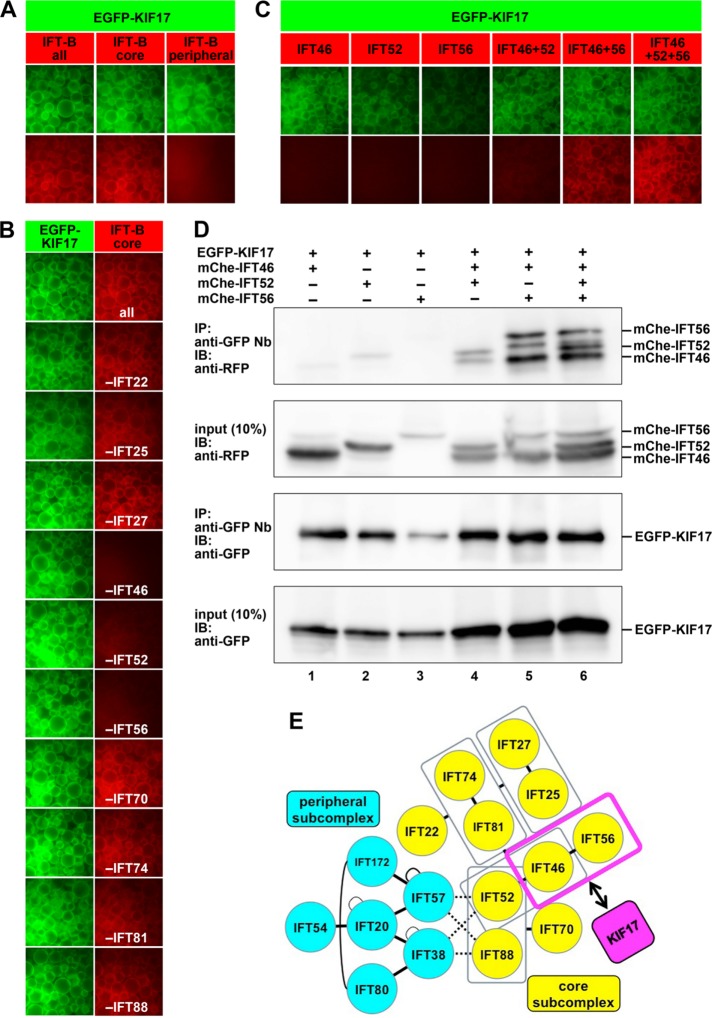
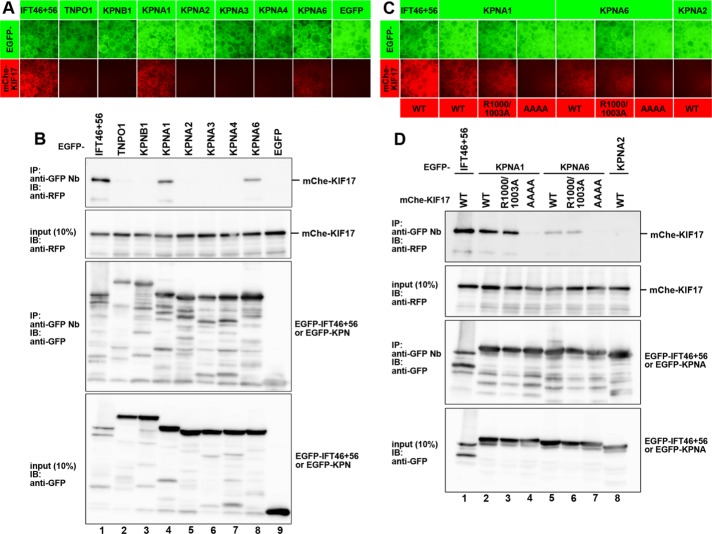
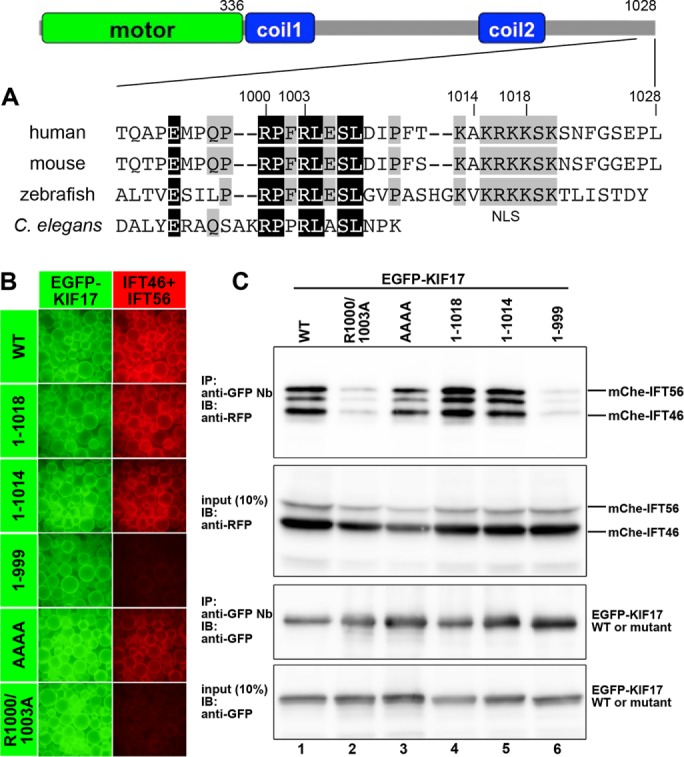
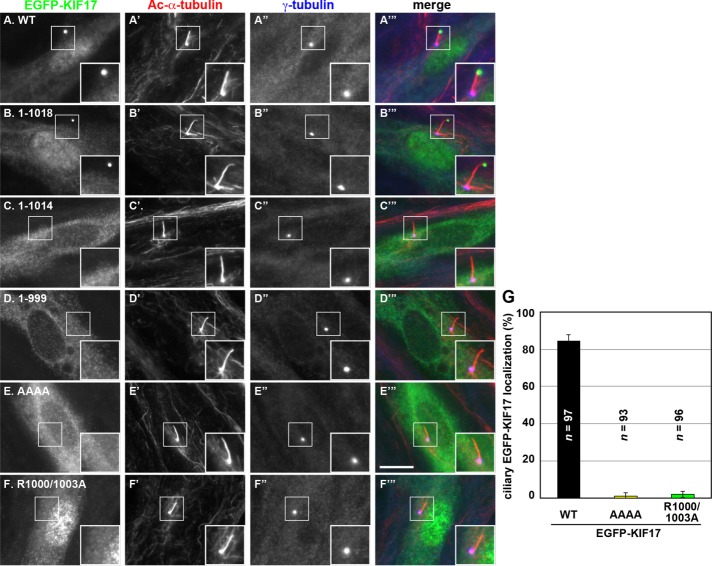
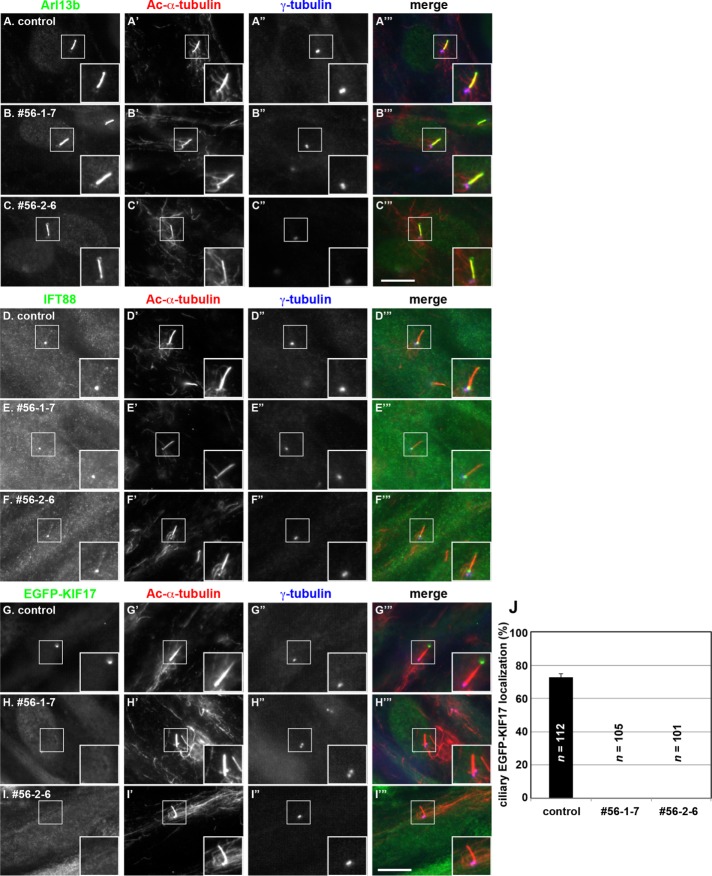
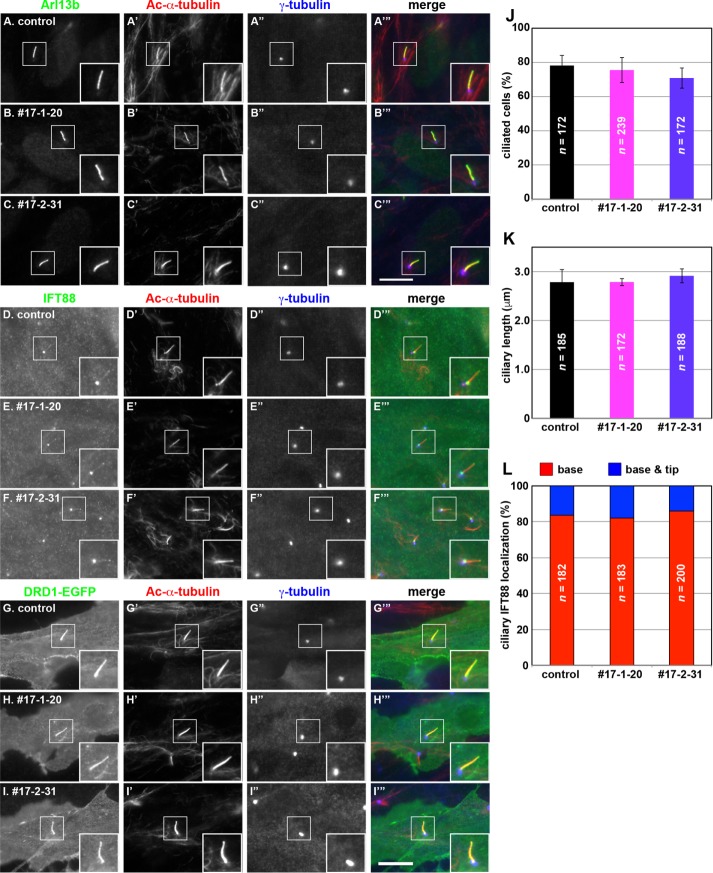
Cilia function as cellular antennae to sense and transduce extracellular signals. A number of proteins are specifically localized in cilia. Anterograde and retrograde ciliary protein trafficking are mediated by the IFT-B and IFT-A complexes in concert with kinesin-2 and dynein-2 motors, respectively. However, the role of KIF17, a homodimeric kinesin-2 protein, in protein trafficking has not been fully understood in vertebrate cilia. In this study, we demonstrated, by using the visible immunoprecipitation assay, that KIF17 interacts with the IFT46-IFT56 dimer in the IFT-B complex through its C-terminal sequence located immediately upstream of the nuclear localization signal (NLS). We then showed that KIF17 reaches the ciliary tip independently of its motor domain and requires IFT-B binding for its entry into cilia rather than for its intraciliary trafficking. We further showed that KIF17 ciliary entry depends not only on its binding to IFT-B but also on its NLS, to which importin α proteins bind. Taking the results together, we conclude that in mammalian cells, KIF17 is dispensable for ciliogenesis and IFT-B trafficking but requires IFT-B, as well as its NLS, for its ciliary entry across the permeability barrier located at the ciliary base.
纤毛作为细胞触角发挥作用,以感知和转导细胞外信号。许多蛋白质特异性定位于纤毛中。纤毛蛋白的顺行和逆行运输分别由IFT - B和IFT - A复合体与驱动蛋白 - 2和动力蛋白 - 2马达协同介导。然而,在脊椎动物纤毛中,同型二聚体驱动蛋白 - 2蛋白KIF17在蛋白质运输中的作用尚未完全明确。在本研究中,我们通过可见免疫沉淀试验证明,KIF17通过其位于核定位信号(NLS)紧邻上游的C末端序列与IFT - B复合体中的IFT46 - IFT56二聚体相互作用。然后我们表明,KIF17独立于其马达结构域到达纤毛尖端,并且其进入纤毛需要与IFT - B结合,而不是用于其在纤毛内的运输。我们进一步表明,KIF17进入纤毛不仅取决于其与IFT - B的结合,还取决于其NLS,输入蛋白α蛋白可与该NLS结合。综合这些结果,我们得出结论,在哺乳动物细胞中,KIF17对于纤毛发生和IFT - B运输并非必需,但它进入纤毛需要IFT - B及其NLS,以跨越位于纤毛基部的通透性屏障。