Mecawi André Souza, Varanda Wamberto Antonio, da Silva Melina Pires
Laboratory of Molecular Neuroendocrinology, Department of Biophysics, Paulista School of Medicine, Federal University of São Paulo, São Paulo, Brazil.
Department of Physiology, Faculty of Medicine of Ribeirão Preto, University of São Paulo, Ribeirão Preto, Brazil.
Front Physiol. 2022 May 24;13:887779. doi: 10.3389/fphys.2022.887779. eCollection 2022.
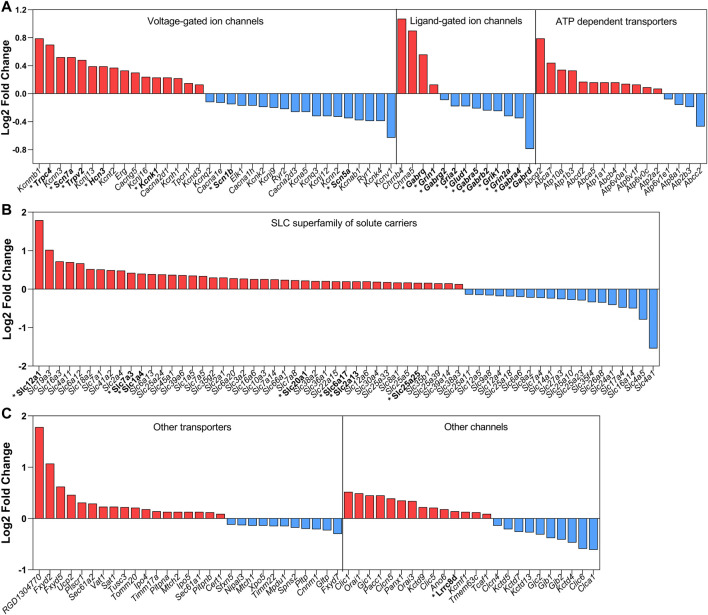
Due to the relatively high permeability to water of the plasma membrane, water tends to equilibrate its chemical potential gradient between the intra and extracellular compartments. Because of this, changes in osmolality of the extracellular fluid are accompanied by changes in the cell volume. Therefore, osmoregulatory mechanisms have evolved to keep the tonicity of the extracellular compartment within strict limits. This review focuses on the following aspects of osmoregulation: 1) the general problems in adjusting the "milieu interieur" to challenges imposed by water imbalance, with emphasis on conceptual aspects of osmosis and cell volume regulation; 2) osmosensation and the hypothalamic supraoptic nucleus (SON), starting with analysis of the electrophysiological responses of the magnocellular neurosecretory cells (MNCs) involved in the osmoreception phenomenon; 3) transcriptomic plasticity of SON during sustained hyperosmolality, to pinpoint the genes coding membrane channels and transporters already shown to participate in the osmosensation and new candidates that may have their role further investigated in this process, with emphasis on those expressed in the MNCs, discussing the relationships of hydration state, gene expression, and MNCs electrical activity; and 4) somatodendritic release of neuropeptides in relation to osmoregulation. Finally, we expect that by stressing the relationship between gene expression and the electrical activity of MNCs, studies about the newly discovered plastic-regulated genes that code channels and transporters in the SON may emerge.
由于质膜对水具有较高的通透性,水倾向于在细胞内和细胞外区室之间平衡其化学势梯度。因此,细胞外液渗透压的变化伴随着细胞体积的改变。所以,已经进化出渗透调节机制以将细胞外区室的张力维持在严格的限度内。本综述聚焦于渗透调节的以下几个方面:1)在调整“内环境”以应对水失衡所带来的挑战时的一般问题,重点在于渗透作用和细胞体积调节的概念方面;2)渗透压感受与下丘脑视上核(SON),首先分析参与渗透压感受现象的大细胞神经分泌细胞(MNCs)的电生理反应;3)持续高渗状态下SON的转录组可塑性,以确定已经证明参与渗透压感受的编码膜通道和转运蛋白的基因以及可能在此过程中有待进一步研究其作用的新候选基因,重点关注那些在MNCs中表达的基因,讨论水合状态、基因表达和MNCs电活动之间的关系;以及4)与渗透调节相关的神经肽的树突体释放。最后,我们期望通过强调基因表达与MNCs电活动之间的关系,可能会出现关于SON中编码通道和转运蛋白的新发现的可塑性调节基因的研究。