Tailor Jignesh, Fernando D, Sidhu Z, Foley R, Abeysinghe K D, Walsh D C
Department of Neurosurgery, King's College Hospital, Denmark Hill, London, SE5, UK.
King's College London School of Medicine, Strand, London, WC2R, UK.
Acta Neurochir (Wien). 2017 Apr;159(4):627-631. doi: 10.1007/s00701-016-3063-2. Epub 2017 Jan 11.
Placement of a subdural drain after drainage of chronic subdural haematoma (CSDH) has been shown to reduce the rate of recurrence in several randomised controlled trials (RCT). The most recently published RCT was from Cambridge, UK, in 2009. Despite class I evidence for the use of subdural drains, it is unclear whether these results have been translated into clinical practice. In this clinical audit we review the use of subdural drains in our institution before and after the publication of the 2009 RCT results.
A longitudinal retrospective study was performed on all adults having burr holes for CSDH between January 2009 and January 2014. Case notes were analysed to determine subdural drain use, re-operation for CSDH recurrence and post-operative complications. The audit loop was closed with data collected from August 2015 to January 2016.
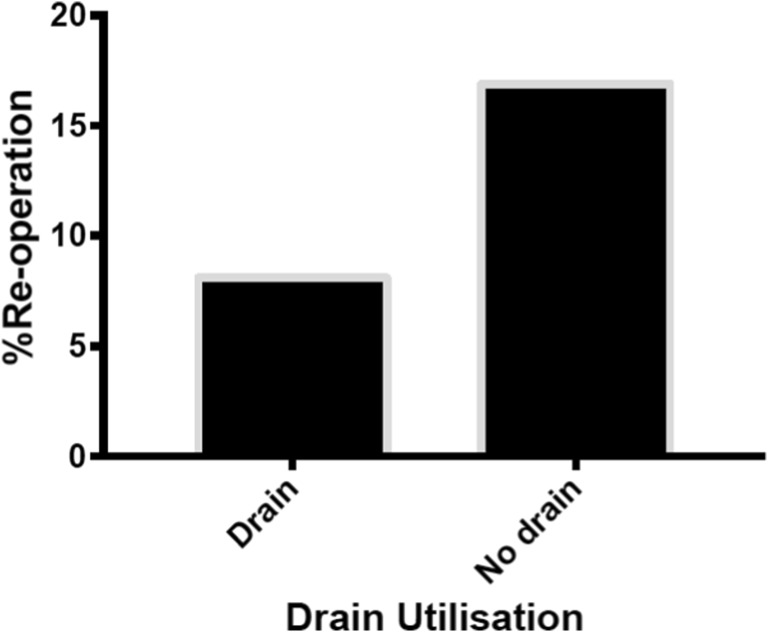
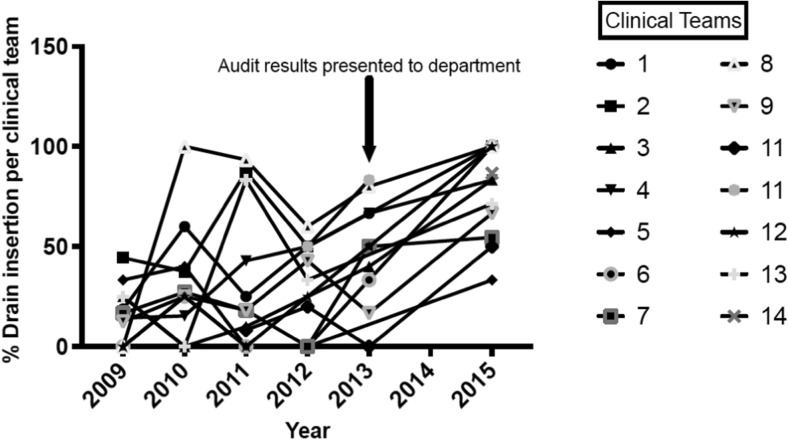
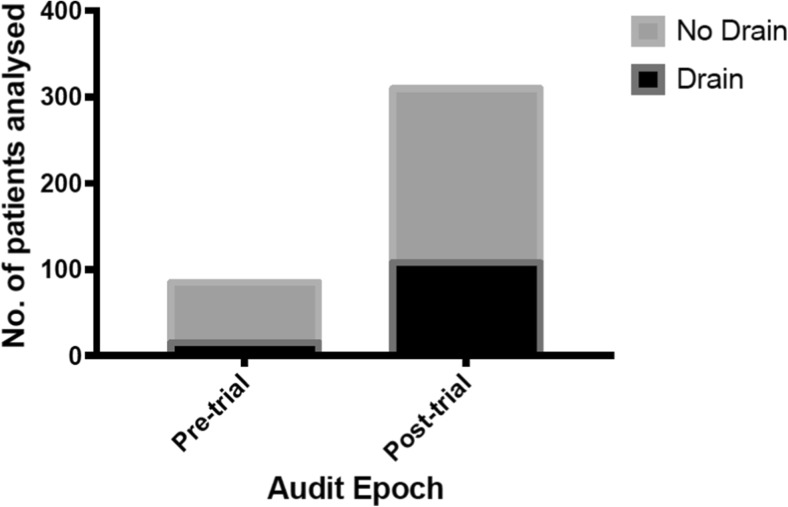
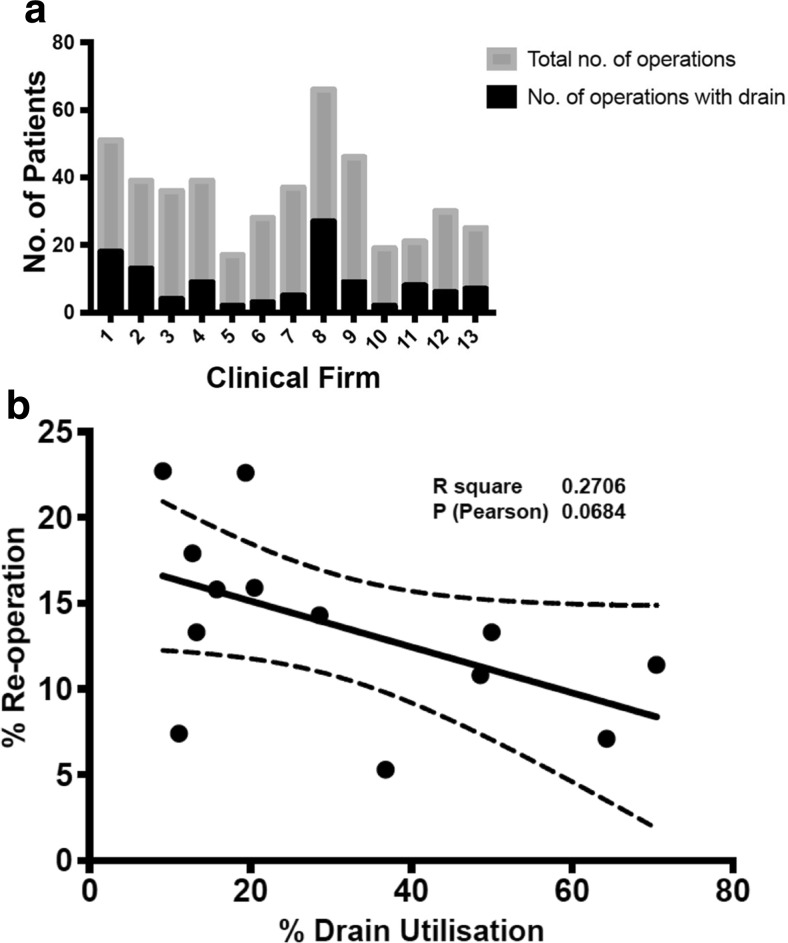
Thirty-one per cent of patients had subdural drains placed at operation. Drain placement was associated with lower reoperation rates (8% vs. 17%, p = 0.021) without increasing complication rates. Drain usage doubled after publication of the Santarius et al. (2009) trial but we observed persisting and significant variability in drain utilisation by supervising consultants. The use of drains in the department increased from 35% to 75% of all cases after presentation of these results.
The use of subdural drains in our unit reduced recurrence rates following drainage of CSDH and reproduced the results of a 2009 clinical trial. Although the use of subdural drains doubled in the post-trial epoch, significant variability remains in practice. Clinical audit provided an effective tool necessary to drive the implementation of subdural drain placement in our unit.
在多项随机对照试验(RCT)中,慢性硬膜下血肿(CSDH)引流术后放置硬膜下引流管已显示可降低复发率。最近发表的RCT来自英国剑桥,于2009年发布。尽管有I级证据支持使用硬膜下引流管,但尚不清楚这些结果是否已转化为临床实践。在本次临床审计中,我们回顾了2009年RCT结果公布前后我院硬膜下引流管的使用情况。
对2009年1月至2014年1月期间所有因CSDH进行钻孔引流的成年患者进行纵向回顾性研究。分析病历以确定硬膜下引流管的使用情况、因CSDH复发进行的再次手术以及术后并发症。通过收集2015年8月至2016年1月的数据来完成审计循环。
31%的患者在手术时放置了硬膜下引流管。引流管放置与较低的再次手术率相关(8%对17%,p = 0.021),且未增加并发症发生率。Santarius等人(2009年)的试验发表后,引流管的使用量增加了一倍,但我们观察到指导顾问在引流管使用方面仍存在持续且显著的差异。在公布这些结果后,该科室引流管的使用从所有病例的35%增加到了75%。
我院使用硬膜下引流管降低了CSDH引流后的复发率,并重现了2009年一项临床试验的结果。尽管在试验后时代硬膜下引流管的使用量增加了一倍,但实际操作中仍存在显著差异。临床审计提供了推动我院实施硬膜下引流管放置的必要有效工具。